
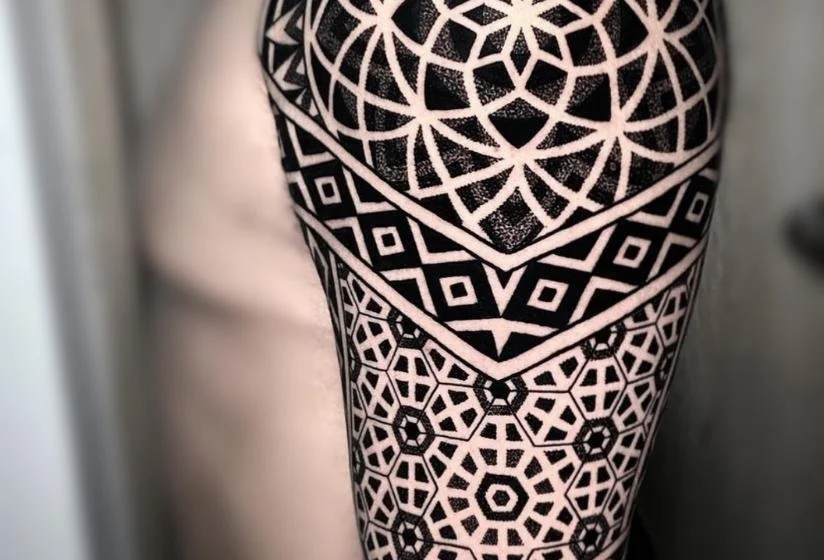
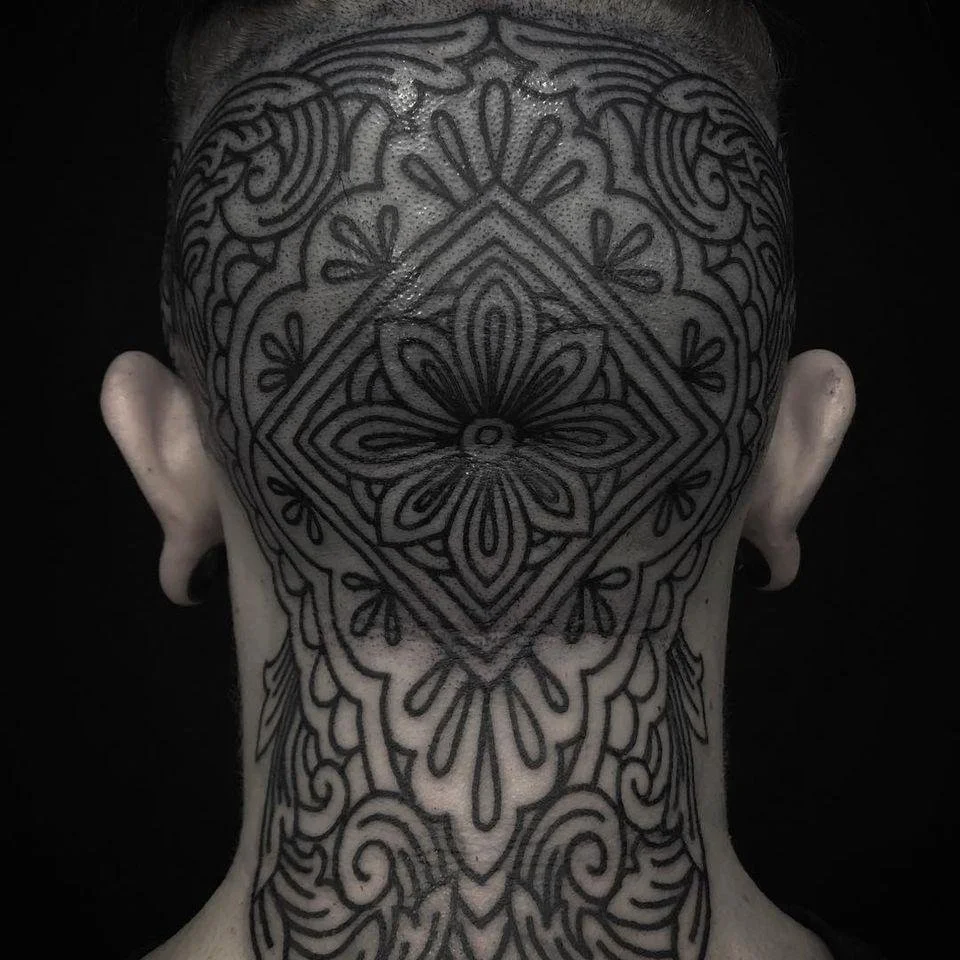
Blackwork Tattoo History is a story of how black pigment, cultural traditions and artistic expression have shaped tattooing across centuries. From ancient tattooed bodies to contemporary geometric, ornamental and abstract designs, black ink has remained an important medium for marking identity, memory and belonging.
Today, blackwork tattoos are admired for their bold contrast, intricate patterns and expressive compositions. Yet their visual simplicity can conceal a complex cultural background.
Blackwork is not one ancient tattoo tradition with a single origin. Instead, it is a modern umbrella term used for several styles that rely predominantly on black ink. Some contemporary designs draw inspiration from historical tattoo practices, while others emerge from modern illustration, graphic design and abstract art.
Understanding this distinction makes the history more interesting—and helps us appreciate both the traditions and the artists behind the work.
What Is Blackwork Tattoo History?
Blackwork Tattoo History examines the use of predominantly black tattoo pigment across different cultures and the development of blackwork as a contemporary artistic category.
What defines a blackwork tattoo?
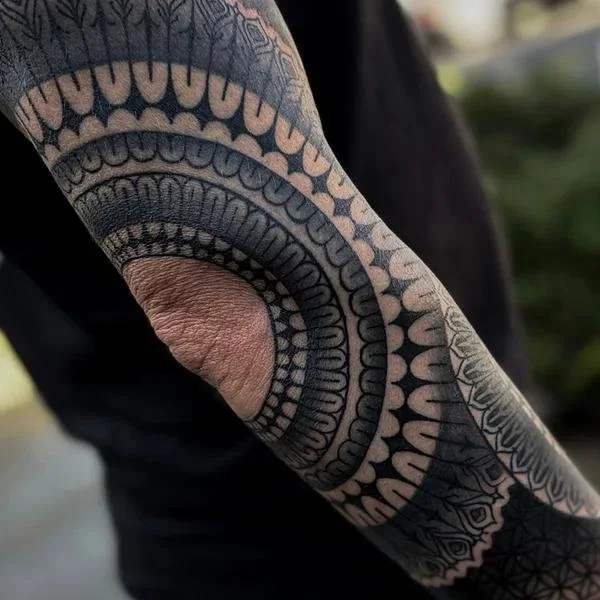
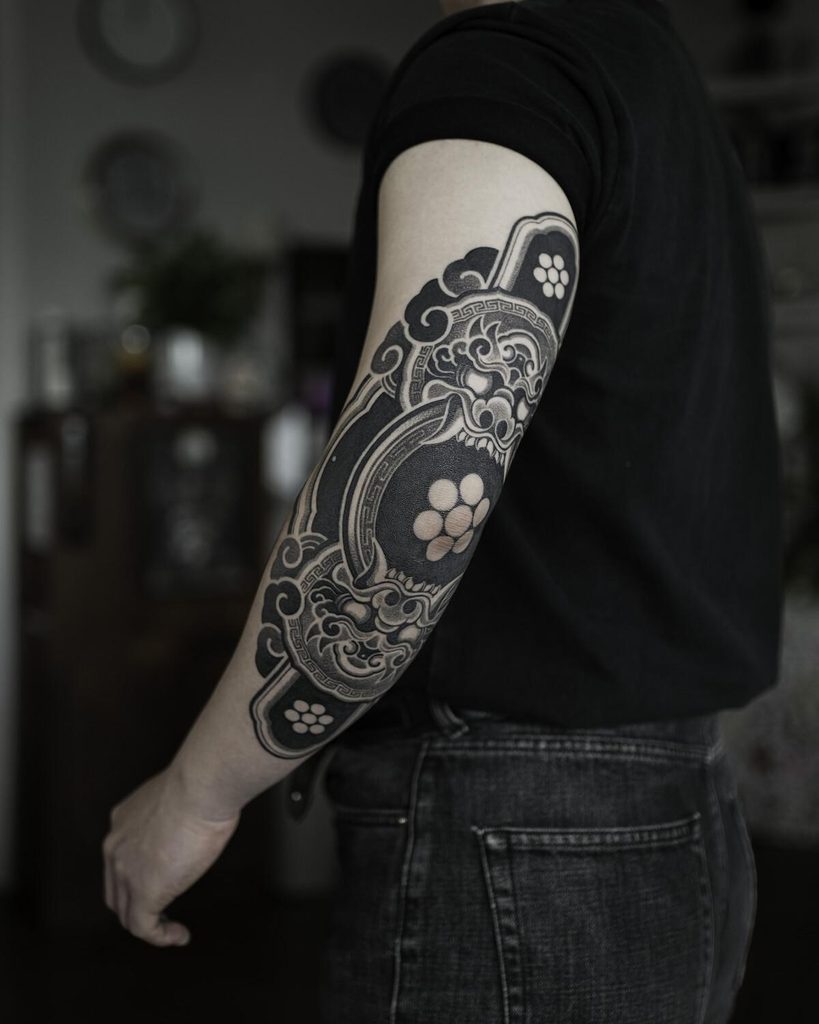
In contemporary tattooing, blackwork generally refers to designs created primarily or entirely with black ink.
Its defining characteristics may include:
• Bold black outlines and solid fills
• Geometric and ornamental patterns
• Negative space that uses natural skin as part of the composition
• Fine dots, hatching and textured shading
• Abstract, illustrative or figurative imagery
Blackwork can range from a small minimalist symbol to a large sleeve featuring dense black shapes and intricate details.
Is blackwork the same as tribal tattooing?
Not exactly.
Some blackwork designs resemble patterns found in Indigenous tattoo traditions. However, the term tribal tattoo is often used too broadly and can obscure the identities and histories of specific communities.
Contemporary blackwork also includes styles with no direct connection to Indigenous tattoo practices, such as abstract brushstroke work, modern geometric compositions and illustrative designs.
The key distinction: Blackwork describes a broad visual approach, while many traditional tattoo practices have specific cultural identities, meanings and protocols.
Where Did Blackwork Tattoo History Begin?
Blackwork Tattoo History does not have one universally recognized starting point.
Evidence of tattooing exists in several ancient societies, and dark pigments were used long before the emergence of modern tattoo styles.
What is the earliest evidence of tattooing?
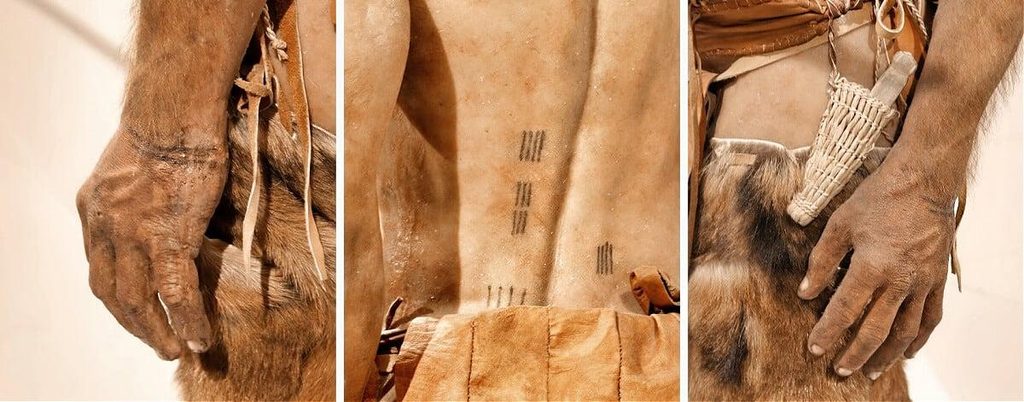
One of the best-known examples is Ötzi the Iceman, a naturally preserved human body dating to approximately 3300 BCE.
Researchers have identified numerous groups of tattoo marks on his body, including lines and crosses. These marks were made using dark pigment, although their precise purpose remains uncertain.
Some researchers have proposed a therapeutic explanation because several markings occur near joints and areas associated with physical stress. This remains an interpretation rather than an established fact.
Ötzi’s tattoos demonstrate that tattooing was practiced thousands of years ago, but they do not establish the origin of contemporary blackwork as a style.
Đọc thêm: South Tyrol Museum of Archaeology — Ötzi the Iceman
Were black tattoos used in ancient Egypt?
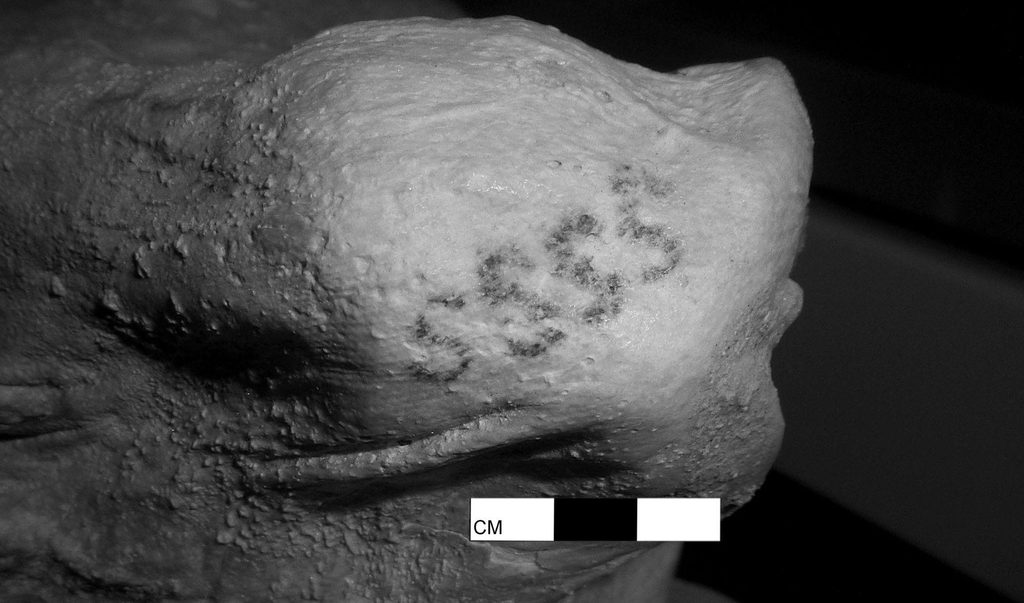
Archaeological evidence also confirms tattooing in ancient Egypt. Infrared imaging of naturally mummified individuals from Gebelein revealed tattoos, including figurative designs, dating to the Predynastic period.
These discoveries show that tattooing could involve more than simple geometric marks in ancient societies. However, the precise meanings of many ancient Egyptian tattoos remain subjects of scholarly research.
Đọc thêm: British Museum — Ancient Egyptian Collections.
How Did Ancient Cultures Shape Blackwork Tattoo History?
Ancient and Indigenous tattooing traditions help us understand the broader cultural history of dark-pigment body art. However, these traditions should be studied on their own terms rather than treated as interchangeable versions of modern blackwork.
Polynesian tattoo traditions
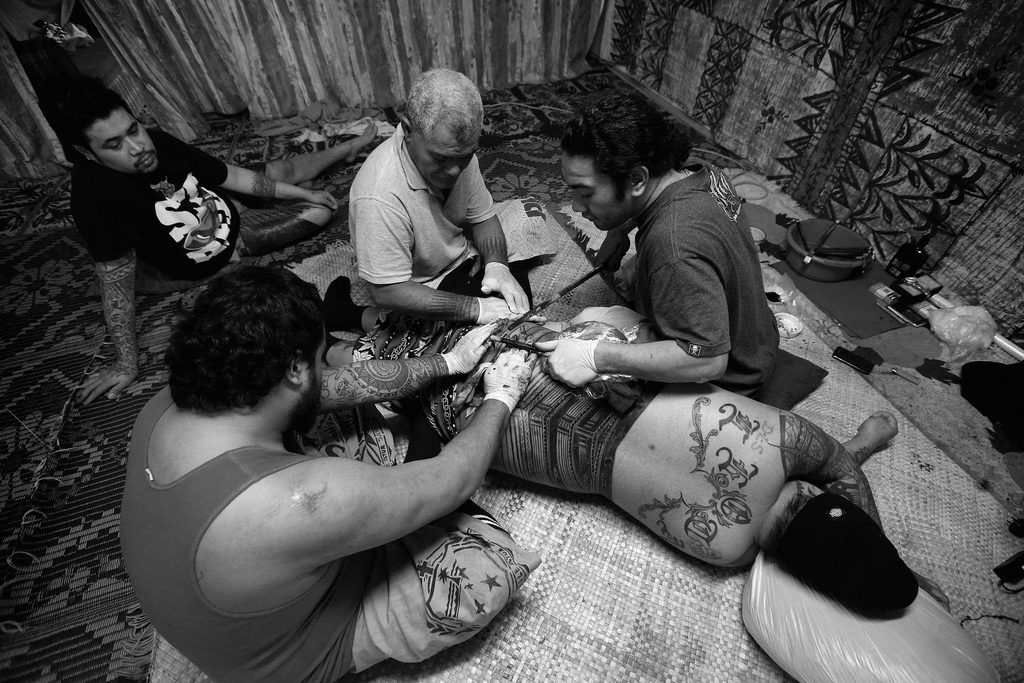
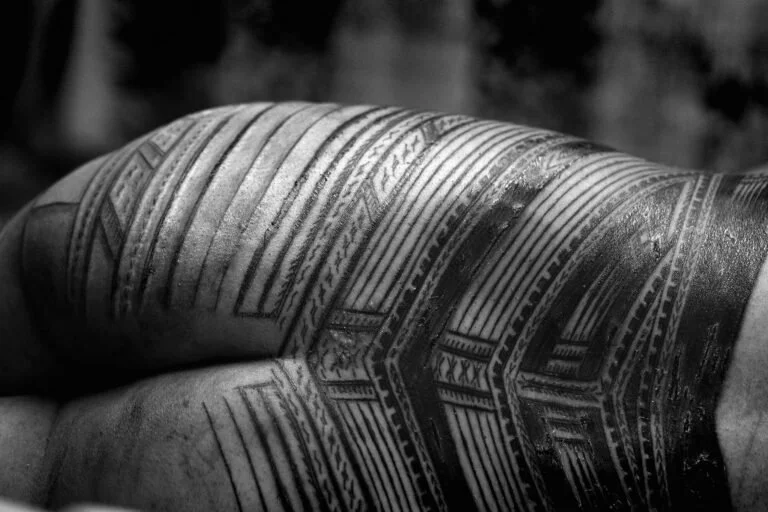
Tattooing has deep cultural significance across Polynesia, although practices vary considerably between communities. In Samoa, traditional forms such as the pe’a and malu are connected with cultural identity, responsibility and social relationships.
In other Polynesian communities, tattoo practices carry different histories, design systems and protocols. Dense black areas, repeated patterns and carefully organized compositions can create visual similarities with contemporary blackwork.
Nevertheless, these traditions are not merely aesthetic inspiration. They are living cultural practices with meanings that extend beyond their appearance.
Māori tā moko
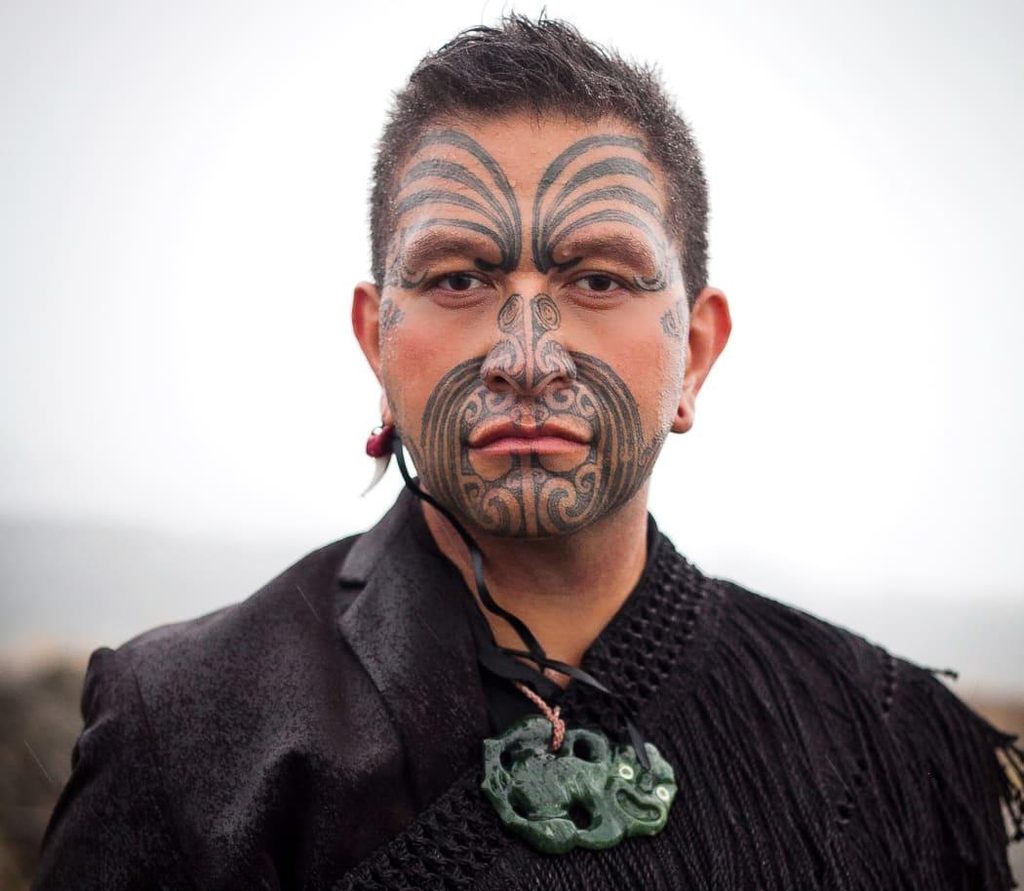
In Māori culture, tā moko is associated with identity, genealogy and cultural belonging.
Traditional moko can communicate information through patterns and placement, and contemporary practices continue to carry cultural significance.
Although some modern blackwork tattoos share a preference for strong black shapes, Māori moko should not be described as simply another blackwork style. Its cultural context is essential.
Japanese tattooing traditions
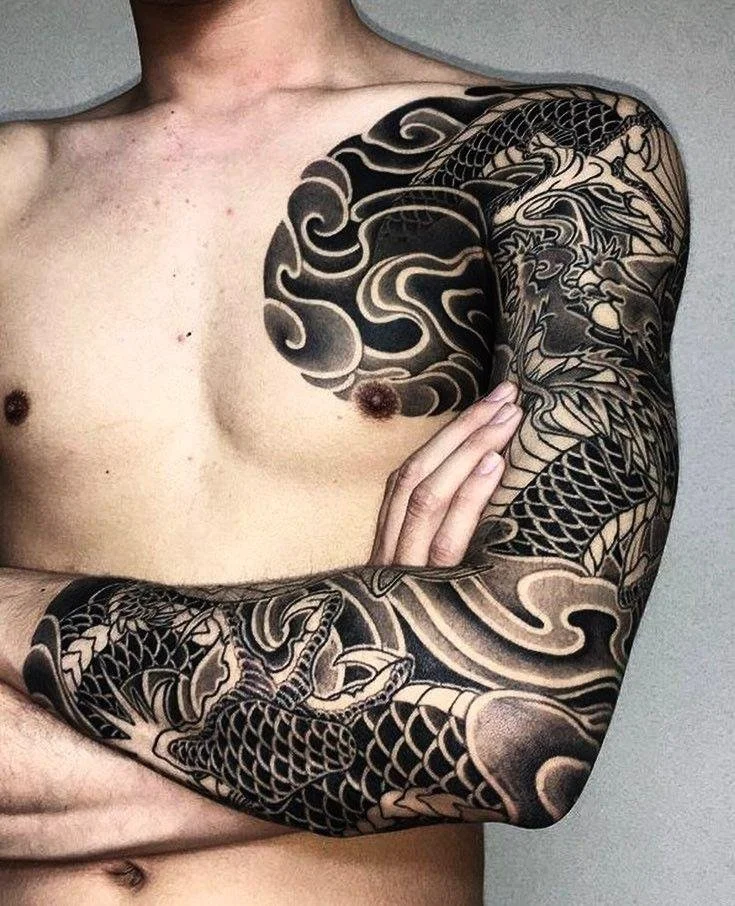
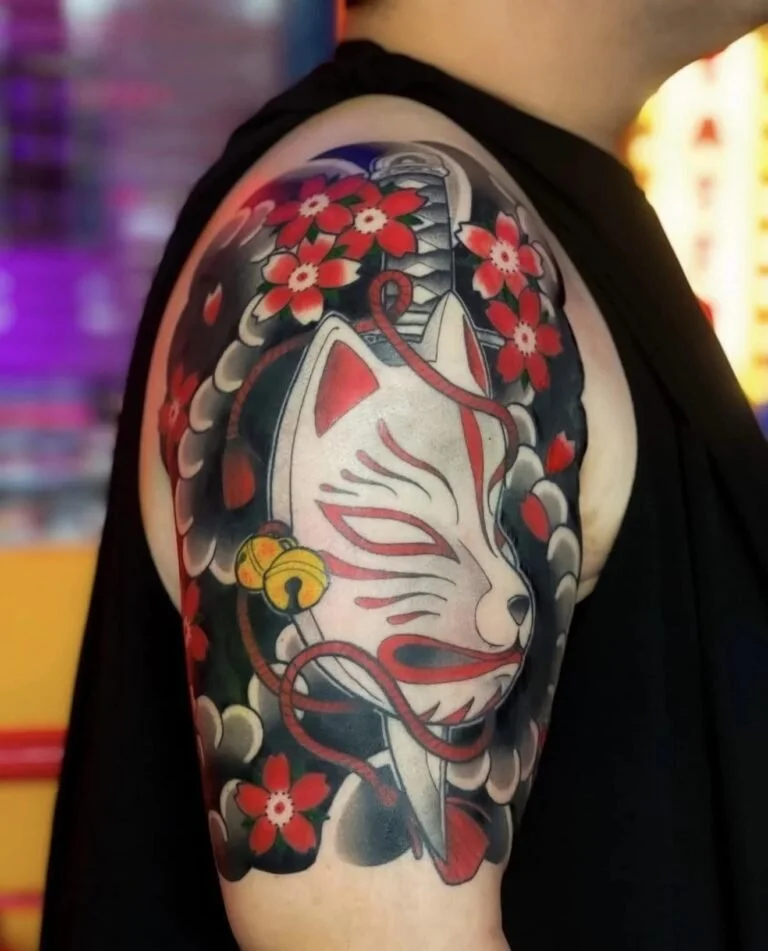
Japanese tattoo history includes different forms of marking, decorative tattooing and complex pictorial traditions. The development of Japanese decorative tattooing was influenced by visual culture, including woodblock prints and popular imagery.
Black ink plays an important role in outlining, shading and contrast, although traditional Japanese tattooing frequently incorporates color.
Contemporary artists sometimes reinterpret Japanese motifs using an all-black palette. These reinterpretations can overlap visually with modern blackwork, but they should not be confused with the full history of Japanese tattooing.
Đọc thêm: Japanese Tattoo History: From Ancient Japan to Modern Irezumi
How Did Blackwork Tattoo History Evolve Into Modern Art?
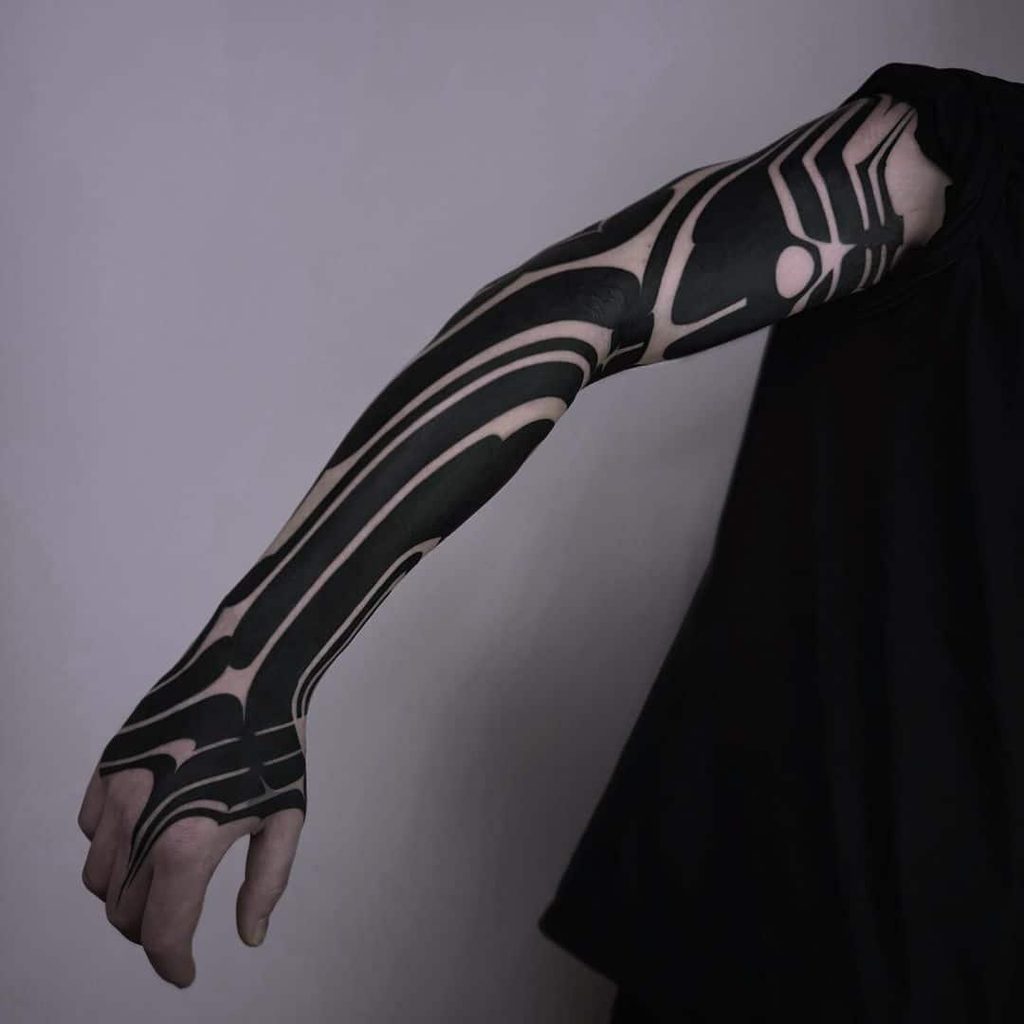
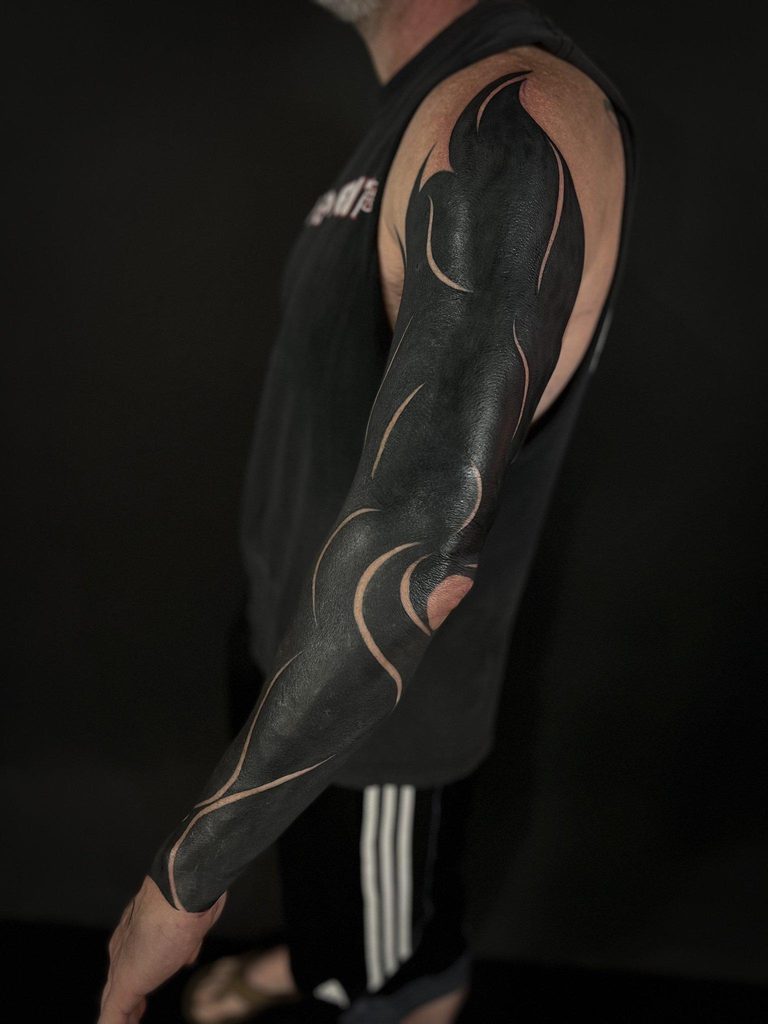
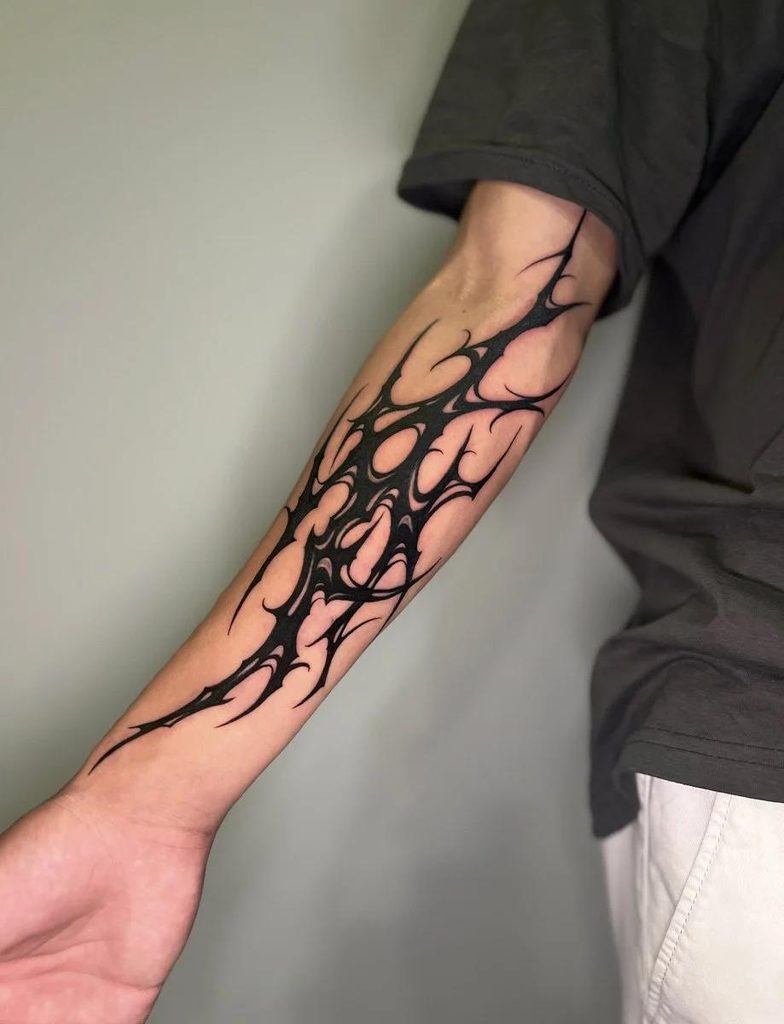
Blackwork Tattoo History entered a new phase as tattoo artists began exploring bold black compositions outside their original cultural contexts.
Contemporary blackwork developed through several overlapping artistic movements rather than one uninterrupted tradition.
The neo-tribal movement of the late 20th century
During the late 1970s and 1980s, tattoo artists in the United States began developing what became known as neo-tribal tattooing.
Filipino-American tattoo artist Leo Zulueta was an influential figure in this movement, alongside artists and publishers such as Don Ed Hardy. Their work helped introduce large-scale black compositions, graphic patterns and body-conscious design to a broader Western tattoo audience.
However, this history also raises important questions about cultural borrowing, attribution and the commercialization of Indigenous artistic traditions.
The influence of modern graphic art
As tattooing developed into a broader contemporary art practice, blackwork began incorporating influences from:
• Geometric abstraction
• Illustration and printmaking
• Graphic design
• Contemporary ornamental art
• Calligraphy and expressive brushwork
• Op art and negative-space compositions
These influences expanded the visual possibilities of blackwork beyond patterns associated with earlier neo-tribal tattooing.
FAQs About Blackwork Tattoo History
1. What is the origin of blackwork tattoos?
Blackwork tattoos do not have one single origin. Contemporary blackwork is a broad artistic category influenced by multiple tattoo traditions and modern artistic movements. Dark-pigment tattooing itself has existed for thousands of years.
2. How old is blackwork tattooing?
Dark-pigment tattooing dates back thousands of years. Ötzi the Iceman, who lived more than 5,000 years ago, provides some of the earliest direct evidence of preserved tattoos on human skin. Contemporary blackwork as a named style developed much later.
3. Is blackwork tattooing the same as tribal tattooing?
No. Blackwork is a broad visual category based on the use of black ink. Culturally specific tattoo traditions have their own histories, meanings and practices, which should not be grouped together solely because they use similar pigments.
4. Who invented modern blackwork tattoos?
No single artist invented all modern blackwork tattooing. Leo Zulueta was influential in the development of Western neo-tribal tattooing during the late twentieth century, but contemporary blackwork includes many other artistic approaches.
5. What is the difference between blackwork and blackout tattoos?
Blackwork includes many styles that primarily use black ink. Blackout tattoos are a more specific approach involving large areas of solid black pigment, sometimes incorporating negative-space patterns.
6. Can blackwork tattoos be inspired by ancient cultures?
Yes, but inspiration should be approached respectfully. Culturally specific motifs may carry meanings or protocols that are not appropriate to copy without understanding their context.
7. Where can I get a custom blackwork tattoo in Hanoi?
3 of Spades Hanoi Tattoo is located in Hanoi’s Old Quarter and welcomes clients interested in discussing custom blackwork designs. Sharing your references, preferred size, placement and travel dates helps the team assess your idea.
Final Thoughts: From Ancient Traditions to Modern Art
Blackwork Tattoo History is not the history of one single tattoo style. It is the story of how dark-pigment tattooing developed across different cultures and how contemporary artists transformed black ink into a diverse artistic language.
From ancient markings and culturally significant traditions to modern geometric patterns, illustrative artwork and expressive brushstrokes, black ink continues to offer possibilities for both personal storytelling and visual experimentation.
The most important lesson is that appreciating blackwork means understanding not only its visual beauty, but also the people, traditions and creative decisions behind it.
Create Your Blackwork Tattoo at 3 of Spades Hanoi Tattoo
Inspired by the history and artistry of blackwork tattoos?
At 3 of Spades Hanoi Tattoo, we believe a meaningful tattoo begins with a conversation.
Whether you’re drawn to bold black shapes, expressive brushstroke designs, geometric compositions or detailed illustrations, our team can help you explore an idea that suits your personal style.
Located in Hanoi’s Old Quarter, our studio welcomes international travelers looking for a friendly, collaborative Hanoi Tattoo experience with clear English communication.
Send us your reference images, preferred tattoo size in centimeters, body placement and travel dates in Hanoi. We’ll help you discuss the design possibilities, estimated time and pricing.
Your idea. Your story. Your tattoo.