

- What Makes a Sensitive Tattoo Position Hurt More?
- 10 Common Sensitive Tattoo Positions
- 1. Ribs: A Common Sensitive Tattoo Position
- 2. Sternum: A Bony Sensitive Tattoo Position
- 3. Spine: A Sensitive Tattoo Position for Vertical Designs
- 4. Foot: A Sensitive Tattoo Position With Little Cushioning
- 5. Ankle: A Small but Sensitive Tattoo Position
- 6. Elbow: A Sensitive Tattoo Position for Arm Tattoos
- 7. Knee: A Sensitive Tattoo Position Around a Major Joint
- 8. Inner Upper Arm: A Soft but Sensitive Tattoo Position
- 9. Inner Thigh: A Sensitive Tattoo Position Without Prominent Bone
- 10. Armpit: One of the Most Sensitive Tattoo Positions
- Can You Use Numbing Cream on a Sensitive Tattoo Position?
- Aftercare for a Sensitive Tattoo Position
- Frequently Asked Questions About Sensitive Tattoo Positions
- 1. Where Is the Most Sensitive Tattoo Position?
- 2. What Is the Most Sensitive Tattoo Position for an Arm Tattoo?
- 3. Why Are Bony Tattoo Positions More Sensitive?
- 4. Are Rib Tattoos Sensitive?
- 5. Is the Inner Arm More Sensitive Than the Outer Arm?
- 6. What Are Some Less Sensitive Tattoo Positions?
- 7. Should I Change My Tattoo Placement Because of Pain?
- Final Thoughts: Don't Let Pain Choose Your Tattoo
- The Right Design. The Right Placement. Your Story.
If you’re planning a tattoo, especially your first one, you’ve probably wondered: Where is the most sensitive tattoo position?
There isn’t one answer that applies to everyone. Tattoo pain is highly individual. A placement one person finds extremely uncomfortable may feel much more manageable to someone else.
However, certain parts of the body are commonly considered more sensitive because of factors such as limited cushioning over bone, delicate skin and individual anatomy. The ribs, sternum, spine, feet, ankles, elbows, knees and areas close to the armpit are commonly described as more uncomfortable than fleshier areas such as parts of the outer upper arm or thigh.
Understanding each sensitive tattoo position can help you prepare for your appointment. However, pain shouldn’t necessarily be the only factor determining where your tattoo goes. Let’s explore 10 commonly sensitive tattoo areas, why they may feel different and what you should consider before choosing your placement.
What Makes a Sensitive Tattoo Position Hurt More?
Not every part of your body experiences tattooing in the same way. Several factors can influence sensitivity.
Less Cushioning Over Bone
Areas where the skin sits relatively close to bone can feel more intense during tattooing. The ankle, elbow, sternum and parts of the foot are good examples. Some people also find the vibration from the tattoo machine more noticeable in these locations.
Delicate or Sensitive Skin
Bone isn’t the only factor. Certain areas naturally have softer or more sensitive skin. This helps explain why locations such as the inner upper arm can feel significantly different from the outer upper arm.
Individual Pain Tolerance
Everyone experiences pain differently. Your sleep, stress level, physical condition, session duration and individual sensitivity can all influence the experience.
Therefore, tattoo pain charts should be treated as general guidance rather than guaranteed rankings.
Tattoo Size and Session Length
Placement isn’t the only thing that matters. A tiny tattoo in a sensitive location might be completed relatively quickly.
Meanwhile, a large tattoo in a supposedly easier area could require several hours of tattooing. As a long session progresses, the skin may also become increasingly sensitive.
10 Common Sensitive Tattoo Positions
There isn’t an official pain ranking that works for every person. However, the following locations are commonly regarded as more sensitive tattoo positions.
1. Ribs: A Common Sensitive Tattoo Position
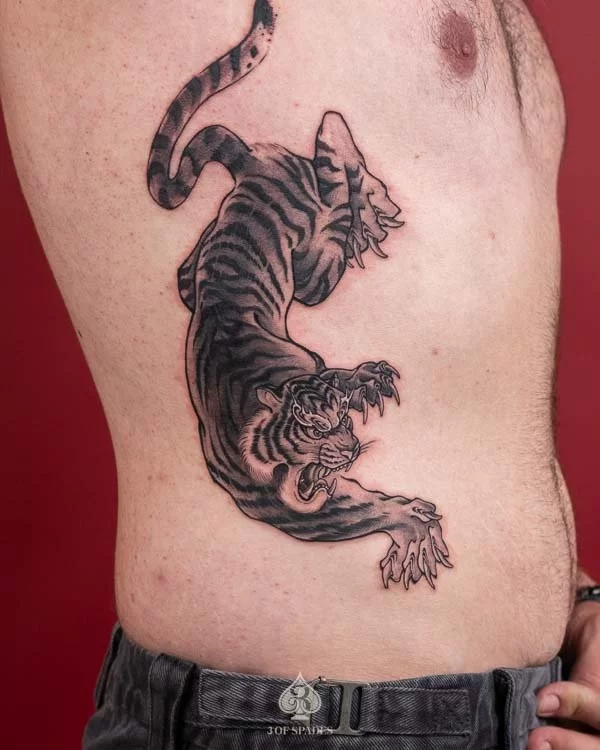
The ribs are commonly associated with greater tattoo discomfort. There is relatively little cushioning between the skin and rib cage across many parts of this area.
Your rib cage also moves continuously while you breathe, creating a different experience from tattooing a more stable surface such as the outer upper arm. Large rib tattoos can additionally require lengthy sessions.
Why it can feel sensitive: Limited cushioning over the ribs combined with movement from breathing.
Popular designs: Flowers, snakes, lettering, dragons, botanical artwork and ornamental designs.
2. Sternum: A Bony Sensitive Tattoo Position
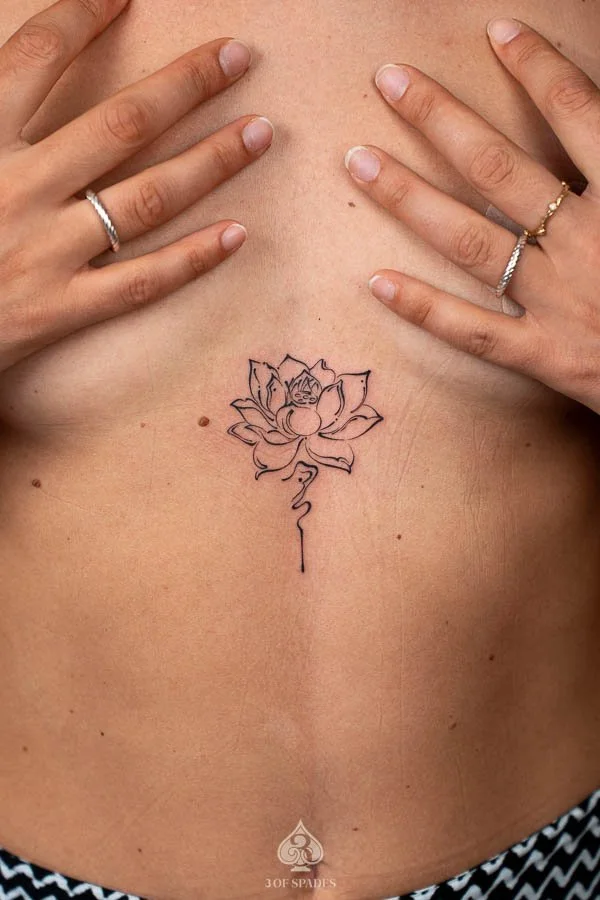
The sternum runs through the center of the chest. Parts of this area have relatively little cushioning directly over the breastbone, which can make the tattooing sensation feel particularly intense for some people.
Ornamental and symmetrical designs are popular here because they can follow the body’s natural central line. Placement accuracy is especially important with symmetrical artwork.
Why it can feel sensitive: Limited cushioning over the breastbone and noticeable vibration.
Popular designs: Ornamental artwork, flowers, geometric designs, mandalas and symmetrical compositions.
3. Spine: A Sensitive Tattoo Position for Vertical Designs

The spine creates a natural vertical canvas. Lettering, flowers, ornamental patterns and abstract designs can all follow the center of the back beautifully. However, tattooing directly over or near the vertebrae can feel intense for some people.
The sensation may change when the artist moves away from the central spine toward areas with more muscle and soft tissue.
Why it can feel sensitive: Limited cushioning directly over parts of the spine.
Popular designs: Vertical lettering, flowers, ornamental patterns, celestial artwork and abstract linework.
4. Foot: A Sensitive Tattoo Position With Little Cushioning
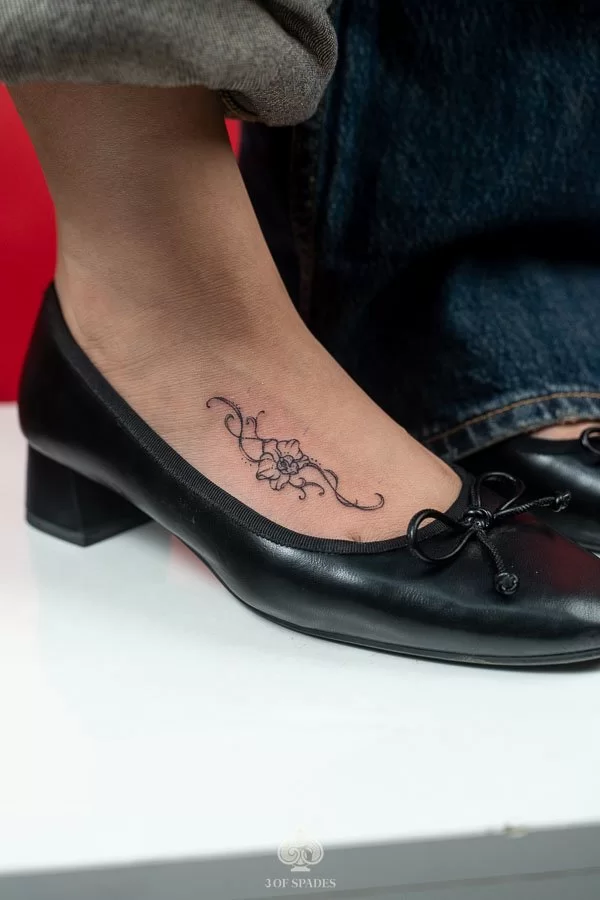
The top of the foot contains several bony areas with relatively little soft tissue. For some people, this makes tattooing here particularly uncomfortable. The foot also experiences frequent movement and contact with footwear.
Therefore, your plans after the tattoo matter too. If you’re getting tattooed while traveling, think about how much walking you’ll need to do afterward.
Why it can feel sensitive: Limited cushioning over several bones and a naturally sensitive location.
Popular designs: Flowers, ornamental patterns, butterflies, small symbols and fine-line artwork.
5. Ankle: A Small but Sensitive Tattoo Position
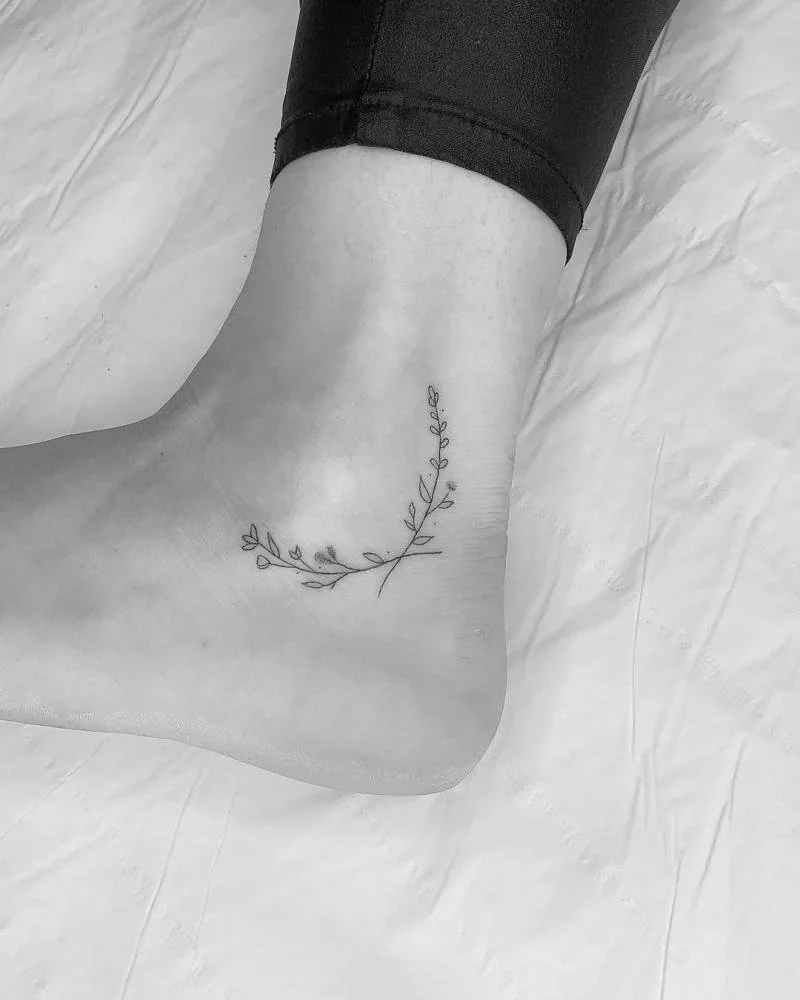
The ankle can be another sensitive tattoo position, particularly directly around prominent bone. However, even a small change in placement can affect the experience.
A tattoo positioned directly over the ankle bone may feel different from artwork extending slightly higher onto the lower leg. Ankle tattoos remain popular because the area works beautifully with small and wraparound designs.
Why it can feel sensitive: Thin cushioning around prominent ankle bones.
Popular designs: Flowers, ornamental bracelets, vines, small symbols and minimalist artwork.
6. Elbow: A Sensitive Tattoo Position for Arm Tattoos

The elbow can be challenging both in terms of tattooing and design. There is a prominent joint underneath the skin, and the area moves constantly.
Circular compositions are particularly popular because artists can use the elbow itself as the center of the artwork. For larger sleeve projects, the elbow also needs to connect the upper and lower sections of the tattoo.
Why it can feel sensitive: Prominent bone, limited cushioning and movement around the joint.
Popular designs: Spider webs, mandalas, flowers, geometric artwork and blackwork.
7. Knee: A Sensitive Tattoo Position Around a Major Joint
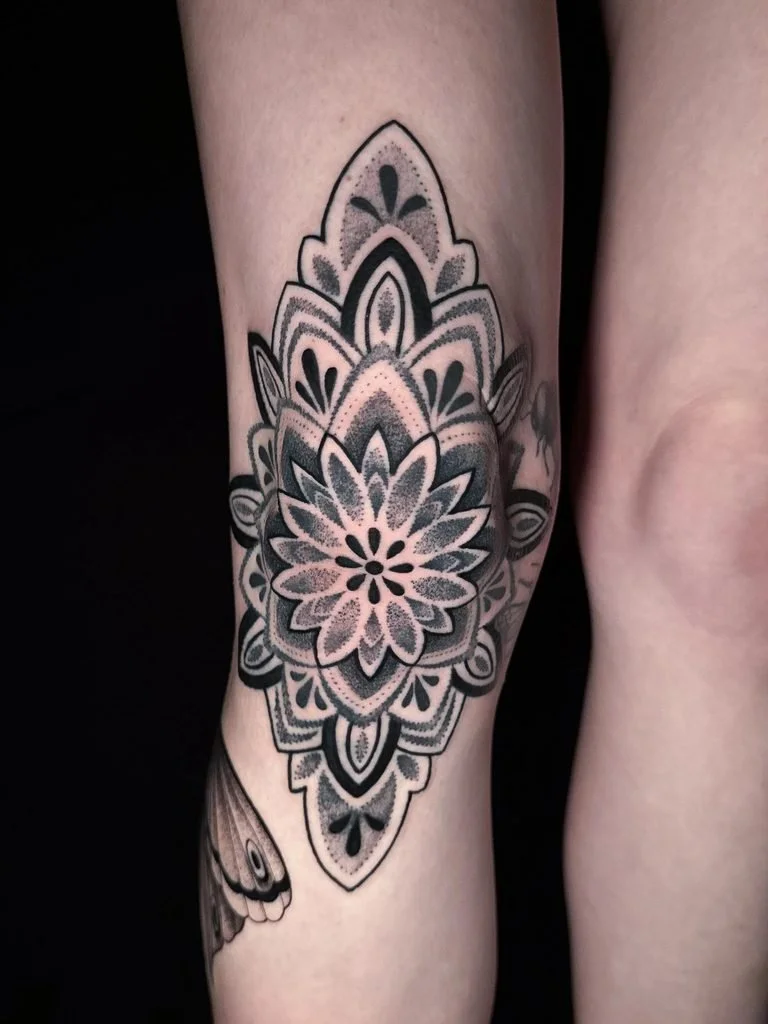
The knee shares several characteristics with the elbow. It’s a prominent joint that bends constantly, and the kneecap has limited cushioning.
Many knee tattoos use the anatomy rather than trying to ignore it. Flowers, mandalas and animal heads can use the kneecap as the visual center of a larger composition.
Why it can feel sensitive: Prominent bone, joint movement and limited cushioning across parts of the knee.
Popular designs: Flowers, mandalas, animal heads, traditional tattoos and ornamental blackwork.
8. Inner Upper Arm: A Soft but Sensitive Tattoo Position

Not every sensitive tattoo position is bony. The inner upper arm is a good example. Although this area contains more soft tissue than the elbow or ankle, many people find it more sensitive than the broad outer upper arm.
The sensation may also become stronger as the tattoo approaches the armpit. This location remains popular because it provides substantial space while being less immediately visible than the outer arm.
Why it can feel sensitive: Softer, sensitive skin and proximity to the underarm.
Popular designs: Lettering, flowers, portraits, fine-line designs and illustrative tattoos.
9. Inner Thigh: A Sensitive Tattoo Position Without Prominent Bone

The inner thigh demonstrates why tattoo sensitivity isn’t determined by bone alone. This area has considerably more soft tissue than the ankle, ribs or elbow, yet some people still find tattooing here intense.
At the same time, the thigh provides enough room for large compositions. Flowers, ornamental artwork and illustrative pieces can all take advantage of the available space.
Why it can feel sensitive: Naturally sensitive skin despite the presence of more soft tissue.
Popular designs: Flowers, botanical artwork, animals, ornamental compositions and illustrative tattoos.
10. Armpit: One of the Most Sensitive Tattoo Positions
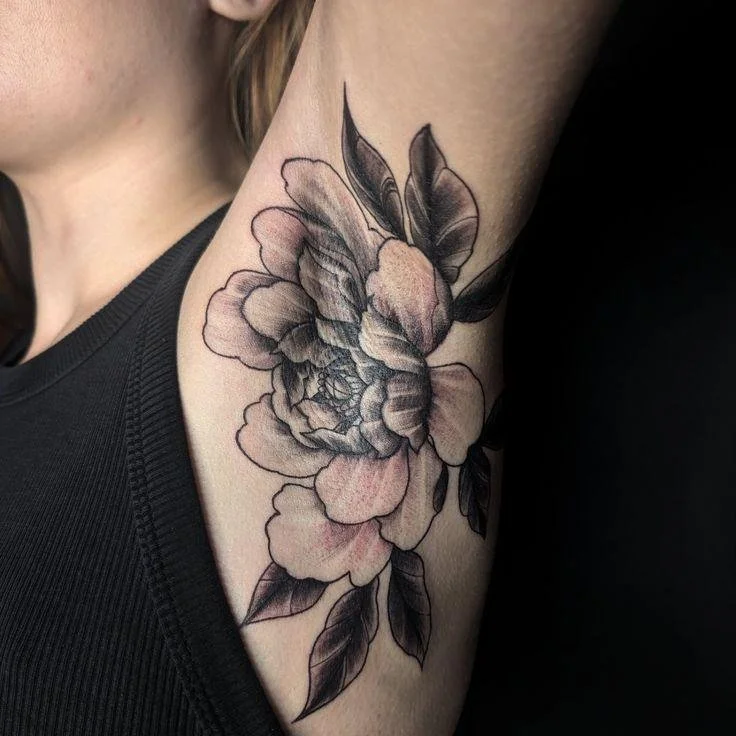
Tattooing in or very close to the armpit is often described as particularly intense. It’s less common as an isolated tattoo placement.
Instead, the area usually becomes relevant when a larger chest, shoulder or full sleeve design extends toward the underarm. Your artist may choose to limit unnecessary detail here unless the overall composition requires it.
Why it can feel sensitive: Delicate skin and a naturally sensitive body area.
Popular designs: Usually extensions of larger chest, shoulder or sleeve compositions.
Can You Use Numbing Cream on a Sensitive Tattoo Position?
Some clients consider topical numbing products when tattooing sensitive areas. Always speak with your tattoo artist before applying one.
Different products and application methods can affect the skin differently, and individual artists may have their own recommendations about what should or shouldn’t be used before tattooing.
If pain is one of your main concerns, mention it during your consultation rather than experimenting with a product immediately before your appointment.
Aftercare for a Sensitive Tattoo Position
Different placements create different practical challenges during healing. Your tattoo artist should provide specific aftercare instructions based on your tattoo.
In general:
• Avoid tight footwear rubbing against fresh foot or ankle tattoos.
• Avoid clothing repeatedly rubbing against rib or sternum tattoos.
• Be careful with unnecessary friction around fresh elbow and knee tattoos.
• Don’t scratch or pick peeling skin.
• Avoid swimming and prolonged soaking while healing.
• Keep the tattoo clean according to your artist’s instructions.
• Protect the fresh tattoo from unnecessary direct sun exposure.
If you experience spreading redness, worsening pain, unusual discharge, fever or other concerning symptoms, seek appropriate medical care.
Frequently Asked Questions About Sensitive Tattoo Positions
1. Where Is the Most Sensitive Tattoo Position?
There isn’t one position that will be the most painful for everyone.
However, the ribs, sternum, spine, feet, ankles, elbows, knees and areas around the armpit are commonly regarded as more sensitive tattoo placements.
2. What Is the Most Sensitive Tattoo Position for an Arm Tattoo?
The elbow and areas closer to the inner upper arm or armpit can be more sensitive for many people.
The broad outer upper arm is often considered relatively more manageable.
3. Why Are Bony Tattoo Positions More Sensitive?
Bony areas often have less cushioning between the skin and underlying bone. Some people also notice stronger vibration sensations when these locations are tattooed.
4. Are Rib Tattoos Sensitive?
Many people consider the ribs a sensitive tattoo position because there is relatively little cushioning across parts of the rib cage. However, individual experiences vary.
5. Is the Inner Arm More Sensitive Than the Outer Arm?
Many people find the inner upper arm more sensitive than the broad outer upper arm, particularly as the tattoo approaches the underarm.
6. What Are Some Less Sensitive Tattoo Positions?
Parts of the outer upper arm, outer forearm, outer thigh, shoulder and calf are commonly described as relatively manageable locations. However, no tattoo placement is completely painless.
7. Should I Change My Tattoo Placement Because of Pain?
Not automatically.
Consider pain alongside the design, visibility, anatomy and your personal preferences. If you’re concerned, discuss nearby alternative placements with your artist before changing the concept completely.
Final Thoughts: Don’t Let Pain Choose Your Tattoo
Understanding each sensitive tattoo position can help you prepare for your appointment.
The ribs, sternum, spine, feet, ankles, elbows and knees can feel particularly intense for many people. Meanwhile, areas such as the inner arm and inner thigh show that tattoo sensitivity isn’t determined by bone alone.
Most importantly, everybody experiences tattooing differently. Your anatomy, pain tolerance, design, tattooing technique and session length all influence the experience.
Use tattoo pain information as a planning tool—not as the only rule determining your placement. Choose the location that makes sense for your artwork, prepare properly and communicate with your artist.
The Right Design. The Right Placement. Your Story.
Worried about choosing a sensitive tattoo position during your Hanoi trip?
Tại Hình xăm lá bài 3 bích Hà Nội, our artists can help you find a placement that works with your design, anatomy and preferences.
Send us your reference images, preferred size, desired placement and travel dates before your visit.
Your body is your journal, and your tattoos are your story.
Every tattoo has a story. Let’s create yours.


