- What Does Irezumi Mean?
- The History Behind Irezumi Tattoo
- How Ukiyo-e Influenced Irezumi Tattoo
- Irezumi Tattoo as a Full-Body Art Form
- The Art of Irezumi Tattoo Composition
- Frequently Asked Questions About Irezumi Tattoo
- 1. What is an Irezumi Tattoo?
- 2. Is Irezumi the same as a Japanese Tattoo?
- 3. What is the difference between Irezumi and Tebori?
- 4. What are common Irezumi Tattoo designs?
- 5. Does an Irezumi Tattoo have to cover the whole body?
- 6. Are Irezumi Tattoos only associated with Yakuza?
- 7. Can I get a modern version of Irezumi?
- Lời kết
- Create Your Irezumi Tattoo in Hanoi
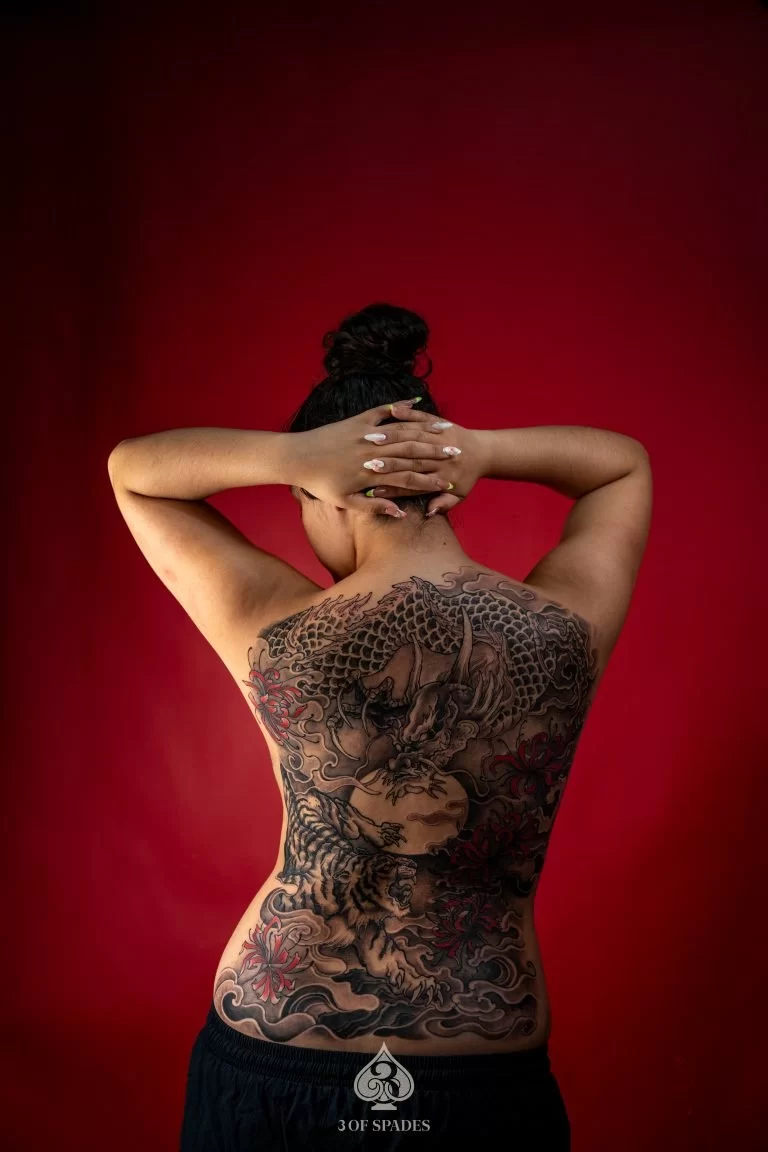
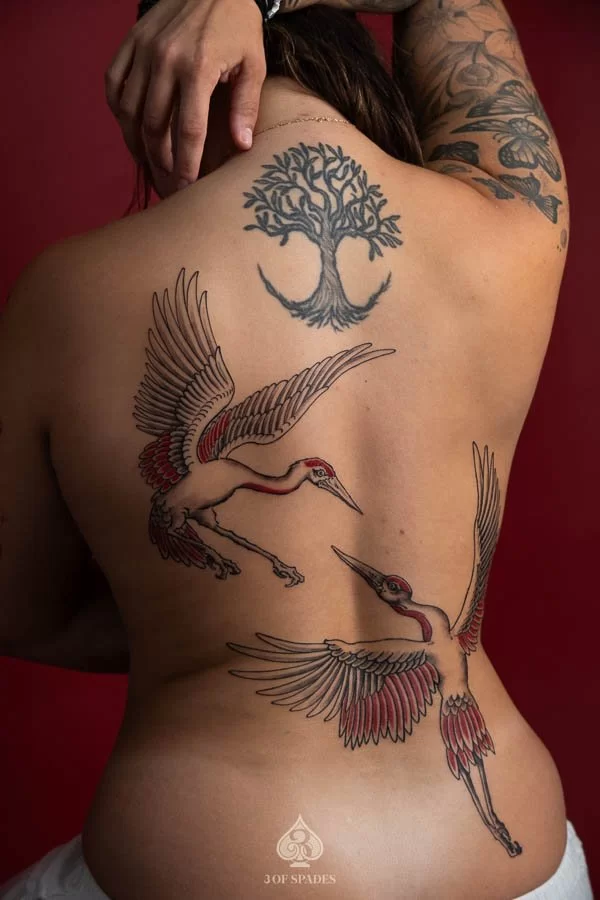
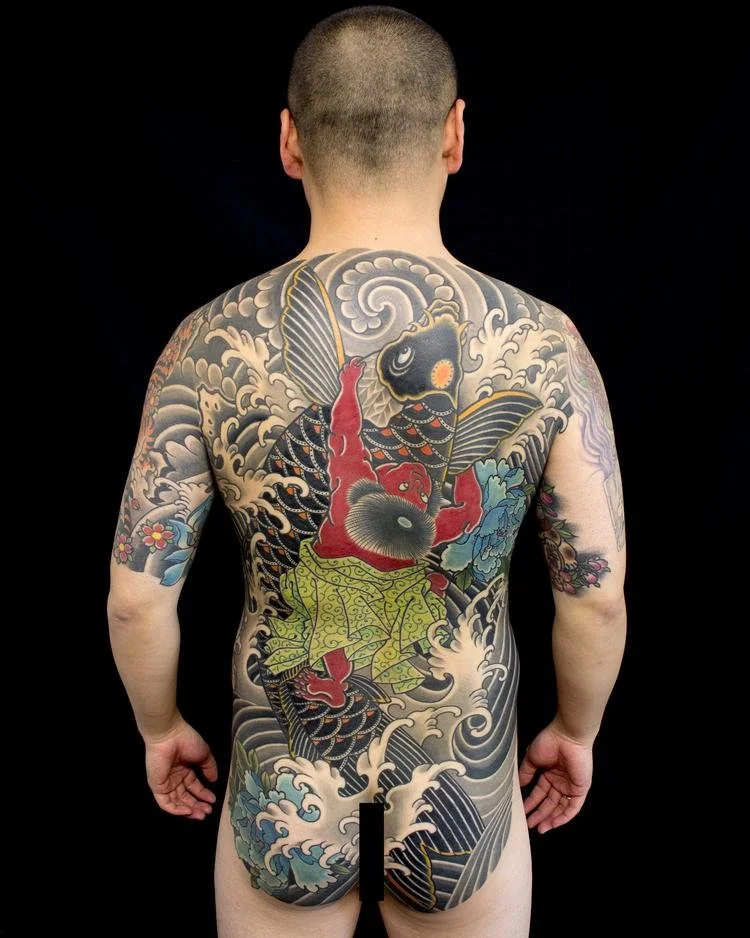
MỘT Irezumi Tattoo is closely associated with the traditional Japanese practice of creating large, highly structured tattoo compositions across the body.
Rather than treating every tattoo as an isolated image, traditional Japanese tattooing can transform the body into one continuous visual story.
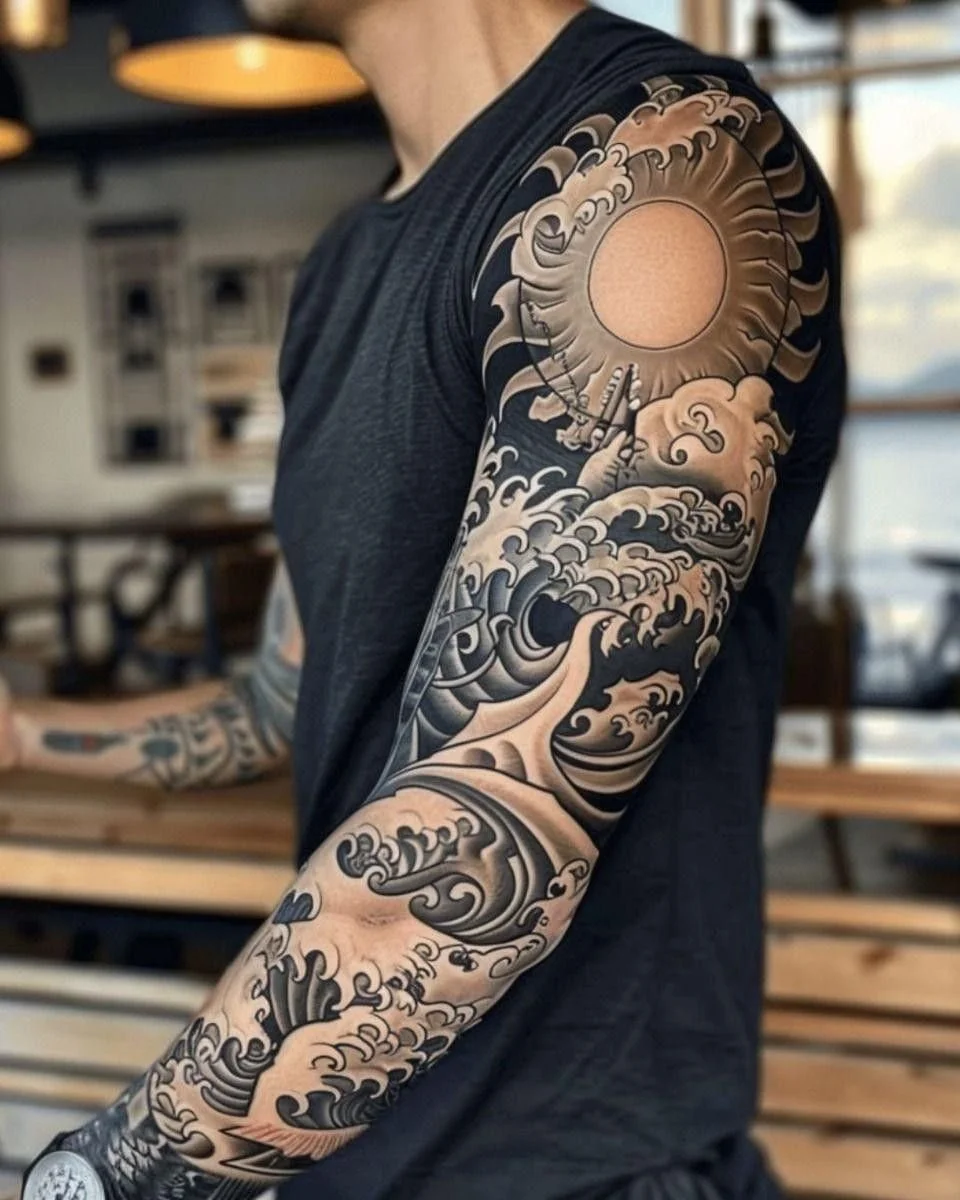
A dragon may move from the chest onto the shoulder. Waves can travel down the arm. Peonies may frame the main subject, while clouds, wind bars or rocks connect the entire composition.
This sense of flow and storytelling is one of the characteristics that makes Irezumi immediately recognizable.
However, Irezumi is more than an aesthetic. Behind the dragons, koi fish, tigers and Hannya masks lies a long history connected to Japanese art, folklore, craftsmanship and changing social attitudes toward tattooing.
What Does Irezumi Mean?
The Japanese term irezumi (入れ墨) literally refers to the insertion of ink into the skin.
However, Japanese tattoo terminology is complex. Other words, including horimono, are also used in discussions of traditional decorative Japanese tattooing.
Today, outside Japan, “Irezumi” is often used broadly to describe traditional Japanese tattoo art—particularly large-scale compositions featuring recognizable Japanese motifs and backgrounds.
For tattoo enthusiasts, the important point is that traditional Irezumi isn’t simply about copying Japanese imagery. It is an artistic system in which subject, symbolism, season, background and body placement work together.
The History Behind Irezumi Tattoo
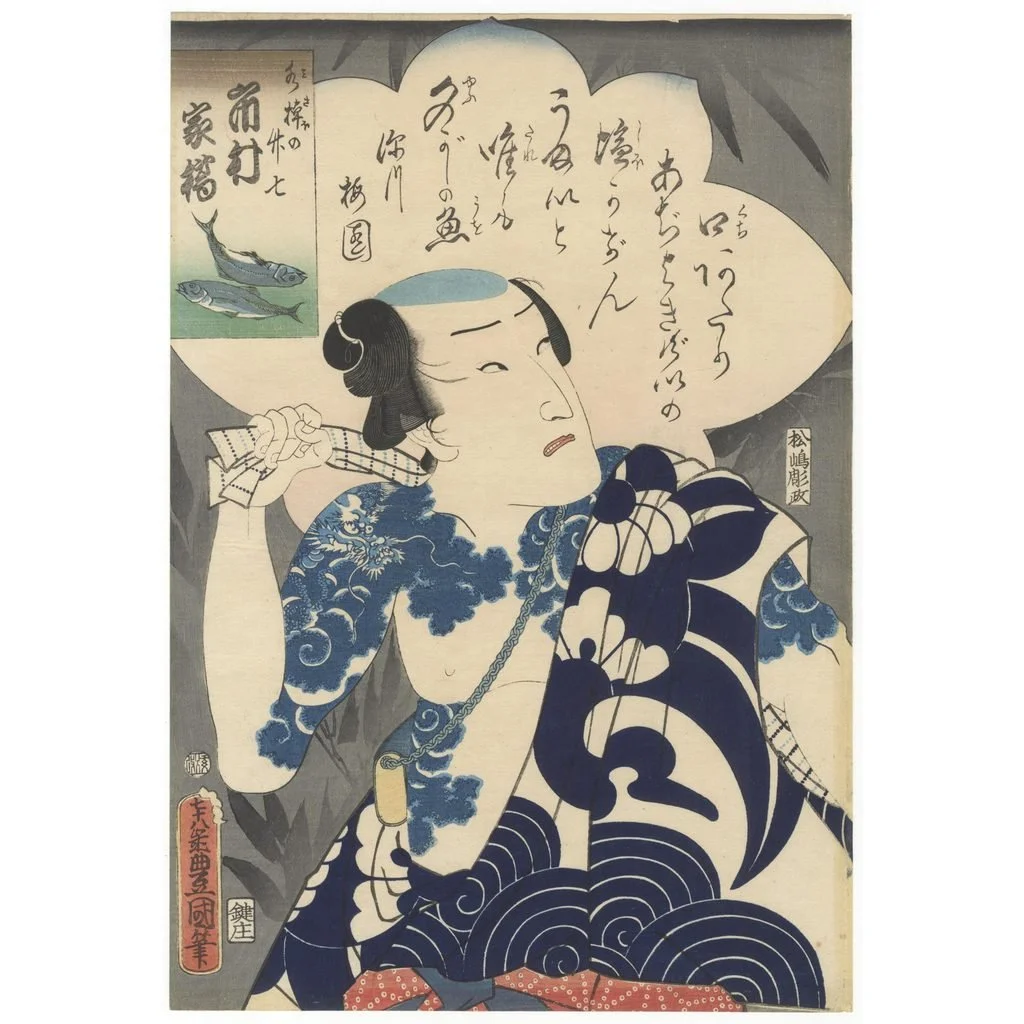
The form of decorative Irezumi recognizable today developed particularly strongly within the urban culture of Japan’s Edo period (1603–1868).
During this era, cities such as Edo grew into major cultural centers. Artisans and merchants helped create a flourishing popular culture that included Kabuki theatre, literature and ukiyo-e woodblock prints.
Tattooing had not always carried this artistic role. Earlier Japanese history also included forms of punitive tattooing used to permanently mark people convicted of certain crimes. Decorative tattooing therefore needs to be distinguished from those earlier punitive practices.
By the Edo period, however, increasingly elaborate body decoration became associated with parts of urban popular culture and working communities. Eventually, tattoo artists began developing large compositions that covered significant areas of the body. The foundations of what we now recognize as Irezumi were taking shape.
How Ukiyo-e Influenced Irezumi Tattoo
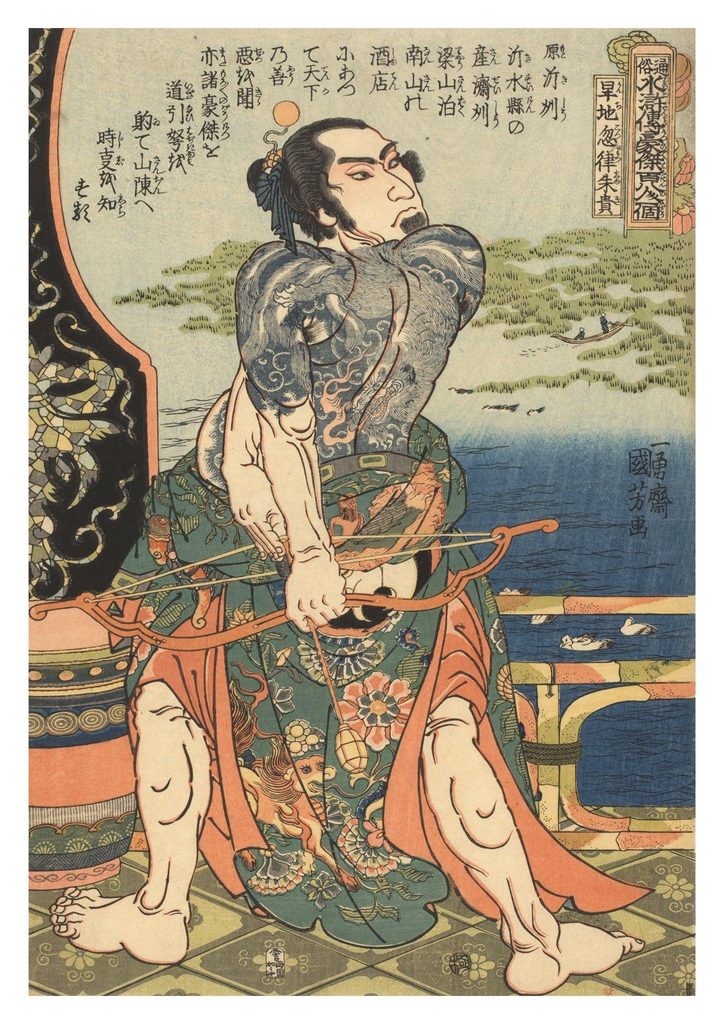
One of the most important artistic influences on Irezumi was ukiyo-e, the famous Japanese tradition of woodblock prints.
Edo-period ukiyo-e flourished alongside an expanding urban public and depicted actors, beautiful women, landscapes, heroes, legends and scenes from contemporary life. Many of these prints used dramatic compositions, bold outlines and powerful movement—qualities that can also be seen in traditional Japanese tattooing.
The nineteenth-century artist Utagawa Kuniyoshi is particularly important to this story. His famous Suikoden series depicted heroic figures from the Water Margin, including warriors shown with extensive body decoration. British Museum examples from the 1827–1830 series show characters such as Cao Zheng and Zhang Shun heavily tattooed.[3][4]
These dramatic tattooed heroes helped create a powerful visual connection between heroic storytelling, print culture and the decorated body. The influence is still easy to recognize today. Look at a traditional Irezumi back piece and it can feel almost like an ukiyo-e print transformed to fit human anatomy.
Irezumi Tattoo as a Full-Body Art Form
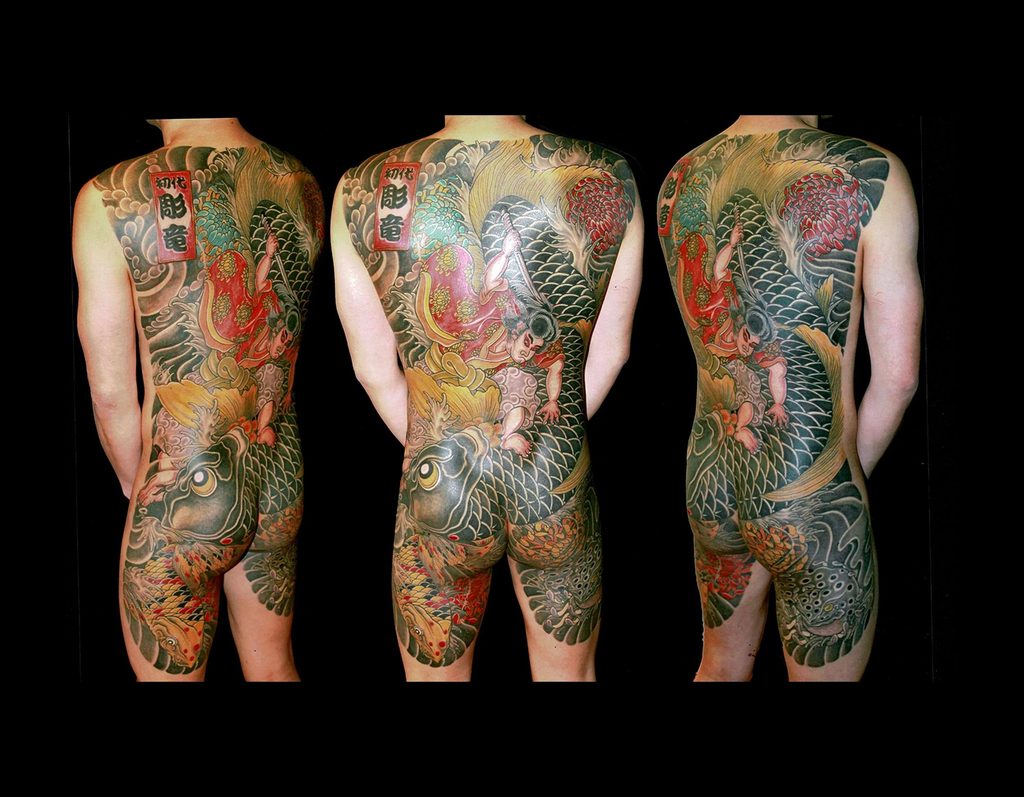
One of the defining qualities of traditional Irezumi is scale. Instead of stopping at a single small motif, the artwork can extend across large areas of the body.
Traditional compositions may cover:
• Back
• Chest
• Shoulders
• Arms
• Buttocks
• Thighs
• Legs
Eventually, these sections can become one complete Japanese tattoo bodysuit.
Yet covering every centimeter of skin isn’t necessarily the goal. Traditional compositions may deliberately preserve areas of negative space, helping define the overall shape of the tattoo and allowing it to remain concealed beneath clothing. The body itself becomes part of the composition.
The Art of Irezumi Tattoo Composition
Traditional Irezumi is not simply a collection of Japanese symbols. Composition matters enormously.
Imagine placing a dragon, koi fish, tiger and Hannya mask randomly across an arm. Each image might be beautifully tattooed, but the result would not automatically become a strong traditional Japanese composition.
Irezumi instead considers how every element belongs within the same visual world.
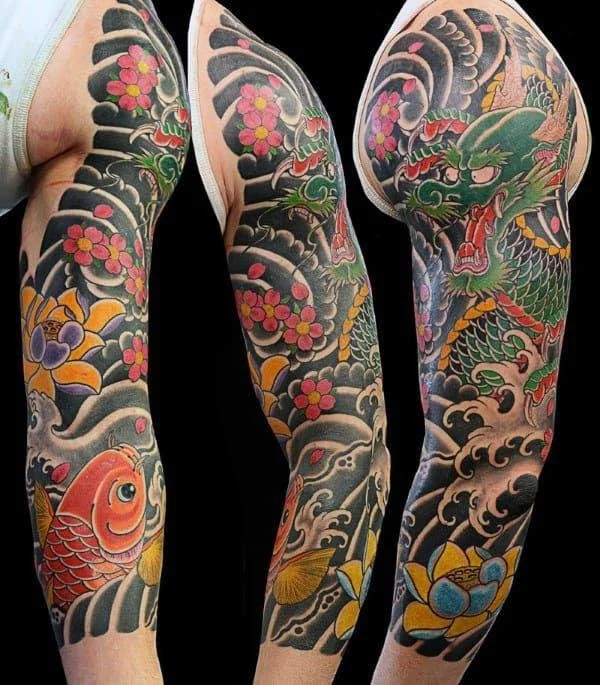
Main Subject
The primary subject creates the focal point. This might be a:
• Dragon
• Koi fish
• Tiger
• Snake
• Hannya
• Samurai
• Phoenix
• Mythological figure
The size and movement of this subject often determine how the rest of the tattoo develops.
Background
Background elements connect the composition. Common elements include:
• Waves
• Clouds
• Wind bars
• Rocks
• Water
• Fire
Instead of functioning as empty decoration, these elements create movement and help guide the eye around the body.
Flowers and Seasonal Elements
Flowers are another essential part of traditional Japanese tattoo composition. Peonies, chrysanthemums, lotus flowers and cherry blossoms can introduce symbolism while establishing atmosphere and season.
This is why experienced Japanese tattoo artists think carefully about which subjects belong together.
Frequently Asked Questions About Irezumi Tattoo
1. What is an Irezumi Tattoo?
Irezumi is commonly used to describe traditional Japanese tattooing, particularly large-scale decorative work featuring Japanese imagery and structured compositions.
2. Is Irezumi the same as a Japanese Tattoo?
Irezumi belongs to the broader world of Japanese tattooing. However, not every tattoo featuring Japanese imagery necessarily follows traditional Irezumi composition.
3. What is the difference between Irezumi and Tebori?
Irezumi refers broadly to Japanese tattooing or the resulting artwork, while Tebori refers to a traditional hand tattooing technique.
4. What are common Irezumi Tattoo designs?
Popular subjects include dragons, koi fish, tigers, snakes, Hannya masks, phoenixes, samurai and flowers such as peonies, chrysanthemums and cherry blossoms.
5. Does an Irezumi Tattoo have to cover the whole body?
No. Irezumi can appear as a sleeve, back piece, leg piece or other large composition. Full bodysuits represent one traditional form but aren’t required.
6. Are Irezumi Tattoos only associated with Yakuza?
No. Although extensive tattoos developed a strong modern association with organized crime in Japan, the history of decorative Japanese tattooing is much broader.
7. Can I get a modern version of Irezumi?
Yes. Many contemporary artists combine traditional Japanese imagery and composition with modern tattooing techniques. Discuss whether you want traditional Irezumi or a more contemporary Japanese-inspired interpretation with your artist.
Lời kết
MỘT Irezumi Tattoo is more than a dragon, koi or Hannya placed on the skin.
Its distinctive beauty comes from the relationship between symbolism, composition, movement and the human body.
From Edo-period visual culture and ukiyo-e to Tebori and contemporary tattooing, Irezumi has evolved while preserving a powerful storytelling tradition.
Understanding that tradition can help you create a Japanese tattoo that doesn’t simply look impressive—it tells a coherent story.
Create Your Irezumi Tattoo in Hanoi
Inspired by traditional Japanese tattooing?
Tại Hình xăm lá bài 3 bích Hà Nội, our artists can help develop your idea around your preferred subject, placement and overall composition.
Send us your reference images, desired placement, approximate size and Hanoi travel dates before your visit, especially if you’re planning a larger Japanese sleeve or multi-session piece.
Every tattoo has a story. Let’s create yours.