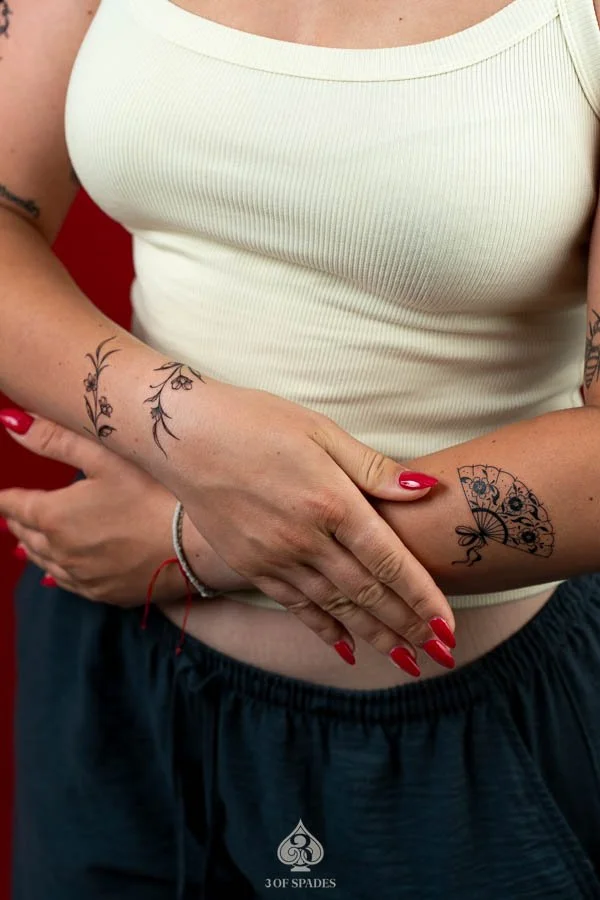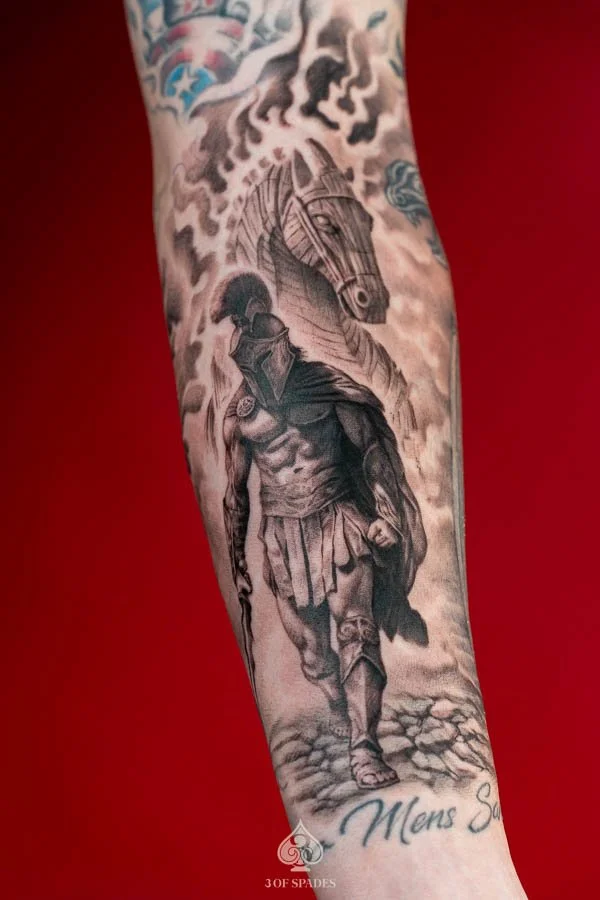
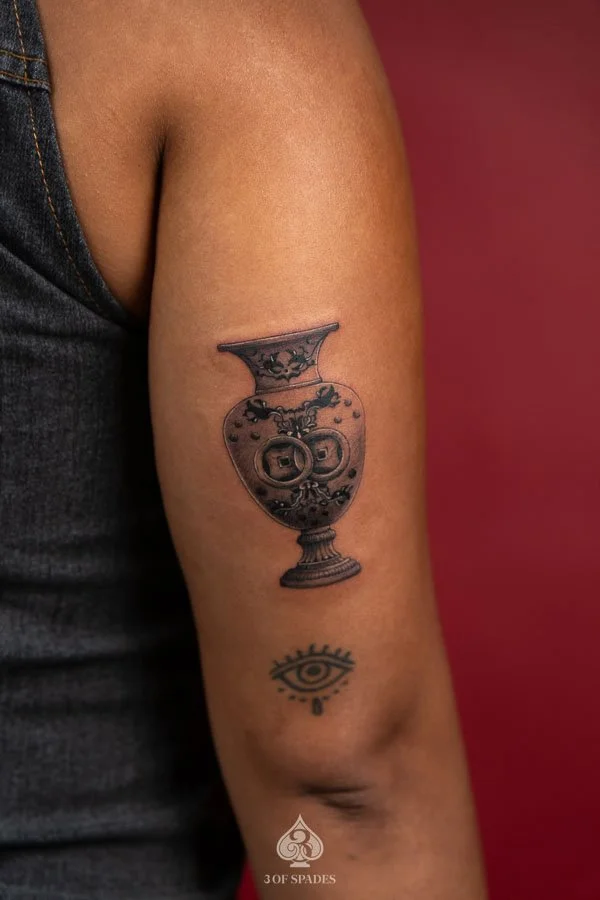
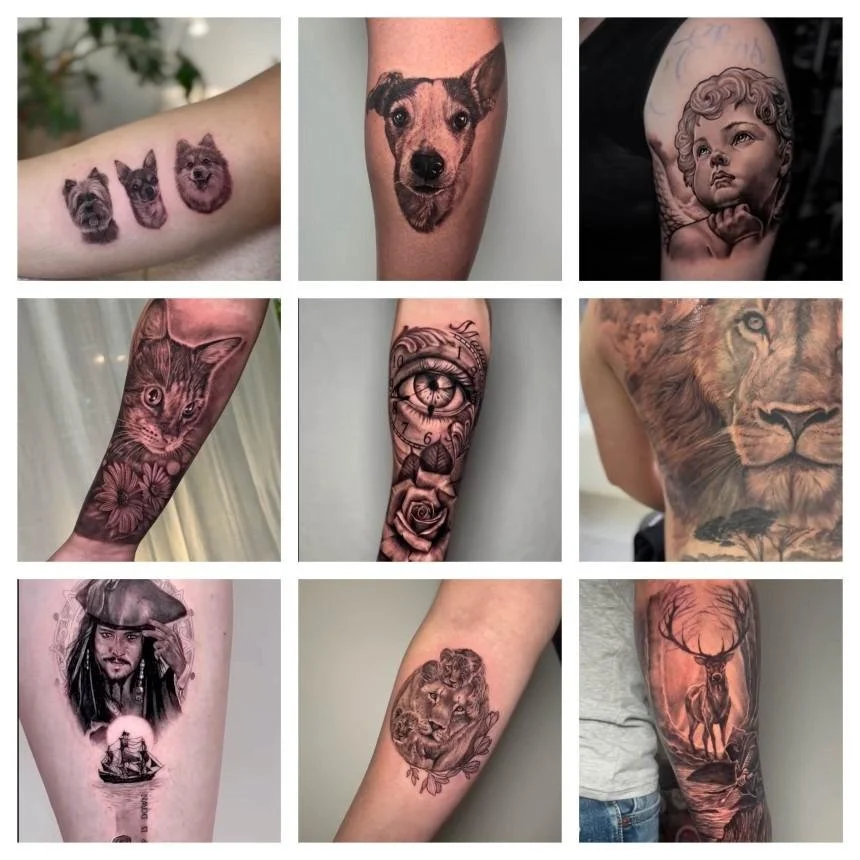
A portrait that looks like a black-and-white photograph. A butterfly with vivid, lifelike wings. A tiny pet portrait packed with detail. An eye so realistic that its reflection seems to catch the light. These designs all belong to the world of Realism Tattoo Styles, yet each achieves its effect differently.
Realism tattooing focuses on recreating the appearance of real subjects through accurate proportions, natural textures, carefully controlled shading and light.
However, realism is not a single, fixed technique. Artists may work entirely in black and grey, recreate the colors of a photograph, concentrate on miniature designs or push photographic detail to an extreme.
Understanding these differences helps you choose a tattoo that suits your subject, preferred appearance, placement and long-term expectations.
In this guide, we’ll compare the four major approaches—black and grey realism, color realism, micro-realism and hyperrealism—and explain how each works.
What Are the Different Realism Tattoo Styles?
Realism tattoos aim to create recognizable, lifelike images on skin. The main approaches are often grouped into four categories:
• Black and Grey Realism: Uses black ink, diluted tones and negative space to create photographic depth without a full color palette.
• Color Realism: Uses multiple pigments to reproduce natural colors, lighting and textures.
• Micro-Realism: Creates small-scale realistic designs, usually with simplified or tightly controlled details.
• Hyperrealism: Emphasizes exceptional photographic detail, surface textures and convincing three-dimensional effects.
These categories are not mutually exclusive.
A tiny black and grey portrait can be both micro-realism and black and grey realism. Likewise, a large color tattoo can also be described as hyperrealistic. The terms describe different aspects of the artwork: palette, scale and degree of detail.
| Style | Defining feature | Common subjects |
|---|---|---|
| Black & Grey | Monochromatic shading | Portraits, animals, statues |
| Màu sắc | Lifelike pigmentation | Flowers, birds, nature |
| Micro | Small physical scale | Pets, objects, mini portraits |
| Hyperrealism | Intense photographic detail | Eyes, faces, reflective objects |
1. Black and Grey Realism Tattoo
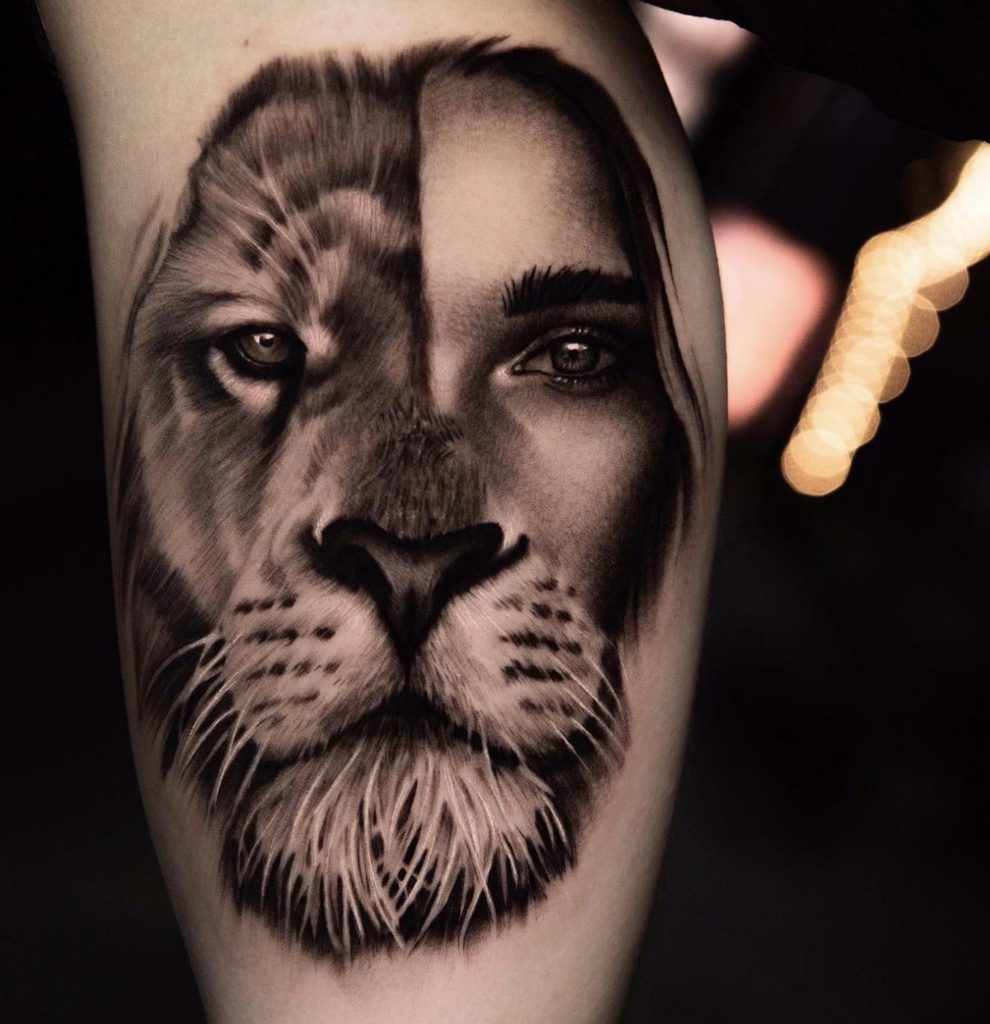
Black and grey realism is one of the most recognizable approaches to realistic tattooing. Rather than recreating the full color of a reference image, the artist builds the composition through differences in light and dark.
The result can resemble black-and-white photography, charcoal drawing or classical monochromatic artwork.
How does black and grey realism work?
Artists create depth by controlling tonal values. Darker areas establish shadows and contrast, while lighter areas create volume and define the subject’s shape.
Techniques may include:
• Smooth shading and tonal gradients
• Diluted black ink, often called grey wash
• Carefully placed solid black areas
• Negative space to preserve highlights
• Selective texture for hair, fur, fabric or skin
Some artists use opaque grey pigments, while others rely primarily on black ink diluted to different strengths. The objective is not simply to make an image dark. It is to create a convincing sense of three-dimensional form.
Popular black and grey realism tattoo designs
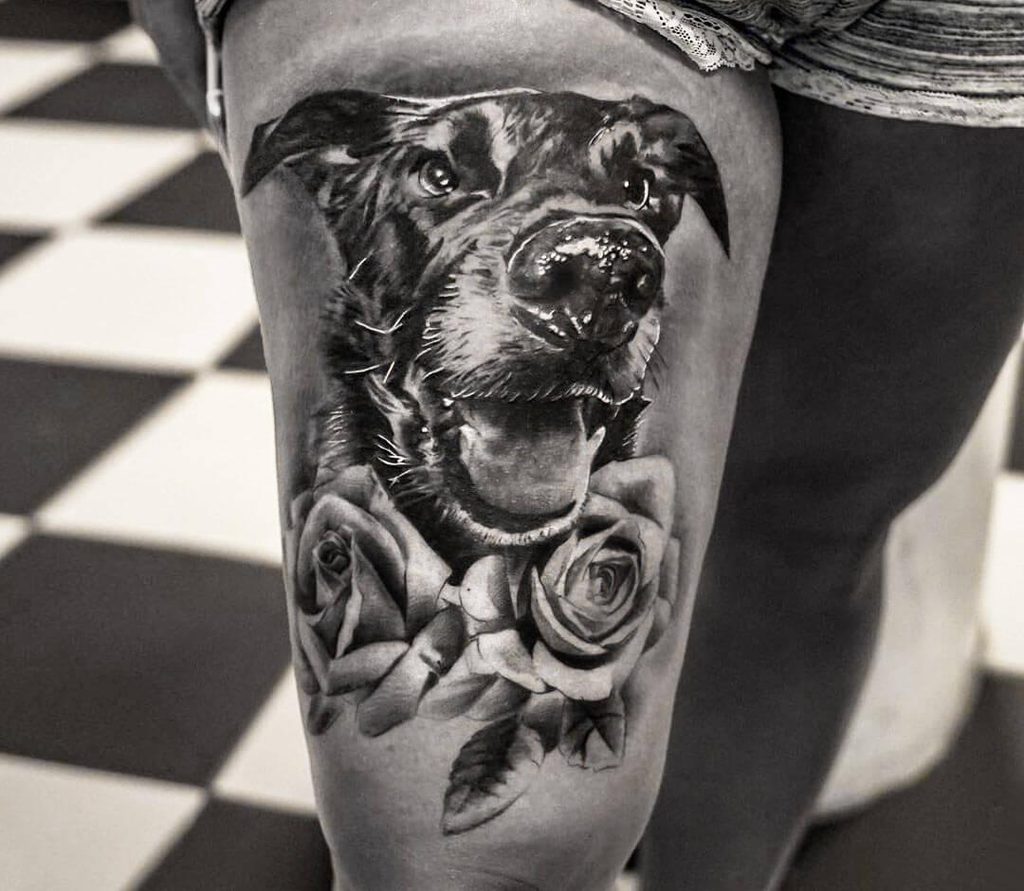
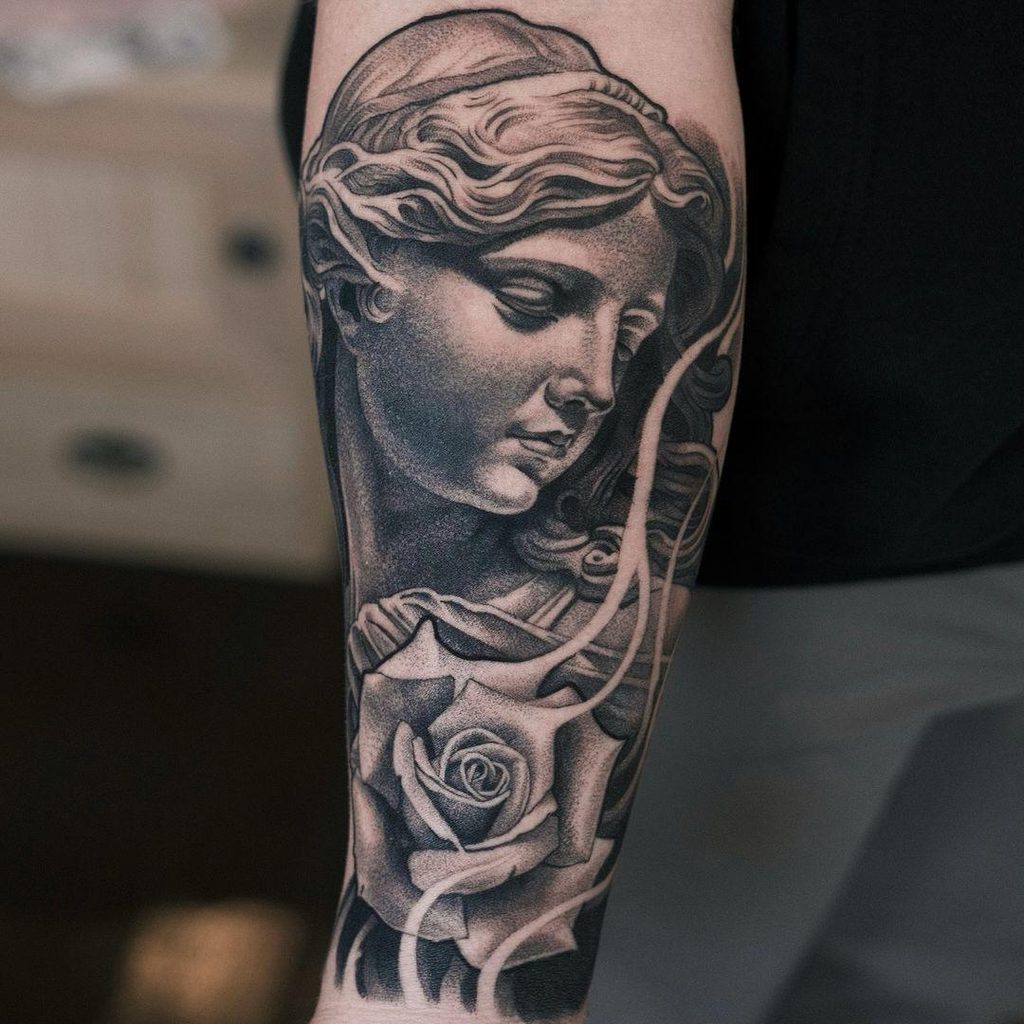
Portrait tattoos: Human faces, family portraits and memorial designs.
Animal tattoos: Lions, tigers, wolves, cats and dogs.
Classical sculpture tattoos: Greek and Roman statues, marble textures and architectural details.
Botanical tattoos: Roses, peonies and other flowers with dramatic shading.
Cinematic compositions: Portraits combined with landscapes, clocks or atmospheric backgrounds.
Advantages of black and grey realism
• Strong emphasis on shape, expression and contrast.
• Works well for dramatic or emotional subjects.
• Can create visual consistency across large sleeves.
• Does not depend on reproducing complex natural colors.
What are its limitations?
Subtle grey tones can become less distinct as the tattoo ages. A portrait that relies on many closely spaced midtones may lose definition if the artist does not preserve enough contrast.
This is why a successful black and grey tattoo requires both technical shading and careful long-term planning.
Best for: Portraits, memorial tattoos, animals, sculptures and large monochromatic compositions.
2. Color Realism Tattoo
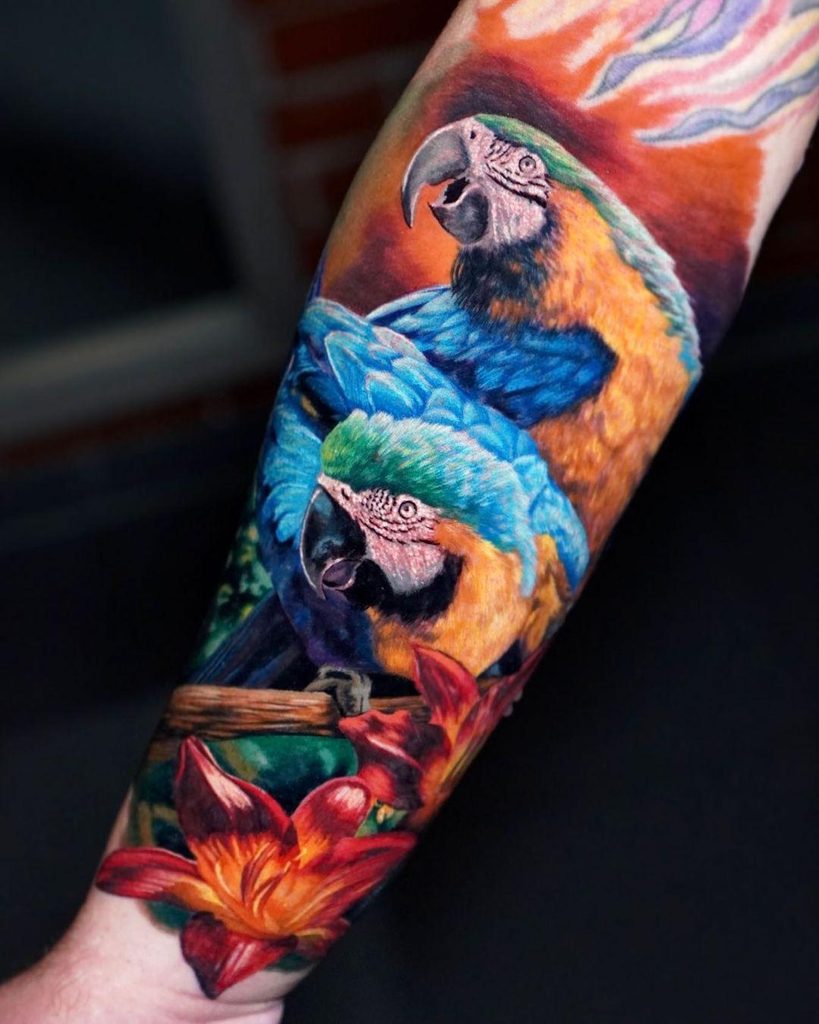
Color realism recreates the appearance of a subject using multiple tattoo pigments. Instead of translating a photograph into black and grey, the artist attempts to preserve its natural color relationships. This makes color realism especially effective for subjects where color is essential to recognition or emotional impact.
How do artists create realistic colors?
Color realism requires an understanding of hue, saturation, value and contrast. For example, a red rose is not created using one flat shade of red. Its petals may contain darker reds, warmer highlights, cooler shadows and subtle transitions.
Likewise, realistic animal fur may require several related colors to create depth. Artists must also consider the client’s skin tone because tattoo pigments are viewed through the skin after healing.
Advantages of color realism
• Preserves the recognizable colors of the original subject.
• Creates vibrant, visually striking compositions.
• Works especially well for flowers, insects and birds.
• Allows artists to reproduce complex lighting effects.
What are its limitations?
Color selection and contrast must be adapted to the skin. Some subtle color differences may become less visible over time, and pigment appearance can change with sun exposure and aging.
Very pale highlights or low-contrast color combinations may also be difficult to maintain.
Best for: Flowers, butterflies, colorful animals and designs where natural color is central to the concept.
3. Micro-Realism Tattoo
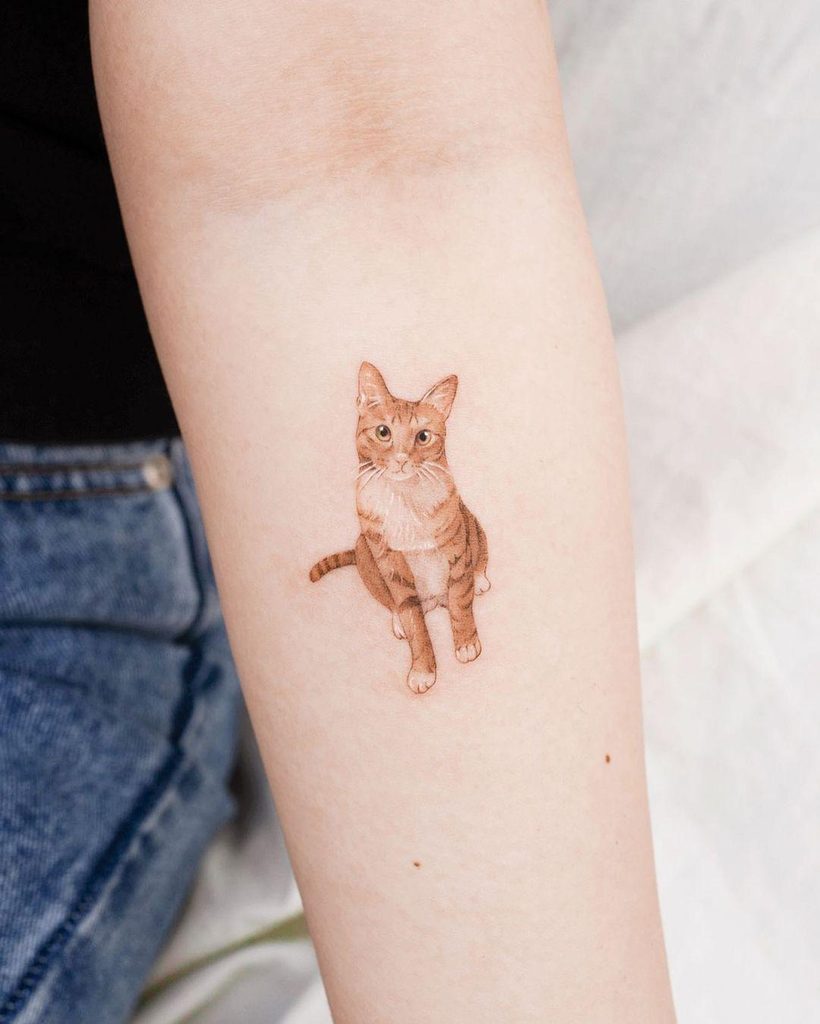
Micro-realism takes the principles of realistic tattooing and applies them to a much smaller canvas.
Instead of a large portrait covering the upper arm, a micro-realism design might feature a tiny pet, miniature flower, architectural landmark or meaningful object.
The appeal is simple: a recognizable image rendered at an unexpectedly small size. However, micro-realism is also one of the most misunderstood tattoo styles.
How is micro-realism different from fine-line tattooing?
Micro-realism describes the size and realistic appearance of the design. Fine-line tattooing describes an approach that uses thin, delicate lines.
The two can overlap, but they are not identical.
A micro-realism tattoo may rely heavily on soft shading rather than visible outlines. Conversely, a fine-line tattoo can be illustrative or abstract without attempting to look realistic.
Why is micro-realism technically challenging?
Skin is a living surface, not paper. Over time, tattoo pigment can spread slightly within the skin, while delicate shading may soften.
In a large portrait, these changes may have little effect on recognition. In a tiny portrait, the same changes can cause important details to merge.
For example, if the eyes, nose and mouth of a pet portrait are placed too close together, they may become less distinguishable as the tattoo ages.
A good micro-realism artist therefore needs to make decisions about which details to preserve and which to simplify.
Advantages of micro-realism
• Compact and often discreet.
• Suitable for meaningful standalone subjects.
• Can fit smaller placements.
• Offers a delicate, understated aesthetic.
What are its limitations?
• Limited space for detailed shading.
• Fine features may soften or merge over time.
• Not every photograph can be reduced successfully.
• Some designs need to be enlarged to remain readable.
Best for: Small pets, flowers, meaningful objects and simplified miniature compositions.
4. Hyperrealism Tattoo
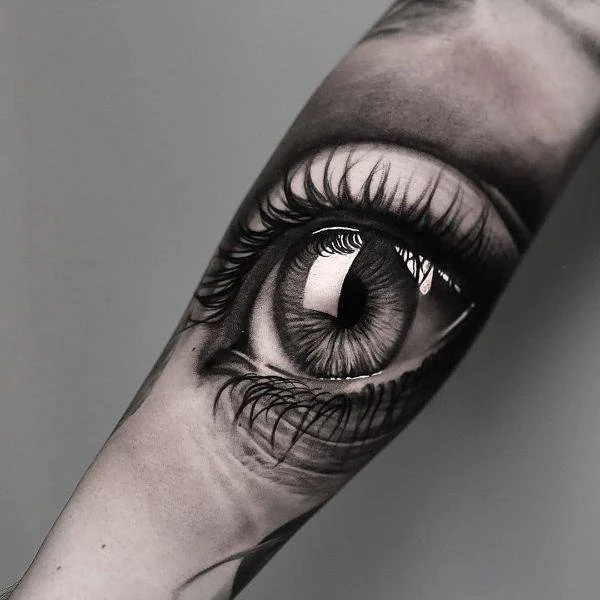
Hyperrealism takes realistic representation to an especially detailed level. The goal is often to create an image that appears almost indistinguishable from a photograph, with convincing textures, reflections and depth.
However, the boundary between realism, photorealism and hyperrealism is not strictly standardized in tattooing. Some artists use the terms interchangeably.
What makes a tattoo hyperrealistic?
Hyperrealistic designs often emphasize:
• Extremely accurate proportions
• Dramatic light and shadow
• Detailed surface textures
• Reflections in eyes, glass or metal
• Convincing depth and dimensionality
• Carefully controlled transitions between light and dark
For example, a realistic eye tattoo may capture the basic structure of the iris, eyelids and reflections.
A hyperrealistic interpretation might place even greater emphasis on the moisture of the eye, the texture of surrounding skin and the interaction between multiple light sources.
Advantages of hyperrealism
• Creates striking visual impact.
• Suitable for detailed, expressive subjects.
• Can achieve convincing three-dimensional effects.
• Offers extensive opportunities for artistic precision.
What are its limitations?
Hyperrealism can require substantial space and working time. The artist must balance photographic detail with the realities of tattoo longevity.
Reproducing every pixel of a photograph is neither possible nor desirable. Important features need sufficient contrast and separation to remain clear after healing.
Best for: Detailed portraits, eyes, reflective objects and larger designs where realistic texture is the main attraction.
How Do Realism Tattoo Techniques Differ?
Regardless of style, realism tattoo artists work with several common technical principles.
Shading and Grey Wash
Grey wash uses diluted black ink to create different tonal values. Artists may use varying dilutions and controlled application to build gradual transitions between shadows and highlights.
It is particularly important in black and grey realism.
Color Blending and Layering
Color realism depends on smooth transitions between pigments. Artists plan color relationships carefully and may build certain areas through controlled layering.
The aim is to achieve natural-looking color without unnecessarily overworking the skin.
Contrast and Negative Space
Negative space refers to areas where the natural skin is left visible. It can create highlights, separate textures and prevent a design from appearing overly dense.
Strong contrast also helps a tattoo remain recognizable at a distance.
Texture and Detail
Different subjects demand different visual treatments.
Fur requires directional texture. Metal needs controlled reflections. Human skin requires subtle changes in value, while flowers depend on delicate transitions between curved surfaces.
A skilled artist studies how the subject behaves under light instead of applying the same shading pattern everywhere.
Composition and Anatomy
The tattoo must work with the body’s curves. A face placed across a highly curved area may appear distorted from certain angles.
Similarly, a realistic sleeve requires careful planning so the individual subjects remain visually connected as the arm moves.
Đọc thêm: Realism Tattoo: Designs, Techniques & Inspiration
How Much Do Different Realism Tattoo Styles Cost?
Pricing depends primarily on the size, complexity, working time and artist’s expertise. The style influences those factors but does not determine the price on its own.
For example, a tiny micro-realism tattoo may cost less overall than a large hyperrealistic sleeve because it requires less time.
However, a small portrait should not be priced or evaluated solely by its dimensions. The technical demands can still be substantial.
At 3 of Spades Hanoi Tattoo, an accurate quote requires reviewing the design reference, approximate size in centimeters and placement.
Frequently Asked Questions About Realism Tattoo Styles
1. What are the main Realism Tattoo Styles?
The four commonly discussed approaches are black and grey realism, color realism, micro-realism and hyperrealism. They differ mainly in color palette, physical scale and level of photographic detail.
2. What is the most popular realism tattoo style?
Black and grey realism is a widely recognizable approach, particularly for portraits, animals and large compositions. However, popularity varies by artist, audience and tattoo trends.
3. Is black and grey realism better than color realism?
Neither is inherently better. Black and grey emphasizes tonal contrast and dramatic lighting, while color realism reproduces natural colors and vibrant subjects.
4. What is the difference between micro-realism and hyperrealism?
Micro-realism focuses on small-scale realistic tattoos. Hyperrealism focuses on highly detailed, photographic effects. A design can belong to both categories.
5. Can realism tattoos be done on darker skin tones?
Yes. Realism tattoos can be designed for a wide range of skin tones. Artists should account for the skin’s natural pigmentation when planning contrast, highlights and color choices. Experience with comparable skin tones is valuable.
6. Can I combine different realism styles in one tattoo?
Yes. For example, a black and grey realism sleeve may include a small color accent, or a larger realistic composition may contain micro-realistic details. The combination should be planned to maintain visual consistency.
7. What is the best realism style for a pet portrait?
Black and grey or color realism can both work well. The best choice depends on the pet’s appearance, reference photograph, desired size and artist’s experience.
Final Thoughts: Which Realism Tattoo Style Should You Choose?
Understanding Realism Tattoo Styles helps you move beyond simply choosing a beautiful reference image.
Black and grey realism offers dramatic shading and timeless monochromatic compositions.
Color realism brings natural colors and vibrant subjects to life.
Micro-realism creates meaningful designs on a smaller canvas, although careful sizing is essential.
Hyperrealism emphasizes extraordinary detail and photographic depth.
Each approach offers different creative possibilities, but they share one important principle: a successful realism tattoo must balance visual accuracy with the practical limits of tattooing on skin.
The best style is not necessarily the most detailed or the most complicated. It is the one that communicates your idea clearly and is designed to remain recognizable as it ages.
Get Your Realism Tattoo in Hanoi
Looking for a realistic tattoo that captures your idea with the right balance of detail, composition and style?
At 3 of Spades Hanoi Tattoo, our team can help you explore different realism approaches based on your reference images, preferred size and placement.
Whether you’re interested in a black and grey portrait, a realistic pet tattoo, a small detailed piece or a larger composition, we can discuss the design and help you plan your session.
Our studio is located in Hanoi’s Old Quarter and welcomes international travelers seeking a comfortable, collaborative tattoo experience.
Send us your reference images, approximate dimensions in centimeters, preferred placement and Hanoi travel dates to begin your consultation.
Every tattoo has a story. Let’s create yours.