
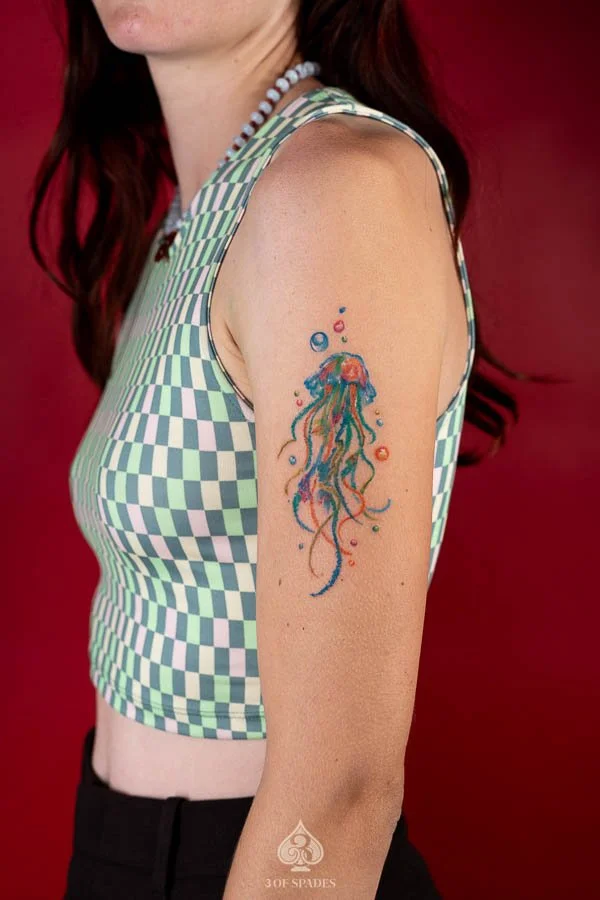
Remove Tattoo is a common search for anyone looking to erase unwanted ink, change an outdated design, or make room for something new. The good news? Most tattoos can be significantly faded, and some can be removed almost completely with modern treatments. However, complete removal is not always guaranteed.
Whether it’s an old tattoo that no longer represents you, a design that didn’t turn out as expected, or a piece you simply don’t love anymore, there are several ways to approach tattoo removal.
Laser technology has made tattoo removal more effective than ever, but it often requires multiple sessions, considerable patience, and a financial commitment.
So, can you completely remove a permanent tattoo? How much does tattoo removal cost? And is removal always better than covering up an old design?
In this 2026 guide, 3 of Spades Hanoi Tattoo explores the most common tattoo removal methods, expected results, recovery timelines, and alternatives worth considering before making your decision.
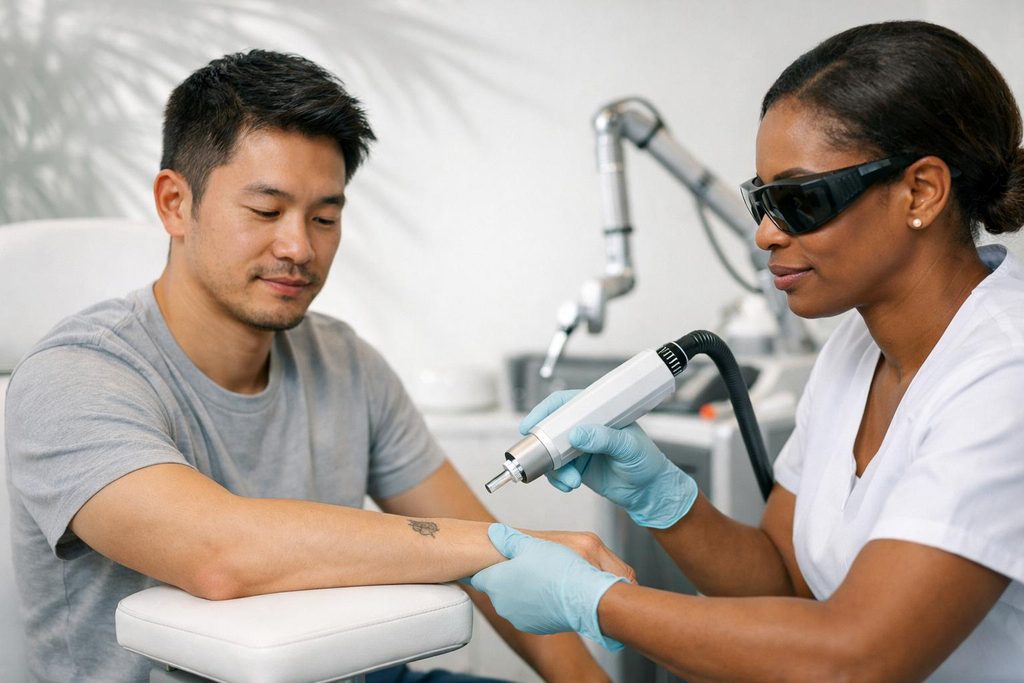
Can You Remove Tattoo Completely?
Yes, it is possible to remove tattoo ink using professional treatments, particularly laser tattoo removal. However, complete removal is not guaranteed for every tattoo.
According to the U.S. Food and Drug Administration (FDA), laser treatment is the most commonly used method for removing or lightening permanent tattoos. Results depend on several factors, including ink color, tattoo size, pigment depth, and skin characteristics.
Some tattoos can fade until they become almost invisible, while others may retain traces of pigment or changes in skin texture.
Why are permanent tattoos difficult to remove?
When you get tattooed, needles deposit pigment particles into the dermis, a deeper layer of skin. Unlike the outer epidermis, which continuously renews itself, the dermis retains tattoo pigment for many years. Your immune system can gradually process some pigment particles, but many are too large to be efficiently cleared.
This is why tattoos are considered permanent. Professional laser treatments work by breaking pigment particles into smaller fragments that the body can gradually remove.
What factors determine whether a tattoo can be removed?
Several characteristics influence the difficulty of tattoo removal:
- Ink color: Black and dark blue usually respond better to laser treatment than certain bright colors.
- Tattoo age: Older tattoos may be easier to fade because some pigment has already changed or dispersed over time.
- Tattoo size: Larger designs generally require more extensive treatment.
- Ink density: Heavily saturated tattoos may take more sessions.
- Tattoo depth: Ink deposited at different depths can respond differently to laser energy.
- Skin type: Skin tone and pigmentation influence laser selection and treatment risks.
- Existing scars: Scar tissue can complicate removal and affect final appearance.
These factors help explain why two tattoos of similar size may respond very differently to the same treatment.
What Are the Best Methods to Remove Tattoo Ink?
There are several professional approaches to removing unwanted tattoos, but laser removal is generally the preferred option for most people.
Other methods, such as surgical excision and dermabrasion, may be appropriate in selected situations.
| Method | How it works | Main limitation |
| Laser removal | Breaks ink into fragments that the body gradually clears | Multiple sessions; complete removal not guaranteed |
| Surgical excision | Cuts out tattooed skin and closes the wound | Leaves a surgical scar |
| Dermabrasion | Removes skin layers using a mechanical device | Higher risk of scarring and inconsistent results |
| Chemical methods | Damage or peel skin to attempt pigment removal | Unpredictable results and significant skin injury risk |
| Removal creams | Claim to fade ink through topical application | Not proven to remove ink in the dermis |
What’s the difference between Q-switched and picosecond lasers?
Both are established technologies for tattoo removal, but they deliver energy in different pulse durations.
| Technology | Main characteristics |
|---|---|
| Q-switched laser | Uses nanosecond-scale pulses and has a long clinical history |
| Picosecond laser | Uses shorter picosecond-scale pulses and may offer advantages for certain ink colors |
| Multiple-wavelength systems | Help target different pigment colors using appropriate wavelengths |
A systematic review published in the Journal of the American Academy of Dermatology found that picosecond lasers may offer better results for certain blue, green, and yellow pigments, although additional research is needed.
The most appropriate treatment depends on your skin and tattoo, not simply which machine has the newest technology.
Can laser treatment remove colored tattoos?
Yes, many colored tattoos can be treated, but some pigments are more resistant than others.
Black and dark blue typically respond well. Green, yellow, red, and certain mixed pigments may require specialized wavelengths or additional sessions.
White ink, skin-colored pigments, and some permanent makeup pigments can be especially challenging because laser treatment may cause darkening rather than fading.
How Many Sessions Does It Take to Remove Tattoo Ink?
Most tattoos require multiple removal sessions, and the total number varies considerably.
For many professional tattoos, treatment may involve approximately 6–10 sessions or more. Some respond in fewer sessions, while stubborn or heavily saturated designs may require considerably more.
How long should you wait between laser sessions?
Laser tattoo removal sessions are generally spaced several weeks apart, commonly around six to eight weeks or longer.
This interval allows the treated skin to recover and gives the body time to clear fragmented pigment. Your dermatologist may recommend longer intervals depending on your skin’s response.
Trying to accelerate the process with excessively frequent treatments can increase the risk of complications without necessarily improving results.
Can you remove a tattoo in one session?
Complete removal in one laser session is uncommon.
A small, lightly pigmented tattoo may show noticeable fading after the first treatment, but that does not guarantee complete clearance.
Surgical excision may remove certain small tattoos in one procedure, though it leaves a scar.
How Much Does It Cost to Remove Tattoo Ink in 2026?
Tattoo removal costs vary according to location, tattoo size, ink colors, treatment technology, and the number of sessions required.
Laser removal is typically priced per treatment session, so the total can become significantly higher than the initial quote.
How much does laser tattoo removal cost in the United States?
n practice, prices vary widely by provider and tattoo complexity.
If a treatment costs $300 per session and requires eight sessions, the procedure fees alone would total $2,400, excluding consultations, medications, or other expenses.
How much does tattoo removal cost in Vietnam?
Pricing in Vietnam varies across hospitals and dermatology clinics.
As one published example, WeDo Skin Clinic in Ho Chi Minh City lists the following tattoo removal prices:
| Tattoo area | Published price per session |
|---|---|
| Under 10 cm² | 1.000.000 VND |
| 10–20 cm² | 2,500,000 VND |
| 20–30 cm² | 3,500,000 VND |
| 30–50 cm² | 4,500,000 VND |
Does Tattoo Removal Hurt?
Yes, tattoo removal can be painful, although discomfort varies from person to person.
Laser treatment is often described as a sensation similar to a rubber band snapping against the skin. Some individuals find it comparable to getting tattooed, while others consider it more uncomfortable.
What is the typical tattoo removal healing timeline?
| Recovery period | What you may experience |
|---|---|
| First 24–48 hours | Redness, tenderness, swelling, or temporary whitening |
| Days 3–7 | Gradual improvement; possible blistering or crusting |
| Weeks 1–2 | Continued skin recovery, depending on treatment response |
| Following weeks | Ongoing pigment clearance and gradual fading |
| Before next session | Skin assessment and confirmation of adequate recovery |
Can Tattoo Removal Leave Scars?
Yes, tattoo removal can leave scars, although modern laser techniques generally carry a lower scarring risk than more invasive methods.
The risk depends on the treatment method, individual skin characteristics, clinician expertise, and aftercare.
What are the possible side effects of laser tattoo removal?
Potential complications include:
- Temporary redness and swelling.
- Blistering and crusting.
- Hyperpigmentation (darkening of the skin).
- Hypopigmentation (lightening of the skin).
- Infection.
- Scarring or texture changes.
- Incomplete tattoo removal.
Final Thoughts: Can You Remove Tattoo Completely?
Yes, it is possible to remove tattoo ink, but complete removal is not guaranteed. Laser tattoo removal is generally the preferred method because it can progressively break down pigment while avoiding the deliberate removal of large sections of skin.
However, successful removal depends on ink color, tattoo size, pigment depth, skin characteristics, and the number of treatments completed.
Costs can also accumulate over time, making it important to understand the full treatment plan before starting.
If you no longer love an existing tattoo, removal is not your only option. A professionally designed cover-up may offer a creative alternative, especially if your goal is to replace an old design with something more meaningful.
Whether you choose removal, partial fading, or a cover-up, the most important decision is finding qualified professionals who understand both skin safety and realistic outcomes.
Frequently Asked Questions About Tattoo Removal
1. Can you remove tattoo ink completely?
Yes, some tattoos can be removed almost completely through professional laser treatment. However, total removal is not guaranteed, and residual pigment or skin changes may remain.
2. What is the best method to remove tattoo ink?
Laser tattoo removal is generally the preferred method for most tattoos. It breaks pigment into smaller particles that the body gradually processes, often with less scarring risk than more invasive methods.
3. How much does it cost to remove a tattoo?
Costs vary considerably. In the US, the American Society of Plastic Surgeons reports an average of $697 for laser skin treatments, a category including tattoo removal. One Vietnamese clinic publishes tattoo removal prices starting at 1,000,000 VND per session for areas under 10 cm².
4. How many sessions does it take to remove a tattoo?
Many tattoos require approximately 6–10 laser sessions or more, depending on size, color, ink density, and individual response. Some tattoos can be lightened in fewer sessions, while complete removal may require extended treatment.
5. Does removing a tattoo hurt more than getting one?
Tattoo removal can be uncomfortable, with sensations commonly compared to a rubber band snapping against the skin. Whether it hurts more than tattooing depends on your pain tolerance, tattoo placement, and treatment settings.
6. Can you remove a black tattoo more easily than a colored tattoo?
Black tattoos generally respond well to laser treatment because dark ink absorbs a broad range of laser wavelengths. Certain green, yellow, red, and lighter pigments may be more challenging to remove.
7. Can you remove a tattoo without leaving scars?
Laser removal can sometimes produce substantial clearance without noticeable scars, but there is no guarantee. Pigmentation changes, texture changes, and scarring remain possible complications.
8. Can you remove a tattoo in one session?
Complete removal in one laser session is uncommon. Small tattoos may show visible fading after a single treatment, but most require multiple sessions. Surgical excision can remove selected small tattoos in one procedure but leaves a scar.
9. Can you remove a tattoo that is 10 years old?
Yes. Older tattoos can often be treated using laser removal, and some may respond more readily because they have already faded. Outcomes still depend on pigment composition, depth, and other factors.
10. Can you get a new tattoo after laser tattoo removal?
Yes, after the treated skin has fully healed and a qualified clinician has confirmed that it is ready for tattooing. The waiting period depends on the removal method, skin response, and any residual scarring.
Old Ink. New Possibilities.
Ready for a fresh start? Visit 3 of Spades Hanoi Tattoo to explore custom cover-ups and creative tattoo redesigns.
Book your free consultation today!


