- What Is a Tebori Tattoo?
- What Is the History of Tebori Tattoo?
- How Does a Tebori Tattoo Work?
- What Is the Difference Between Tebori Tattoo and Irezumi Tattoo?
- Does a Tebori Tattoo Hurt More?
- Why Is Tebori Tattoo Still Practiced Today?
- Can You Get a Tebori Tattoo at a Hanoi Tattoo Studio?
- Frequently Asked Questions About Tebori Tattoo
- Final Thoughts: What Makes Tebori Tattoo Special?
- Planning a Japanese Tattoo in Hanoi?
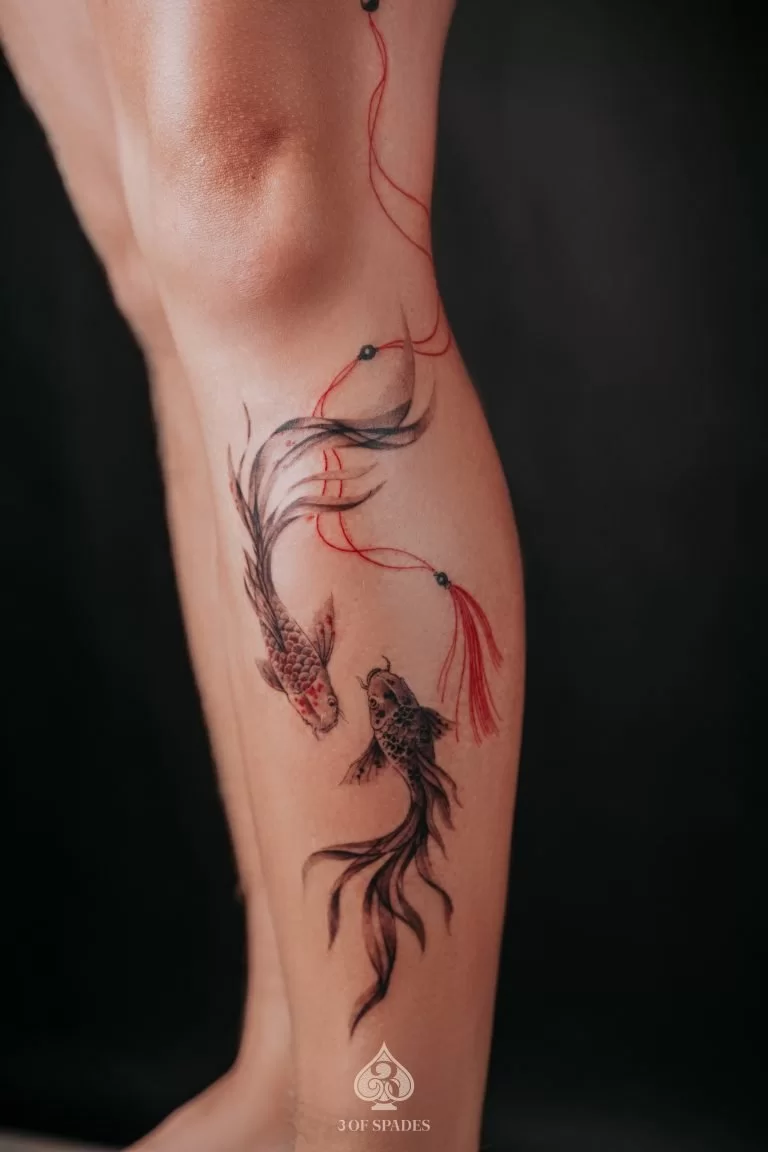
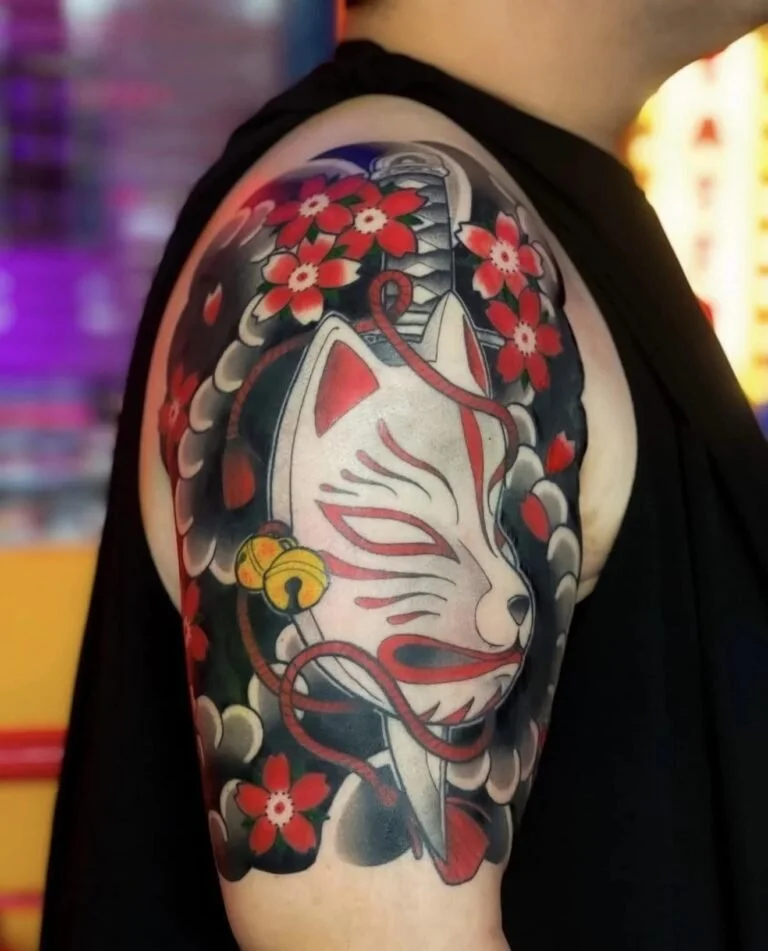
For centuries, Japanese tattooing has been recognized for dramatic dragons, koi fish, tigers, Hannya masks and large compositions that move naturally across the body.
But behind some of these works is a tattooing technique that looks very different from the electric machines found in most modern studios: Tebori Tattoo.
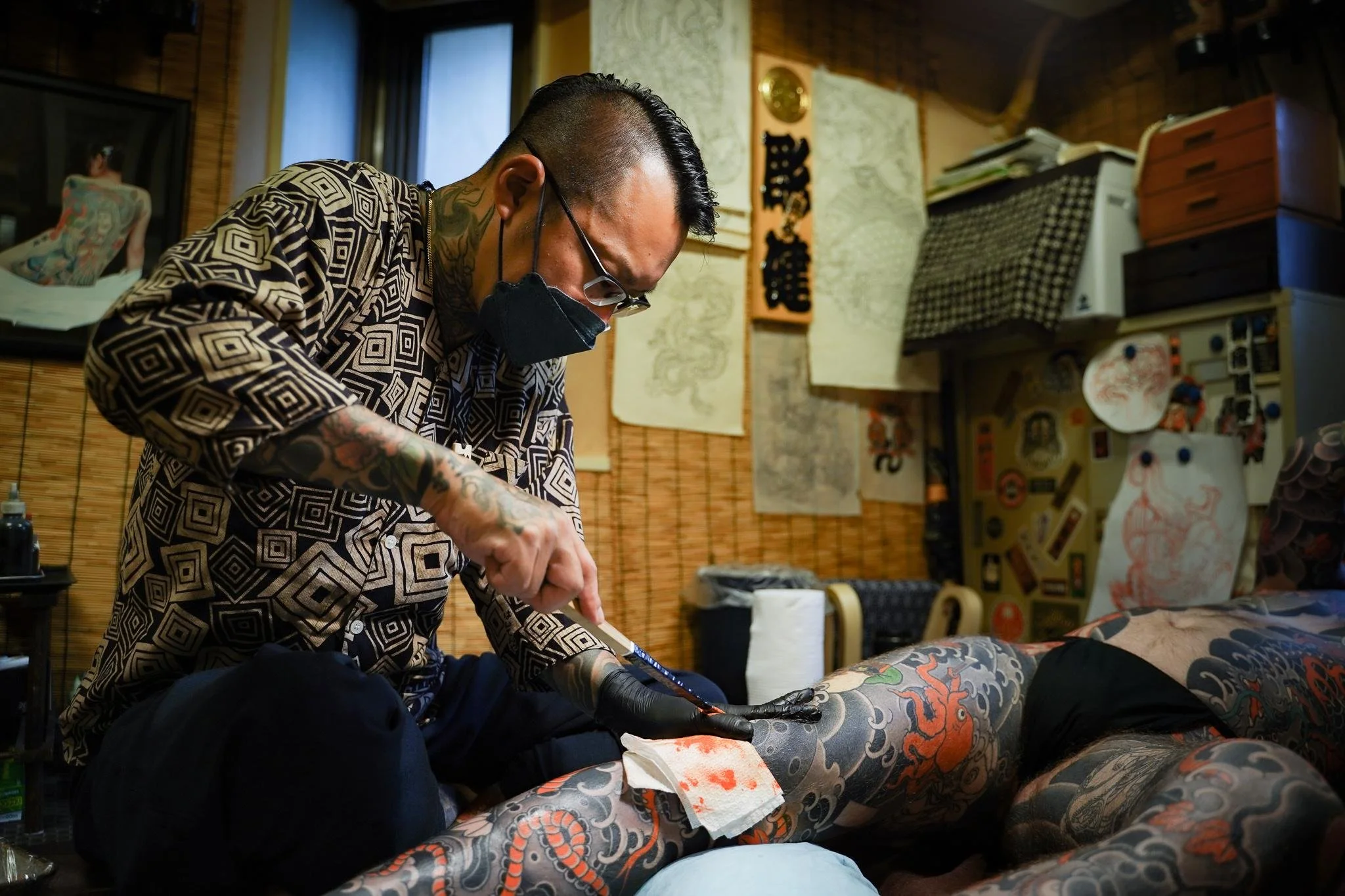
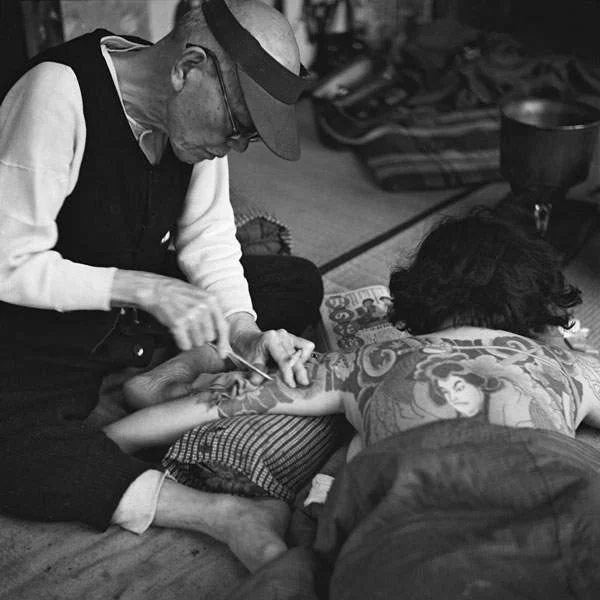
Tebori is a traditional Japanese method of manually inserting tattoo pigment into the skin with a handheld tool. It requires rhythm, control and years of specialized practice.
However, Tebori isn’t simply an old version of a tattoo machine.
Its story is closely connected to Japanese tattoo craftsmanship and the development of Irezumi. Understanding Tebori therefore gives us a deeper look at not only how traditional Japanese tattoos were made, but also how the craft has survived into modern tattoo culture.
What Is a Tebori Tattoo?
A Tebori Tattoo is created by manually inserting tattoo pigment into the skin using a specialized handheld tool rather than relying entirely on an electric tattoo machine.
The Japanese word tebori (手彫り) combines te, meaning “hand,” with hori, associated with carving or engraving. It is therefore commonly translated as “hand carving” or “hand engraving.”
How is Tebori different from ordinary hand-poke tattooing?
Both techniques manually deposit pigment into the skin. However, Tebori belongs to a specific Japanese tattoo tradition. It has its own working methods, artistic lineage and relationship with large-scale Japanese tattooing.
Calling every hand-poked tattoo “Tebori” therefore removes much of the cultural context behind the term.
Is Tebori the same as Irezumi?
No.
This distinction is important:
Tebori refers to a tattooing technique. Irezumi refers more broadly to Japanese tattooing and is commonly used internationally when discussing traditional Japanese tattoo art.
An Irezumi composition may be tattooed using Tebori, modern tattoo machines or a combination of techniques.
Read More: Irezumi Tattoo: The History and Art of Traditional Japanese Tattoo
What Is the History of Tebori Tattoo?
To understand Tebori Tattoo, we first need to understand the environment in which decorative Japanese tattooing developed.
Traditional Japanese tattoo history is complex. Tattooing in Japan has carried different meanings at different periods, including punitive marking as well as decorative body art.
The elaborate decorative tradition most closely associated with modern Irezumi developed particularly strongly during the Edo period (1603–1868).
The Edo period saw flourishing urban societies in cities such as Edo and Kyoto. Artisans and merchants became important forces in popular culture, while Kabuki and ukiyo-e woodblock prints developed into major forms of entertainment and visual art.
How did ukiyo-e influence Japanese tattooing?
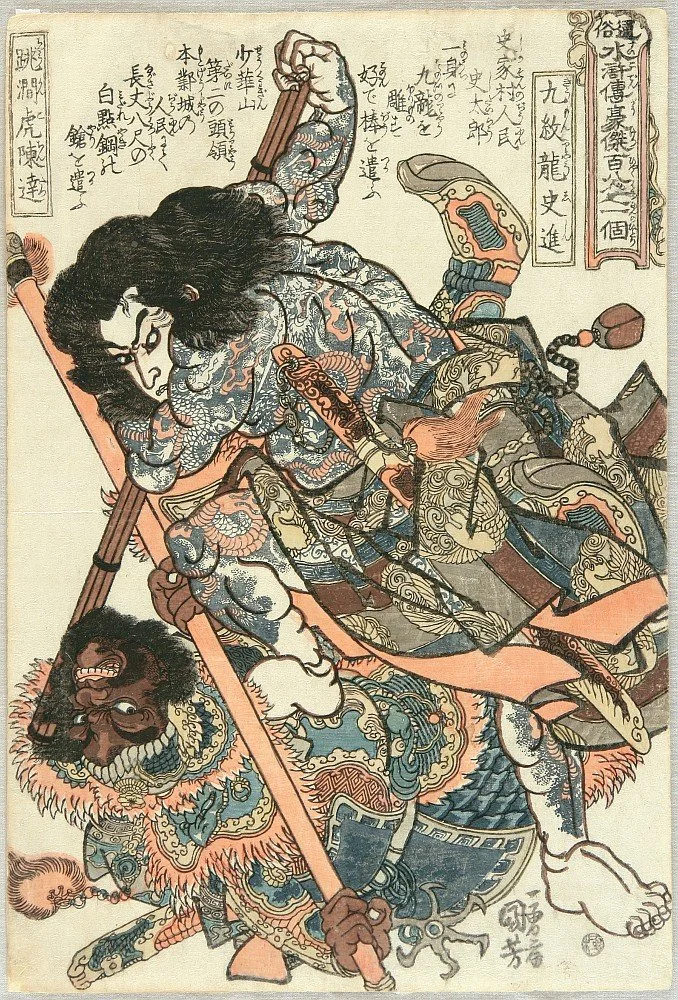
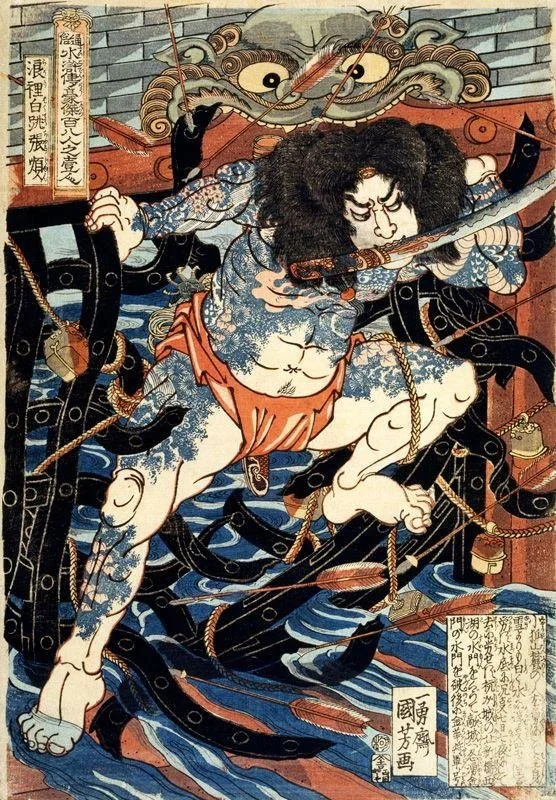
Ukiyo-e gave Japanese popular culture an extraordinary visual vocabulary. Heroes, warriors, supernatural beings, landscapes, animals and dramatic stories could be transformed into bold woodblock compositions.
One particularly important example was artist Utagawa Kuniyoshi. His nineteenth-century Suikoden prints portrayed heroic characters, some covered with elaborate tattoos. These tattooed warriors helped establish visual connections between heroic storytelling and decorated bodies.
Kuniyoshi’s work is not merely similar to Japanese tattoo art. It forms part of the broader visual culture from which traditional Japanese tattooing developed its recognizable imagery.
The Metropolitan Museum of Art identifies ukiyo-e as one of the important artistic forms that emerged from Edo’s flourishing urban culture.
How Does a Tebori Tattoo Work?
Unlike an electric tattoo machine, Tebori relies on controlled movements performed manually by the tattoo artist.
A specialized tool carrying tattoo needles is held by the artist, who repeatedly inserts pigment into the skin through carefully controlled movements.
Why does Tebori require specialized skill?
The artist must control several factors simultaneously, including rhythm, angle, pressure and consistency. That knowledge is developed through extensive practice.
This is one reason Tebori should not simply be described as an “ancient hand-poke tattoo.” It represents a specialized craft within Japanese tattoo culture.
Do modern Tebori artists also use tattoo machines?
Some do. Traditional methods have not remained frozen in time. Contemporary Japanese tattoo artists may work entirely by hand, entirely by machine or combine both approaches depending on their training and artistic practice.
For example, an artist may use a machine for certain parts of a tattoo while completing other areas by Tebori. There is no requirement that every modern Japanese tattoo must be created entirely by hand to qualify as Japanese tattoo art.
What Is the Difference Between Tebori Tattoo and Irezumi Tattoo?
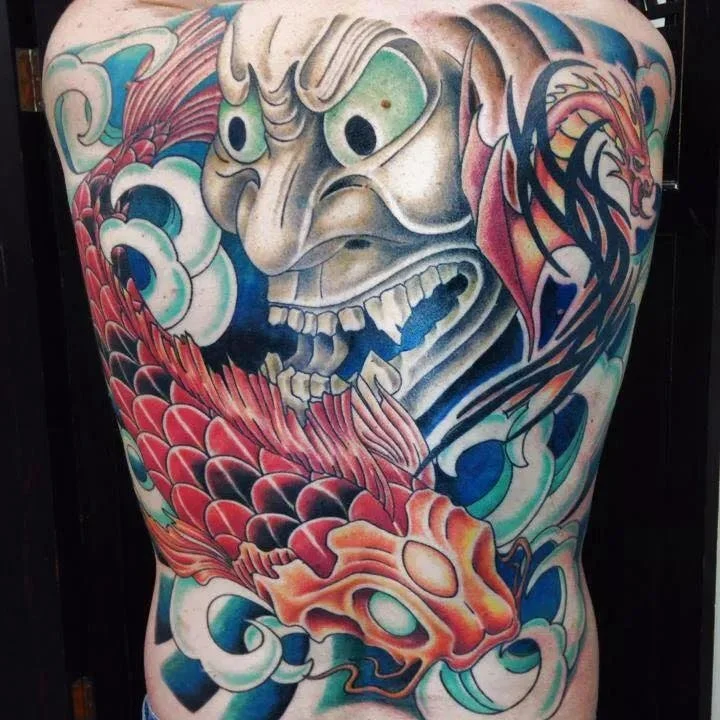
This is one of the most common sources of confusion surrounding Japanese tattoo terminology. The simplest distinction is:
Tebori is how a tattoo can be made. Irezumi describes the broader Japanese tattoo tradition and artwork.
Imagine a Japanese dragon covering someone’s back. The dragon, waves, clouds, flowers and overall composition belong to the visual language of Japanese tattooing.
Tebori describes the manual technique an artist may use to put some or all of that artwork into the skin.
Can Irezumi be tattooed with a machine?
Yes. Many contemporary Japanese-style tattoos are produced using modern tattoo machines. Therefore, seeing a dragon, koi or Hannya tattoo doesn’t tell you whether Tebori was used.
This distinction becomes particularly useful when researching tattoo artists. Someone may specialize in Japanese tattoo composition without practicing Tebori, while another artist may specifically train in traditional hand tattooing.
Does a Tebori Tattoo Hurt More?
There is no universal answer. People experience tattoo pain differently, and the sensation depends heavily on placement, session length, individual tolerance and the artist’s technique.
Therefore, saying that Tebori is always more painful—or always less painful—would be misleading.
Which areas can feel more sensitive?
Areas with thin skin, prominent bones or greater nerve sensitivity can generally feel more uncomfortable during tattooing. The ribs, sternum, elbow, knee, ankle and certain inner areas are commonly regarded as more sensitive than fleshier areas such as parts of the outer upper arm.
If pain is a major concern, discuss placement and session planning with your artist before beginning.
Read More: Where is the most sensitive position tattoo?
Why Is Tebori Tattoo Still Practiced Today?
Electric tattoo machines made tattooing faster and transformed the possibilities available to modern artists. Yet Tebori survived.\ Part of its significance lies in craftsmanship and continuity.
Tebori represents knowledge developed and passed between tattoo artists across generations. For artists and collectors who value Japanese tattoo tradition, the process itself can therefore carry meaning alongside the finished artwork.
At the same time, Tebori isn’t simply a museum artifact. Contemporary practitioners continue to work with the technique, while Japanese tattooing itself continues to evolve internationally. That combination of tradition and adaptation is precisely what has allowed the craft to remain relevant.
Can You Get a Tebori Tattoo at a Hanoi Tattoo Studio?
If you’re searching for a Hanoi Tattoo studio because you’re interested in Tebori, ask specifically whether the artist actually practices traditional hand tattooing. A studio offering Japanese-style tattoos does not automatically offer Tebori.
At 3 of Spades Hanoi Tattoo, we recommend beginning with the artwork itself: your preferred Japanese subject, meaning, placement, scale and overall composition. If a specific traditional technique is important to you, mention it during your consultation so the studio can clearly explain what is available.
This distinction helps prevent one of the biggest misunderstandings surrounding Japanese tattooing: Japanese-style artwork and traditional Tebori technique are related, but they aren’t the same thing.
Frequently Asked Questions About Tebori Tattoo
1. What does Tebori Tattoo mean?
Tebori literally relates to carving or engraving by hand and refers to a traditional Japanese tattooing technique in which pigment is manually inserted into the skin using a handheld tool.
2. Is Tebori Tattoo the same as Irezumi?
No. Tebori describes a tattooing technique, while Irezumi is commonly used more broadly when discussing Japanese tattooing and traditional Japanese tattoo artwork.
3. Is Tebori the same as hand-poke tattooing?
Both involve manually inserting pigment, but Tebori belongs to a specific Japanese tattoo tradition and should not be used as a generic label for every hand-poked tattoo.
4. Does Tebori Tattoo hurt more?
Not necessarily. Pain varies according to placement, individual sensitivity, session duration and artist technique. People may also perceive Tebori and machine tattooing differently.
5. Is Tebori still practiced today?
Yes. Specialist tattoo artists continue to practice Tebori today, while some artists combine traditional hand tattooing with modern tattoo machines.
6. Can Tebori be used for a full Japanese sleeve?
Yes, Tebori can be used as part of large Japanese compositions, including sleeves, back pieces and bodysuit-style projects.
7. Is Tebori better than machine tattooing?
Neither is universally better. The quality of a tattoo depends greatly on the artist, design, execution, skin and healing. Choosing between them should depend on the artwork and experience you want.
Final Thoughts: What Makes Tebori Tattoo Special?
A Tebori Tattoo is more than tattooing without electricity.
Its significance comes from the craftsmanship, artistic knowledge and Japanese tattoo tradition behind the technique.
Modern machines have transformed tattooing, but Tebori continues to survive because artists and collectors still find value in the craft itself.
Understanding Tebori therefore helps us appreciate traditional Japanese tattooing beyond the finished dragon, koi or Hannya we see on the skin.
Planning a Japanese Tattoo in Hanoi?
Interested in Tebori Tattoo, Irezumi or traditional Japanese tattoo art?
At 3 of Spades Hanoi Tattoo, we can help you explore your Japanese tattoo concept and develop a design around your story, placement and body.
Send us your reference images, preferred placement, approximate size and Hanoi travel dates before your visit—especially if you’re considering a larger Japanese composition.
Every tattoo has a story. Let’s create yours.