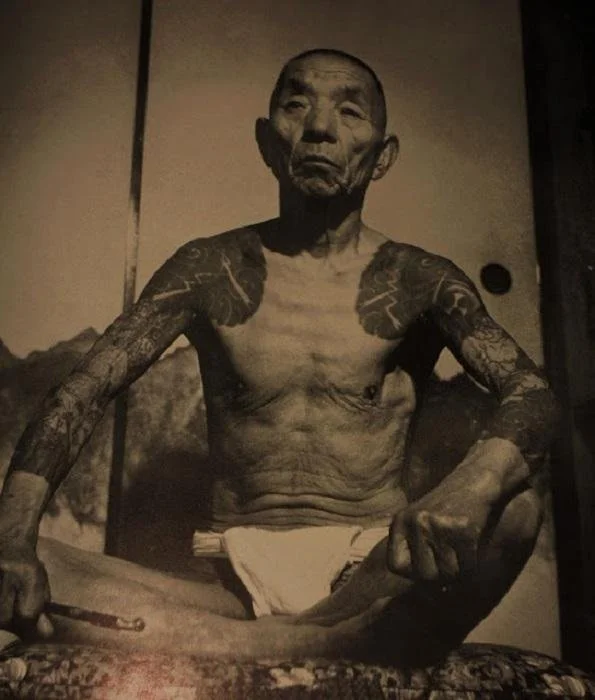
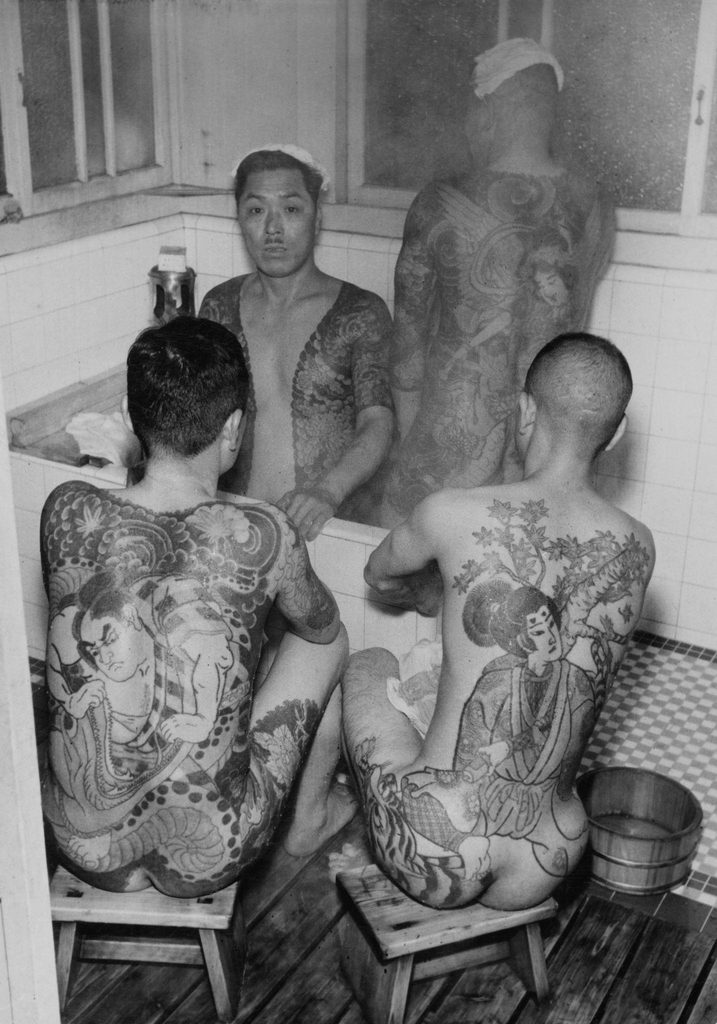
Ask someone in Japan what they associate with tattoos, and Yakuza may still be one of the first answers.
The connection is so strong that traditional Japanese tattoos can sometimes be mistaken for signs of organized-crime membership. Even today, tattooed visitors may encounter restrictions at some Japanese pools, gyms and onsen partly because of this longstanding association.
But the real history is more complicated.
The Yakuza Tattoo did not create traditional Japanese tattooing. Nor does having an Irezumi tattoo make someone Yakuza.
To understand how the two became connected, we need to go back to Edo-period Japan—when tattoos could represent punishment, popular art, working-class identity and eventually the elaborate body art that became associated with Japan’s underworld.
Read more: Japan Times
What Is a Yakuza Tattoo?
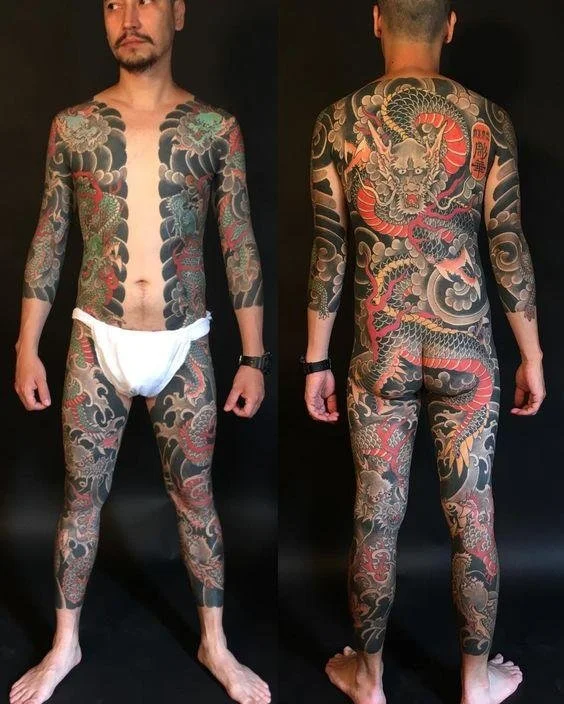
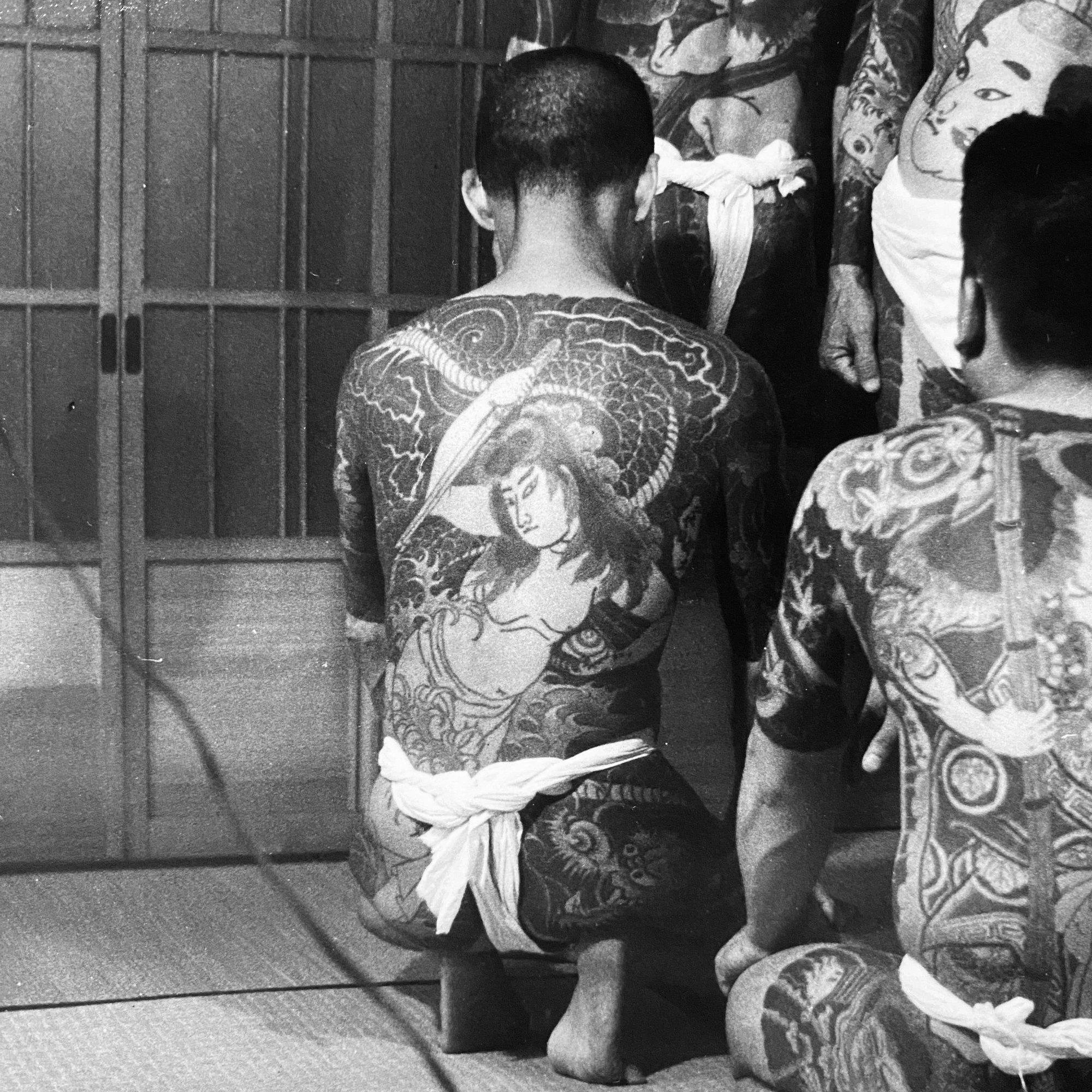
A Yakuza Tattoo usually refers to the extensive traditional Japanese tattooing historically associated with members of Japanese organized-crime groups.
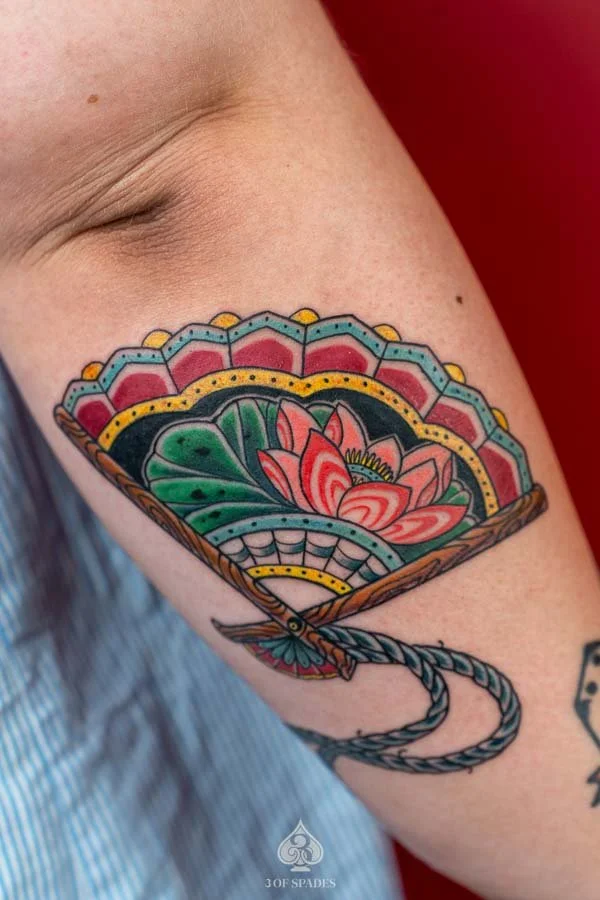
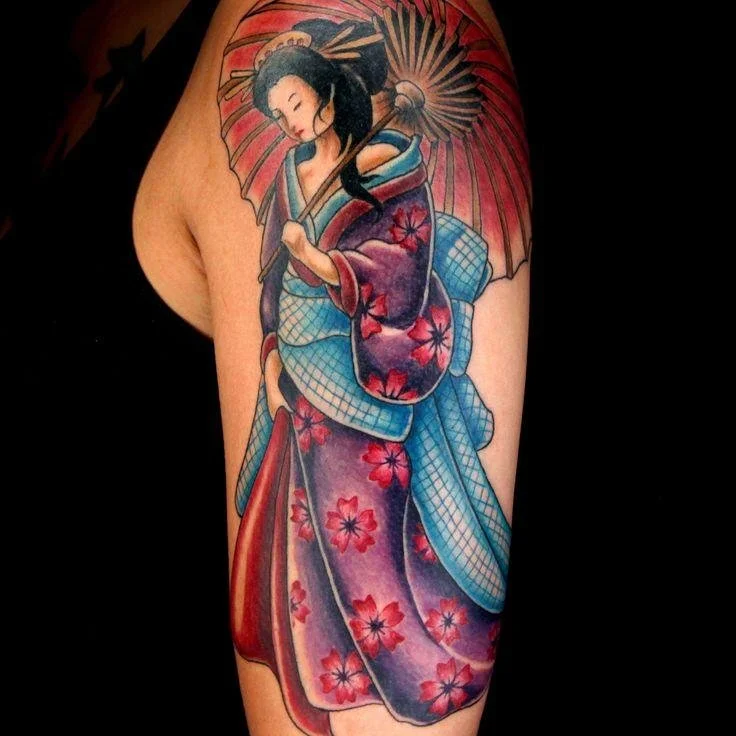
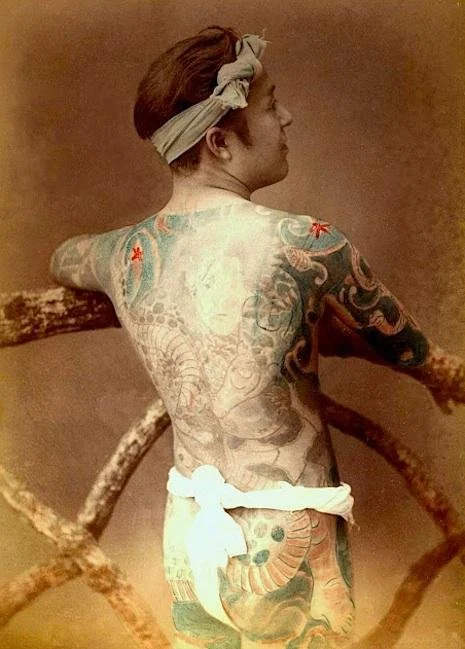
These tattoos are closely related visually to Irezumi, the broader tradition of Japanese tattooing. Dragons, koi, tigers, snakes, flowers, Buddhist figures and legendary heroes may appear within backgrounds of waves, clouds, rocks and wind.
However, calling this entire artistic tradition “Yakuza tattooing” creates a major historical misconception.
Irezumi existed beyond the Yakuza, and not everyone wearing traditional Japanese tattoos was—or is—a member of organized crime.
The Yakuza became one highly visible group associated with the tradition, helping create the stereotype that survives today. Historical and museum-oriented accounts emphasize that Japanese tattooing has a much broader artistic and social history.
Read More: Japanese Tattoo History: From Ancient Japan to Modern Irezumi
Where Did Yakuza Tattoo History Begin?
The roots of the Yakuza Tattoo story lie partly in the complicated status of tattooing during the Edo period. Tattooing could carry very different meanings depending on context. One of those meanings was punishment.
Were tattoos used to punish criminals in Japan?
Yes.
During parts of the Edo period, authorities used tattoo markings as a form of criminal punishment. Marks could be placed on areas such as the arms or forehead, publicly identifying someone who had been convicted of an offense. The practice is documented as beginning in 1720 in one historical overview of Japanese tattooing.
These punishment tattoos were fundamentally different from the elaborate dragons and full-body compositions now associated with traditional Japanese tattoo art. They were intended to stigmatize. This distinction matters because an oversimplified version of the history often says: Criminals were tattooed, criminals became Yakuza, and therefore Irezumi became Yakuza tattooing.
The real development was far less direct. Decorative tattoo culture was simultaneously emerging among other groups within Japanese society.
How Did Decorative Yakuza Tattoo Art Develop?
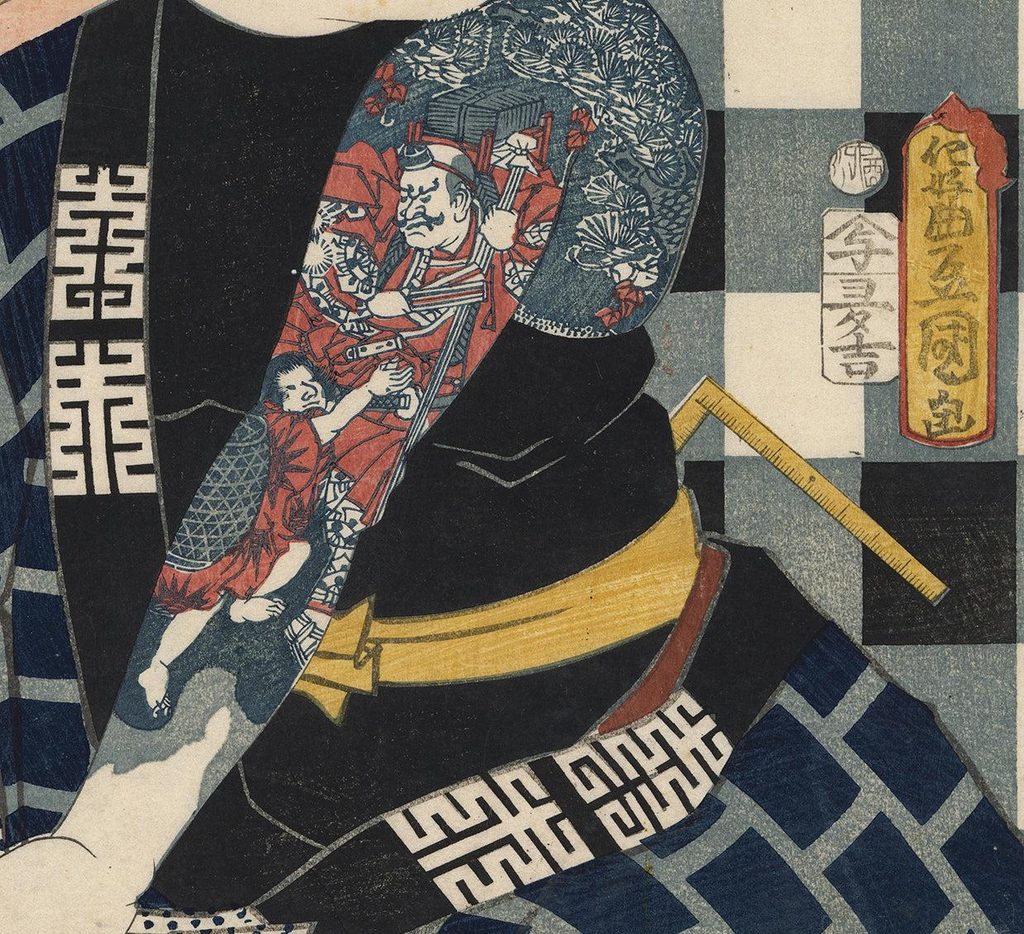
During the Edo period, Japanese cities experienced a flourishing popular culture. Woodblock prints, Kabuki theatre, literature and entertainment created a rich visual world outside the official culture of the ruling elite. Tattooing became part of that environment.
Decorative tattoos were particularly associated with parts of the urban working classes rather than being exclusively criminal. Historical accounts connect tattoo culture with groups such as laborers and firefighters as well as people operating closer to society’s margins.
This is an important point for understanding Yakuza Tattoo history:
Traditional Japanese tattooing did not begin as a Yakuza uniform.
The relationship developed gradually. And one of the biggest forces behind the transformation of Japanese tattooing into a sophisticated visual art was not organized crime.
It was art itself.
How Did Ukiyo-e Influence Yakuza Tattoo History?
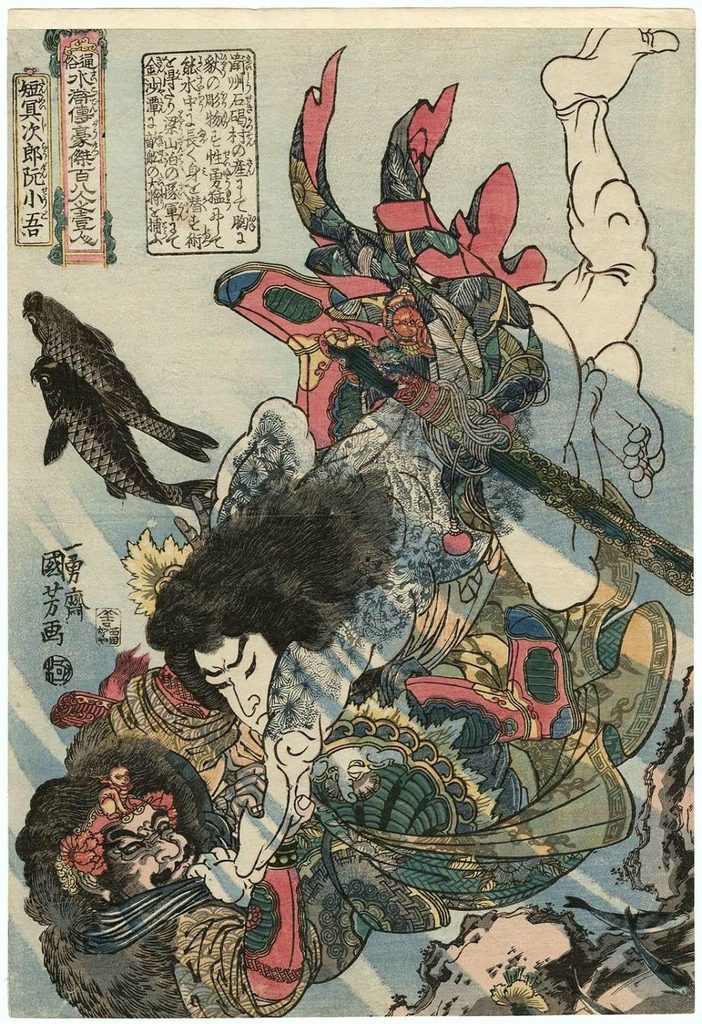
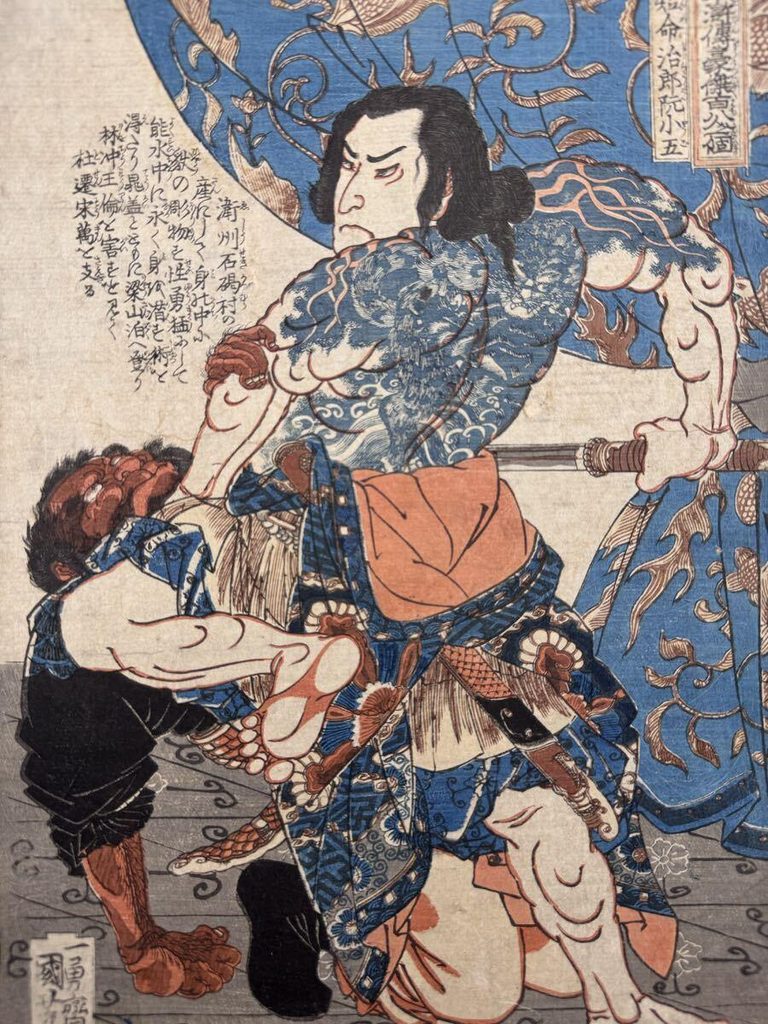
Ukiyo-e woodblock printing became one of the defining visual arts of Edo-period popular culture. The prints depicted everything from actors and beautiful women to landscapes, warriors and legendary heroes.
Among the most influential subjects were the heroes of the Chinese literary classic Water Margin, known in Japan as the Suikoden. Artists transformed these characters into spectacular visual heroes. Some appeared with extensive tattoo-like decoration covering their bodies.
The Metropolitan Museum of Art, for example, holds an 1854 Utagawa Kunisada print depicting a Kabuki character likened to Lu Zhishen, the Tattooed Priest, one of the heroes of the Water Margin.
These images helped expand the visual possibilities of decorative Japanese tattooing. Dragons could stretch across the back. Flowers could frame warriors. Mythological creatures could move across the body. Waves and clouds could connect individual elements into one composition.
By the nineteenth century, Japanese decorative tattooing was developing toward the elaborate full-body compositions recognized today as traditional Japanese tattoo art.
Why Did Yakuza Members Start Getting Tattoos?
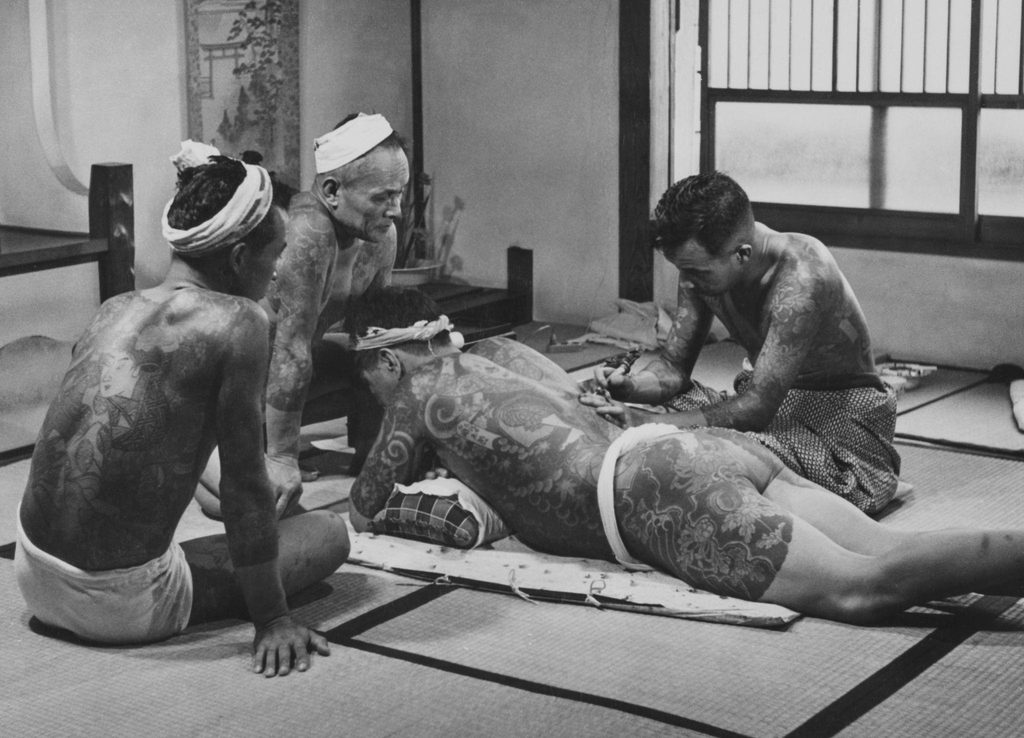
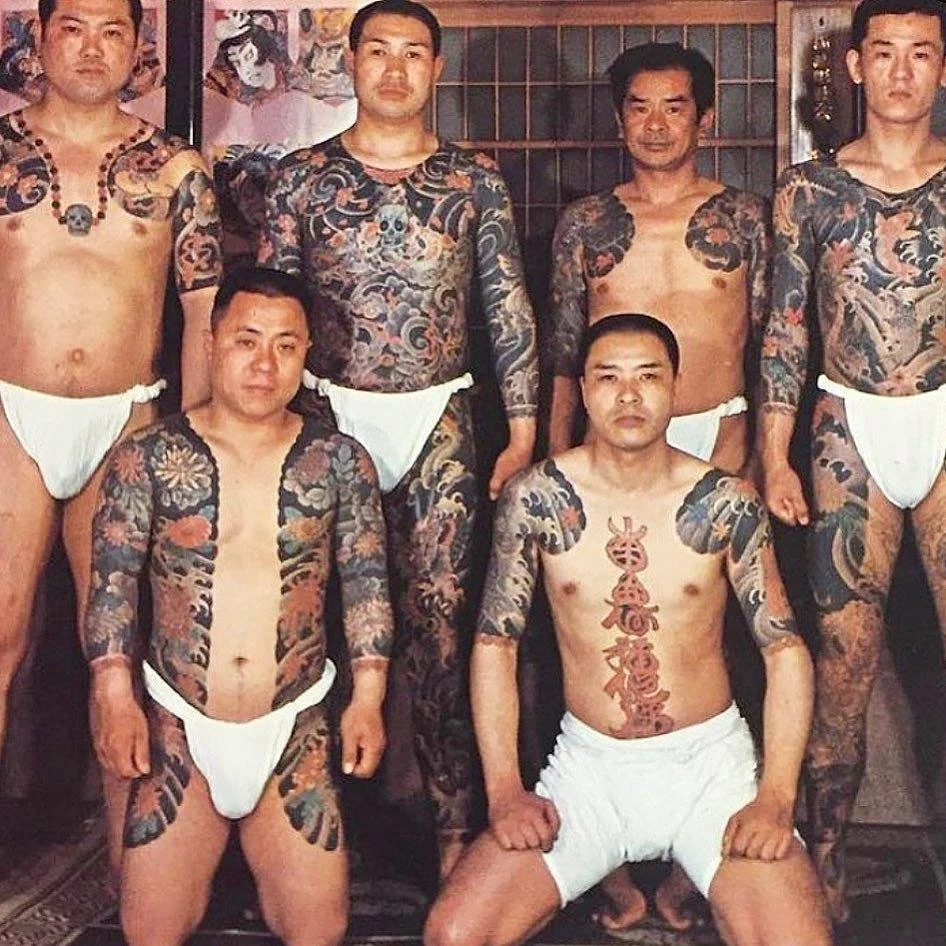
There is no single moment when a Yakuza leader decided that gang members should wear tattoos. The association developed over time.
Groups commonly discussed in histories of the Yakuza include bakuto, associated with gambling, and tekiya, associated with itinerant peddling and market activities. These communities existed closer to the social margins than Japan’s ruling classes.
As elaborate tattooing developed among working-class and marginal communities, it also found a place among people involved in the emerging criminal underworld.
Eventually, large-scale tattooing could communicate qualities valued within that environment.
Endurance
Completing a large Japanese bodysuit requires substantial time and repeated tattoo sessions. Historically, this made extensive tattooing a powerful demonstration of commitment and physical endurance.
Identity
A large tattoo permanently changes the body. Within an outsider community, that permanence could become a powerful expression of identity.
Defiance
Japanese tattoos increasingly existed outside mainstream social acceptance. Choosing extensive tattooing could therefore reinforce an identity separate from conventional society.
Privacy
Unlike many modern tattoos designed to be openly displayed, traditional Japanese bodysuits can be structured so that much of the artwork remains concealed beneath clothing.
This combination of commitment, secrecy and outsider identity helped make elaborate Irezumi particularly compatible with Yakuza culture.
But it still did not make Irezumi exclusively Yakuza.
How Did the Meiji Era Change Yakuza Tattoo History?
The Meiji Restoration of 1868 marked a period of rapid political and social transformation in Japan. The new government sought to modernize the country and reshape Japan’s international image. Tattooing increasingly conflicted with that vision.
Traditional tattooing was prohibited during the Meiji period, pushing an already controversial practice further outside mainstream public life. Historical accounts note that tattooing nevertheless continued, including among foreign visitors fascinated by Japanese tattoo craftsmanship.
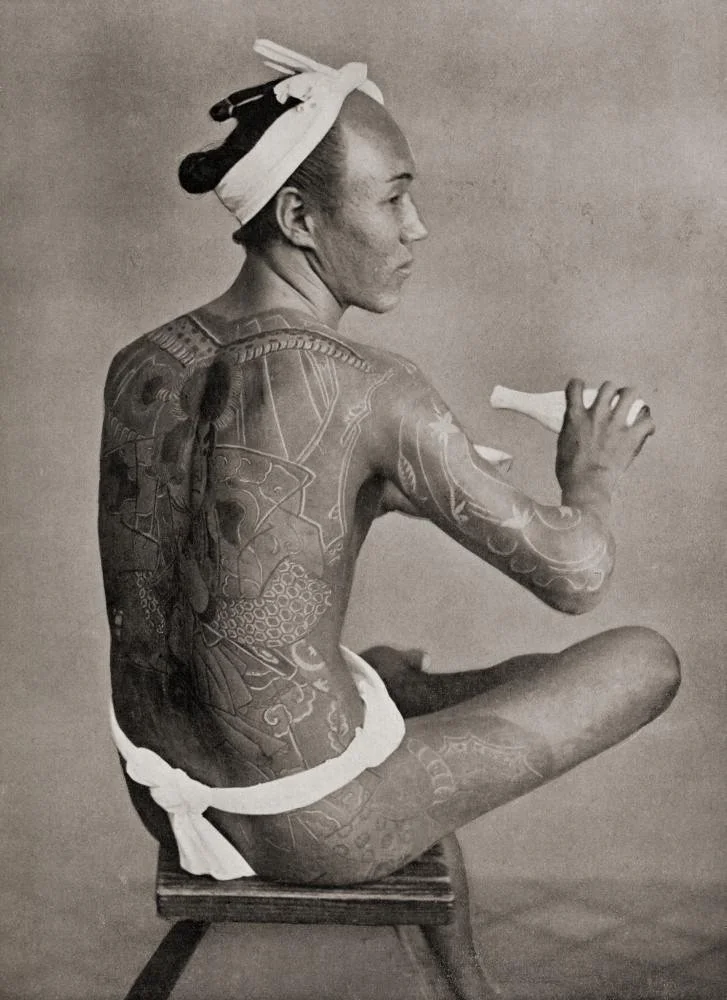
This had an important consequence. When an art form is pushed underground, the people most willing to continue practicing or collecting it are often those already comfortable existing outside conventional social boundaries.
The connection between tattooing and Japan’s underworld consequently became increasingly difficult to separate in the public imagination.
Are Irezumi and Yakuza Tattoo the Same Thing?
No. This is the most important takeaway from the entire history.
Irezumi is part of Japanese tattoo culture. The Yakuza are one social group historically associated with it.
The two overlap. They are not interchangeable.
Japanese tattoo artists have worked with many kinds of clients. Historical tattoo culture included working-class communities, and contemporary collectors around the world now wear traditional Japanese artwork without any relationship to organized crime.
The Japan Times has specifically highlighted this oversimplification, noting that explaining Japanese tattoo stigma entirely through the Yakuza ignores the broader and more complicated history of tattooing in Japan.
This distinction is particularly important today as Japanese tattoo art has become internationally celebrated.
Read more: Irezumi Tattoo: The History and Art of Traditional Japanese Tattoo
Do Modern Yakuza Still Get Tattoos?
Some do, but the stereotype should not be treated as a rule. Traditional full-body tattoos remain strongly associated with Yakuza imagery, but even reporting from more than a decade ago noted that tattooing had already fallen out of fashion among some gang members.
There is an obvious practical reason. If authorities, businesses and the public associate extensive Irezumi with organized crime, having a recognizable bodysuit can make anonymity more difficult.
Therefore, Not every Yakuza member is tattooed, and not every tattooed Japanese person is Yakuza.
That simple distinction is essential for understanding tattoo culture in modern Japan.
Frequently Asked Questions About Yakuza Tattoo History
1. Why do Yakuza have tattoos?
Historically, extensive tattooing became associated with Yakuza communities through overlapping traditions of working-class tattoo culture, social marginalization, endurance and underworld identity. Over time, Irezumi became one of the most recognizable symbols associated with Japanese organized crime.
2. Did Yakuza invent Irezumi?
No. Traditional Japanese decorative tattooing has a broader history and was practiced outside organized crime. The Yakuza became strongly associated with Irezumi but did not create the entire artistic tradition.
3. Were Japanese criminals tattooed as punishment?
Yes. During parts of the Edo period, punitive tattooing was used to mark people convicted of crimes. These marks should be distinguished from the elaborate decorative tattoos that developed as Japanese body art. Nippon
4. When did tattoos become associated with the Yakuza?
The relationship developed gradually rather than on a single date. Decorative tattooing flourished during the Edo period, while its later marginalization and adoption among underworld communities strengthened the Yakuza association through the nineteenth and twentieth centuries.
5. Are all traditional Japanese tattoos Yakuza tattoos?
No. Irezumi is a broader Japanese tattoo tradition. Many people with traditional Japanese tattoos have no connection whatsoever to the Yakuza.
6. Why are tattoos still restricted in some Japanese onsen?
One major factor is the historical association between visible tattoos and organized crime. As a result, some facilities developed blanket tattoo restrictions, although policies differ and attitudes are gradually changing. Japan Times
7. Do all Yakuza members have full-body tattoos?
No. Full-body Irezumi is strongly associated with the traditional Yakuza image, but it has never meant that every member must have one.
Final Thoughts: Why Did Tattoos Become Linked to the Yakuza?
The history of the Yakuza Tattoo cannot be reduced to “Japanese criminals tattooed themselves.”
The connection developed through centuries of changing attitudes toward tattooing—from punitive markings and Edo working-class culture to ukiyo-e-inspired body art, prohibition, underground practice and eventually the powerful image of the tattooed gangster.
The Yakuza became one of Irezumi’s most visible associations.
But Yakuza Tattoo history is only one chapter in the much larger history of Japanese tattoo art.
Understanding that difference allows us to appreciate Irezumi without reducing an entire artistic tradition to organized crime.
Explore Traditional Japanese Tattoo Art in Hanoi
Inspired by the history and visual language of Japanese tattooing?
At 3 of Spades Hanoi Tattoo, we can help develop a Japanese-style tattoo around your preferred subject, meaning, placement and body composition.
Send us your reference images, approximate size, placement and Hanoi travel dates before your visit, especially if you’re considering a larger piece.
Every tattoo has a story. Let’s create yours.