- What Does a Japanese Koi Fish Tattoo Mean?
- Why Does a Japanese Koi Fish Tattoo Represent Perseverance?
- What Is the Legend Behind the Japanese Koi Fish Tattoo?
- What Does a Japanese Koi and Dragon Tattoo Mean?
- Where Does a Japanese Koi Fish Tattoo Work Best?
- Is a Japanese Koi Fish Tattoo a Yakuza Tattoo?
- Frequently Asked Questions About Japanese Koi Fish Tattoo
- Create Your Japanese Koi Fish Tattoo in Hanoi
A koi swims against a powerful current. Waves crash around its body, yet it continues forward. This image has become one of the most recognizable subjects in Japanese tattoo art—and its popularity is not based on appearance alone.
The Japanese Koi Fish Tattoo is commonly associated with perseverance, strength, ambition and transformation. Its symbolism draws from the cultural importance of carp in East Asia, particularly the famous legend of a carp overcoming the current and transforming into a dragon.
But a koi tattoo can tell different stories.
Is the fish swimming upstream or downstream? Is it red, black, blue or gold? Is it surrounded by lotus flowers or swimming toward a dragon? Each decision can change how we interpret the composition.
So before choosing a koi because it “means strength,” it is worth exploring the much deeper story swimming beneath the surface.
What Does a Japanese Koi Fish Tattoo Mean?
A Japanese Koi Fish Tattoo most commonly represents:
• Perseverance — continuing despite obstacles
• Strength — enduring difficult circumstances
• Transformation — becoming something greater through struggle
• Ambition — pursuing a difficult goal
• Courage — confronting challenges rather than avoiding them
• Good fortune — reflecting the auspicious cultural associations of carp
• Success — overcoming difficulty to reach an important goal
However, Japanese koi symbolism does not function like a fixed tattoo dictionary. The meaning can change according to the fish’s direction, color, surrounding elements and the personal story of the wearer.
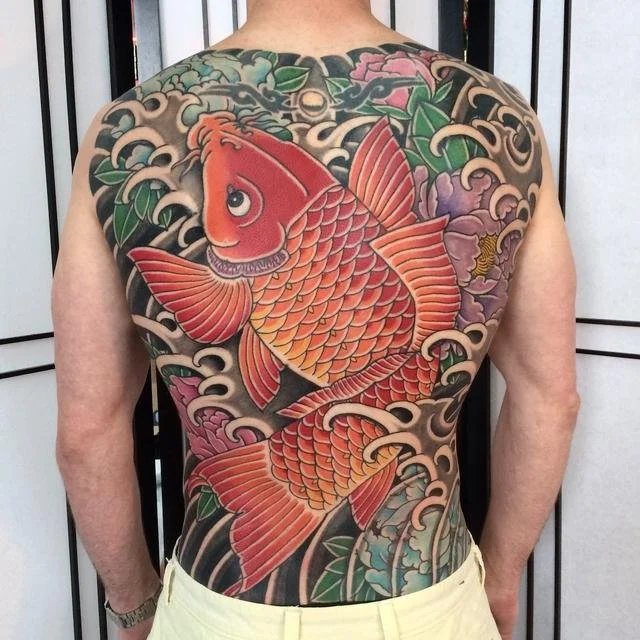
This flexibility is one reason koi remain such powerful tattoo subjects. A koi can represent someone still fighting through a difficult chapter. Or someone looking back after surviving it.
The same fish can tell two very different stories depending on where it is going.
Why Does a Japanese Koi Fish Tattoo Represent Perseverance?
The koi’s association with perseverance comes from the nature of the carp itself and centuries of East Asian cultural symbolism.
Carp are known for swimming against currents and overcoming difficult waterways. That behavior became a natural metaphor for human persistence.
In Japan, carp became particularly powerful symbols of strength and determination. The koinobori, carp-shaped streamers displayed for Children’s Day, reflect this symbolism.
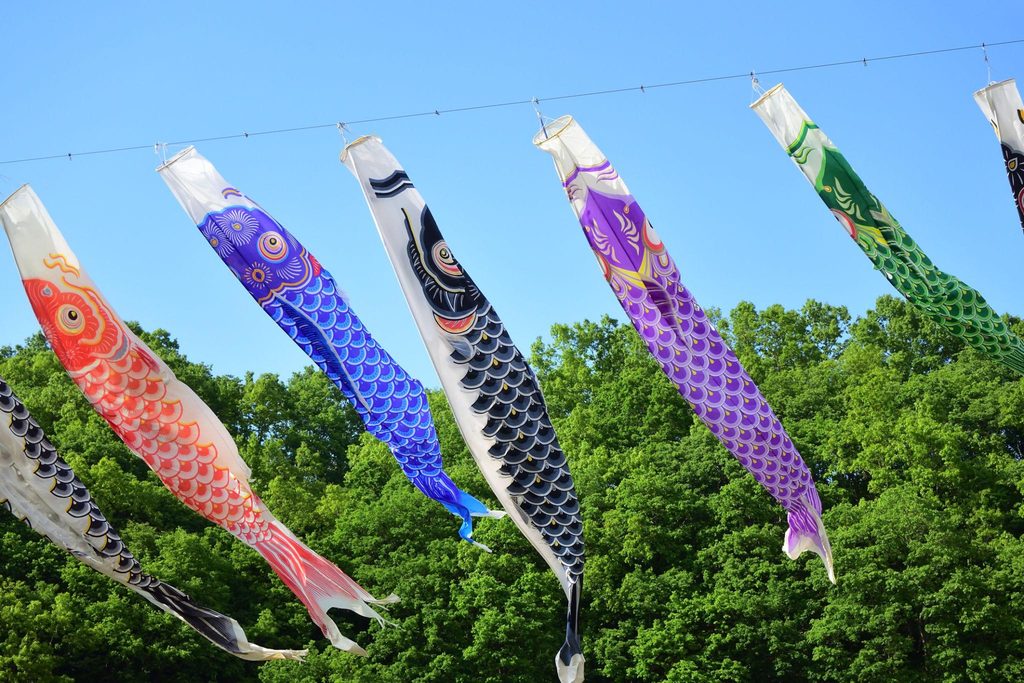
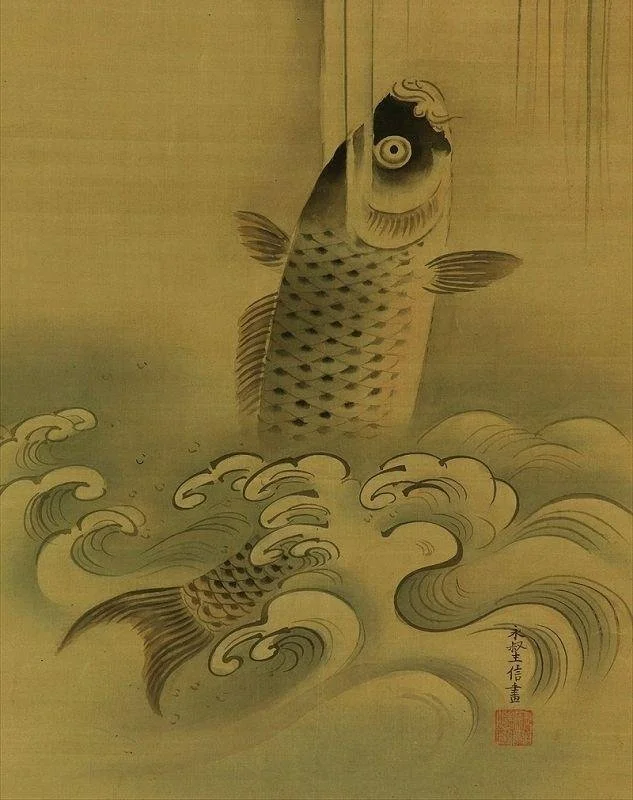
Japan’s Ministry of Foreign Affairs describes koinobori as carp streamers traditionally flown in hopes that children will grow up healthy and strong.[1]
That cultural association makes the koi particularly suitable for a tattoo representing someone who refuses to surrender when life becomes difficult.
It doesn’t symbolize a life without obstacles. It symbolizes the ability to keep swimming when the current pushes back.
What Is the Legend Behind the Japanese Koi Fish Tattoo?
One of the most famous stories associated with carp symbolism actually originates in Chinese tradition before spreading throughout East Asian culture.
The story centers on the Dragon Gate.
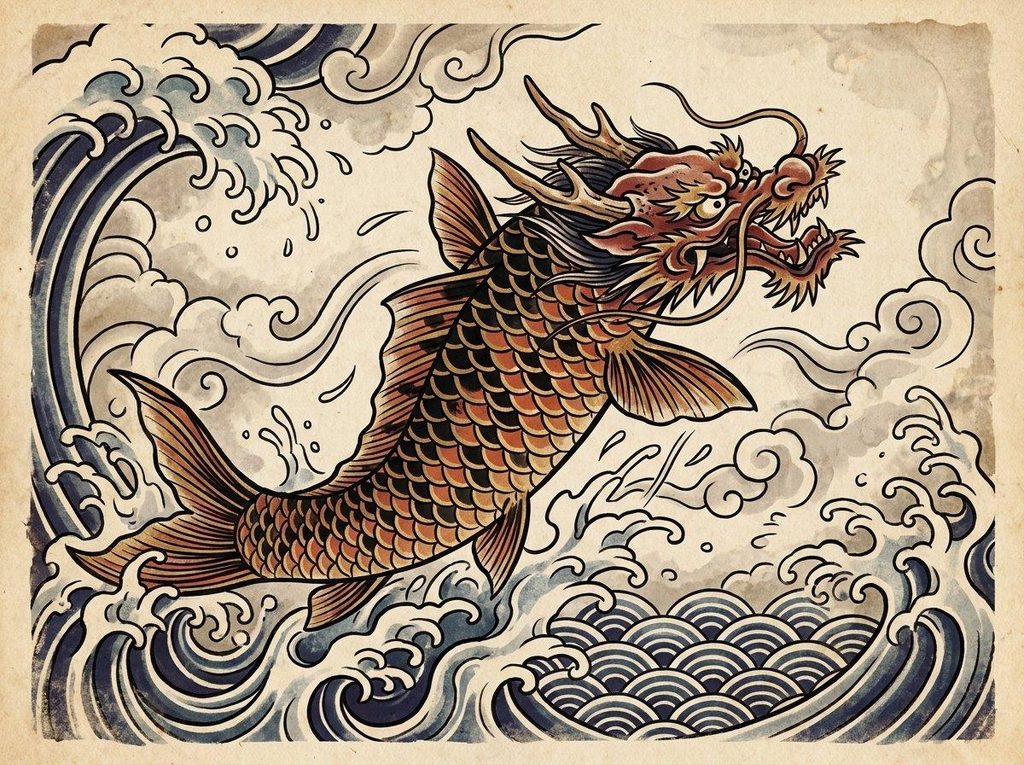
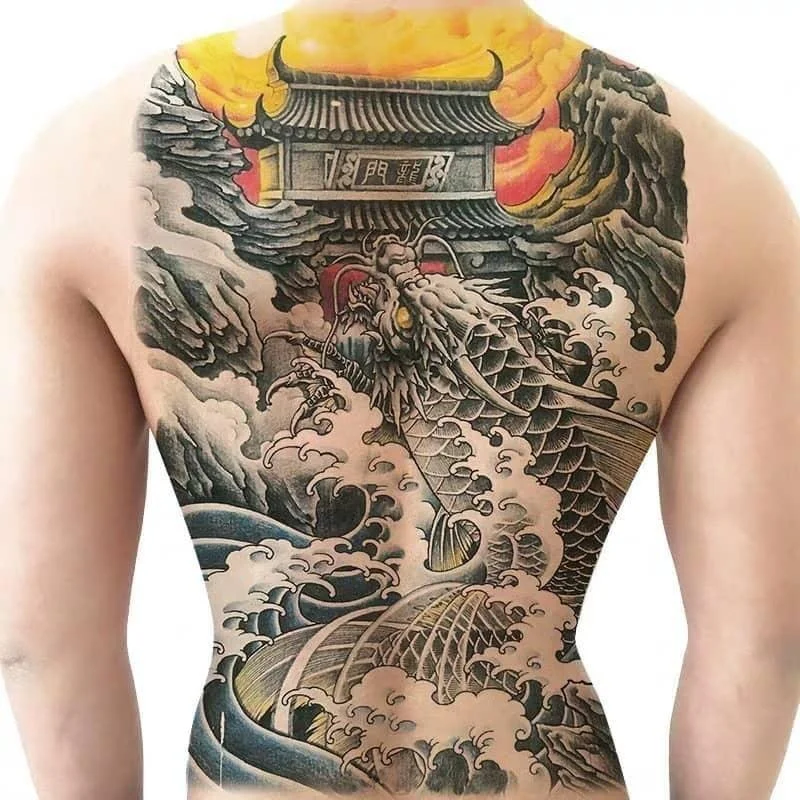
According to the legend, a carp that successfully swims upstream and overcomes the powerful currents and waterfalls at the Dragon Gate is transformed into a dragon.
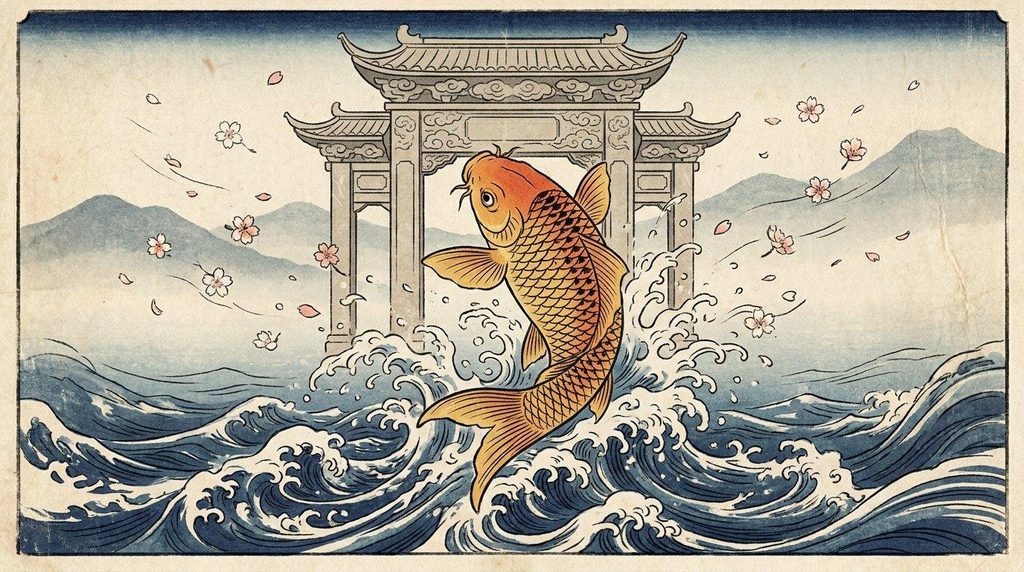
The story became a metaphor for:
Effort → struggle → achievement → transformation
A small fish confronts an apparently impossible obstacle. Instead of turning around, it continues. At the end of that struggle, it becomes something greater than what it was before.
This is why koi and dragon imagery can work so naturally together in Japanese tattooing. The dragon isn’t simply another powerful creature added to the design. It can represent what the koi is becoming.
What Does a Japanese Koi and Dragon Tattoo Mean?
The koi and dragon create one of the clearest visual stories available in Japanese-inspired tattooing. Remember the Dragon Gate legend:
The carp struggles against the current. It reaches the gate. It transforms into a dragon.
Therefore:
Koi = perseverance
Journey = struggle
Dragon = transformation and achievement
A tattoo containing both can represent the entire process. It works particularly well for someone whose story is not simply about surviving difficulty but about becoming fundamentally different because of it.
Where Does a Japanese Koi Fish Tattoo Work Best?
The koi’s curved body makes it extremely adaptable to human anatomy. Its shape naturally creates movement, while water and flowers can connect the main subject to the surrounding body.
Japanese Koi Fish Sleeve Tattoo
The arm is ideal for creating vertical movement. A koi can swim upward toward the shoulder or move downward toward the forearm while waves wrap around the arm.
Japanese Koi Fish Back Tattoo
The back allows a much larger story. Artists can incorporate multiple koi, waterfalls, dragons, flowers and extensive backgrounds without sacrificing readability.
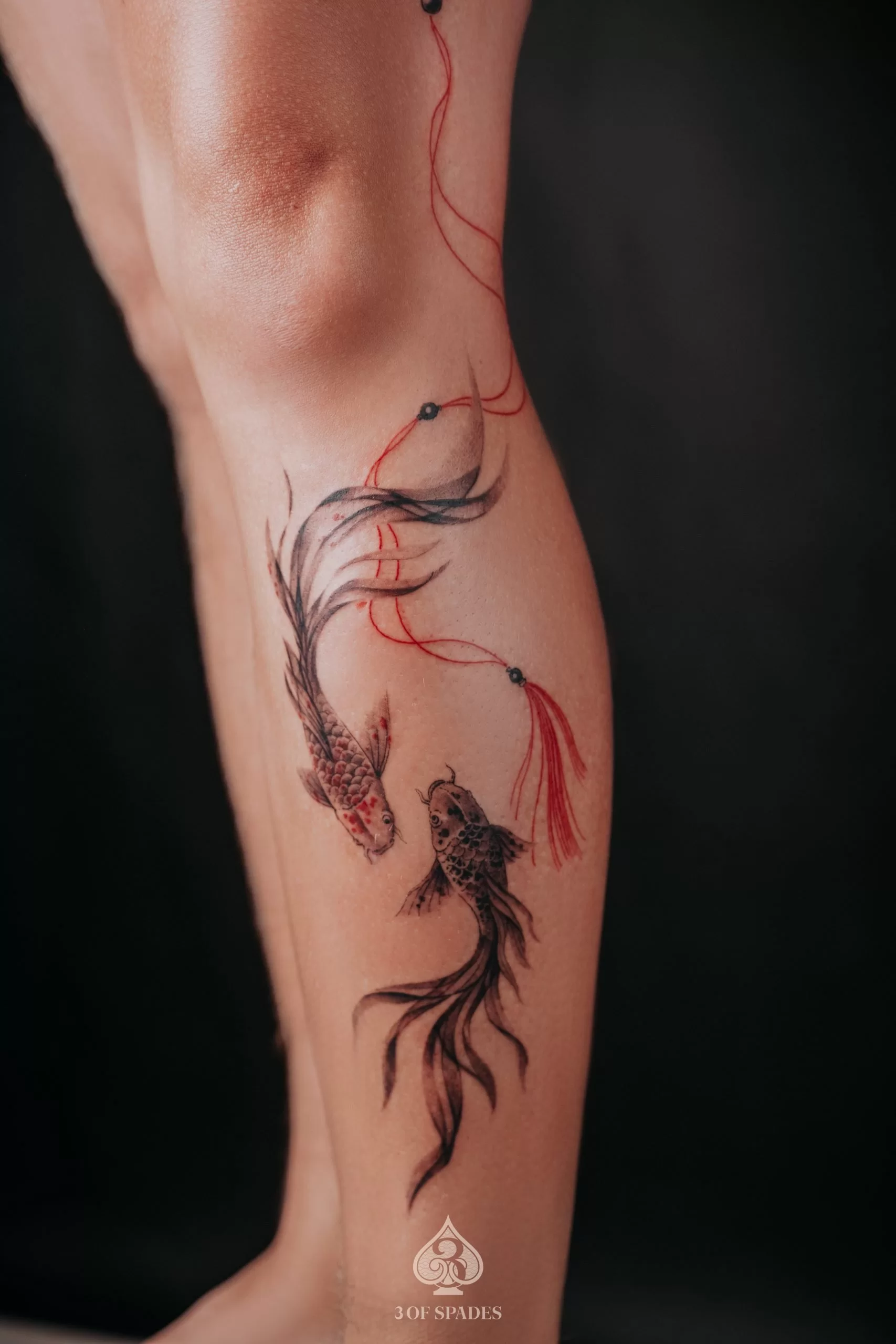
Japanese Koi Fish Leg Tattoo
The leg works particularly well for swimming movement because the koi can follow the vertical anatomy of the thigh and calf.
Japanese Koi Fish Forearm Tattoo
A forearm piece can work as a standalone tattoo or become the beginning of a larger sleeve. If you may eventually extend the tattoo, tell your artist before designing the first piece so enough compositional space remains for future elements.
Is a Japanese Koi Fish Tattoo a Yakuza Tattoo?
No.
Koi appear frequently within traditional Japanese tattooing, and traditional Irezumi became historically associated with the Yakuza. But this does not make the koi itself a Yakuza symbol.
Carp symbolism has a much broader history in Japanese and East Asian culture, appearing in festivals, visual art and stories of strength and success. A koi tattoo therefore does not indicate Yakuza membership.
This distinction is important because reducing every traditional Japanese tattoo to organized crime ignores centuries of broader artistic and cultural history.
Read More: Yakuza Tattoo History: How Tattoos Became Linked to the Yakuza
Frequently Asked Questions About Japanese Koi Fish Tattoo
1. What does a Japanese Koi Fish Tattoo mean?
A Japanese Koi Fish Tattoo commonly symbolizes perseverance, strength, ambition and transformation. Its meaning can change according to color, swimming direction and accompanying elements.
2. What does a koi swimming upstream mean?
An upstream koi is commonly interpreted as continuing to fight through obstacles, pursuing a goal or refusing to give up despite resistance.
3. What does a koi swimming downstream mean?
A downstream koi is often interpreted as having overcome adversity, accepting change or moving forward after a difficult period. These direction meanings are popular interpretations rather than rigid historical rules.
4. What does a koi and dragon tattoo mean?
The pairing draws from the Dragon Gate legend in which a carp overcoming the current transforms into a dragon. It can symbolize perseverance leading to transformation and achievement.
5. Is a koi fish tattoo Japanese or Chinese?
Carp symbolism exists across East Asian cultures. The famous Dragon Gate legend originates in Chinese tradition, while koi also developed important symbolism within Japanese culture and became a major subject in traditional Japanese tattoo art.
Read more: Japanese Tiger Tattoo Meaning: Courage, Strength & Protection
Create Your Japanese Koi Fish Tattoo in Hanoi
Have a story you want to turn into a koi tattoo?
At 3 of Spades Hanoi Tattoo, our artists can help develop your Japanese Koi Fish Tattoo around your story, placement and body composition.
Send us your reference images, preferred placement, approximate size and Hanoi travel dates before your visit.
Every tattoo has a story. Let’s create yours.