- What Is a Hannya Tattoo?
- Where Did the Hannya Tattoo Originate?
- What Is the Story Behind the Hannya Demon?
- Is the Hannya a Woman or a Demon?
- What Does a Hannya Tattoo Mean Today?
- What Do Hannya Tattoo Colors Mean?
- How Did the Hannya Mask Become a Japanese Tattoo Design?
- Frequently Asked Questions About Hannya Tattoo
- Final Thoughts: The Woman Behind the Hannya Tattoo
- Create Your Hannya Tattoo in Hanoi
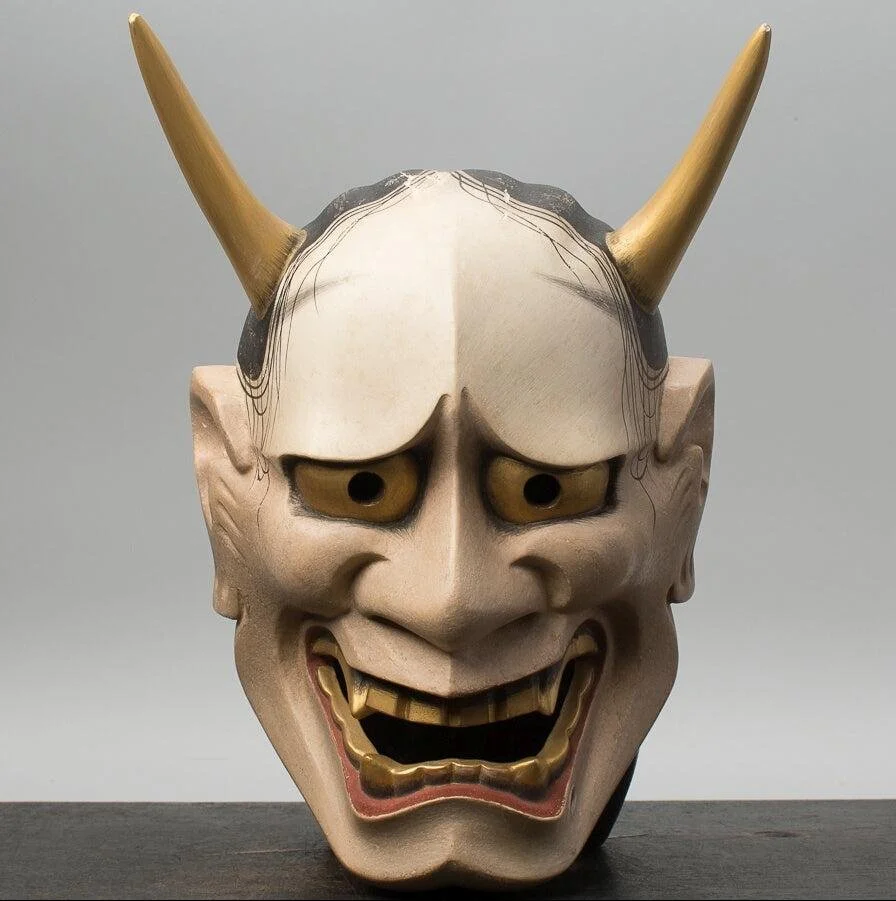
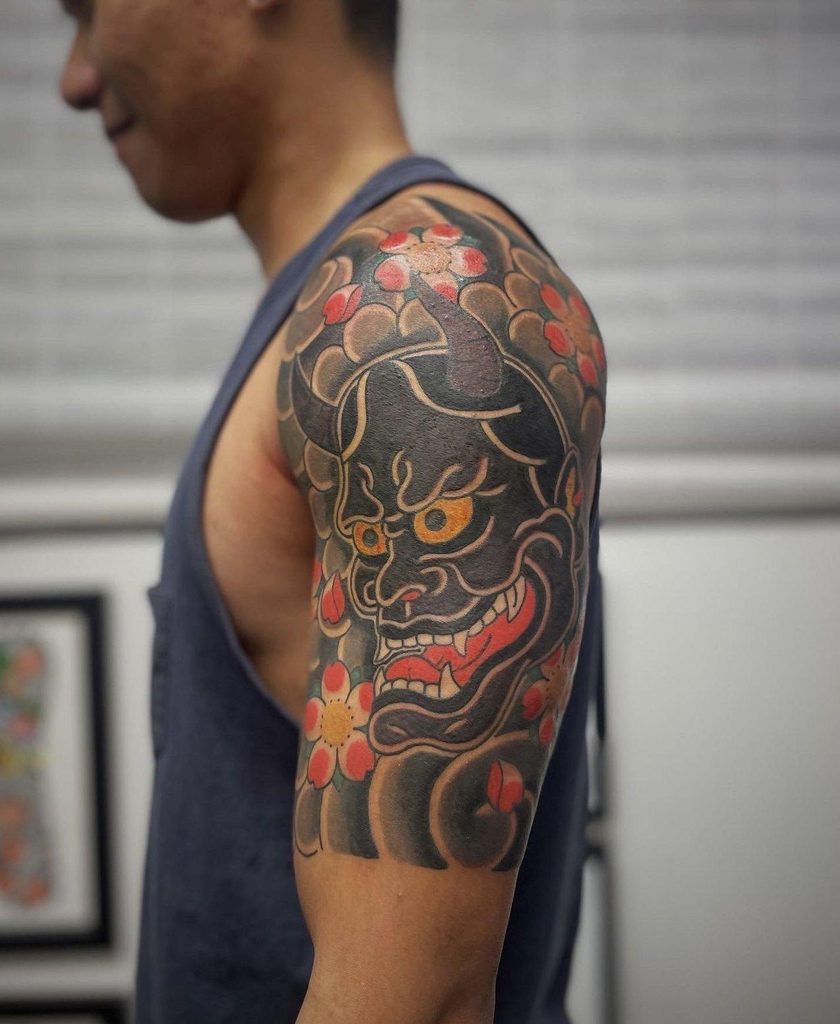
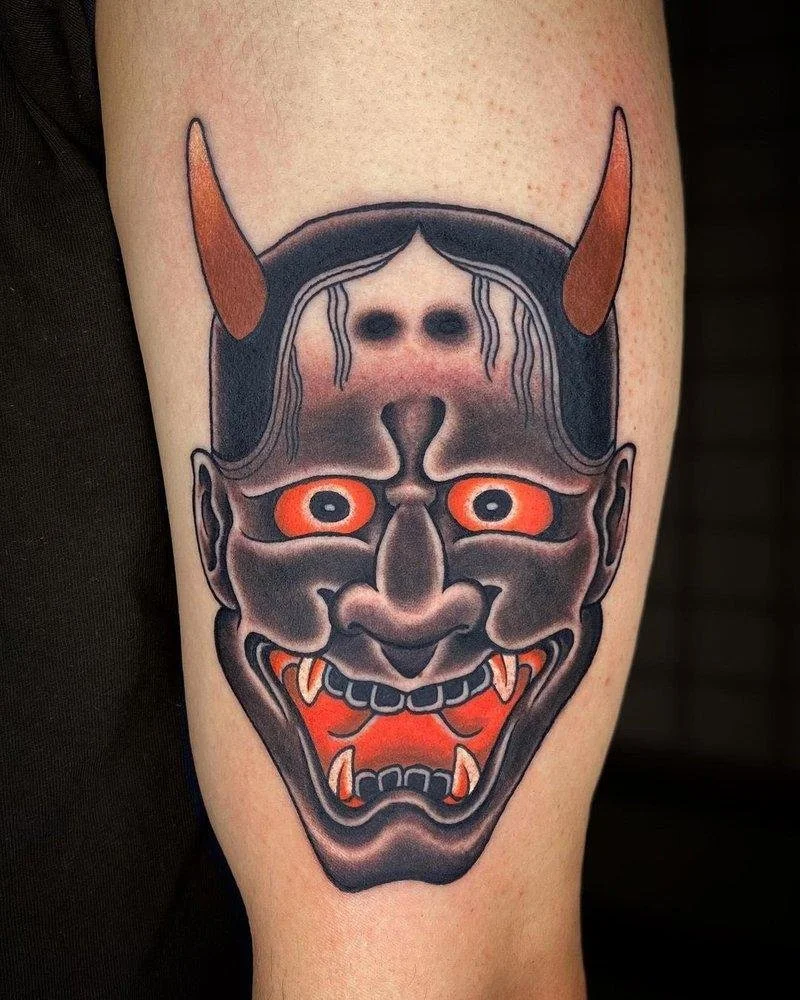
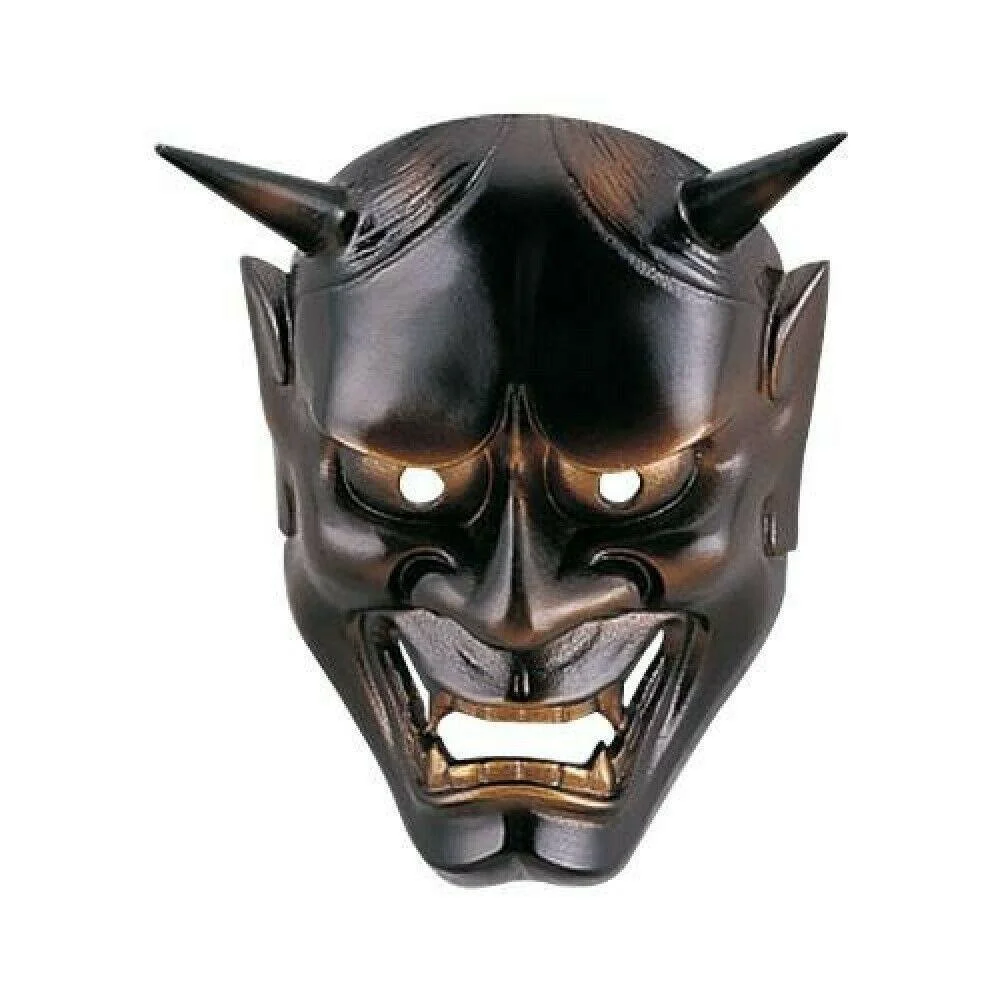
Two horns rise from its forehead. Its eyes are sharp, its mouth stretches into a terrifying expression, and its teeth seem ready to bite. At first glance, the Hannya Tattoo looks like the face of a furious Japanese demon.
But look closer. Depending on how the mask is tilted, that same face can appear not only angry but deeply sorrowful.
This is what makes the Hannya so fascinating. Behind its frightening appearance is a story about a human emotion becoming so overwhelming that it transforms the person experiencing it.
Originating in Japanese Noh theatre, the Hannya mask represents a woman transformed into a demon through jealousy, resentment and emotional suffering.
Yet the Hannya is more than a symbol of rage. It is also a symbol of heartbreak, vulnerability and the frightening consequences of emotions left unchecked.
To understand the Hannya Tattoo, we need to understand the woman behind the mask.
What Is a Hannya Tattoo?
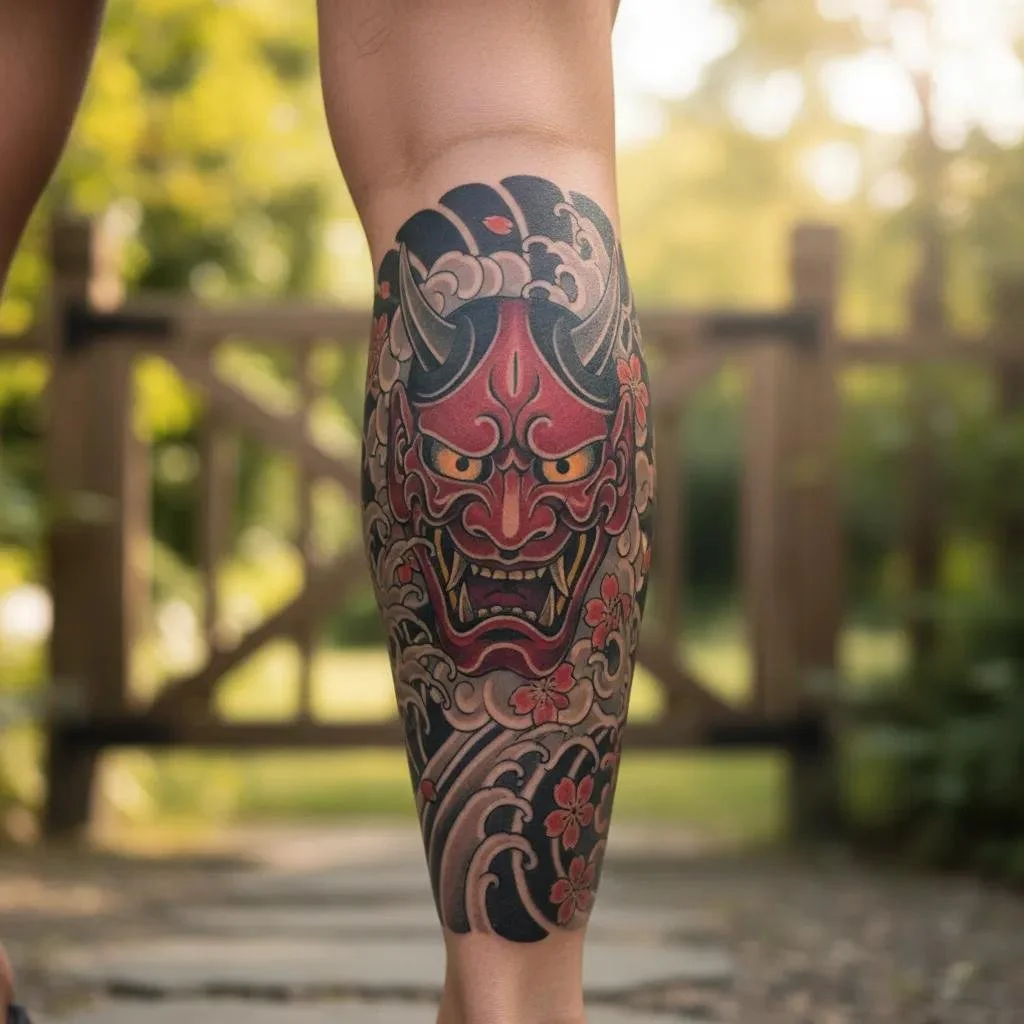
A Hannya Tattoo depicts a mask from traditional Japanese Noh theatre, where the Hannya represents a female character who has transformed into a demon.
The mask is recognized by several distinctive features:
• Two horns projecting from the forehead
• Sharp, intense eyes
• An open mouth with pointed teeth
• A combination of human and supernatural facial features
• An expression that can appear furious or sorrowful
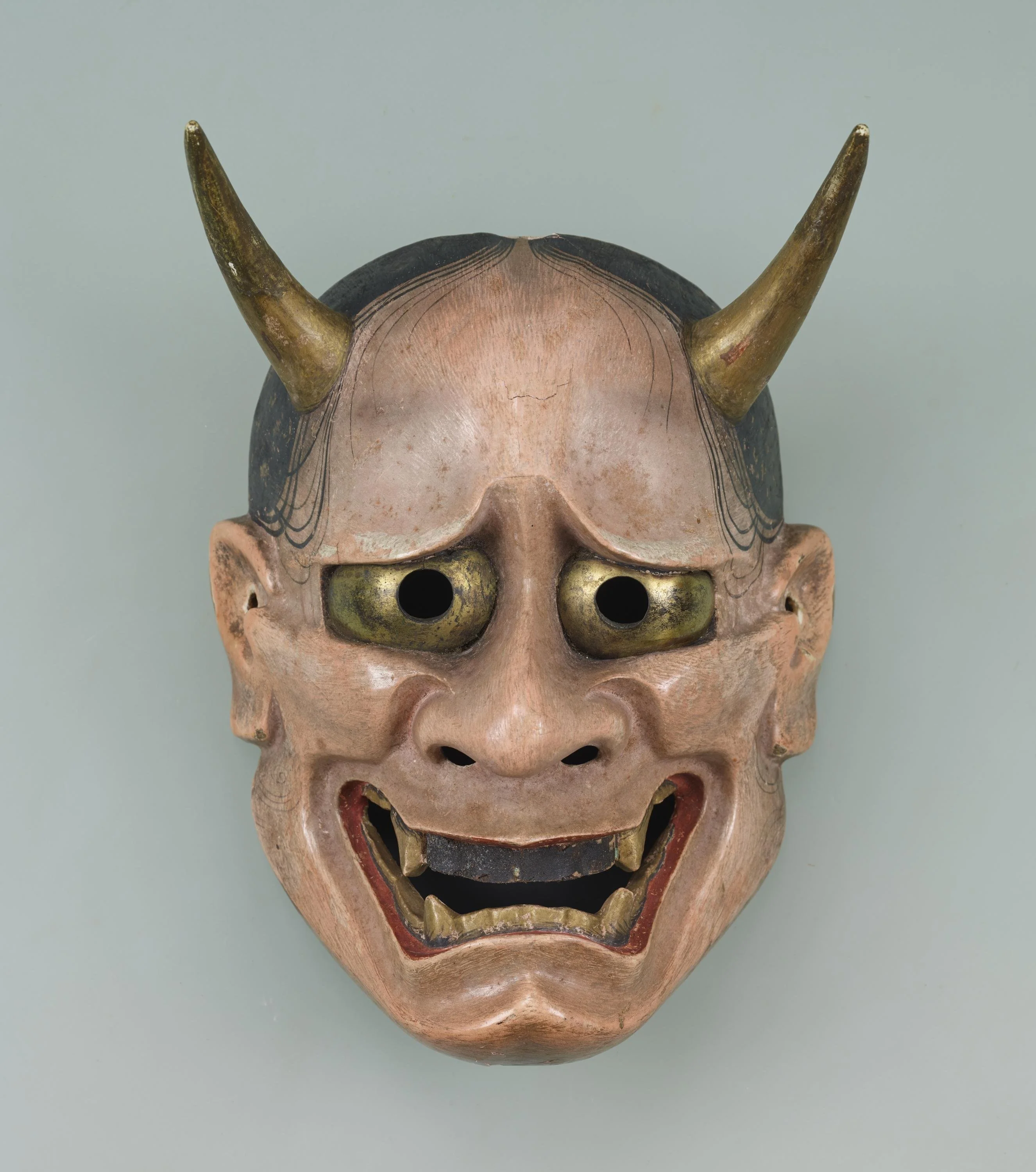
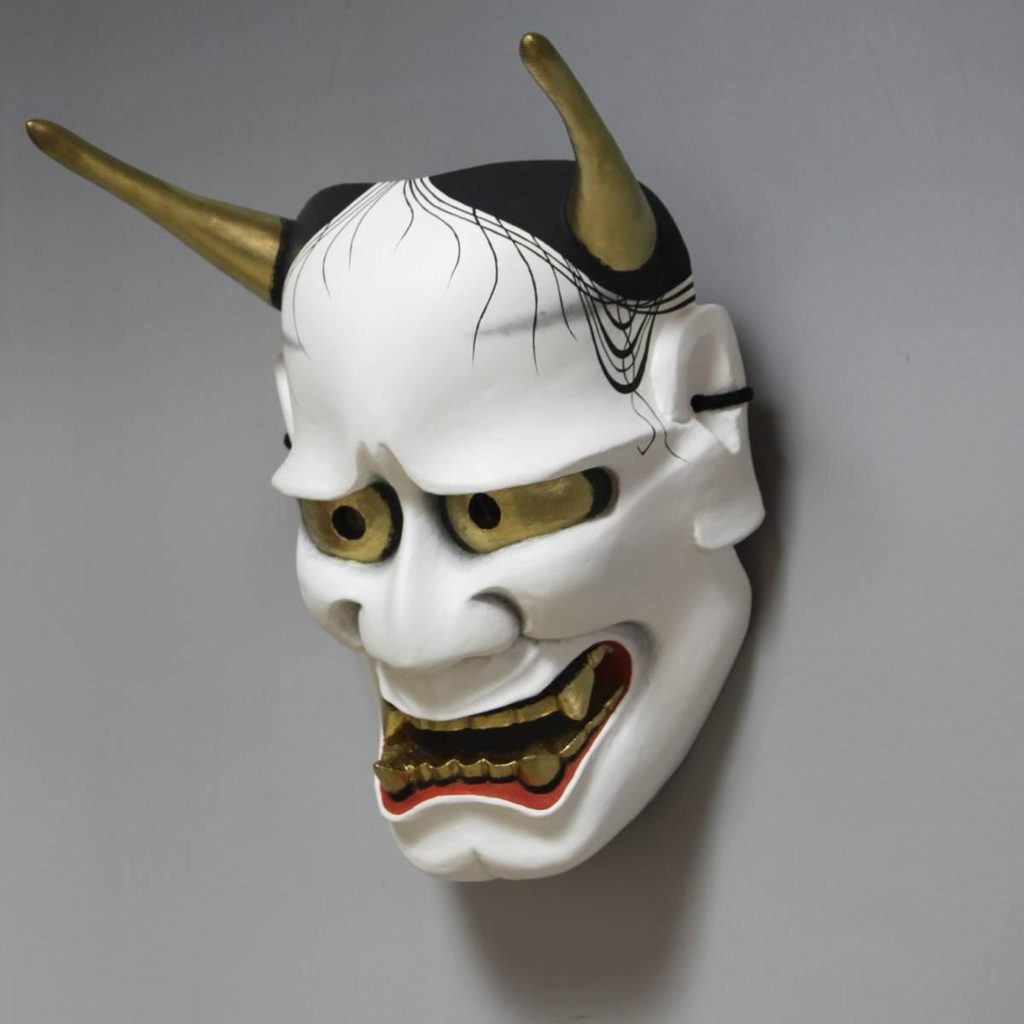
Although Hannya is often described as a Japanese demon, it is important to understand that the mask is not simply a representation of evil. In Noh theatre, the character’s transformation is connected to intensely human experiences, particularly jealousy, attachment and suffering.
That complexity is central to its meaning. A Hannya tattoo can therefore represent a personal struggle with destructive emotions, a reminder of emotional transformation or an appreciation of Japanese theatrical art.
The Hannya is frightening because something deeply human remains behind its demonic face.
Where Did the Hannya Tattoo Originate?
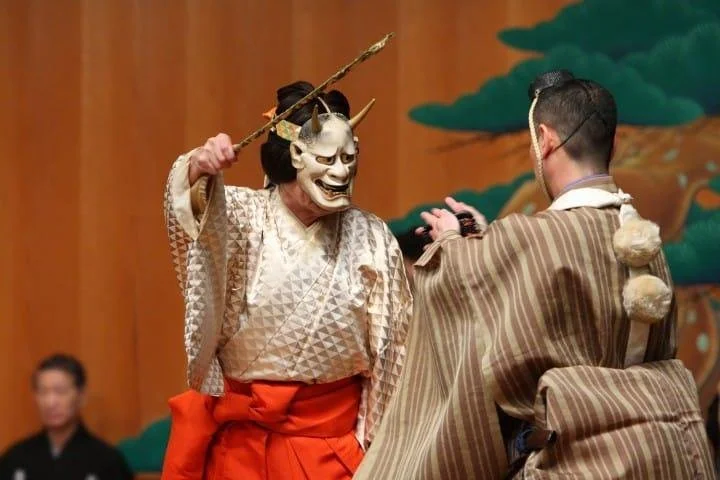
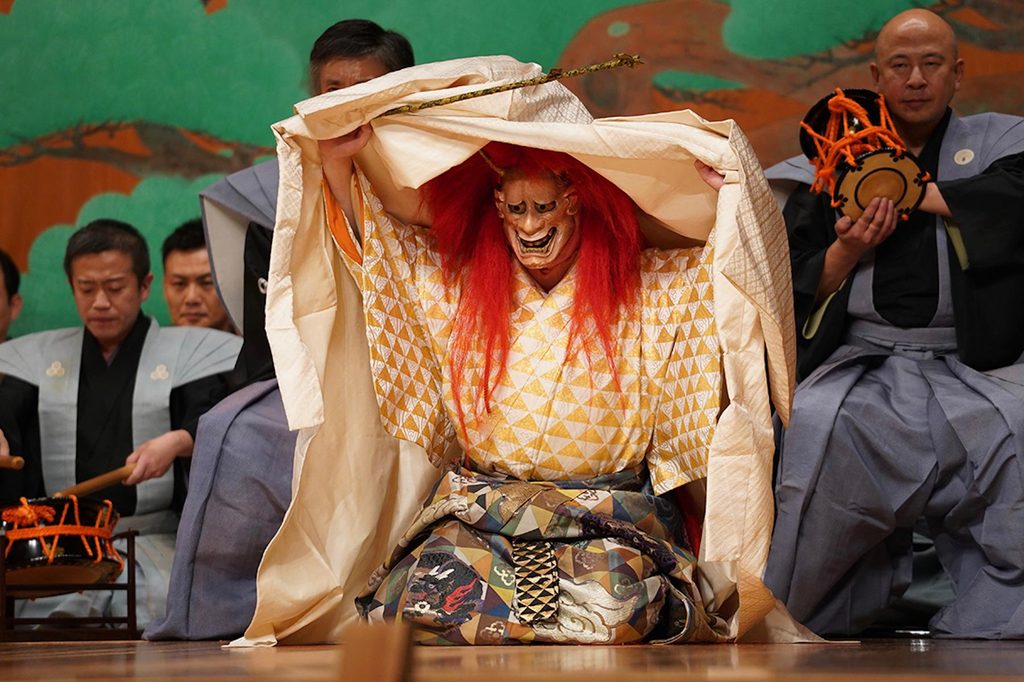
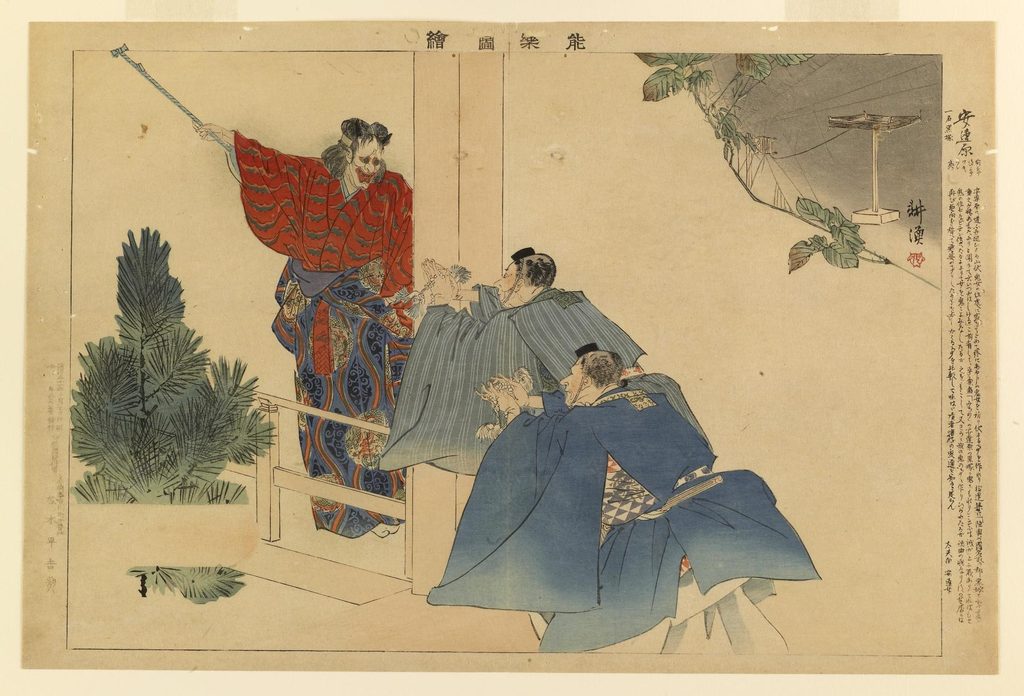
The Hannya Tattoo originates from the imagery of Noh, one of Japan’s oldest surviving theatrical traditions. Noh developed into a highly refined dramatic art during the medieval period, particularly in the fourteenth and fifteenth centuries.
Its performances combine poetry, music, dance, stylized movement and masks to communicate complex emotional and spiritual experiences.
Why are masks important in Noh theatre?
Unlike realistic theatre, Noh does not rely on exaggerated facial movement to communicate emotion. Instead, the performer uses carefully controlled gestures, posture and the angle of the mask. A slight change in the actor’s head position can dramatically alter how the audience interprets the expression.
This is especially important for the Hannya. The mask’s frightening appearance contains emotional ambiguity. It is not simply angry. It can also seem wounded.
Why is the mask called Hannya?
The exact origin of the name is debated. One traditional explanation connects it to a mask carver named Hannya-bō. Another relates it to hannya, a Buddhist term associated with wisdom, derived from the Sanskrit prajñā.
However, these explanations should not be confused with the mask’s theatrical role. The Hannya mask itself represents a transformed female character, not a Buddhist deity of wisdom.
What Is the Story Behind the Hannya Demon?
There is no single story that explains every Hannya mask. Instead, Hannya imagery appears within a broader tradition of Japanese theatrical stories involving jealousy, obsession, betrayal and supernatural transformation.
One of the most famous examples is Dōjōji.
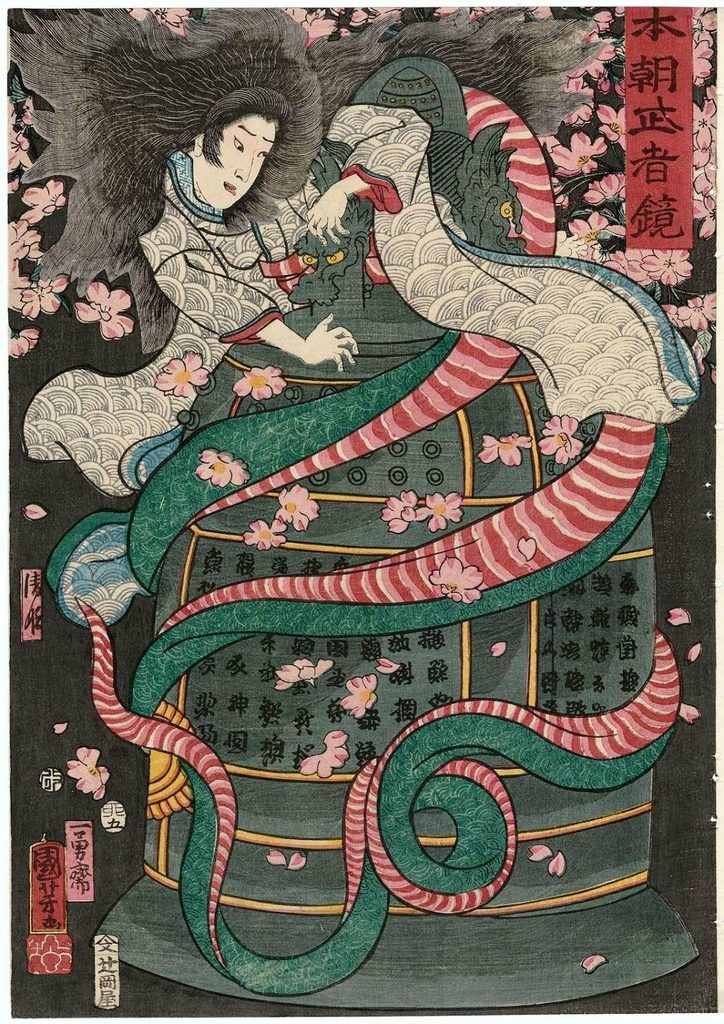
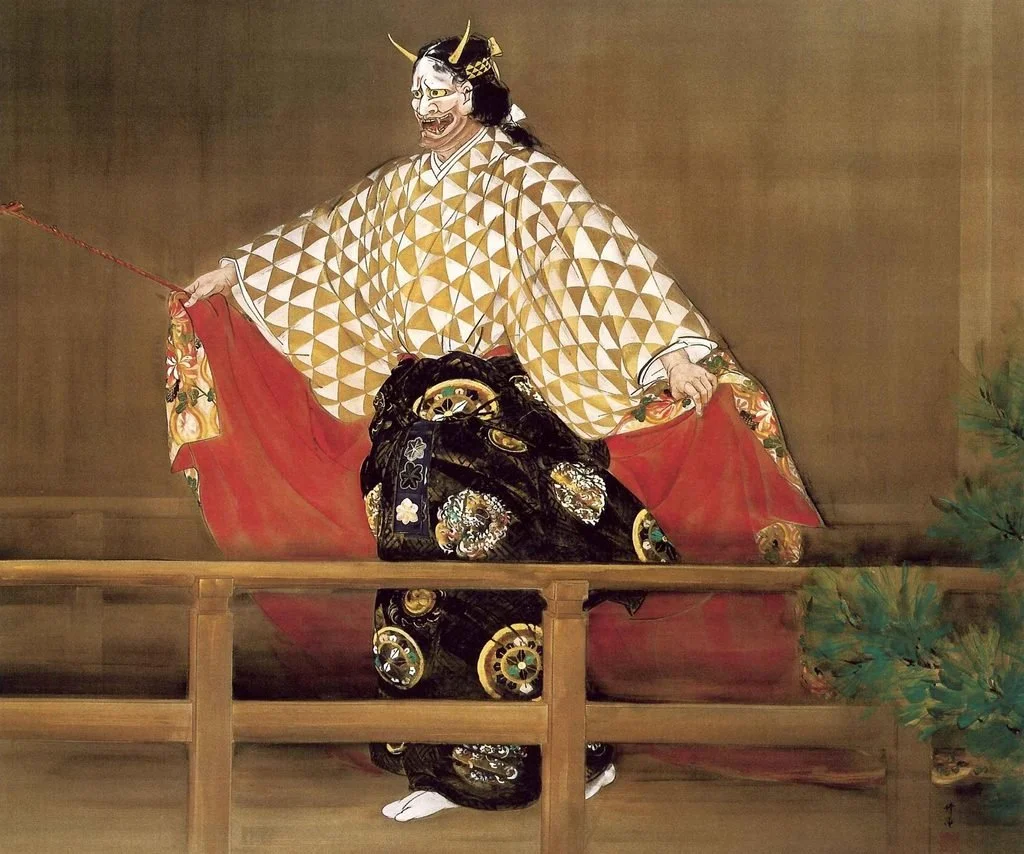
The legend of Kiyohime and Anchin
The Dōjōji legend is commonly associated with a young woman named Kiyohime and a Buddhist monk named Anchin.
In familiar versions of the story, Kiyohime falls in love with Anchin. When he rejects or flees from her, her feelings develop into overwhelming rage and obsession. She pursues him, eventually transforming into a monstrous serpent. Anchin hides beneath a temple bell at Dōjōji, but Kiyohime coils around the bell and destroys him with supernatural fire.
The story has multiple versions across Japanese literature, folklore and performing arts. The Noh play Dōjōji presents a stylized theatrical treatment rather than reproducing every detail of the popular legend.
What does this story reveal about Hannya?
The tragedy is not simply that a woman becomes a monster. It is that emotions once associated with love become destructive. Affection becomes attachment. Attachment becomes jealousy. Jealousy becomes rage. And rage consumes both the object of desire and the person experiencing it.
The Hannya mask captures that moment when emotional suffering takes on a terrifying form.
Read More: Japanese Tattoo History: From Ancient Japan to Modern Irezumi
Is the Hannya a Woman or a Demon?
The answer is both, within the theatrical story.
The Hannya represents a female character whose emotional transformation has given her a demonic appearance. This distinction matters because Hannya masks are sometimes incorrectly described as ordinary Japanese Oni masks.
What Does a Hannya Tattoo Mean Today?
In contemporary tattoo culture, the Hannya has developed meanings that extend beyond its original theatrical role. Some people choose the mask because of its dramatic appearance. Others connect with its emotional complexity.
The most common modern interpretations include:
• Jealousy: Recognizing the destructive potential of envy and obsession.
• Heartbreak: Remembering a painful relationship or emotional loss.
• Transformation: Acknowledging how intense experiences can change a person.
• Inner conflict: The struggle between compassion, anger and resentment.
• Self-awareness: A reminder to understand difficult emotions rather than let them control your actions.
• Protection: A modern interpretation in which the frightening mask serves as a warning or symbolic guardian.
What Do Hannya Tattoo Colors Mean?
Hannya masks can appear in different colors, and those colors have meaningful relationships to particular Noh characters and performances.
However, the popular idea that every Hannya color represents a precise level of jealousy is an oversimplification.
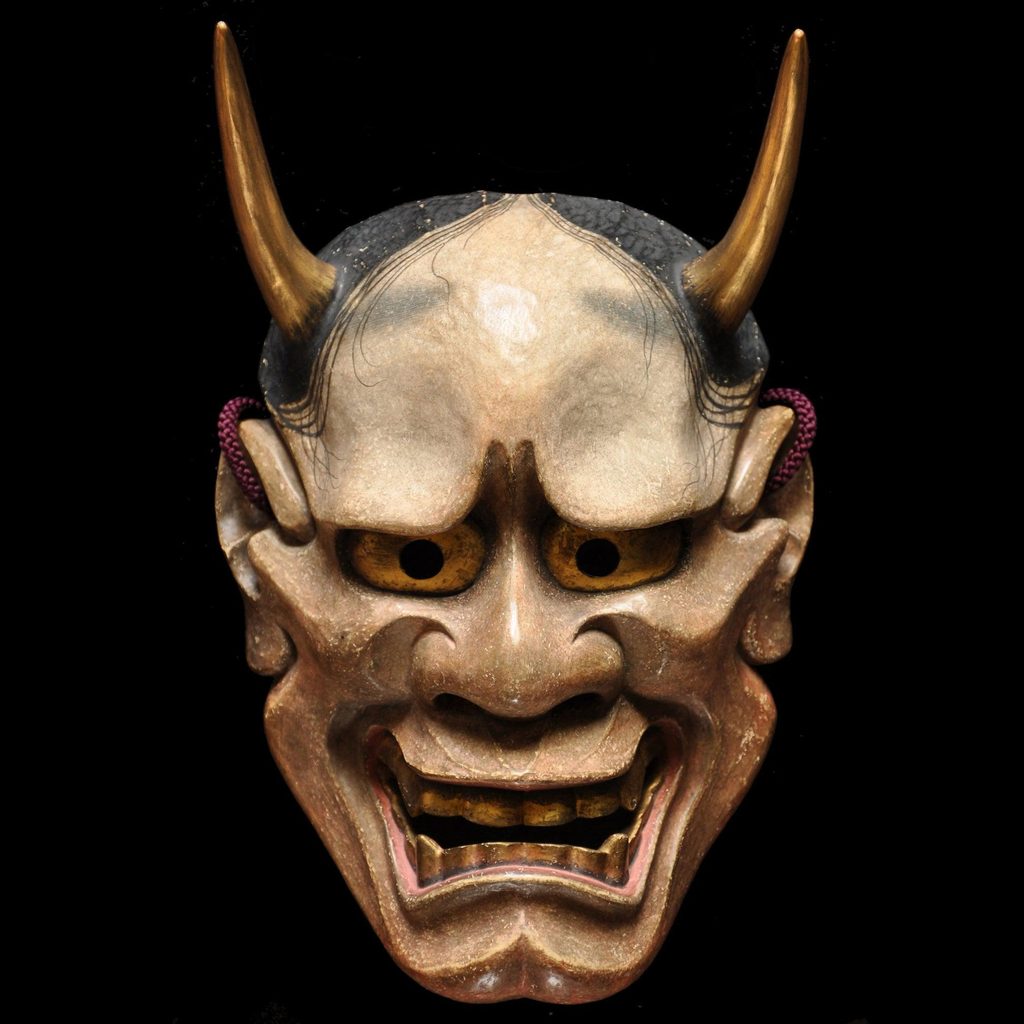
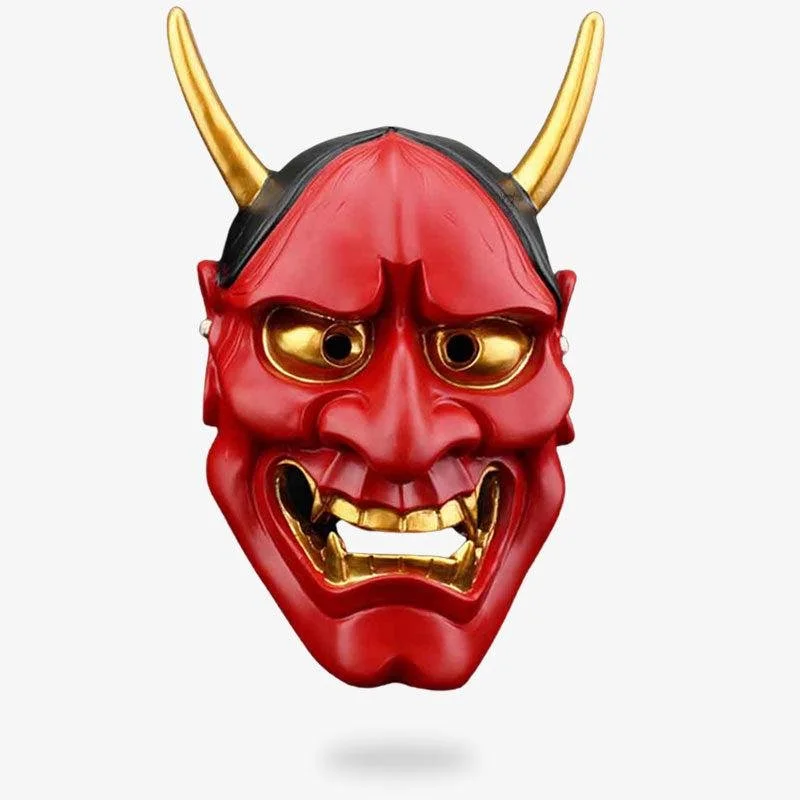
The Noh reference resource the-Noh.com identifies these three mask-color associations with the plays Aoi no Ue, Dōjōji and Kurozuka.
In tattooing, artists may also choose colors for visual contrast, personal meaning or the overall composition. A black-and-grey Hannya tattoo, for example, does not automatically represent the same character as a black theatrical mask.
How Did the Hannya Mask Become a Japanese Tattoo Design?
The Hannya existed in Japanese performance and decorative art long before its popularity in modern tattooing. Historical objects show how the mask’s image circulated beyond the Noh stage.
For example, the Metropolitan Museum of Art preserves eighteenth- and nineteenth-century netsuke carvings depicting Hannya masks, as well as an eighteenth-century artwork representing the mask.
As Japanese tattooing developed its elaborate visual language, artists drew inspiration from many established artistic traditions, including folklore, theatre, mythology and popular illustration.
The Hannya was a compelling subject because its expression remained recognizable even when translated into a large tattoo. Its horns, teeth, flowing hair and dramatic face could become the centerpiece of a sleeve, backpiece or chest composition.
In a tattoo, the mask also offers something especially valuable: A single face capable of telling an entire emotional story.
Frequently Asked Questions About Hannya Tattoo
1. What does a Hannya Tattoo mean?
A Hannya Tattoo traditionally draws on a Noh mask representing a woman transformed by jealousy, resentment and suffering. Modern tattoo interpretations may also include heartbreak, emotional transformation, self-awareness and protection.
2. Is the Hannya a demon or a woman?
The Hannya represents a female character transformed into a demonic being. Its appearance combines human emotion with supernatural features.
3. Is a Hannya Tattoo evil?
No. The mask depicts destructive emotions and supernatural transformation, but choosing it as a tattoo does not mean the wearer identifies with evil. Its symbolism can be personal, artistic or cultural.
4. Why does a Hannya mask look sad?
The mask is designed to communicate complex emotions. Its expression can appear angry, tormented or sorrowful depending on how it is viewed and performed.
5. What does a red Hannya Tattoo mean?
In traditional Noh, red Hannya imagery is associated with the intense passion and rage of the transformed woman in Dōjōji. Contemporary tattoos may use red for other artistic or personal reasons.
6. Can anyone get a Hannya Tattoo?
There is no universal cultural rule prohibiting people outside Japan from choosing a Hannya design. Understanding its theatrical origins and working with an artist who respects the imagery can help create a more thoughtful tattoo.
Final Thoughts: The Woman Behind the Hannya Tattoo
The Hannya is more than a frightening face.
It tells the story of a woman whose suffering becomes something monstrous, revealing how closely love, jealousy, anger and sorrow can become intertwined.
That emotional complexity is what makes the Hannya Tattoo so compelling.
Behind the demon is a human story—and behind every meaningful tattoo is a story worth understanding.
Create Your Hannya Tattoo in Hanoi
Inspired by the history and emotional symbolism of the Hannya mask?
At 3 of Spades Hanoi Tattoo, our artists can help develop a custom Hannya design around your preferred expression, symbolism, placement and body composition.
Send us your reference images, approximate size, placement and Hanoi travel dates before your visit.
Every tattoo has a story. Let’s create yours.