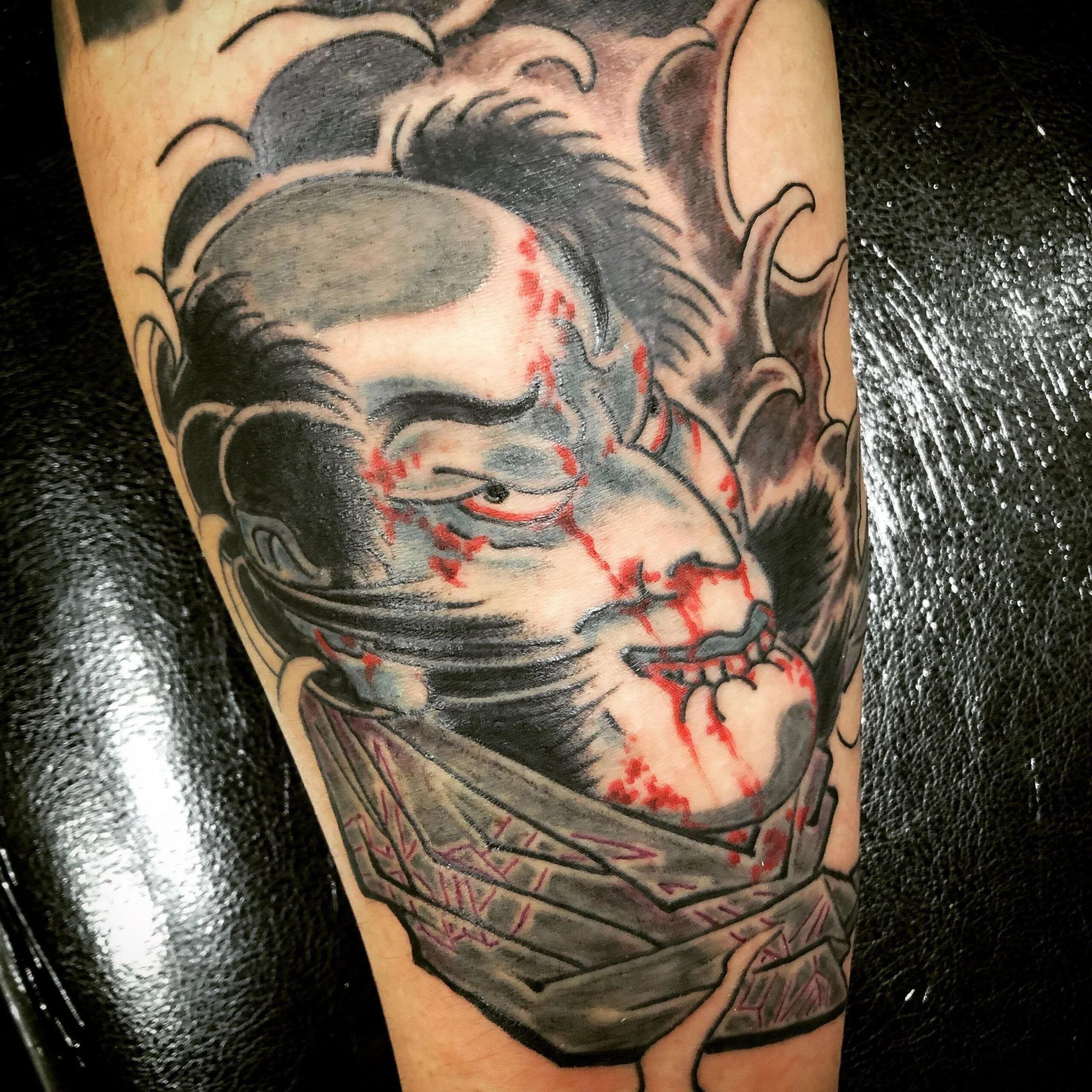
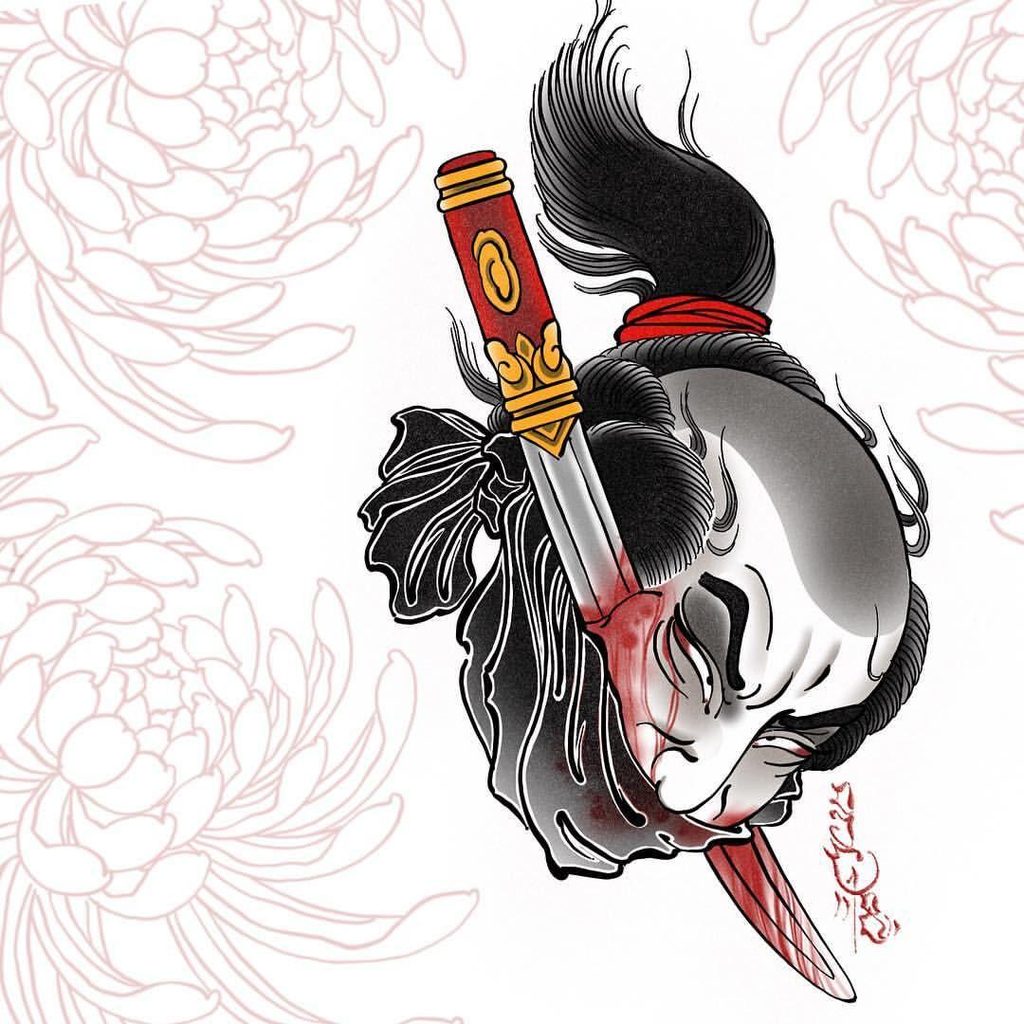
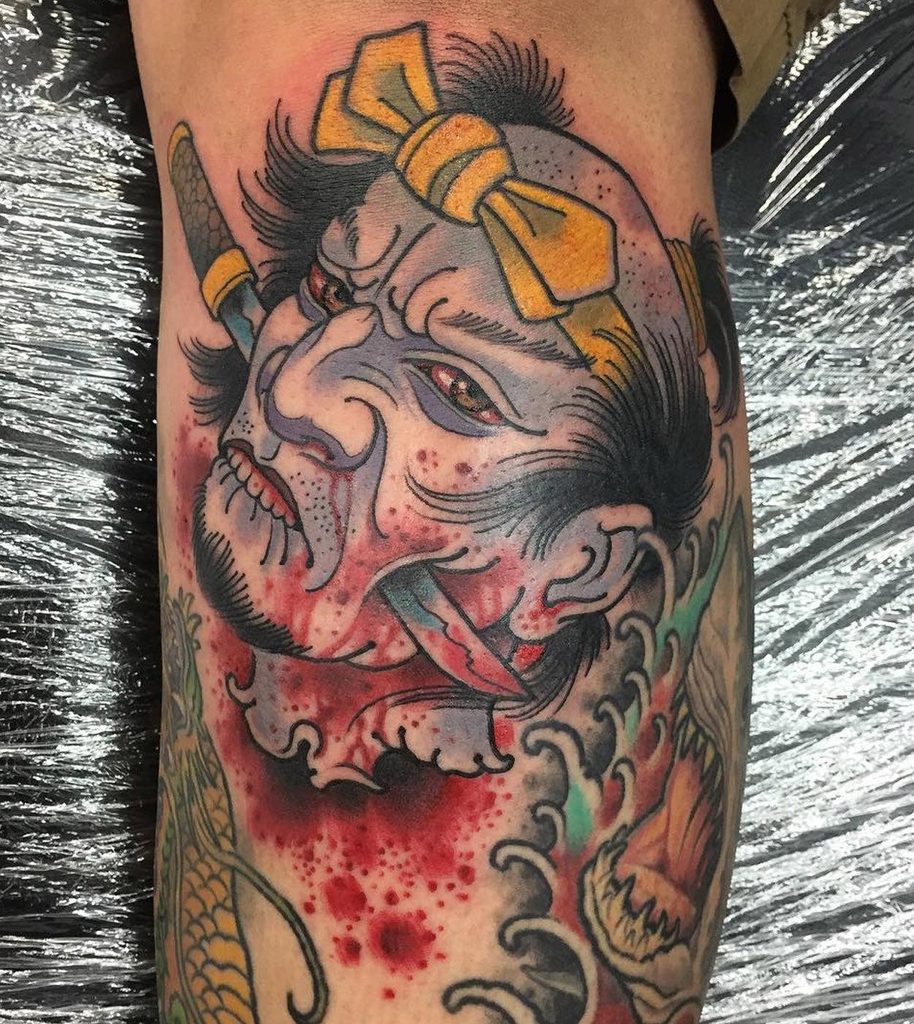
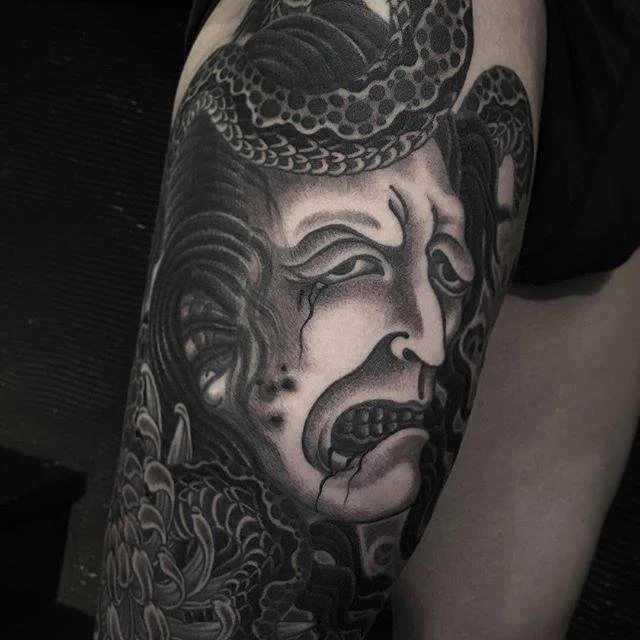
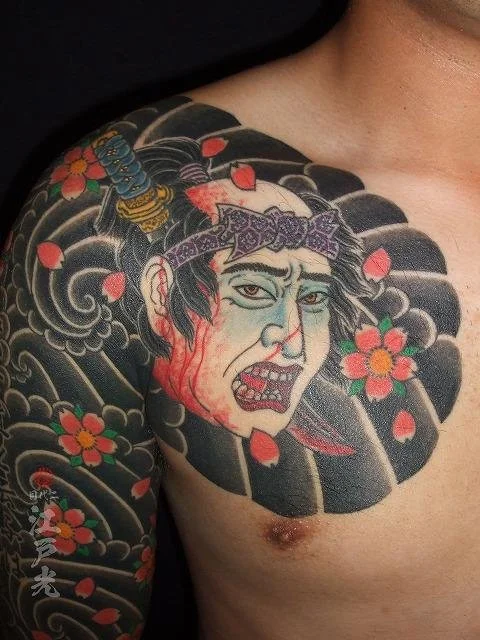
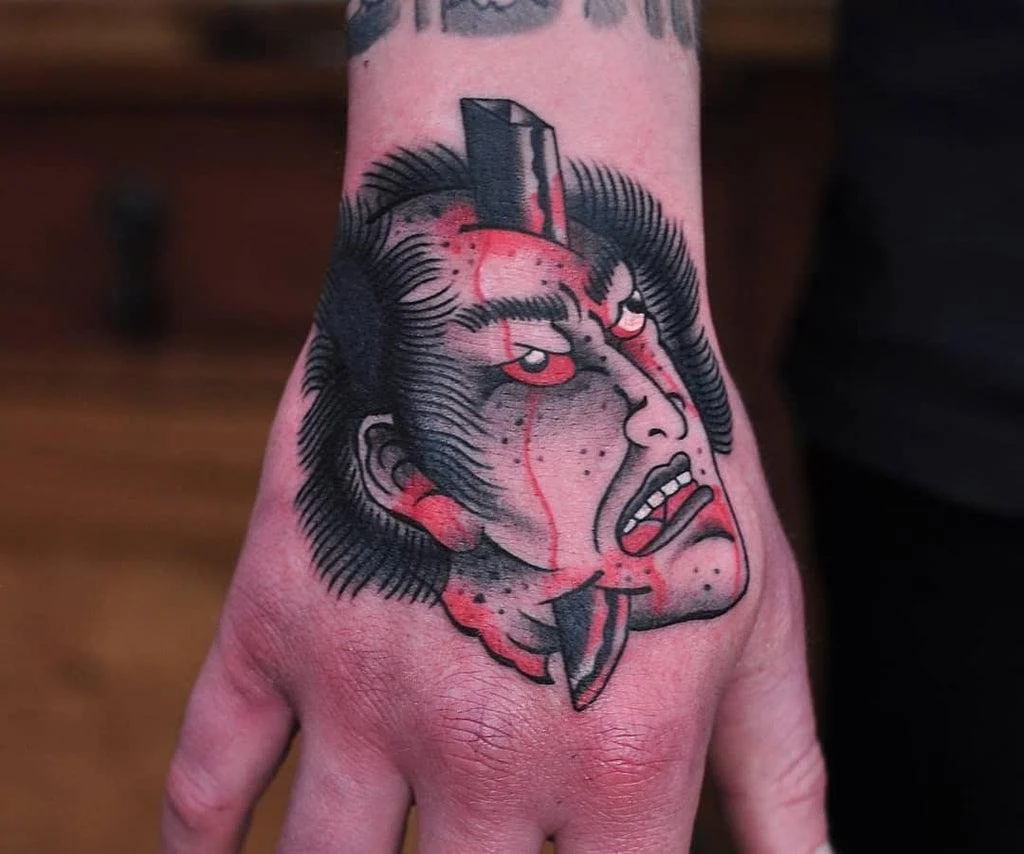
A warrior’s head lies severed from its body. His eyes remain open, his hair is tangled, and blood marks the moment of his death. It is one of the most confronting images in traditional Japanese tattoo art.
A Namakubi Tattoo may appear to represent nothing more than violence or death. But the image carries a much deeper cultural history. The word namakubi (生首) literally refers to a freshly severed head. In Japanese visual culture, severed-head imagery appears in stories of warfare, revenge, loyalty, execution and the consequences of conflict.
In tattooing, the Namakubi has become a powerful subject associated with mortality, courage, defeat, sacrifice and the darker realities of the warrior tradition.
Unlike the Samurai Tattoo, which often celebrates the idealized warrior, the Namakubi confronts what happens when that warrior falls.
To understand its symbolism, we need to explore the historical and artistic traditions behind one of Japanese tattooing’s most unsettling motifs.
What Does a Namakubi Tattoo Mean?
A Namakubi Tattoo depicts a severed human head, usually rendered in a dramatic Japanese artistic style. Its meaning depends on the character, expression and narrative context.
Common interpretations include:
• Mortality: A reminder that life is temporary and death is unavoidable.
• Courage: The willingness to face danger and the possibility of death.
• Defeat: The consequences of conflict, ambition or failed struggle.
• Sacrifice: The human cost of loyalty, warfare or personal convictions.
• Honor: A possible interpretation when the subject relates to a specific warrior narrative.
• Impermanence: Recognition that status, power and physical life do not last forever.
• Consequences: A reminder that violence and personal decisions can carry irreversible outcomes.
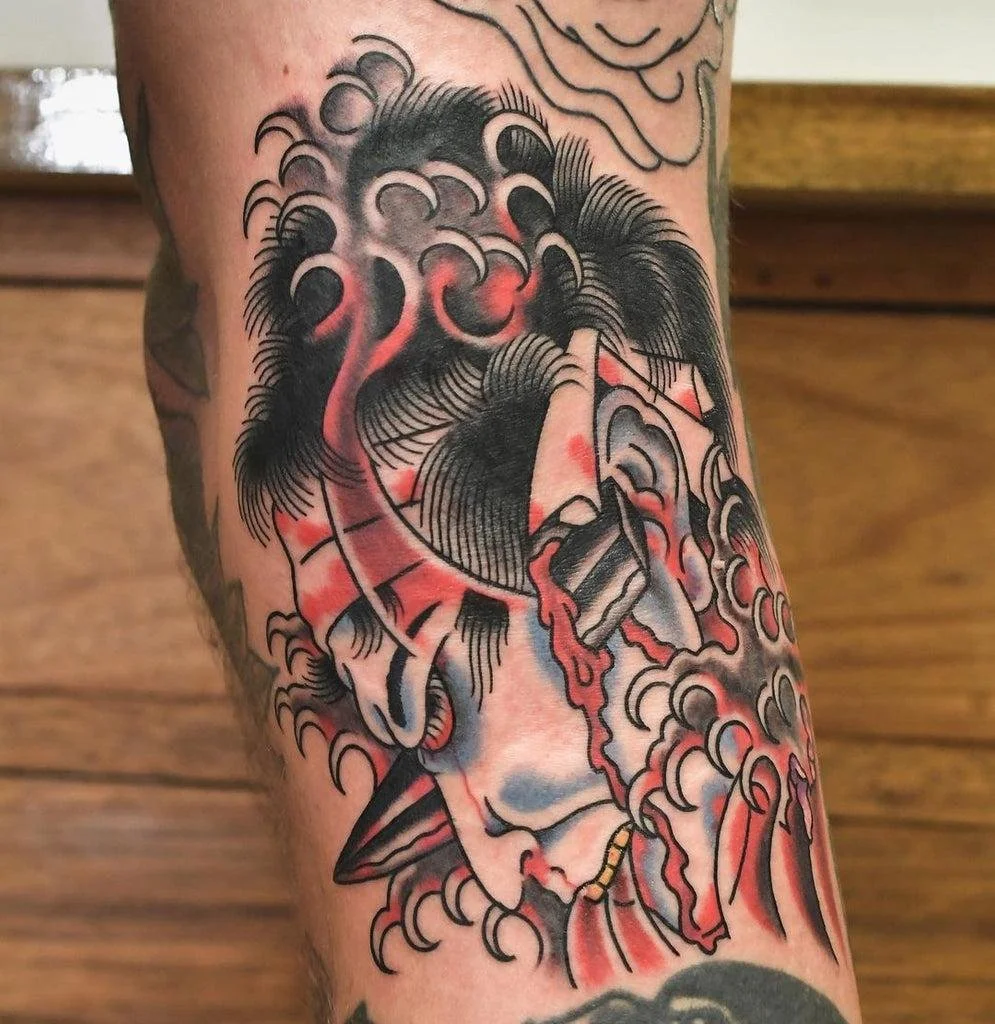
However, these meanings should not be treated as a universal historical tattoo code.
The Namakubi is a visual subject with multiple historical associations. Its interpretation changes depending on whether it depicts a defeated warrior, an executed criminal, a legendary character or an anonymous head.
The Namakubi does not simply represent death. It asks what that death means.
What Does Namakubi Mean in Japanese?
The Japanese word namakubi (生首) combines two characters:
• Nama (生): Raw, fresh or living.
• Kubi (首): Neck or head.
Together, the term refers to a freshly severed head.
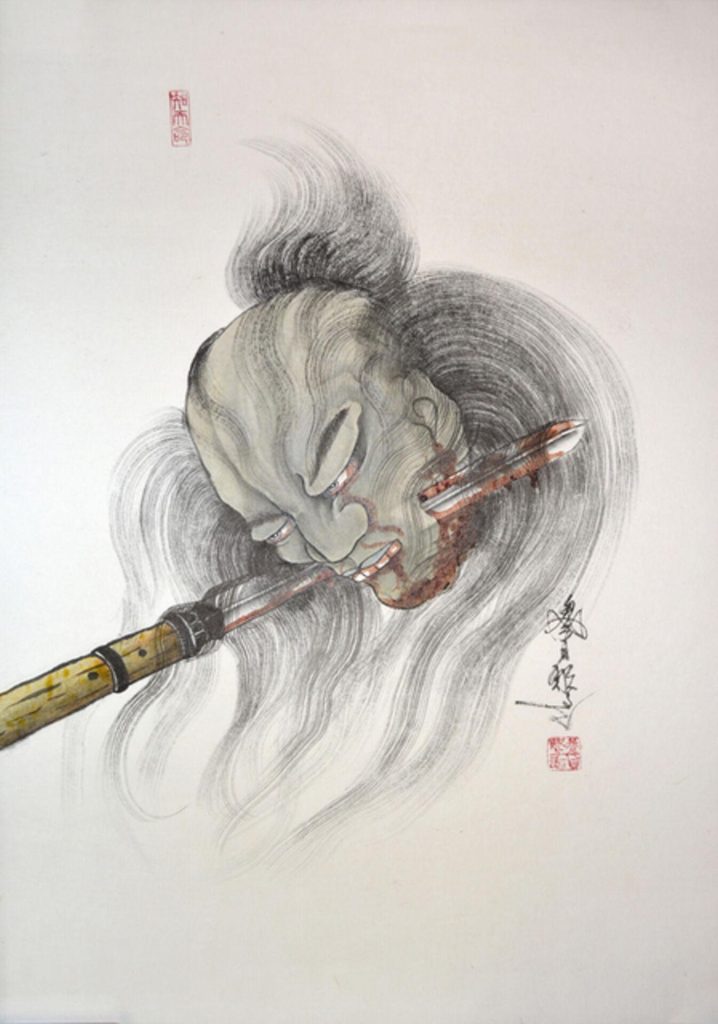
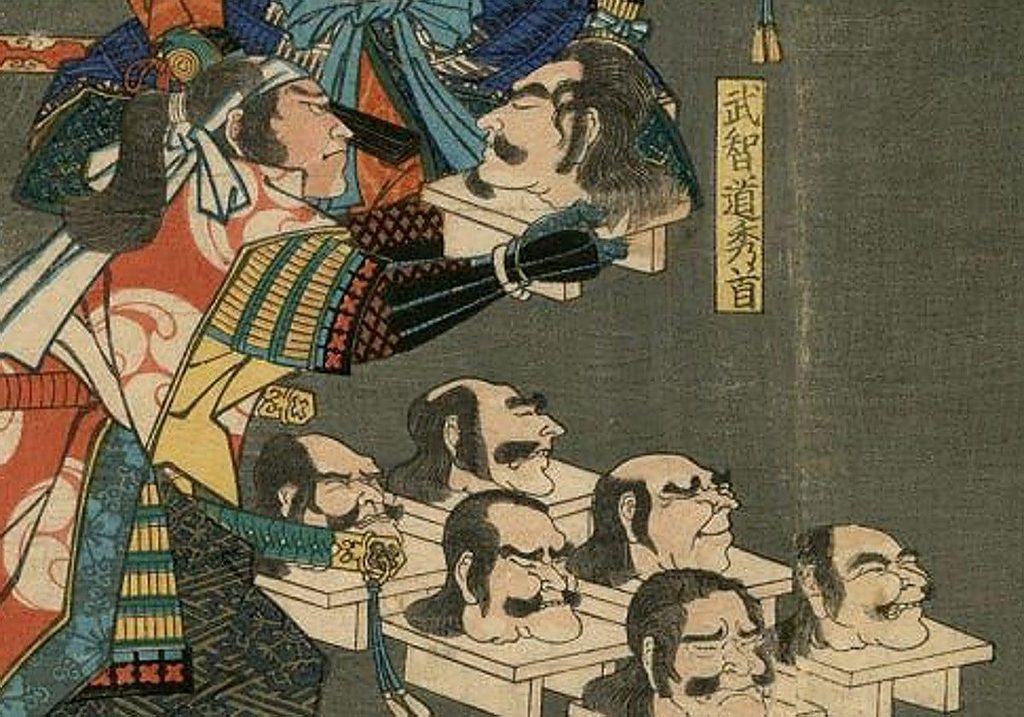
The word is descriptive rather than inherently spiritual. It does not name a particular deity, demon or supernatural creature.
This distinguishes the Namakubi from subjects such as Oni and Hannya, whose imagery is connected to specific supernatural or theatrical traditions.
A Namakubi may depict an ordinary human, a warrior or a character from a historical story. The symbolism emerges from the surrounding narrative rather than from the word alone.
Where Did Namakubi Tattoo Imagery Originate?
The imagery associated with Namakubi tattoos draws from several traditions in Japanese history and art.
These include:
• Medieval and early modern warfare
• The presentation of defeated enemies’ heads
• Public punishment and execution
• Historical chronicles and warrior legends
• Kabuki theatre and dramatic literature
• Ukiyo-e woodblock prints
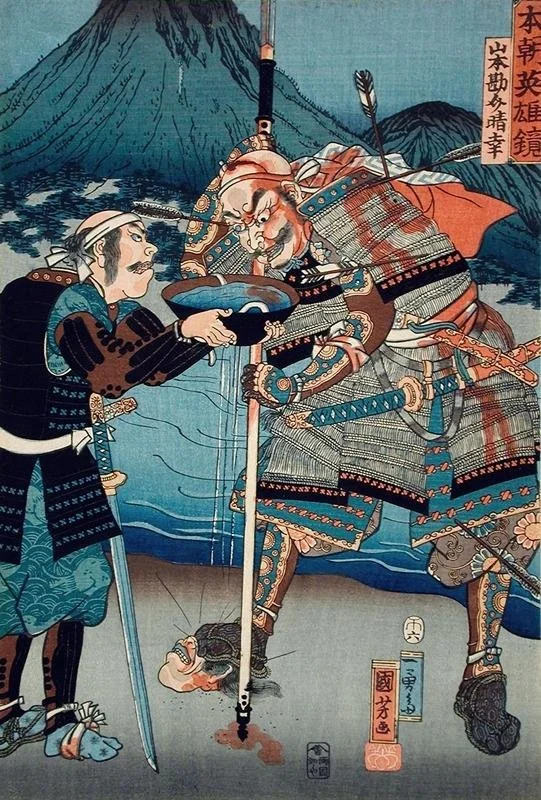
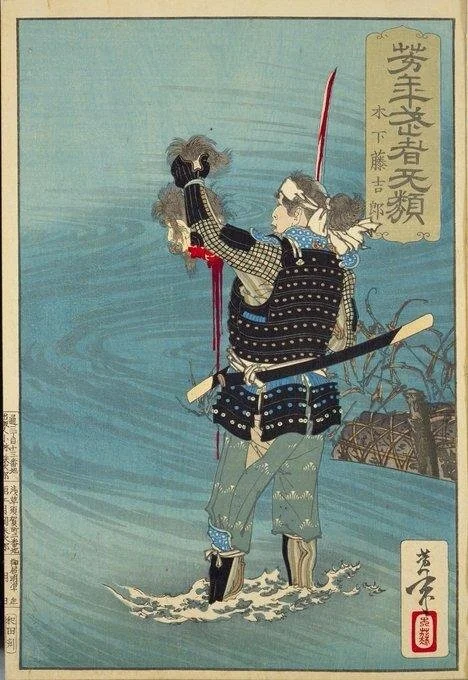
Why were severed heads depicted in Japanese warrior history?
During periods of warfare, the heads of defeated enemies could serve as evidence of battlefield achievements.
In certain historical contexts, warriors presented heads for inspection and identification, practices associated with kubi jikken, or head inspection.
These practices were connected to military reward systems, identification and demonstrations of victory. However, customs varied across periods and conflicts. They should not be treated as something every samurai practiced or as an expression of a single universal warrior code.
How did severed heads become subjects in Japanese art?
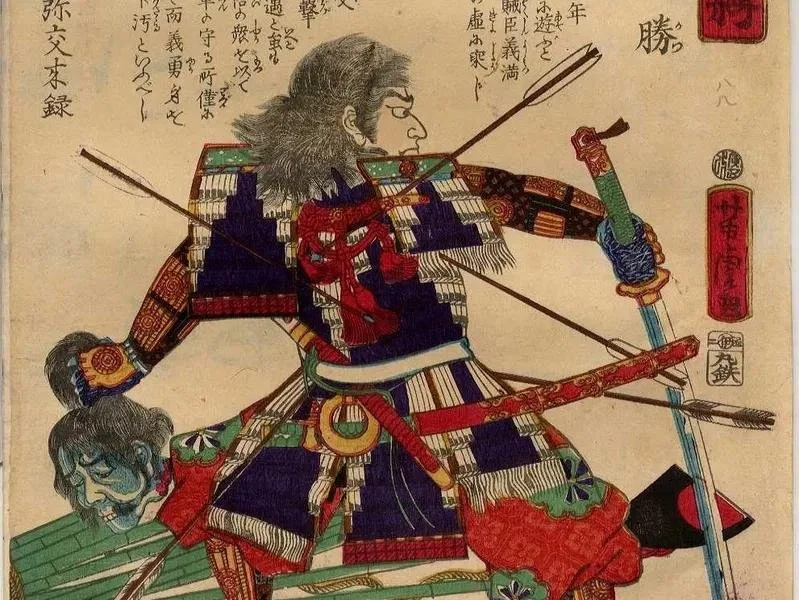
Japanese artists frequently depicted historical battles, legendary warriors and dramatic scenes from literature. Severed heads appeared in some of these works because they formed part of the stories being illustrated.
During the Edo period, woodblock prints helped popularize dramatic warrior imagery among a wider audience. This visual tradition later provided inspiration for Japanese tattoo artists.
The Namakubi therefore belongs to a larger history of storytelling through images rather than existing solely as a tattoo motif.
Why Does a Namakubi Tattoo Symbolize Mortality?
Mortality is one of the most direct interpretations of a severed-head image. Unlike a heroic warrior portrait, which can emphasize courage and achievement, the Namakubi presents the finality of death.
The image can remind the wearer that:
• Physical strength is temporary.
• Power and status can disappear.
• Every life has an ending.
• Human decisions carry consequences.
• No one is immune to mortality.
Is Namakubi related to the idea of impermanence?
The concept of impermanence, known in Buddhist philosophy as mujō, has influenced Japanese literature and art for centuries.
A Namakubi tattoo can be interpreted through this philosophical perspective because it directly confronts the fragility of human life. However, that does not mean every historical severed-head image was created as a Buddhist lesson.
The connection is best understood as a possible interpretation rather than a universal original meaning. A Namakubi Tattoo can become a reminder that even the strongest warrior cannot escape the passing of time.
Why Does a Namakubi Tattoo Represent Courage?
Courage is another interpretation frequently associated with Namakubi imagery. In stories of warfare, facing death was an unavoidable part of a warrior’s life.
However, the severed head does not automatically prove that the person depicted died courageously. A head could belong to a defeated warrior, a victim of violence or someone punished by authorities. The meaning depends on the story.
What does a fearless Namakubi expression symbolize?
In modern tattoo design, a head with a calm or defiant expression may be interpreted as:
• Courage in the face of death
• Acceptance of unavoidable outcomes
• Refusal to surrender personal principles
• Emotional strength under pressure
• Dignity during adversity
These are artistic interpretations based on the expression and composition. They should not be confused with documented historical rules about the facial expressions of severed heads.
Is a Namakubi Tattoo Connected to Samurai Honor?
Namakubi imagery is connected to Japanese warrior history, but its relationship with honor is complicated. The modern image of the honorable samurai is strongly influenced by later interpretations of Bushido.
Historical samurai lived in different periods and faced competing obligations involving family, political authority, survival and military service. The presentation of defeated enemies’ heads could be associated with military achievement, but it also reflects the violence of historical warfare.
A Namakubi Tattoo should not automatically be described as a symbol of honorable death. Both subjects can be inspired by Japanese warrior history, but they communicate different emotional perspectives.
Read more: Japanese Samurai Tattoo Meaning: Honor, Courage & the Warrior Spirit
How Did Namakubi TATTOO Become Part of Japanese Tattoo Art?
To understand the Namakubi’s place in tattooing, we need to look at the influence of ukiyo-e, the Japanese woodblock printing tradition.
During the Edo period, artists created dramatic images of warriors, supernatural creatures, historical events and theatrical characters. One important genre was musha-e, or warrior prints.
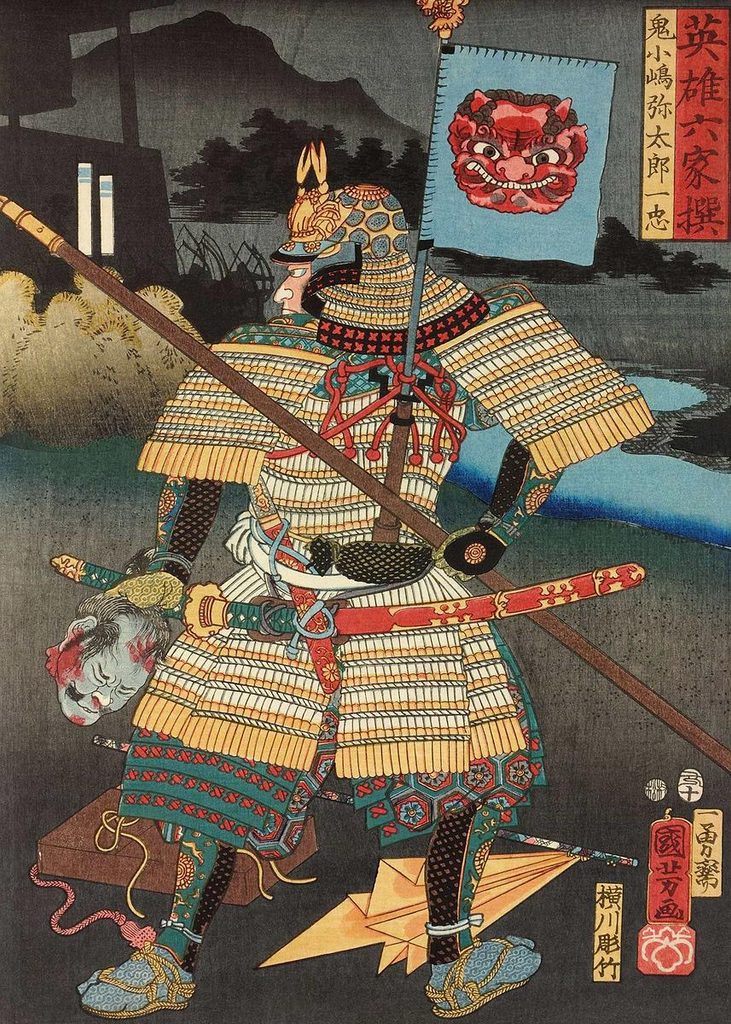
Artists such as Utagawa Kuniyoshi and Tsukioka Yoshitoshi became known for dramatic historical and warrior imagery. Their works featured expressive faces, dynamic poses, elaborate clothing and sometimes graphic scenes of violence.
Why are ukiyo-e prints important to Namakubi tattoos?
These prints helped establish visual conventions that remain recognizable in Japanese-inspired tattoo art:
• Bold outlines and dramatic facial expressions
• Flowing hair and intricate costume details
• Strong contrasts between characters and backgrounds
• Dynamic storytelling through a single scene
• Historical and mythological subjects
The Namakubi fits naturally within this visual language.
However, it is important to distinguish between historical evidence and artistic influence. Although warrior prints and Japanese tattooing share visual traditions, not every modern Namakubi composition can be traced to one particular Edo-period print.
Read More: Irezumi Tattoo: The History and Art of Traditional Japanese Tattooing
What Does a Namakubi Tattoo With Closed Eyes Mean?
The facial expression of a severed head can dramatically change the emotional impact of the tattoo.
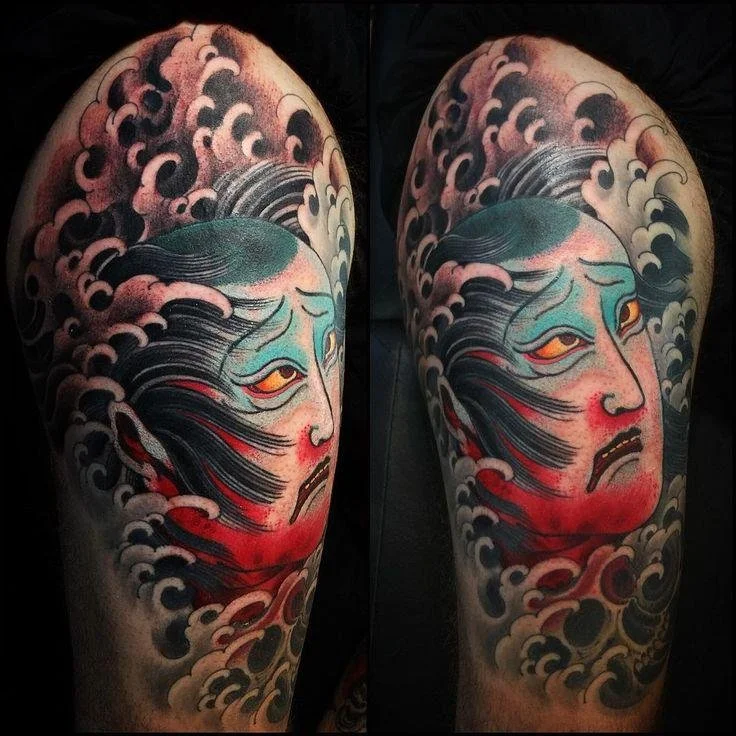
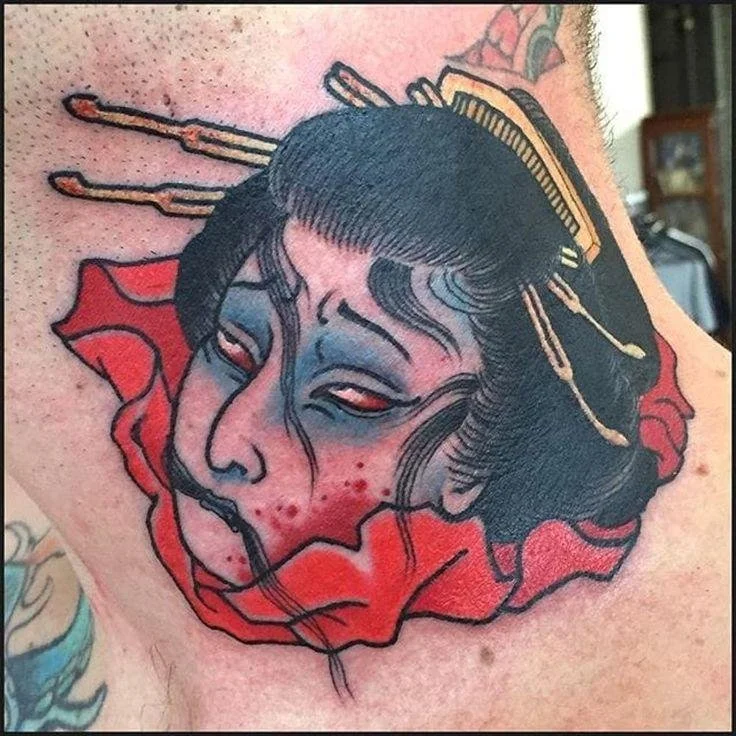
A Namakubi with closed eyes may be interpreted as representing:
• Acceptance of death
• Peace after conflict
• The finality of life
• Resignation or surrender
• Reflection on mortality
These are contemporary interpretations, not traditional rules. A closed-eyed face can also communicate vulnerability rather than courage. The most appropriate meaning depends on the intended story.
What Does a Namakubi Tattoo With Open Eyes Mean?
A severed head with wide-open eyes creates a more confrontational image.
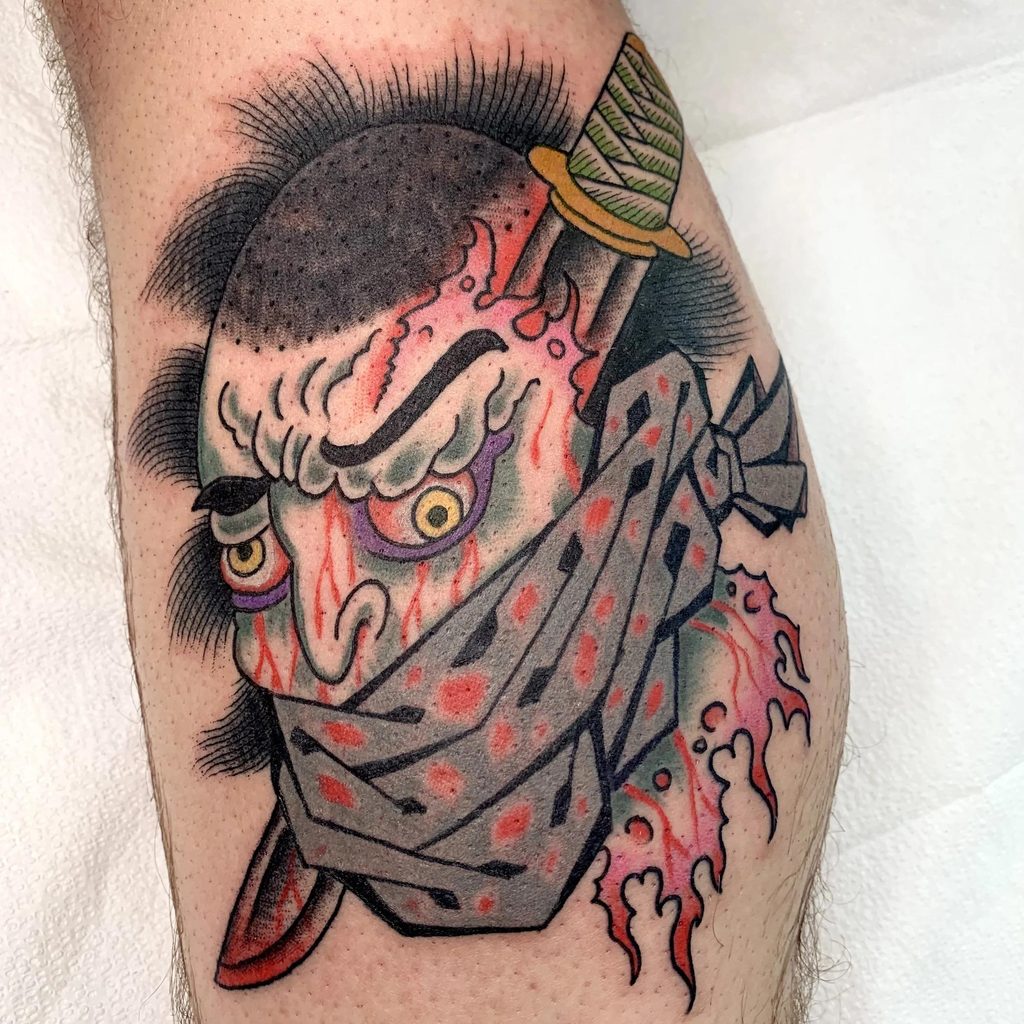
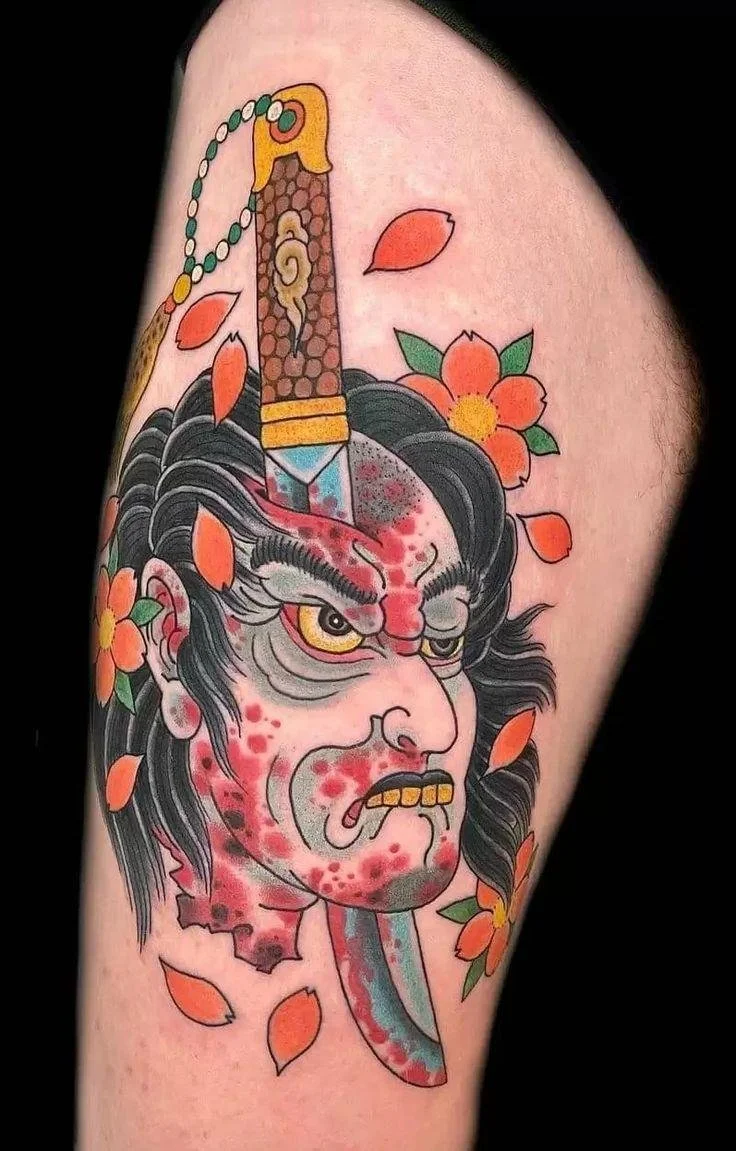
In modern tattoo compositions, open eyes may suggest:
• Defiance
• Anger
• Unresolved conflict
• Fear • Determination
• The shock of death
However, open eyes do not automatically mean that the subject died bravely or dishonorably. The expression is a storytelling device. An angry Namakubi and a sorrowful Namakubi can communicate very different narratives even when the surrounding design is identical.
Is a Namakubi Tattoo Considered Disrespectful?
A Namakubi Tattoo is not automatically disrespectful, but it is a graphic subject connected to death and violence. Its meaning can also be misunderstood by people unfamiliar with Japanese visual culture.
Before choosing the design, consider:
• Whether the image represents a specific historical character or an anonymous figure.
• Whether the tattoo’s meaning is personal, historical or purely aesthetic.
• Whether any religious or cultural references are being used accurately.
• Whether the level of graphic detail is appropriate for the intended placement.
• Whether the artist understands the visual traditions behind the subject.
A thoughtful Namakubi design does not need to glorify violence. It can acknowledge the darker side of history while expressing a personal reflection on mortality.
Frequently Asked Questions About Namakubi Tattoo
1. What does a Namakubi Tattoo mean?
A Namakubi Tattoo depicts a severed human head. Modern interpretations commonly include mortality, courage, defeat, sacrifice and the consequences of violence. Its meaning depends on the character and composition.
2. What does Namakubi mean in Japanese?
Namakubi (生首) means a freshly severed head. The term describes the subject rather than naming a particular supernatural creature.
3. Is a Namakubi Tattoo a samurai tattoo?
It can be. Some Namakubi designs depict warriors or reference historical warfare, but not every severed-head image represents a samurai.
4. Does a Namakubi Tattoo symbolize honor?
It can in a particular narrative, especially when connected to a warrior’s story. However, honor is not a universal meaning of severed-head imagery.
5. What does a Namakubi Tattoo with closed eyes mean?
A closed-eyed Namakubi may be interpreted as representing peace, resignation or acceptance of mortality. These are modern artistic interpretations rather than fixed traditional rules.
Final Thoughts: What Does a Namakubi Tattoo Represent?
A Namakubi Tattoo is one of the most confronting subjects in Japanese tattoo art. Its imagery connects to centuries of warfare, dramatic storytelling and artistic representations of death.
Yet its meaning is not limited to violence.
For some wearers, it becomes a reminder of mortality. For others, it represents sacrifice, courage or the consequences of human ambition. Where a Samurai Tattoo celebrates the warrior, the Namakubi reminds us that even warriors are mortal.
Create Your Namakubi Tattoo in Hanoi
Interested in the darker storytelling traditions of Japanese tattoo art?
At 3 of Spades Hanoi Tattoo, our artists can help develop a custom Namakubi design inspired by Japanese woodblock art, historical references or your personal interpretation.
Whether you’re considering a traditional Japanese forearm piece, a detailed black-and-grey portrait or a larger Irezumi-inspired composition, send us your reference images, approximate size, preferred placement and Hanoi travel dates before your visit.
Every tattoo has a story. Let’s create yours.