A fox stands beneath the moonlight. Its eyes glow with an almost human intelligence, while several long tails move through the mist behind it. Is it an ordinary animal, a guardian spirit or a supernatural trickster?
In Japanese folklore, the answer is not always simple. The Kitsune Tattoo draws inspiration from one of Japan’s most fascinating supernatural figures: the fox spirit. Known for intelligence, shapeshifting and mysterious powers, the Kitsune appears in folktales, religious traditions, literature and Japanese art.
Sometimes it deceives humans. Sometimes it falls in love with them. In other stories, it serves as a messenger connected to the deity Inari. This makes the Kitsune more complex than a symbol of cunning alone.
A Japanese Kitsune Tattoo can represent transformation, intelligence, mystery, adaptability, spiritual connection and the tension between appearance and reality. But what does the fox spirit actually mean in Japanese culture?
To understand the symbolism behind a Kitsune tattoo, we need to explore the stories that shaped this extraordinary creature.
What Does a Kitsune Tattoo Mean?
A Kitsune Tattoo represents a fox inspired by Japanese folklore, often depicted with supernatural qualities. Its symbolism depends on the story, appearance and cultural references used in the design.
Common modern interpretations include:
• Intelligence: The Kitsune’s cleverness and ability to outwit others.
• Transformation: Its supernatural ability to change shape, particularly into human form.
• Adaptability: Moving between different identities and circumstances.
• Mystery: The uncertainty surrounding the fox spirit’s intentions.
• Protection: A personal interpretation inspired by benevolent foxes and associations with Inari.
• Love and loyalty: Themes found in stories involving fox spirits and human relationships.
• Spiritual connection: An appreciation of Japanese folklore, religious imagery and the unseen world.
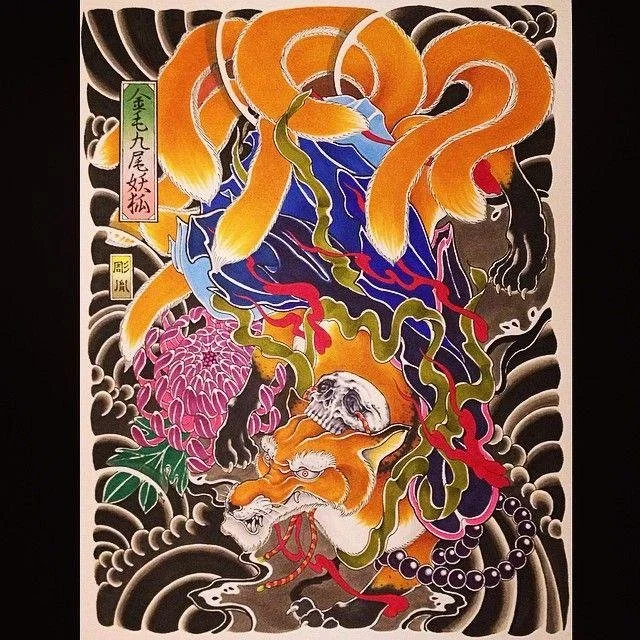
However, these meanings are not part of one universal Japanese tattoo code. Some Kitsune are benevolent, while others are dangerous or deceptive.
A fox associated with an Inari shrine carries a different cultural context from a shapeshifting fox in a supernatural folktale. The most meaningful Kitsune tattoo begins by understanding which fox spirit the design represents.
What Is a Kitsune in Japanese Folklore?
Kitsune (狐) is the Japanese word for fox.
In everyday language, it refers to the animal itself. But in Japanese folklore, foxes can also possess extraordinary supernatural abilities.
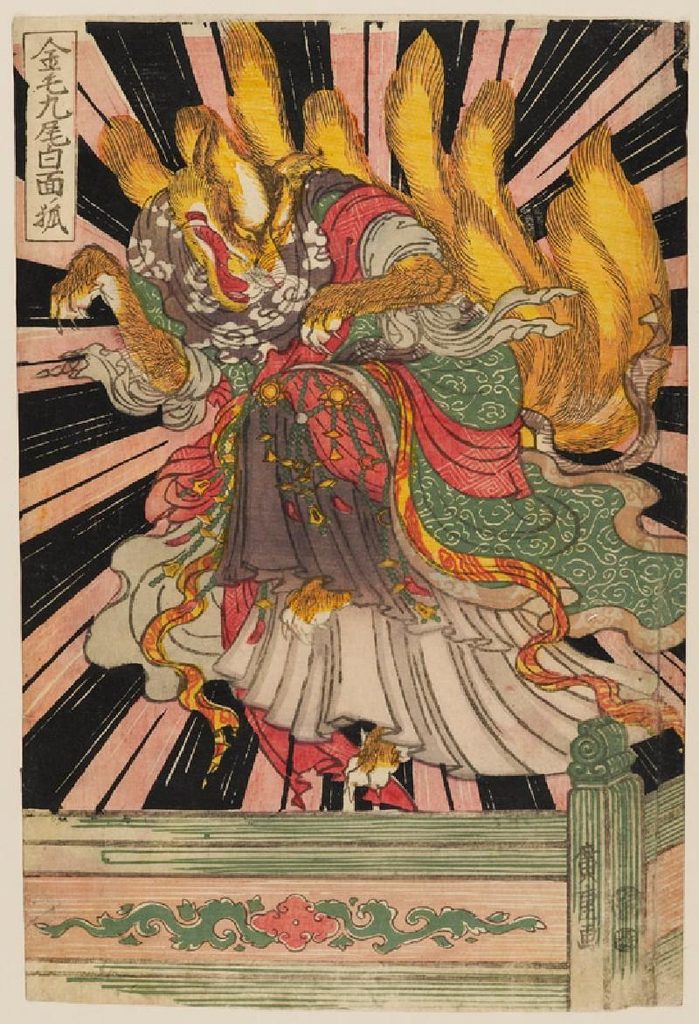
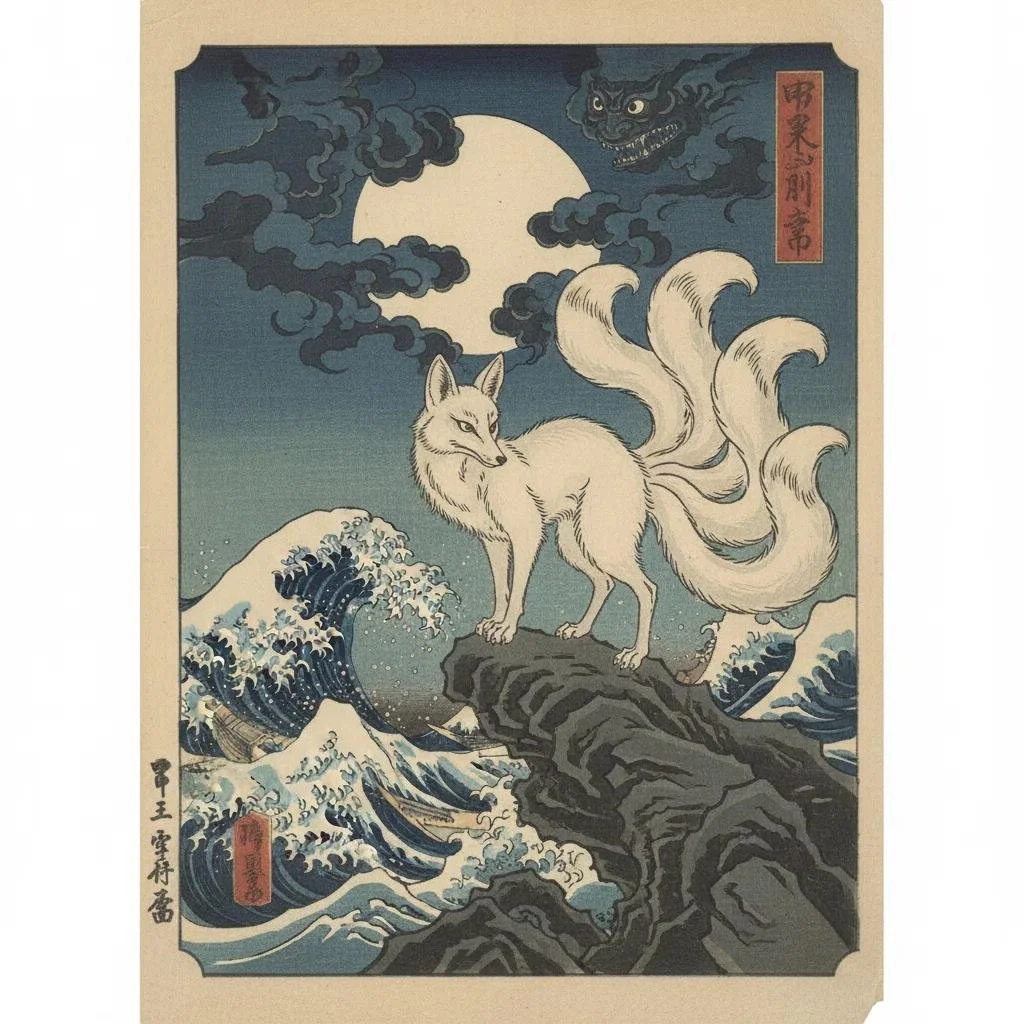
Stories describe foxes that can:
• Transform into human beings
• Create illusions
• Deceive or test humans
• Form relationships with people
• Possess supernatural knowledge
• Live for extraordinary lengths of time
These abilities vary between stories and traditions. Not every Kitsune possesses every power, and not every fox spirit is malevolent.
Are Kitsune considered Yōkai?
Kitsune are frequently discussed within the broader world of yōkai, a Japanese term encompassing many kinds of strange, supernatural or mysterious beings and phenomena.
However, foxes also appear in religious traditions, particularly those associated with Inari. This means Kitsune imagery crosses several cultural categories. It belongs to folklore, but it can also carry religious significance.
That distinction is especially important when choosing tattoo references.
Where Did Kitsune Tattoo Symbolism Originate?
Kitsune imagery developed through centuries of Japanese storytelling, religious practice and artistic exchange.
Fox spirits also appear in Chinese and Korean traditions, and Japanese fox folklore developed within a broader East Asian cultural environment.
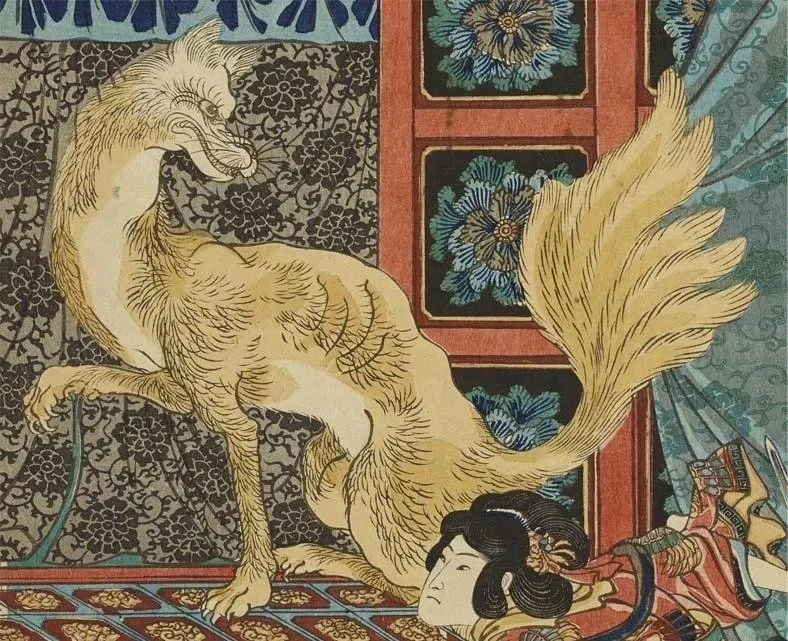
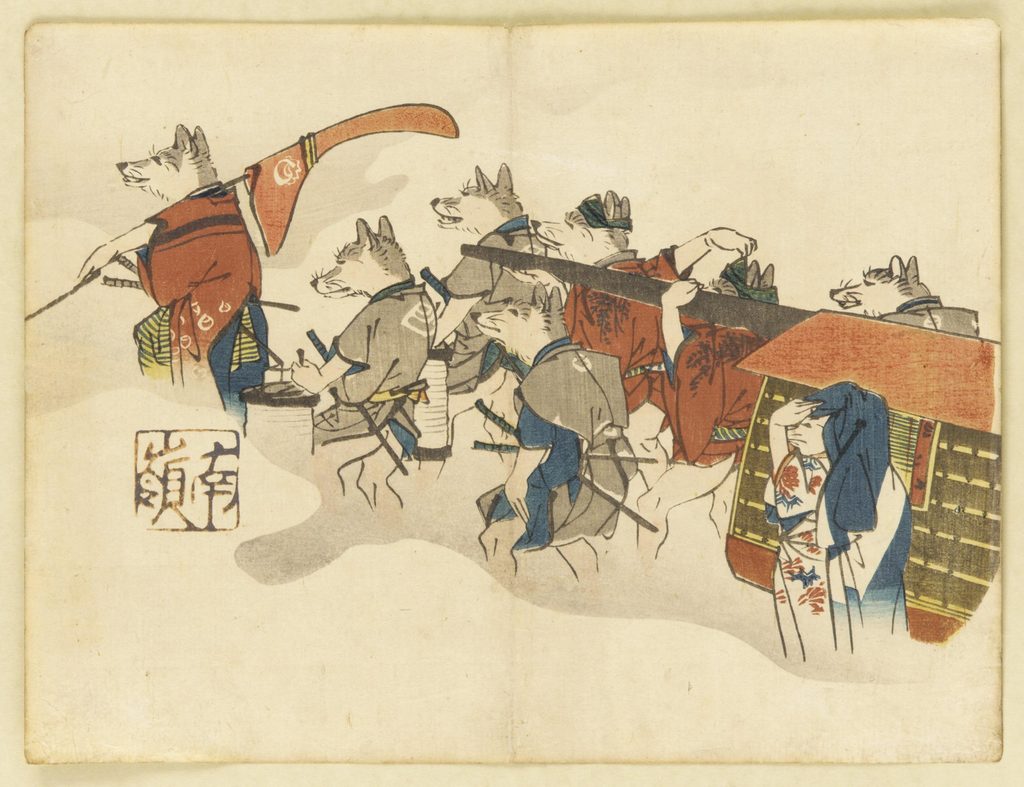
In Japan, fox stories became particularly prominent in:
• Buddhist and Shinto-related traditions
• Medieval collections of supernatural tales
• Folktales involving shapeshifting animals
• Kabuki and other theatrical performances
• Ukiyo-e woodblock prints
• Modern literature, manga and animation
One influential collection is the Konjaku Monogatarishū, compiled around the twelfth century, which includes stories about supernatural encounters and shapeshifting animals.
Over time, fox spirits became recognizable figures in Japanese visual culture. The Kitsune’s dramatic appearance and complex symbolism also made it a compelling subject for Japanese-inspired tattooing.
Why Does a Kitsune Tattoo Symbolize Transformation?
Transformation is one of the most important themes in Kitsune folklore. Many stories describe foxes changing into human form, sometimes appearing as beautiful women, travelers or other ordinary people.
Why do Kitsune transform into humans?
Their reasons vary.
Some fox spirits use shapeshifting to deceive humans. Others form emotional relationships, seek companionship or attempt to live among people.
The transformation may be playful, romantic, dangerous or tragic. This variety is what makes the Kitsune so interesting.
What does transformation mean in a modern Kitsune tattoo?
A wearer may interpret the fox spirit as a symbol of:
• Personal reinvention
• Adapting to change
• Discovering different aspects of identity
• Leaving behind an old version of oneself
• Balancing outward appearance and inner truth
These are contemporary personal interpretations rather than fixed traditional tattoo meanings. The Kitsune reminds us that identity is not always as simple as what others can see.
What Is the Story of the Kitsune Wife?
One of the most memorable themes in Japanese fox folklore involves a fox spirit who becomes a human wife.
A well-known example is the story of Kuzunoha, a fox who takes human form and becomes the mother of the legendary onmyōji Abe no Seimei.
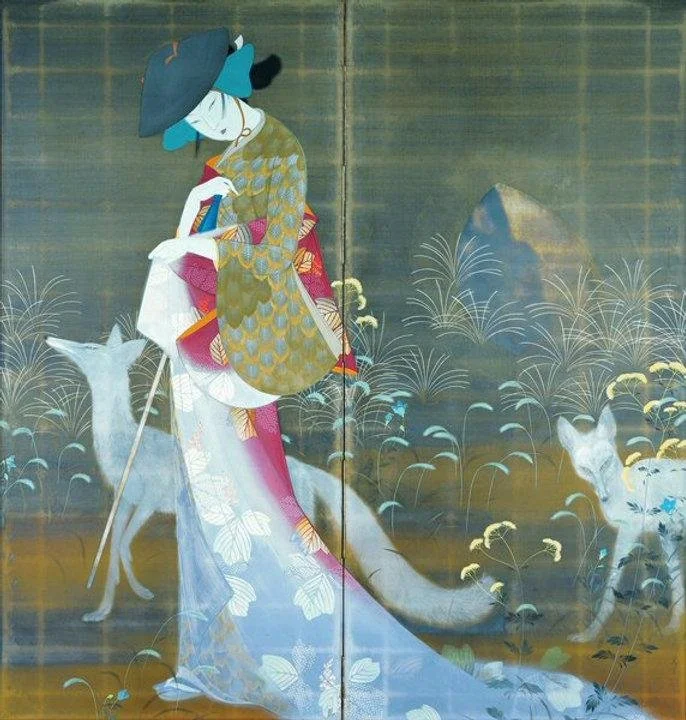
Who was Kuzunoha?
In familiar versions of the legend, a man saves a fox from danger. The fox later appears as a woman named Kuzunoha, and the two marry. They have a child, but her supernatural identity is eventually discovered. Unable to remain in the human world, she leaves her family behind.
The story combines love, secrecy, transformation and separation. It is especially poignant because the fox spirit is not portrayed simply as a trickster or monster. She is also a mother and a loving partner.
What does the Kuzunoha story mean for a tattoo?
A Kitsune tattoo inspired by Kuzunoha may represent:
• Love and sacrifice
• Hidden identity
• Family bonds
• Separation and longing
• The tension between belonging and personal nature
This gives the Kitsune a softer and more emotional dimension than the familiar image of a cunning supernatural fox.
What Is the Connection Between Kitsune and Inari?
One of the most important cultural associations of foxes in Japan is their connection to Inari, a deity associated with rice, agriculture, prosperity and other forms of abundance.
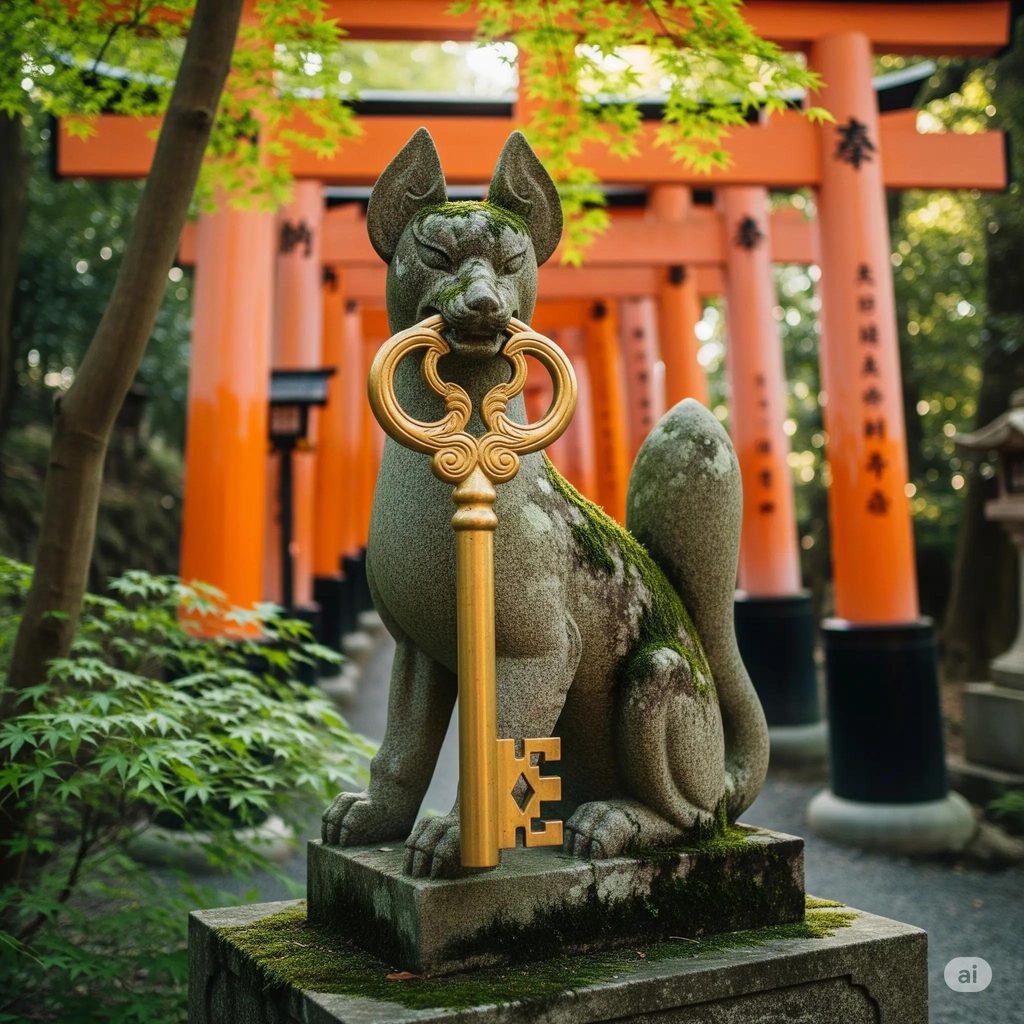
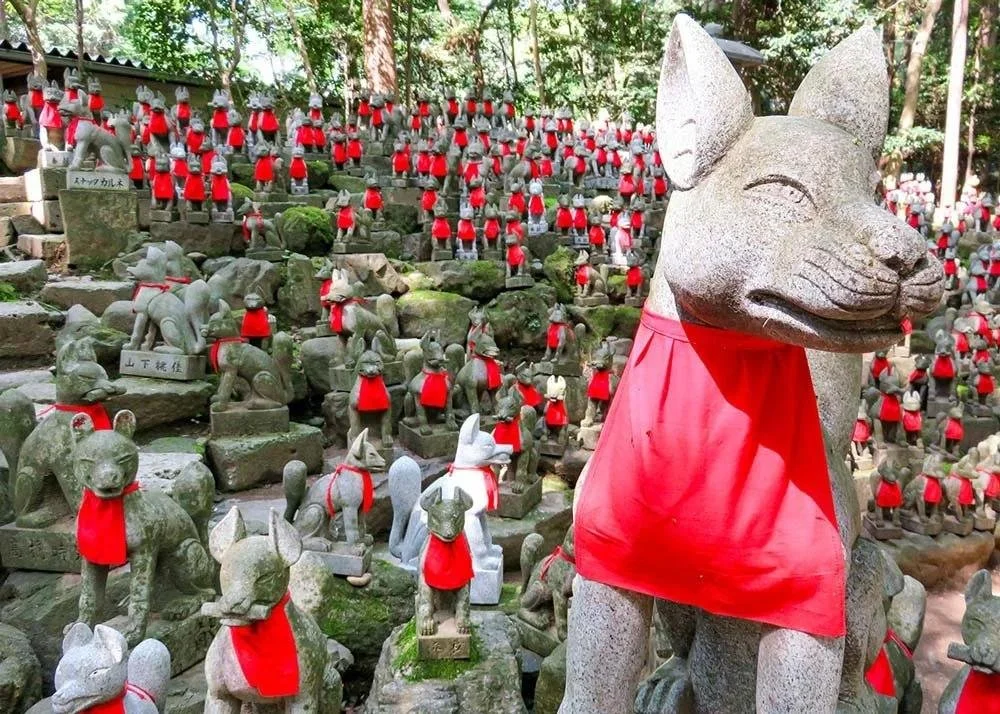
Inari worship is widespread throughout Japan. Fox statues frequently appear at Inari shrines, often positioned near entrances or along pathways.
Are Kitsune the same as Inari?
No. This is an important distinction.
Inari is the deity, while foxes are commonly understood as messengers or attendants of Inari. Foxes should not automatically be described as Inari itself. Some fox statues hold symbolic objects in their mouths, including keys, jewels, scrolls or sheaves of rice.
These objects can relate to agricultural prosperity, sacred treasures and other aspects of Inari worship.
What does an Inari fox tattoo mean?
A tattoo inspired by Inari shrine imagery may represent:
• Prosperity
• Abundance
• Gratitude
• Spiritual guardianship
• A connection to Japanese religious traditions
However, a tattoo of a fox standing beneath red torii gates is not automatically a faithful representation of a specific religious practice.
For a culturally informed design, it helps to distinguish shrine imagery from fictional yōkai illustrations.
What Does a Nine-Tailed Kitsune Tattoo Mean?
The nine-tailed fox, or kyūbi no kitsune (九尾の狐), is one of the most recognizable supernatural fox figures in East Asian mythology.
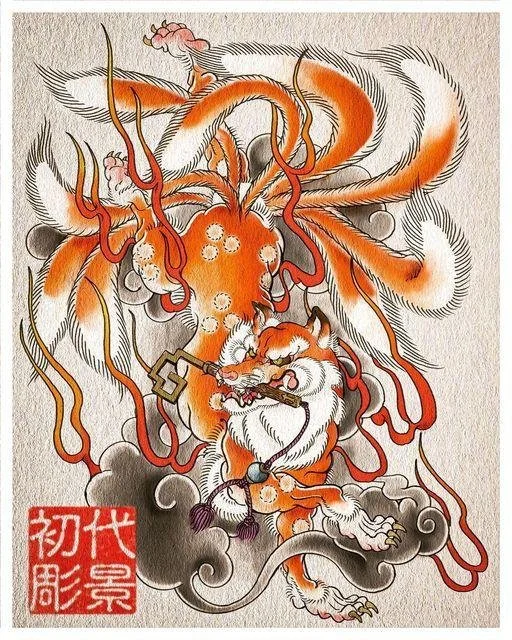
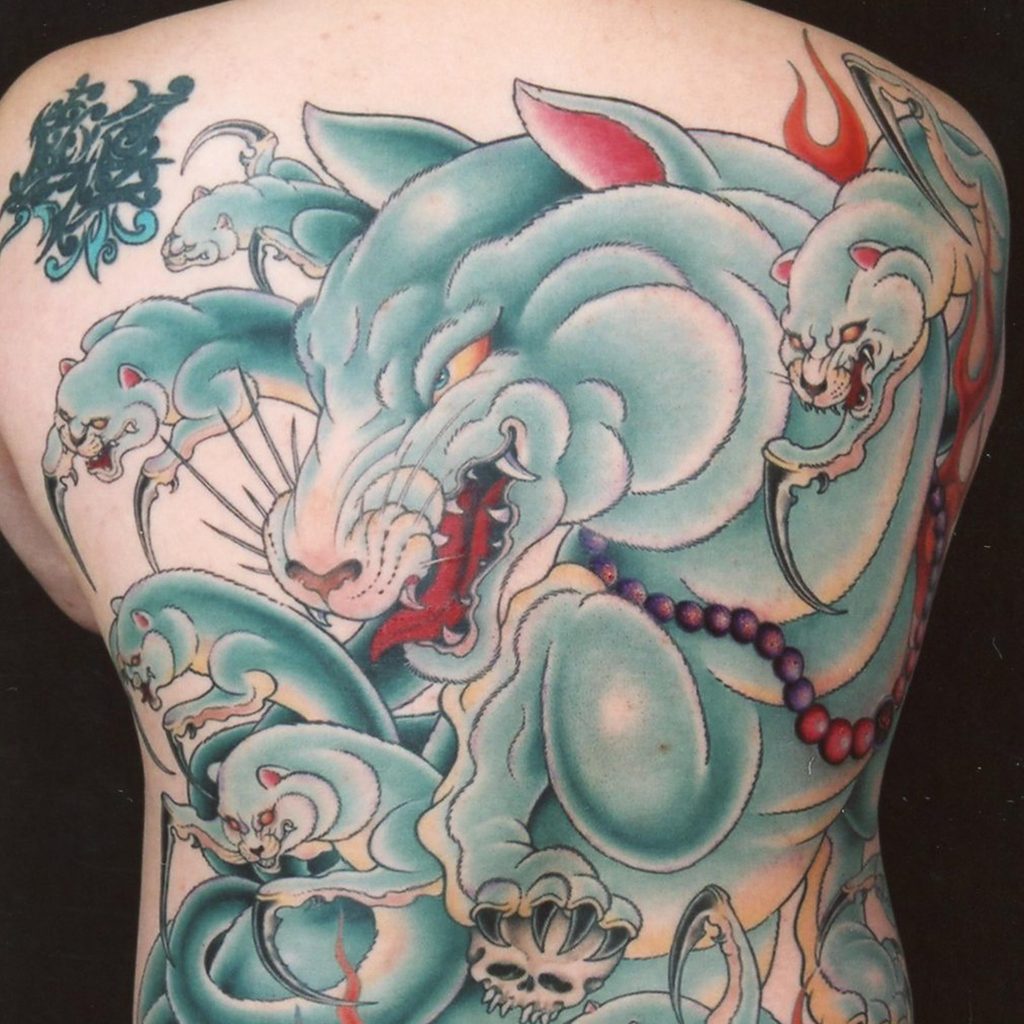
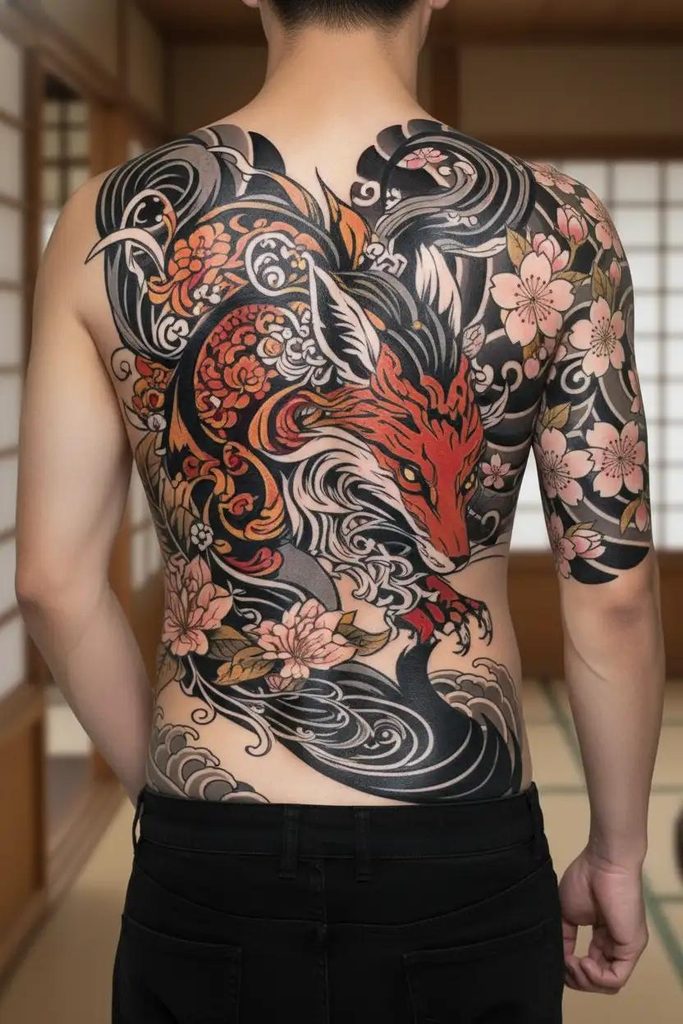
Fox spirits with multiple tails appear in traditions influenced by stories circulating across East Asia, including Chinese accounts of the huli jing.
In popular Japanese folklore, a fox’s increasing age and supernatural abilities are sometimes associated with additional tails. Nine tails are commonly connected with exceptional supernatural power and longevity.
However, the familiar idea that every fox earns one additional tail after a precisely defined number of years should not be treated as a universal historical rule.
What does a nine-tailed fox tattoo symbolize?
Modern interpretations often include:
• Supernatural power and wisdom
• Longevity
• Transformation and personal growth
• Mystery and spiritual knowledge
• The complexity of identity
A nine-tailed fox tattoo is especially suitable for a larger composition because the tails can create dramatic movement around the body.
Who is Tamamo-no-Mae?
One of Japan’s most famous nine-tailed fox stories involves Tamamo-no-Mae, a mysterious woman associated with the imperial court.
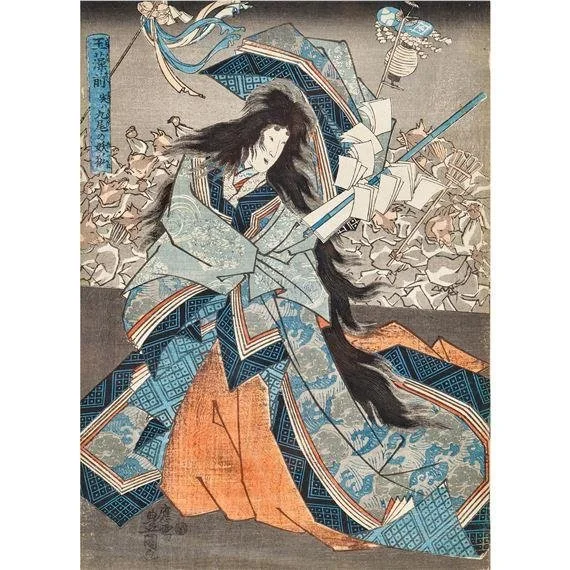
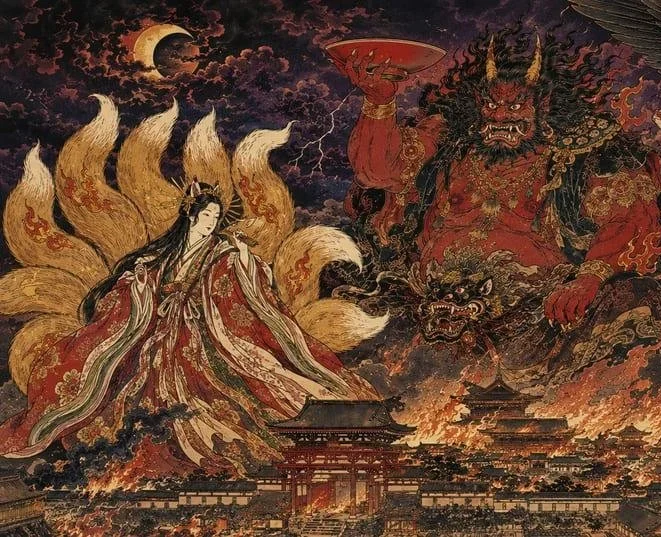
In influential versions of the legend, Tamamo-no-Mae is revealed to be a supernatural fox whose presence brings misfortune. After her true identity is discovered, she flees and is eventually hunted. Her spirit becomes associated with the Sesshō-seki, or Killing Stone, in the Nasu region.
Different versions of the story have developed through literature, theatre and popular culture.
A tattoo inspired by Tamamo-no-Mae may represent deception, supernatural beauty, hidden power or the consequences of dangerous ambition. It should not automatically be described as a benevolent guardian symbol.
What Does a Kitsune Mask Tattoo Mean?
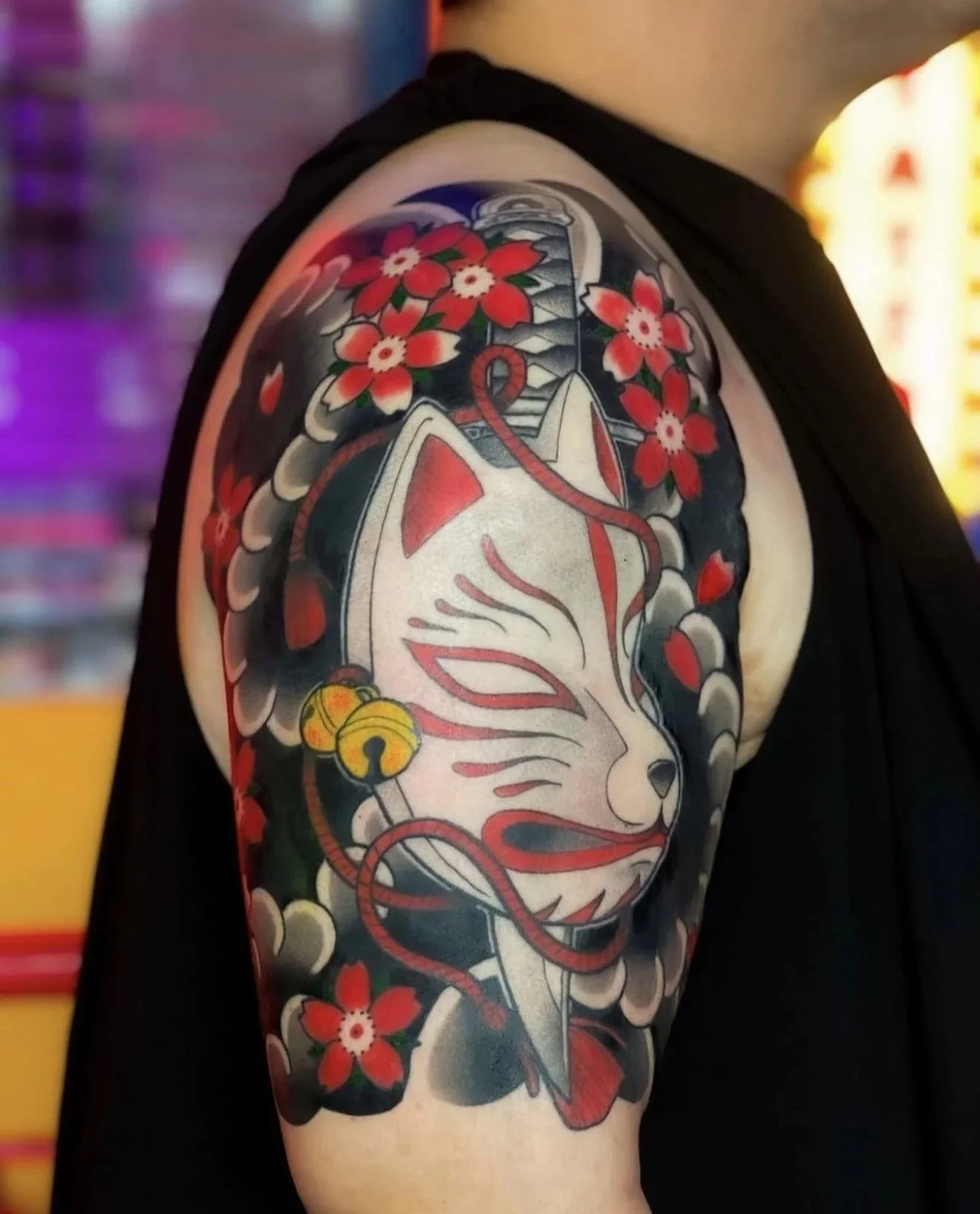
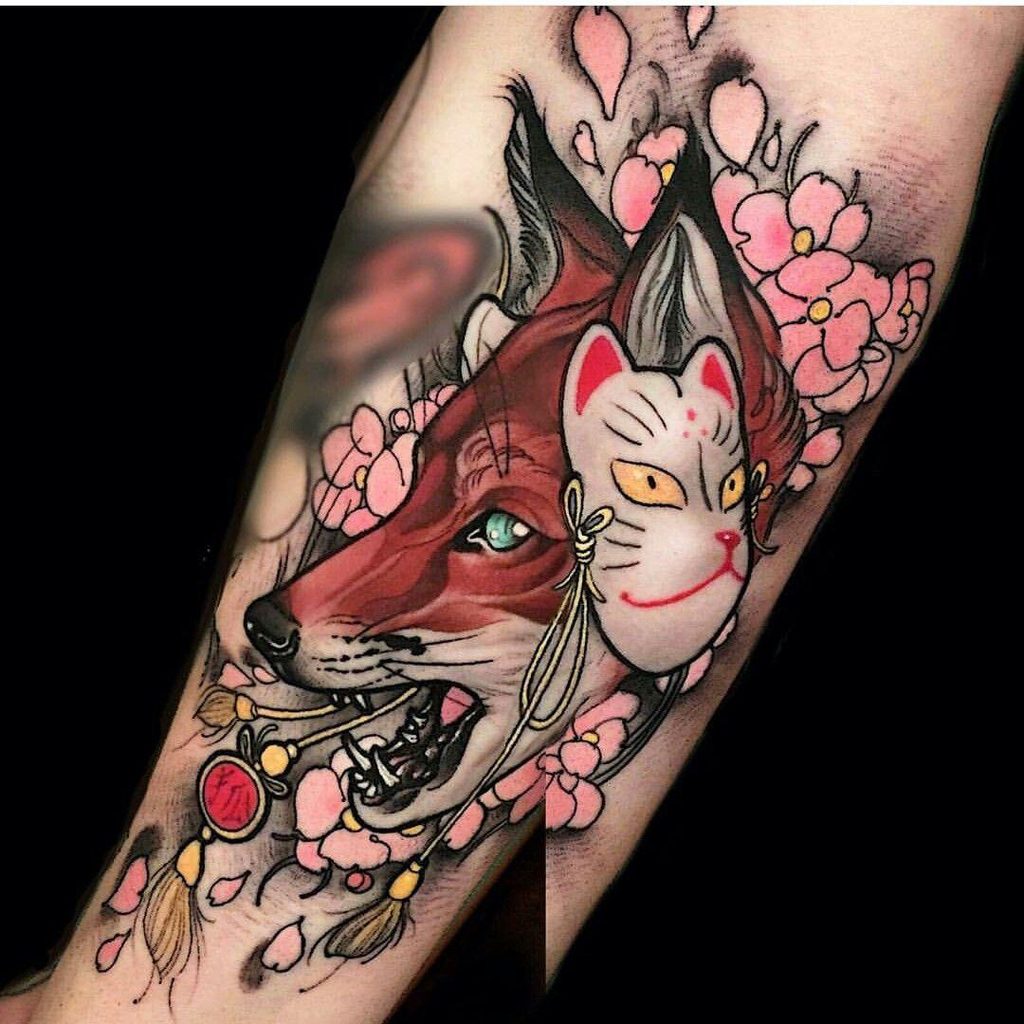
A Kitsune mask tattoo depicts a stylized fox face, often featuring pointed ears, narrow eyes and decorative red markings.
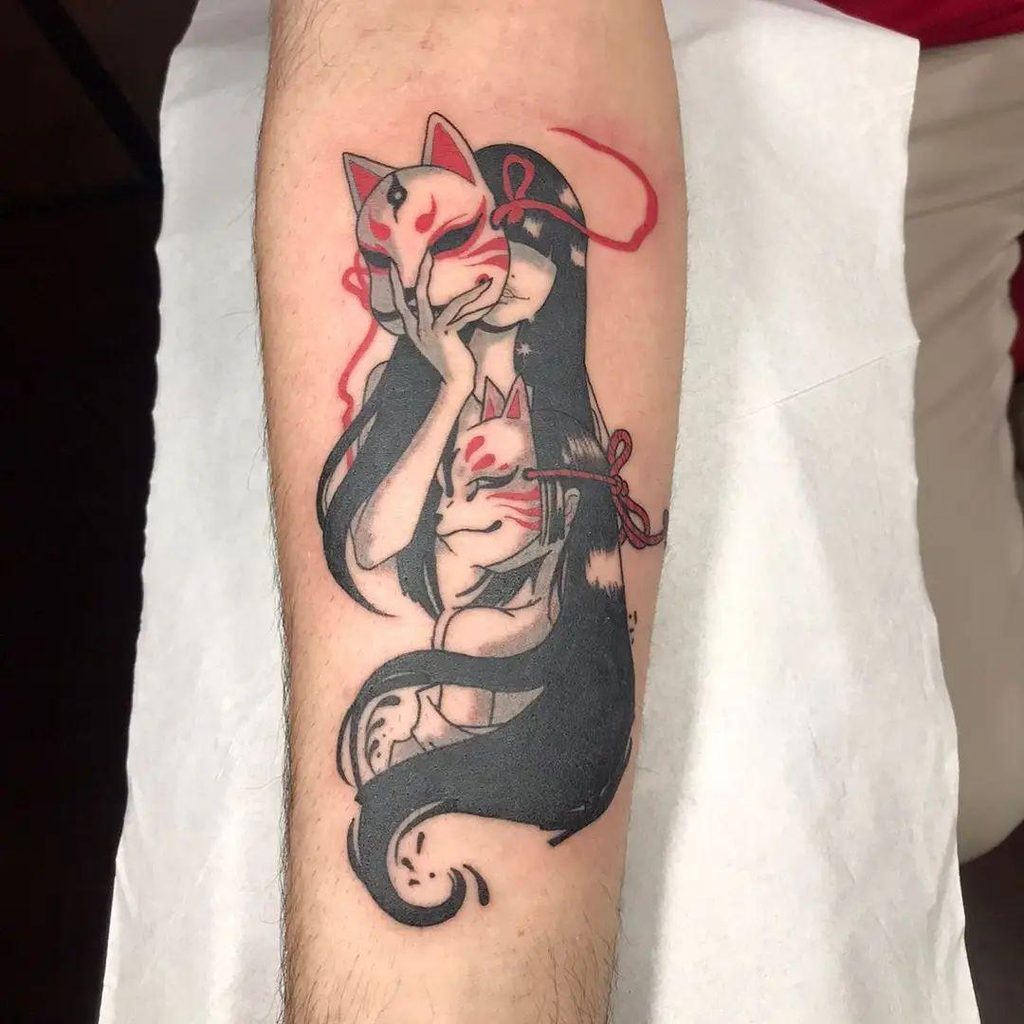
Kitsune masks are popular in contemporary Japanese festival imagery, performance aesthetics and modern visual culture. However, not every fox mask has the same historical or religious function.
Some are decorative festival objects, while others are inspired by theatre, folklore or contemporary character design.
What does a white Kitsune mask symbolize?
A white fox is particularly recognizable in imagery associated with Inari worship. White foxes are often represented as sacred messengers in Inari-related traditions.
However, a white fox mask tattoo does not automatically represent a specific Inari deity or religious ritual.
What does a red Kitsune mask mean?
Red markings frequently appear on contemporary Kitsune masks, partly reflecting the visual language of Japanese shrine and festival imagery.
Nevertheless, there is no universal rule that red markings always represent love, protection or a specific supernatural power. For tattoo design, red can provide strong contrast against white or black while reinforcing the mask’s recognizable appearance.
What Does a Kitsune and Torii Gate Tattoo Mean?
A torii is a traditional Japanese gate commonly associated with Shinto shrines. Torii gates mark an entrance to sacred space.
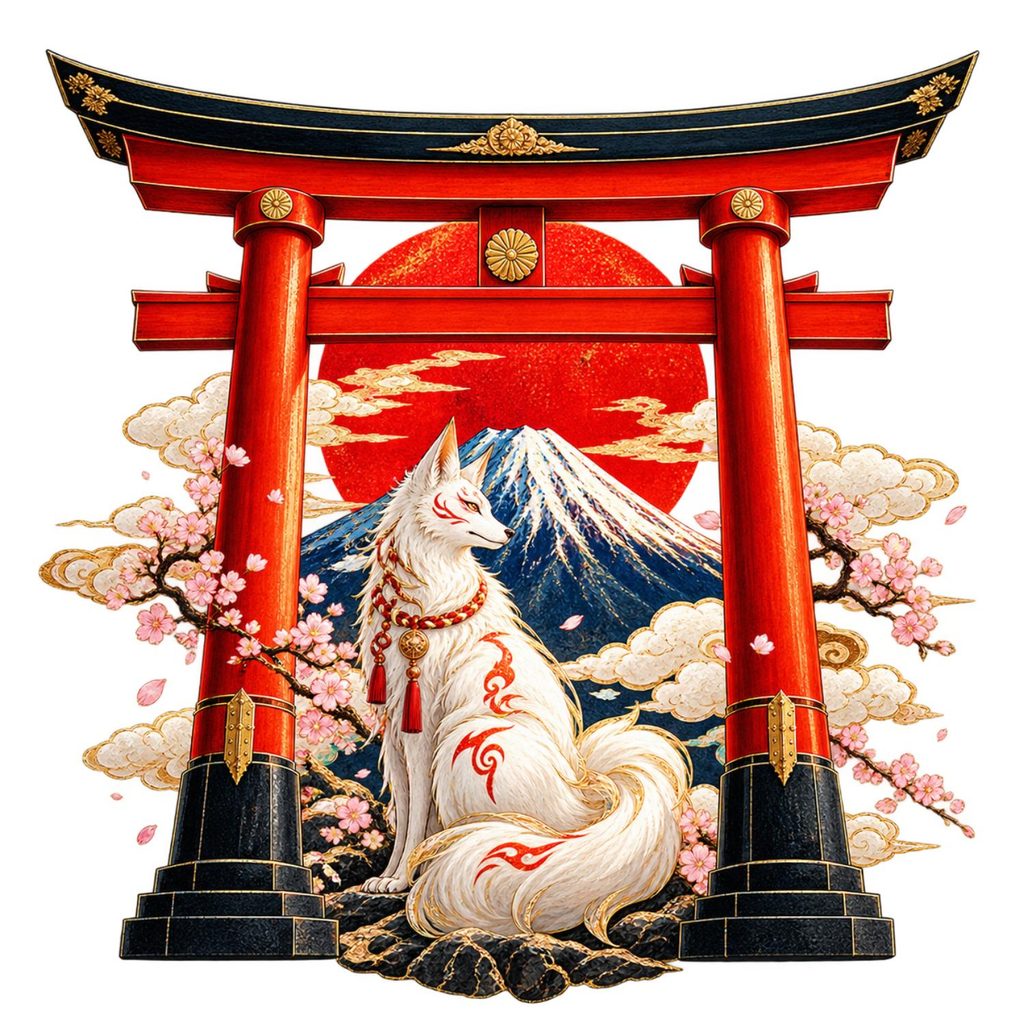
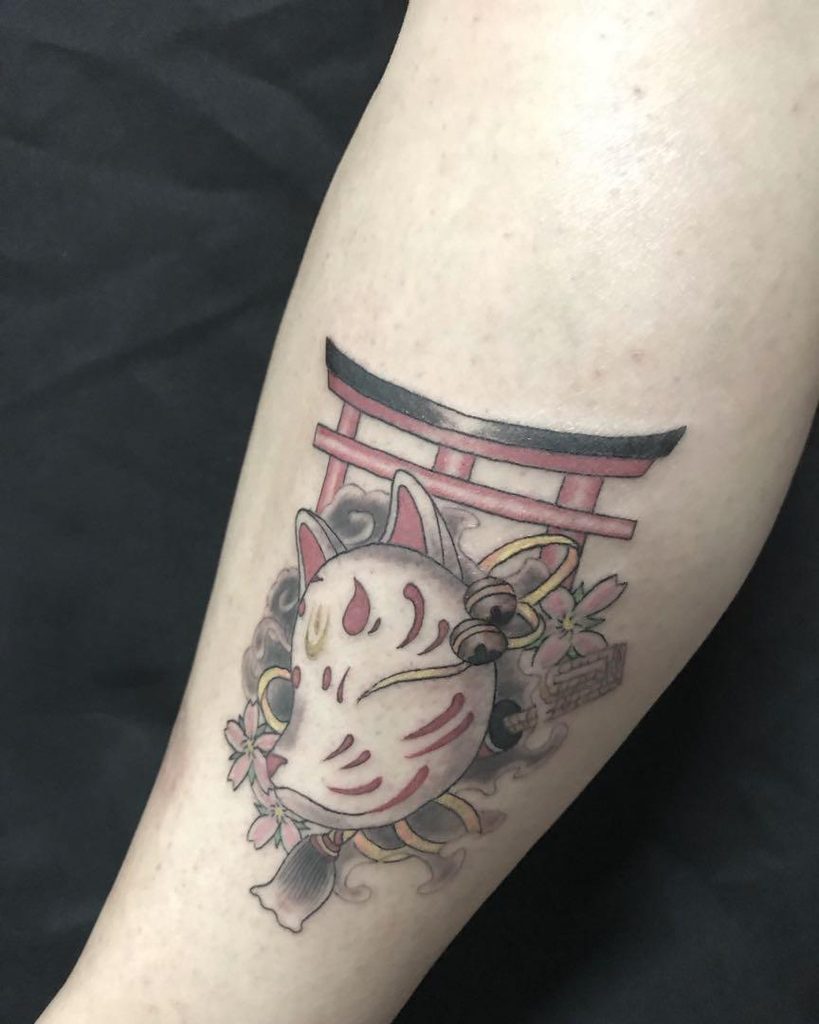
A Kitsune depicted near torii gates may evoke Inari shrine traditions, especially when the fox resembles the white messenger figures commonly seen at those shrines.
In modern tattoo art, the combination may represent:
• Spiritual connection
• Respect for sacred traditions
• A journey between different worlds
• Gratitude or prosperity
However, the torii should not be treated as a generic decorative symbol without cultural meaning. For an Inari-inspired tattoo, accurate shrine references can help the composition feel more thoughtful.
Frequently Asked Questions About Kitsune Tattoo
1. What does a Kitsune Tattoo mean?
A Kitsune Tattoo commonly represents intelligence, transformation, mystery, adaptability and supernatural power. Some designs also draw on themes of love, loyalty or spiritual connection.
2. Is a Kitsune good or evil?
Neither description applies to every Kitsune. Japanese fox spirits can be benevolent, deceptive, dangerous or sympathetic depending on the story.
3. What does a nine-tailed Kitsune tattoo mean?
A nine-tailed fox is commonly associated with extraordinary supernatural power, longevity and wisdom. Modern tattoo wearers may also interpret it as a symbol of personal transformation.
4. Is Kitsune the same as Inari?
No. Inari is a Japanese deity, while foxes are commonly associated with Inari as messengers or attendants.
Final Thoughts: What Does a Kitsune Tattoo Represent?
A Kitsune Tattoo is more than an image of a beautiful or mysterious fox.
It draws on centuries of Japanese folklore in which fox spirits deceive, protect, transform and sometimes form deeply emotional relationships with humans.
The Kitsune’s power lies in its complexity. It can be clever and dangerous, loving and secretive, ordinary and supernatural.
The Kitsune reminds us that appearances do not always reveal the truth—and that transformation can be both a gift and a mystery.
Create Your Kitsune Tattoo in Hanoi
Inspired by the supernatural fox spirits of Japanese folklore?
At 3 of Spades Hanoi Tattoo, our artists can help develop a custom Kitsune Tattoo based on your preferred story, visual references, placement and artistic style.
Whether you’re considering a delicate Kitsune mask, a traditional Japanese fox spirit or a detailed nine-tailed backpiece, send us your reference images, approximate size, preferred placement and Hanoi travel dates before your visit.
Every tattoo has a story. Let’s create yours.