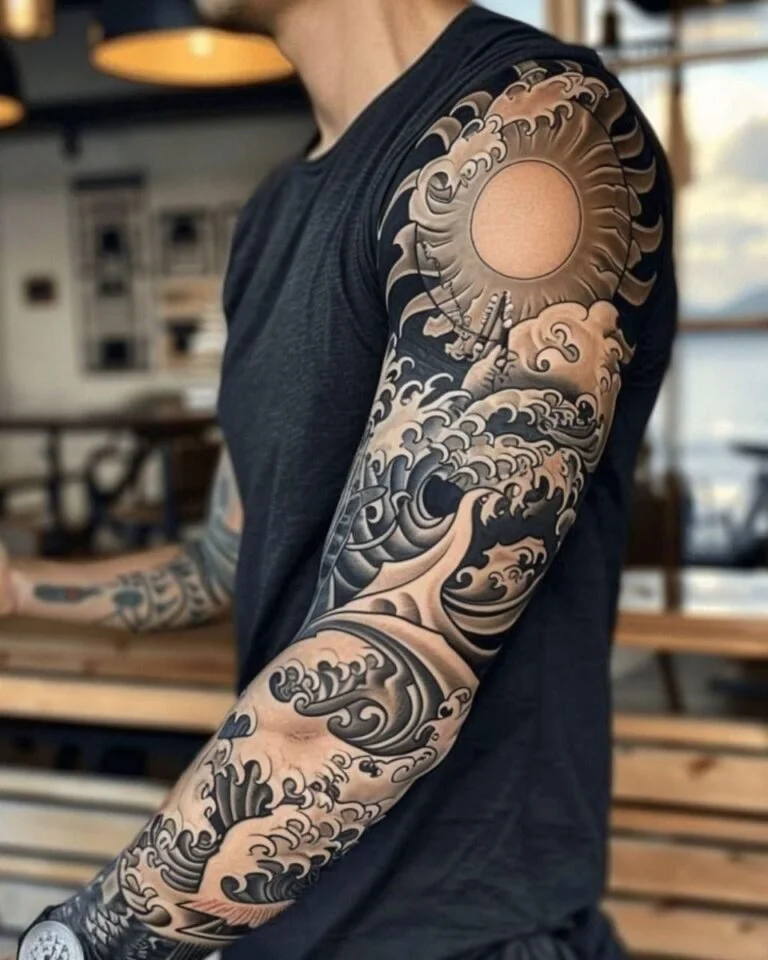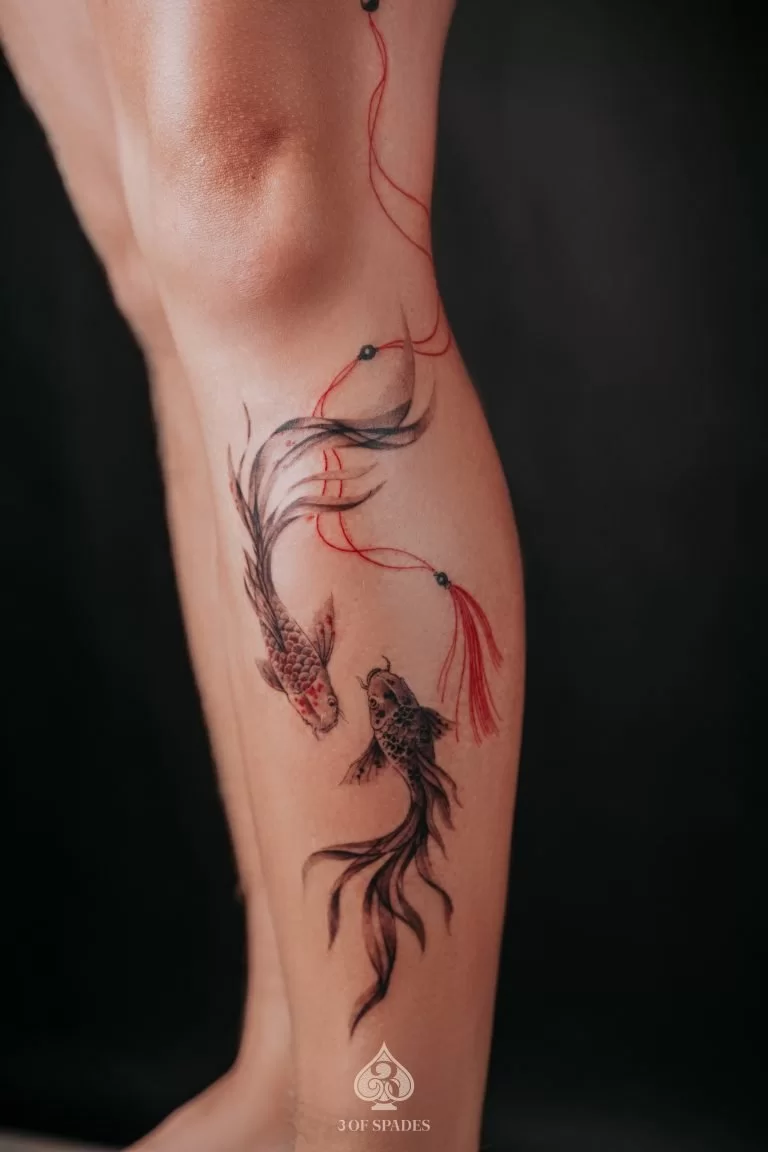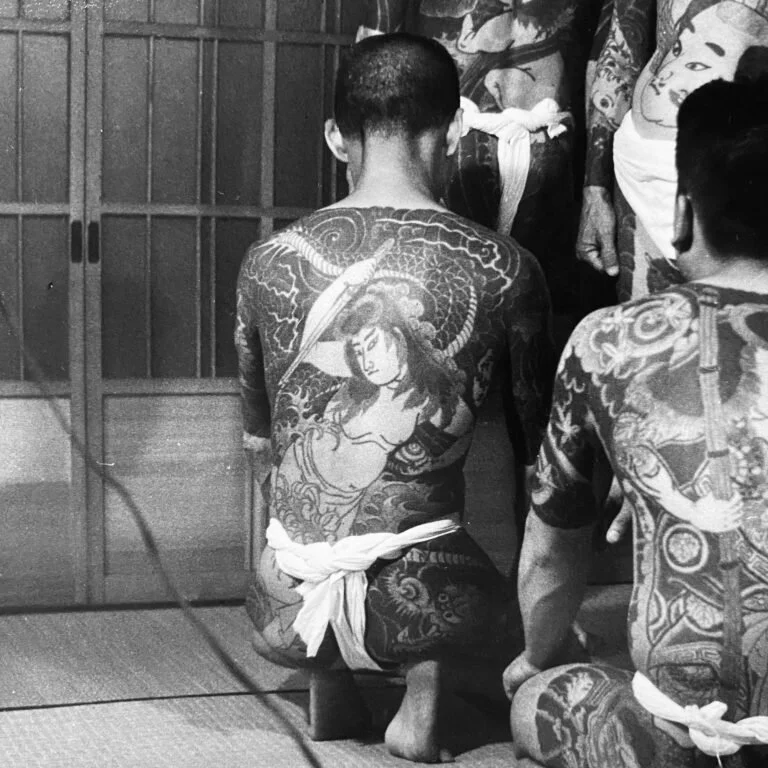
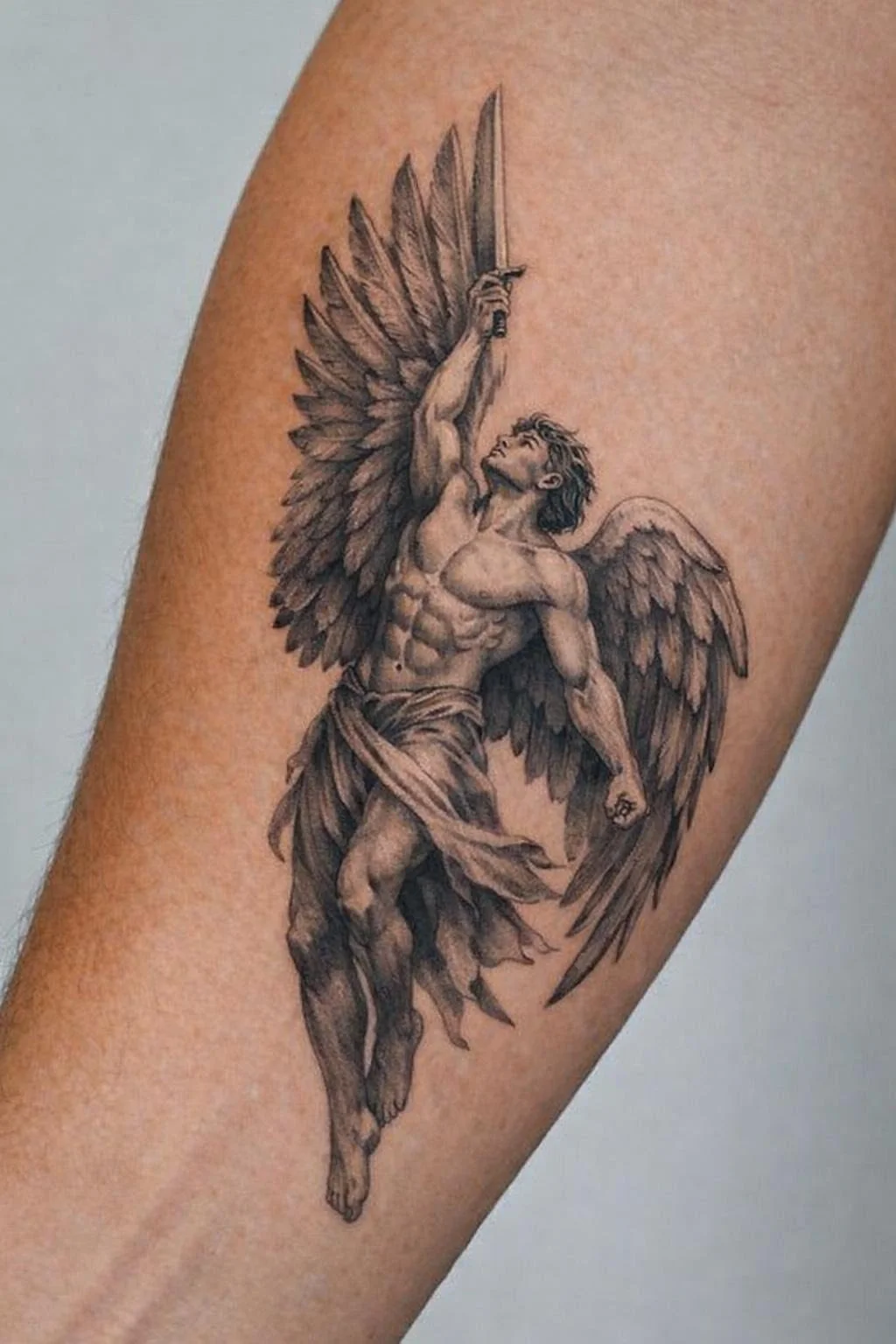
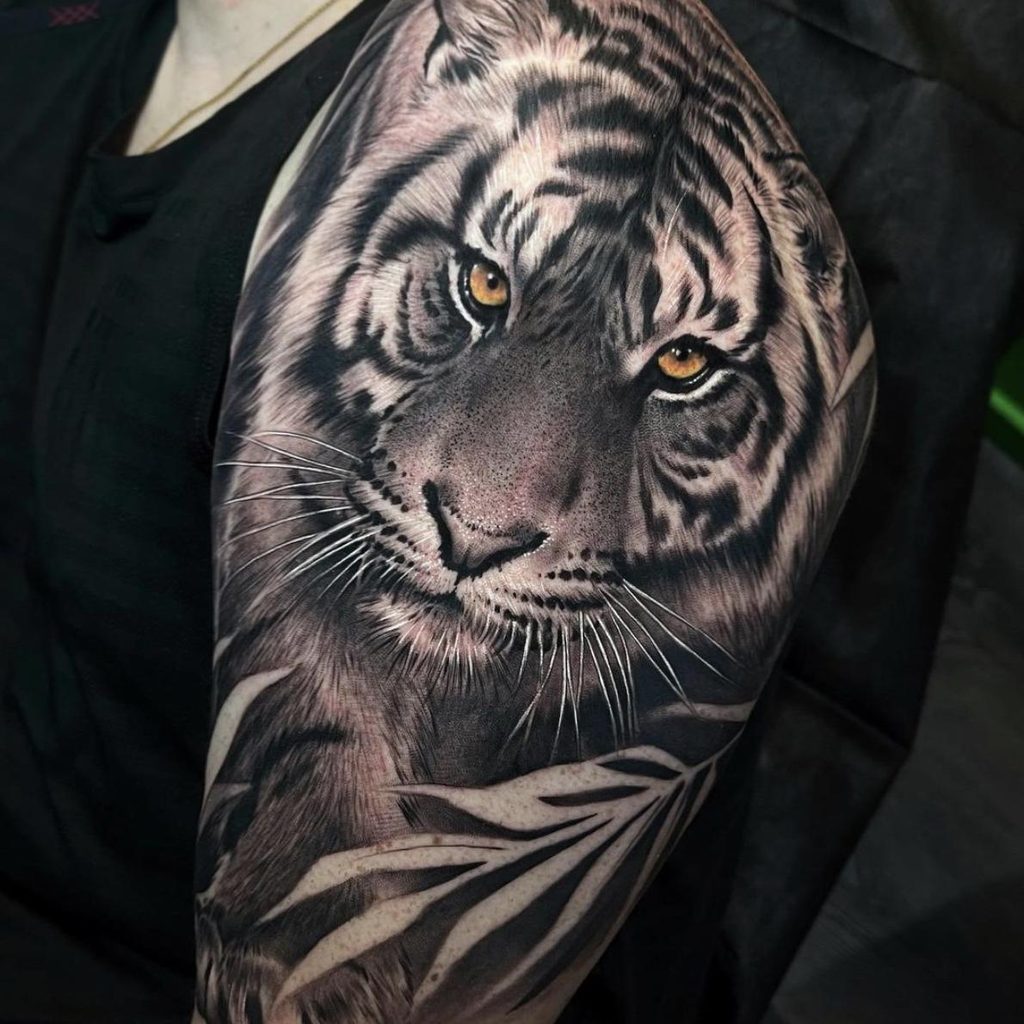
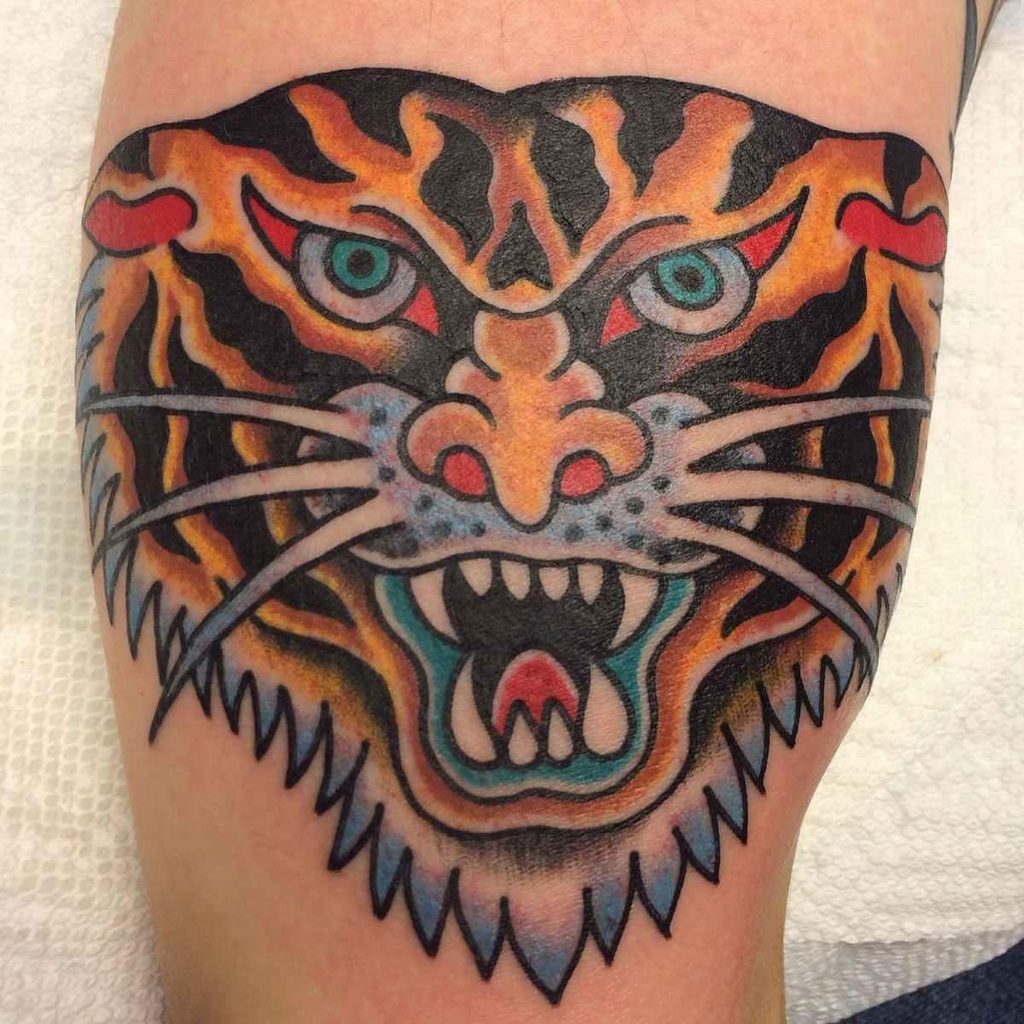
A tiger tattoo can look like a photograph, with lifelike fur, intense eyes and natural shadows. Or it can feature thick black outlines, striking colors and the unmistakable character of classic tattoo flash.
Both designs depict the same animal, yet their visual styles are completely different. This is the central distinction between a Realism Tattoo and a traditional tattoo.
Realism focuses on reproducing the appearance of real subjects, while traditional tattooing emphasizes bold shapes, recognizable imagery and graphic simplicity.
But appearance is only the beginning.
These styles also differ in their artistic history, techniques, design possibilities, placement considerations and how certain details may change over time.
In this guide, we’ll compare realism and traditional tattoos to help you decide which style best suits your ideas, preferences and long-term expectations.
What Is a Realism Tattoo?
A Realism Tattoo is designed to resemble a real-life subject or photographic reference as closely as practical.
Rather than relying primarily on bold outlines, realism artists use tonal variation, lighting, shadows and texture to create depth.

Popular realism subjects include:
• Human portraits and memorial tattoos
• Realistic animals and pet portraits
• Flowers and botanical designs
• Classical sculptures
• Landscapes and architecture
• Eyes, clocks and meaningful objects
Realism can be created in black and grey or color. Some artists also specialize in micro-realism or highly detailed photorealistic compositions.
What makes realism tattoos look lifelike?
A realistic image depends on accurate proportions and believable lighting.
For example, a portrait artist must understand how shadows define facial structure, how light reflects in the eyes and how different textures appear on skin.
However, a successful realistic tattoo is not simply a photograph copied without adjustment. Artists must simplify certain details and preserve sufficient contrast so the image remains readable after healing.
Related article: Realism Tattoo: Designs, Techniques & Inspiration
What Is a Traditional Tattoo?
Traditional tattooing refers to several established tattoo traditions, but in modern Western tattoo-style comparisons, the term usually means American Traditional Tattoo, also known as Old School Tattoo.
American traditional tattoos are recognized for their bold outlines, simplified shapes and limited but striking color palettes.
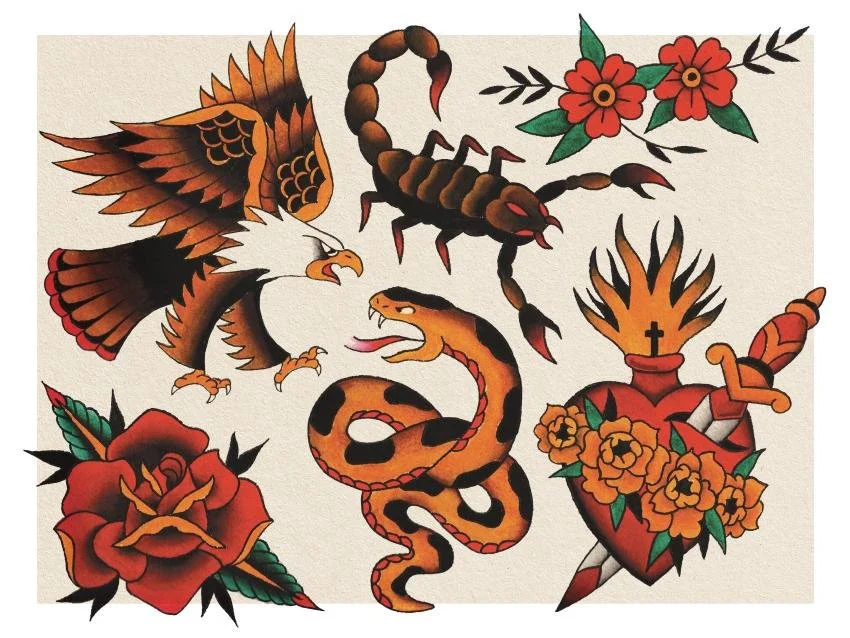
Common traditional tattoo subjects include:
• Swallows and eagles
• Roses and flowers
• Daggers and swords
• Anchors and ships
• Hearts and banners
• Tigers, panthers and snakes
• Skulls and nautical symbols
American traditional tattooing developed through the work of multiple artists and communities, with strong connections to maritime culture, military tattooing and twentieth-century tattoo shops.
Artists such as Norman Collins helped shape its recognizable visual language.
Why do traditional tattoos use bold outlines?
Strong outlines help establish clear shapes and separate the main subject from surrounding details. Traditional designs also tend to use deliberate negative space and relatively simple color arrangements. These choices create tattoos that remain recognizable even when viewed from a distance.
However, American traditional tattooing should not be confused with every historical form of traditional tattooing. Japanese Irezumi, Polynesian tattooing and other cultural tattoo traditions have their own distinct histories and techniques.
In this article, Traditional Tattoo refers specifically to American Traditional unless otherwise stated.
Realism Tattoo vs Traditional Tattoo: Quick Comparison
| Feature | Realism Tattoo | American Traditional Tattoo |
|---|---|---|
| Visual appearance | Lifelike and photographic | Bold and illustrative |
| Outlines | Often subtle or selectively used | Strong black outlines |
| Shading | Smooth gradients and tonal transitions | Simpler, more graphic shading |
| Colors | Naturalistic or monochromatic | Often a limited, saturated palette |
| Level of detail | Frequently intricate | Deliberately simplified |
| Common subjects | Portraits, animals, statues | Roses, eagles, daggers, anchors |
| Composition | Photographic depth and lighting | Clear silhouettes and graphic balance |
| Small designs | Fine details may be difficult to preserve | Simplified designs can work at smaller sizes |
| Aging considerations | Subtle details may soften | Bold shapes often remain readable |
| Overall aesthetic | Realistic, cinematic, detailed | Classic, graphic, timeless |
Neither style is universally superior.
The better choice depends on the subject you want, your preferred aesthetic and how the tattoo is designed for the body.
1. Realism Tattoo vs Traditional: Outlines and Linework
One of the clearest differences between these styles is the use of outlines.
Realism tattoos often use subtle boundaries
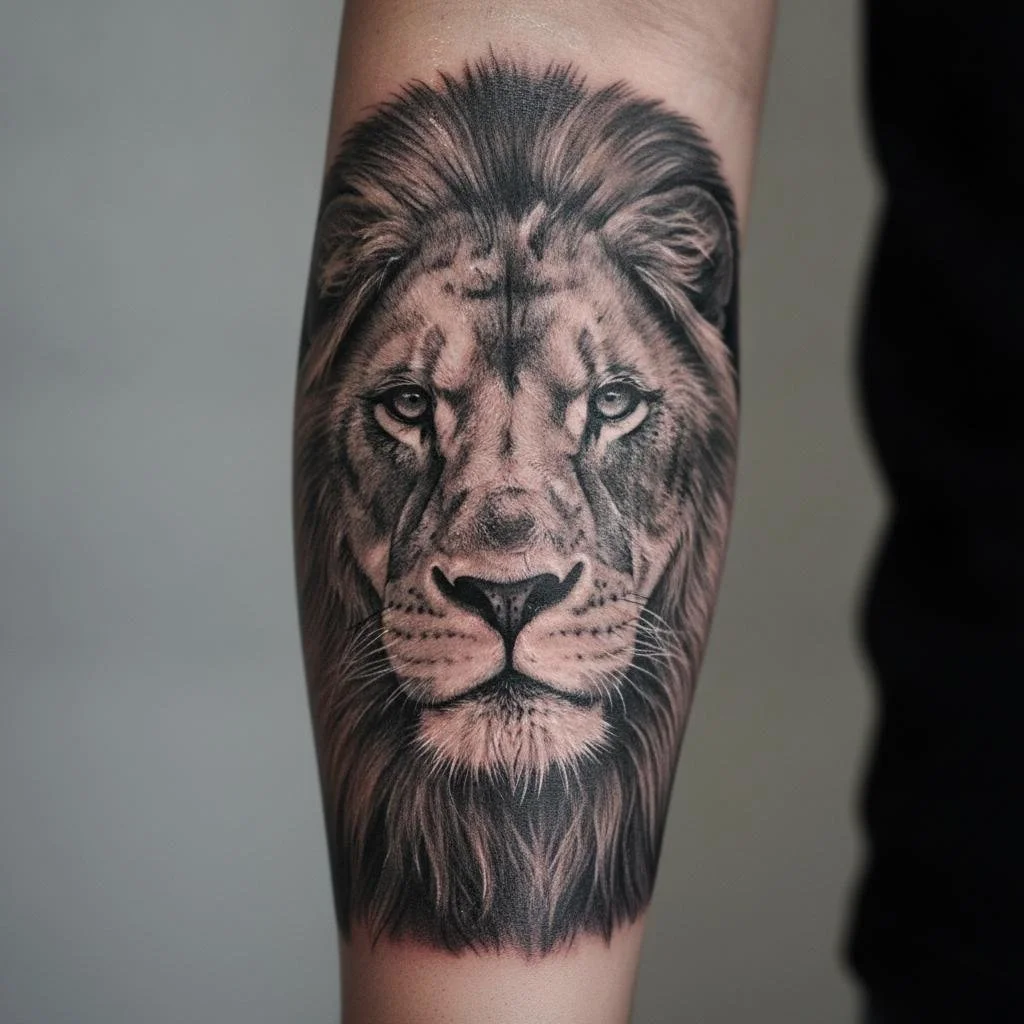
In realism, artists create form through changes in light, shadow and color. For example, the edge of a realistic lion’s face may be defined by dark fur against a lighter background rather than a continuous black outline.
Some realism tattoos still use selective lines to reinforce important features, but these lines generally support the realistic effect.
Traditional tattoos rely on bold outlines
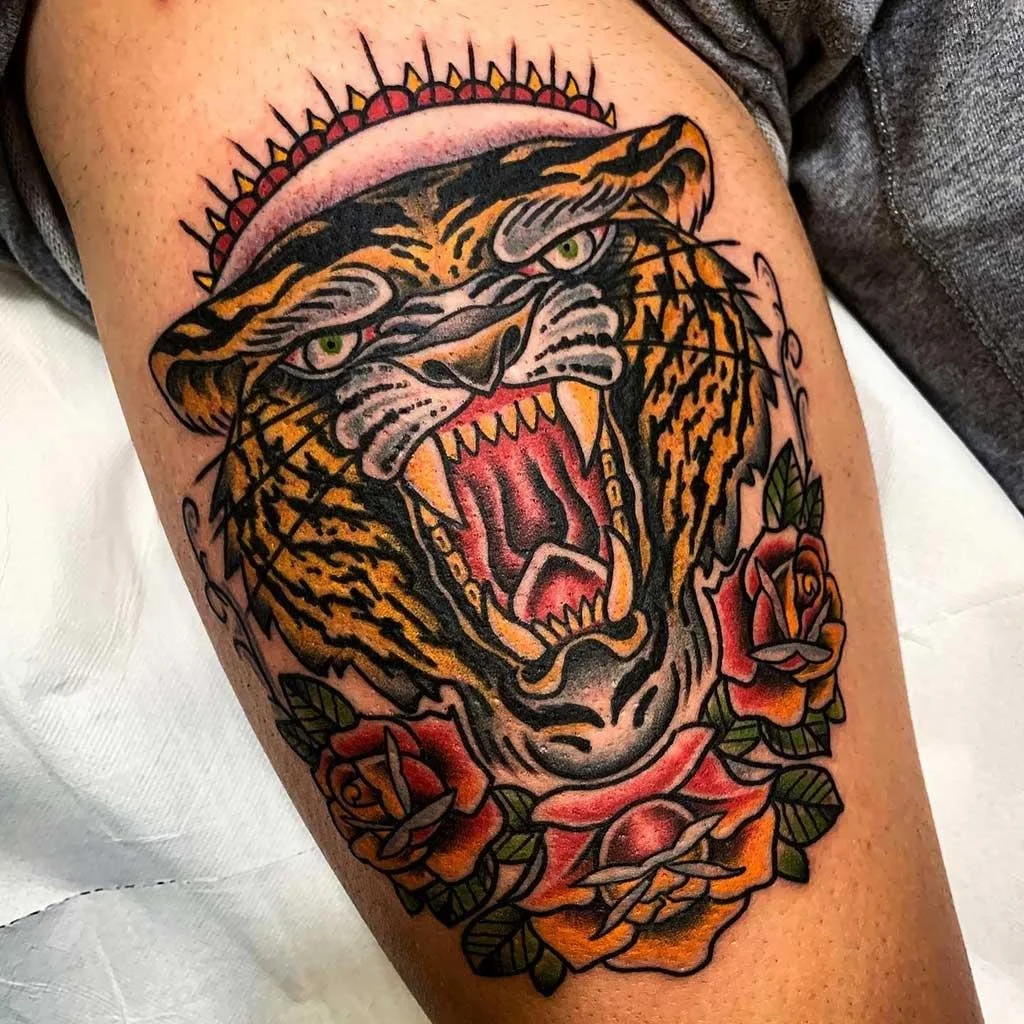
In American traditional tattooing, strong black outlines are a defining characteristic. They separate the subject into recognizable shapes and establish the overall composition.
A traditional tiger might have a bold silhouette, simplified stripes and deliberately exaggerated facial features.
Key difference: Realism uses tonal variation to create natural form, while traditional tattooing uses strong linework to establish graphic structure.
2. Shading Techniques: Smooth Gradients vs Bold Contrast
Shading is another major difference.
Realism Tattoo shading
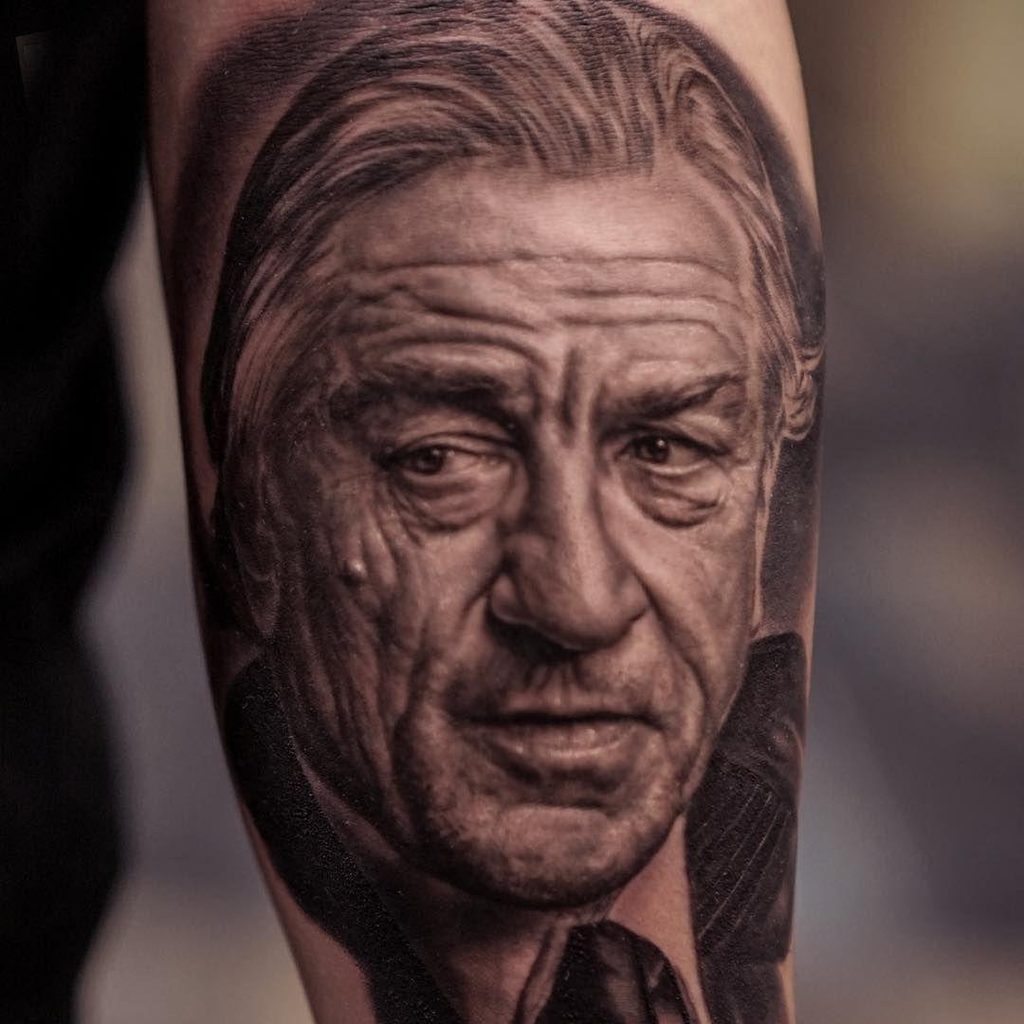
Realism artists often use smooth transitions between light and dark. These transitions help recreate the appearance of skin, fur, metal, stone and other materials.
Techniques may include grey wash, controlled layering and carefully planned negative space.
Traditional Tattoo shading
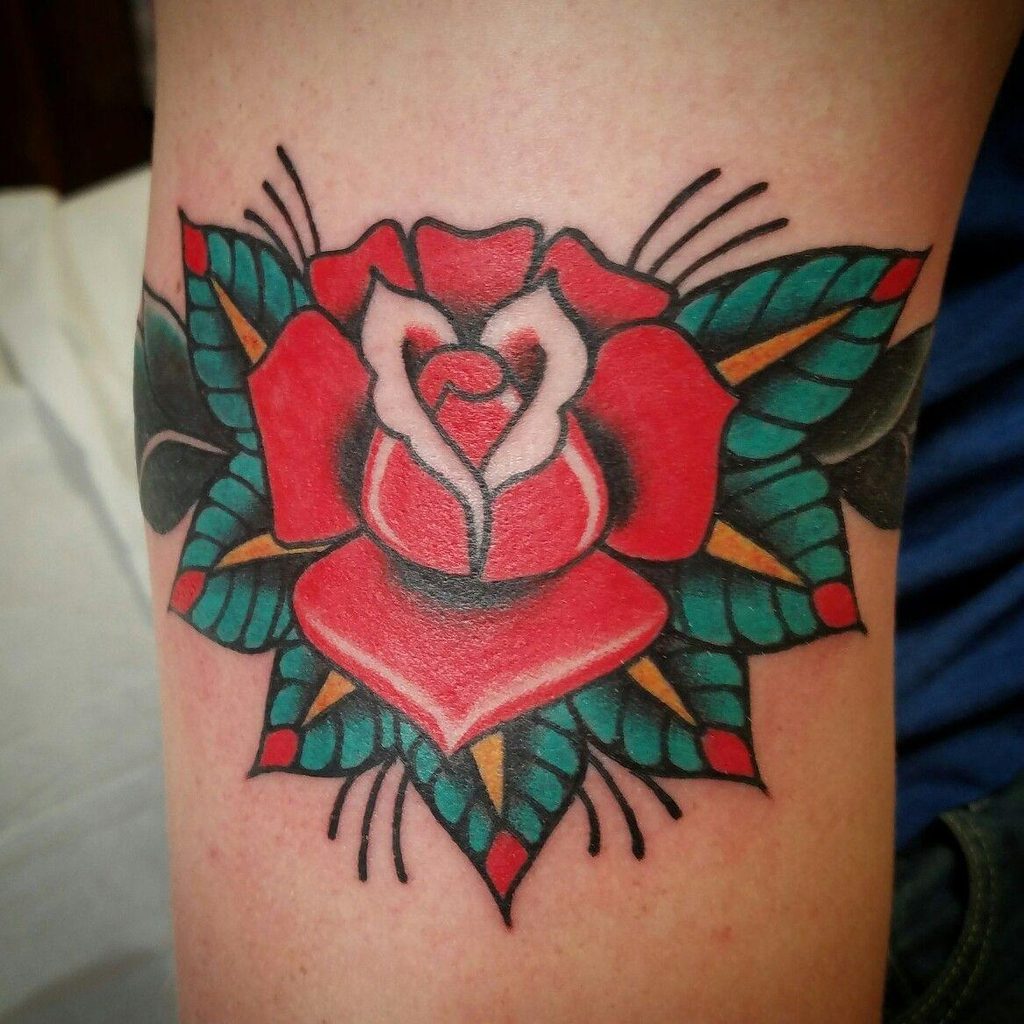
Traditional tattoos commonly use more graphic shading. Rather than reproducing every subtle change in light, the artist emphasizes clear areas of shadow and color.
This can involve whip shading, solid black sections and strong contrast. The objective is immediate readability rather than photographic accuracy.
3. Realism Tattoo vs Traditional Tattoo: Color Differences
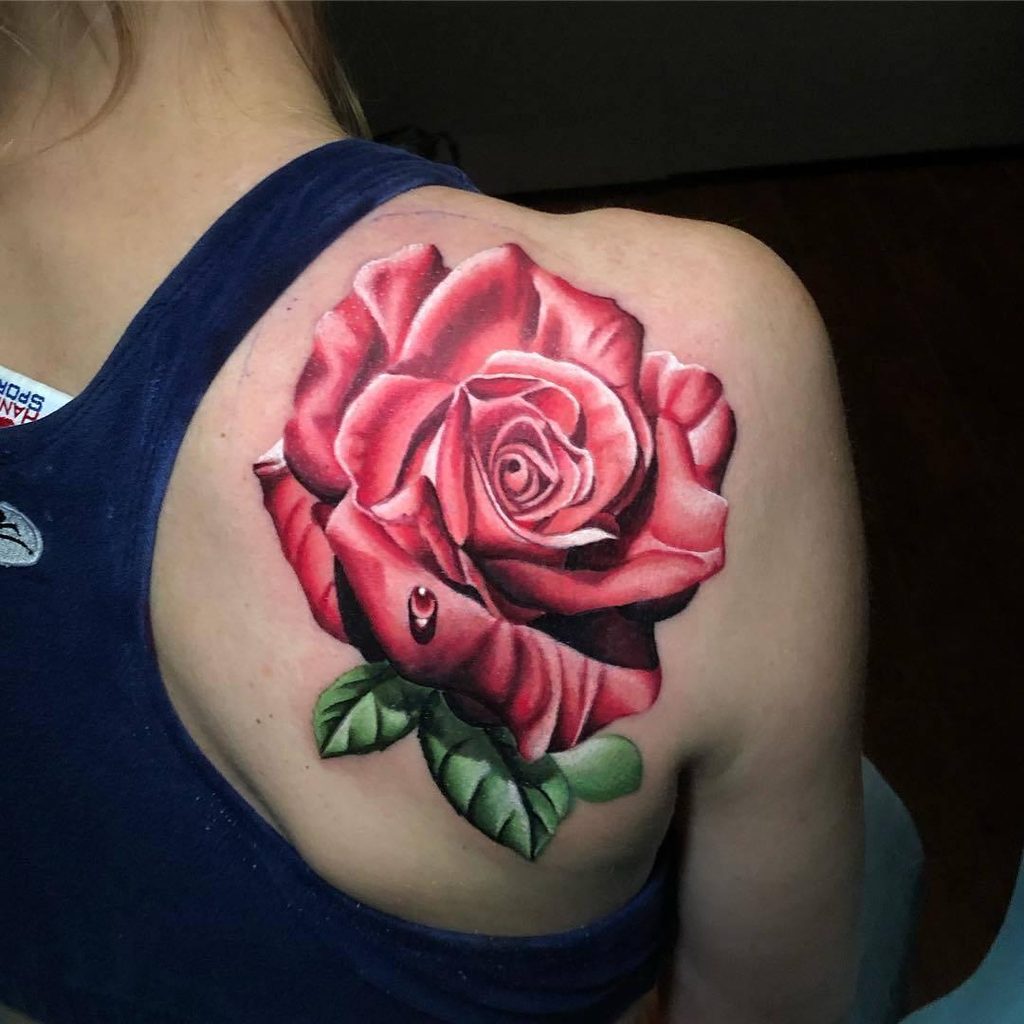
Natural color variation, soft highlights and realistic depth.
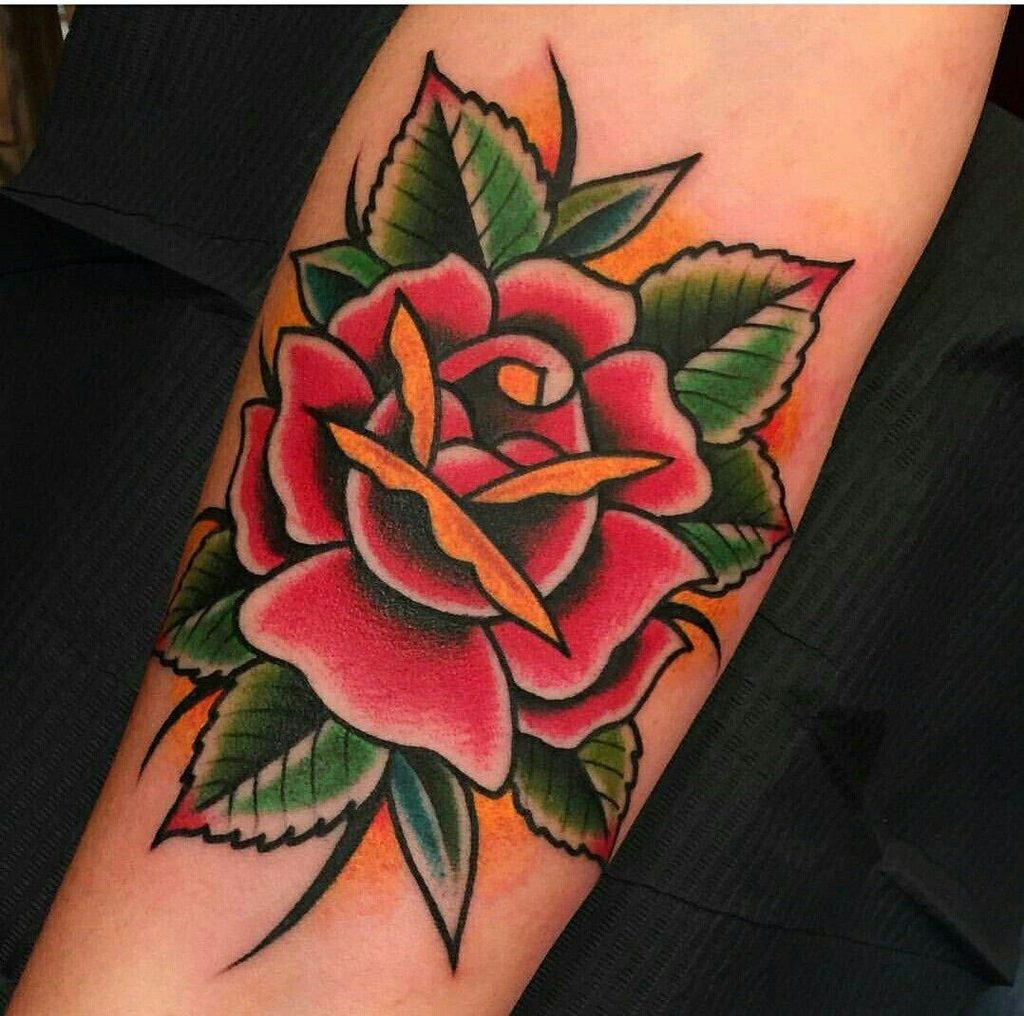
Solid colors, bold contrast and simplified petals.
Realism tattoos may use complex color relationships to recreate a reference image.
A realistic rose might include several shades of red, subtle purple shadows and warm highlights.
Traditional tattoos usually emphasize a smaller selection of bold, recognizable colors.
Classic American traditional palettes often include black, red, green and yellow, although contemporary traditional artists may use a wider range.
Which style looks better in black and grey?
Both can work beautifully.
Black and grey realism creates photographic depth, while blackwork or black-and-grey traditional designs emphasize silhouettes, linework and contrast.
The choice depends on whether you prefer a lifelike image or a graphic illustration.
4. Realism vs Traditional Tattoo: Design Details
The two styles approach detail very differently. In realism, detail helps recreate the physical appearance of a subject. While in traditional tattooing, detail is simplified to strengthen the overall design.
Realism emphasizes natural textures
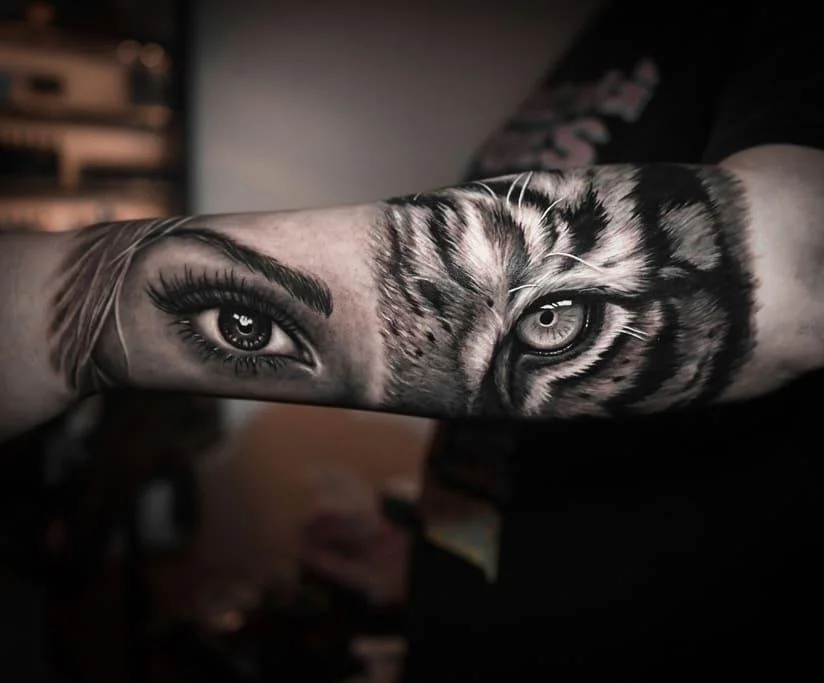
A realistic animal tattoo may include individual fur patterns, reflections in the eyes and gradual changes in light. A portrait may require precise facial proportions and subtle shading to capture a person’s likeness.
However, adding more detail does not automatically make a realism tattoo better. The artist must determine which features are essential.
Traditional emphasizes recognizable shapes
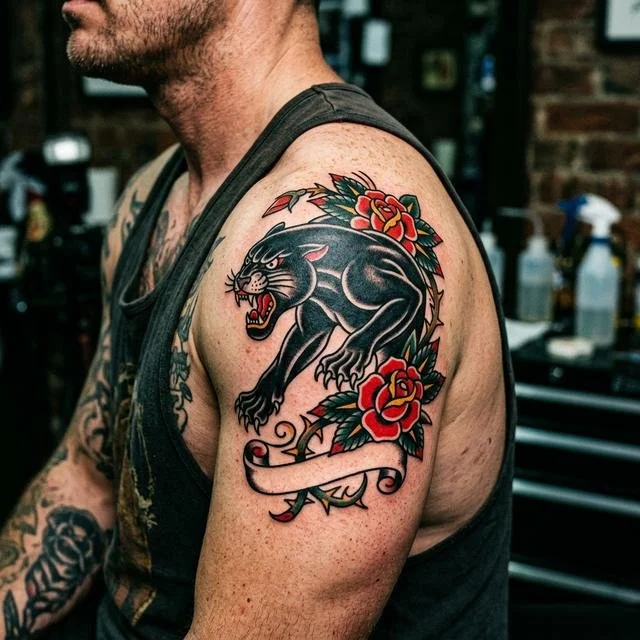
A traditional panther might have an exaggerated mouth, bold claws and a dramatic curved silhouette.
The design does not attempt to reproduce a real panther photograph.
Instead, it communicates energy, movement and character through simplified visual elements.
The difference is artistic intention: realism recreates how something looks, while traditional tattooing interprets it through a recognizable visual language.
5. Which Tattoo Style Takes Longer?
Realism tattoos can take longer when they involve detailed shading, complex textures and highly accurate proportions. Traditional tattoos may be completed more quickly when the design uses simplified shapes and a limited number of elements.
However, size and complexity make direct comparisons difficult.
| Design example | Realism approach | Traditional approach |
|---|---|---|
| Small rose | Detailed petals and tonal transitions | Bold petals and simplified shading |
| Tiger head | Fur texture, anatomy and lighting | Strong outline and graphic stripes |
| Human portrait | Precise likeness and facial shading | Stylized portrait with simplified features |
| Full sleeve | Multiple subjects and complex tonal transitions | Multiple bold motifs with cohesive spacing |
A small realism tattoo can take less time than a large traditional backpiece. Likewise, an elaborate traditional sleeve may require several sessions.
The artist should estimate the duration after reviewing the actual design.
6. Can You Combine Realism and Traditional Tattoo Styles?
Yes. Combining realism and traditional elements can create a distinctive tattoo, but the composition requires careful planning.
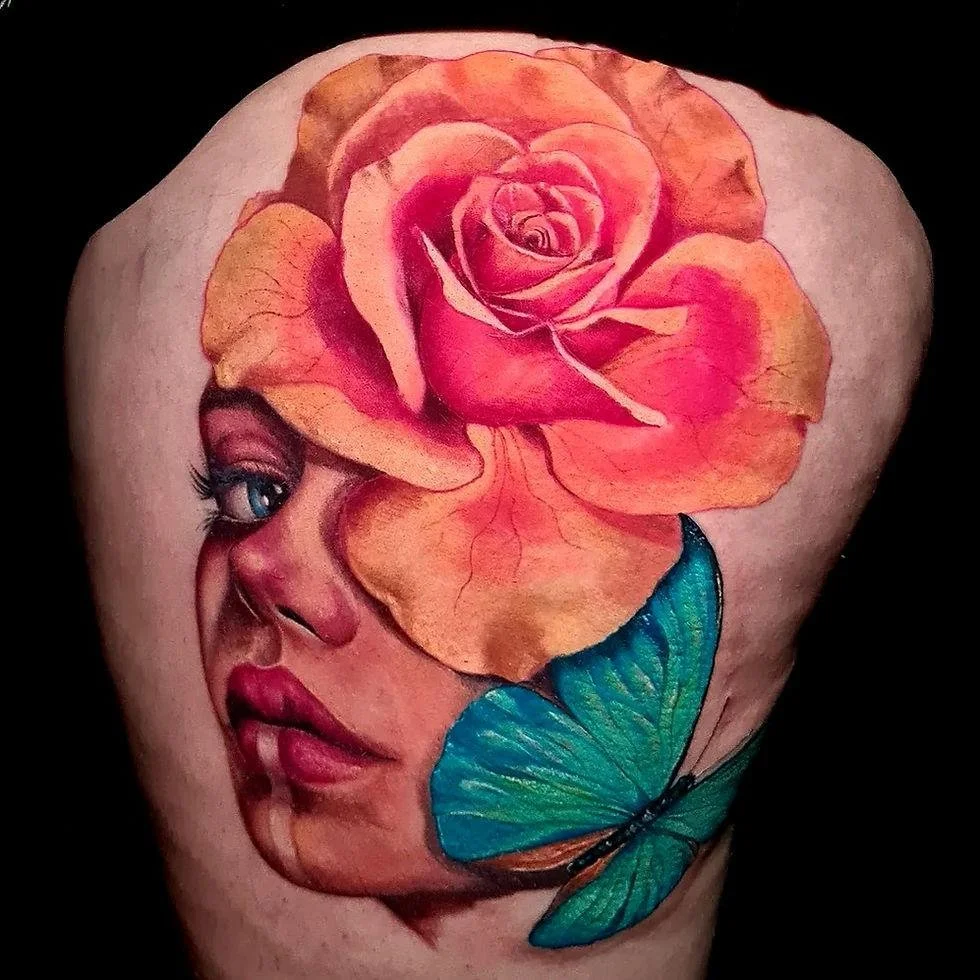
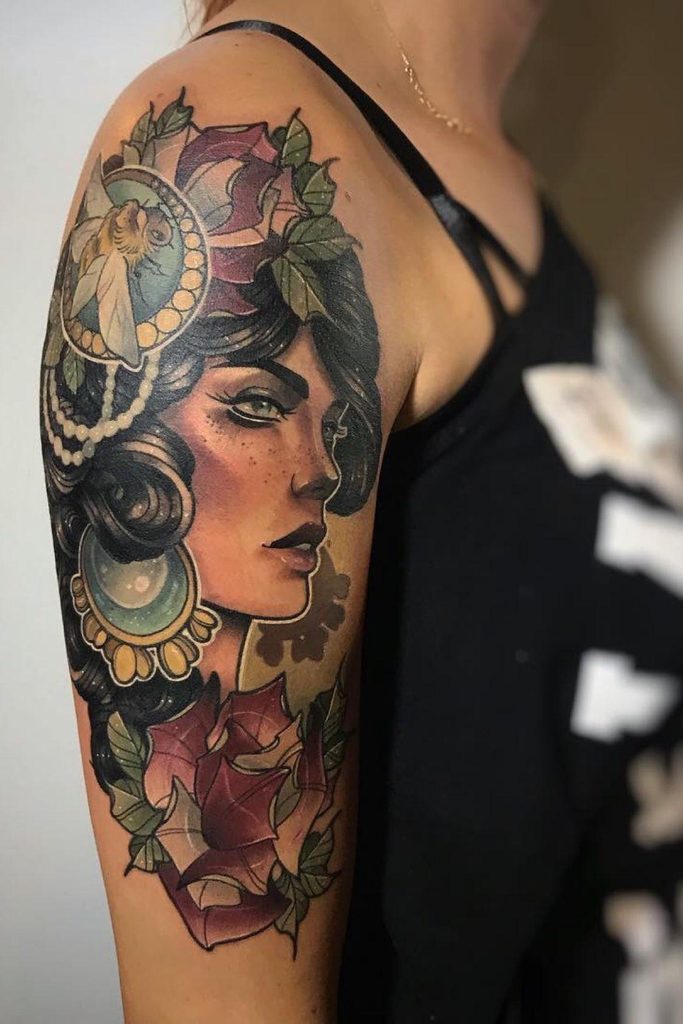
For example:
• A realistic portrait surrounded by traditional roses.
• A black and grey realistic animal with bold decorative framing.
• A traditional dagger combined with a realistically shaded flower.
• A sleeve featuring separate realism and traditional sections.
The challenge is maintaining visual balance. Realism often relies on subtle tonal transitions, while traditional tattooing uses strong outlines and graphic shapes.
If these approaches are combined without planning, one element may visually overpower the other. A successful hybrid design establishes a clear focal point and a consistent relationship between its different styles.
Is neo-traditional tattooing the same as combining realism and traditional?
Not exactly.
Neo-traditional tattooing developed from traditional tattoo aesthetics but often uses expanded color palettes, more elaborate shading and greater dimensionality.
It may incorporate realistic influences, yet it remains a distinct artistic approach rather than simply a combination of realism and American traditional.
Frequently Asked Questions About Realism vs Traditional Tattoo
1. What is the main difference between a realism tattoo and a traditional tattoo?
A realism tattoo aims to recreate lifelike subjects using natural proportions, textures and shading. An American traditional tattoo emphasizes bold outlines, simplified shapes and strong graphic contrast.
2. Do traditional tattoos last longer than realism tattoos?
Traditional designs often retain strong readability because of their bold outlines and simplified forms. However, longevity depends on the design, technique, placement, skin and aftercare.
3. Which style is better for a portrait tattoo?
Realism is generally better when accurate likeness is the main objective. Traditional tattooing can create stylized portraits, but it does not usually attempt photographic accuracy.
4. Can traditional tattoos be black and grey?
Yes. Although American traditional tattooing is often associated with bold colors, traditional-style designs can also use black ink and grey shading.
5. Can realism tattoos have bold outlines?
Yes. Some realism artists use selective outlines to reinforce important features. However, heavy outlines are generally less central to realism than to traditional tattooing.
6. Can I combine realism and traditional tattoos in one sleeve?
Yes. A skilled artist can combine different approaches through consistent composition, spacing and visual hierarchy.
Final Thoughts: Realism Tattoo or Traditional Tattoo?
Both realism and traditional tattooing offer powerful ways to express personal stories.
A Realism Tattoo is ideal when you want to preserve the recognizable details of a person, animal, object or meaningful photograph. A traditional tattoo is an excellent choice when you prefer bold visual symbols, classic imagery and graphic clarity.
The decision should not be based only on which style looks more impressive in a photograph. Consider the subject, placement, available space, artist specialization and how the design may change over time.
Realism captures how something looks. Traditional tattooing captures its character through bold artistic interpretation. Neither approach is inherently better. The right tattoo is the one that communicates your idea in the visual language you love.
Get Your Custom Tattoo in Hanoi
Still deciding between a realistic tattoo and a traditional design?
At 3 of Spades Hanoi Tattoo, our artists can help you explore different approaches based on your references, preferred placement and personal style.
Whether you’re considering a black and grey portrait, a lifelike animal tattoo or a bold old-school design, our team can discuss how to translate your idea into a composition suited to your body.
Located in Hanoi’s Old Quarter, our studio welcomes international travelers looking for a comfortable, collaborative tattoo experience.
Send us your reference images, approximate size in centimeters, preferred placement and Hanoi travel dates to discuss your design and receive a quote.
Every tattoo has a story. Let’s create yours.