Polynesian Blackwork Tattoo is a contemporary search term often used to describe bold black tattoo designs associated with the tattooing traditions of Polynesian cultures. However, the term brings together practices that have distinct histories, meanings and cultural responsibilities.
Across Polynesia, tattooing has been connected with identity, genealogy, social relationships, community belonging and personal achievement. In many traditions, tattoo designs are not simply decorative patterns. Their significance comes from the people, cultural practices and histories associated with them.
Today, contemporary tattoo enthusiasts may be drawn to Polynesian-inspired blackwork because of its striking geometry, rhythmic patterns and body-conscious compositions.
Yet appreciating these designs requires more than understanding their appearance.
It means recognizing that Polynesia is not one homogeneous culture, that traditional tattooing remains a living practice and that not every culturally significant pattern is appropriate to reproduce.
This guide explores the heritage of Polynesian tattooing, the meaning of selected motifs and how to approach these artistic traditions with respect.
What Is a Polynesian Blackwork Tattoo?
A Polynesian Blackwork Tattoo generally refers, in contemporary tattoo terminology, to black-ink artwork influenced by tattooing traditions associated with Polynesian cultures.
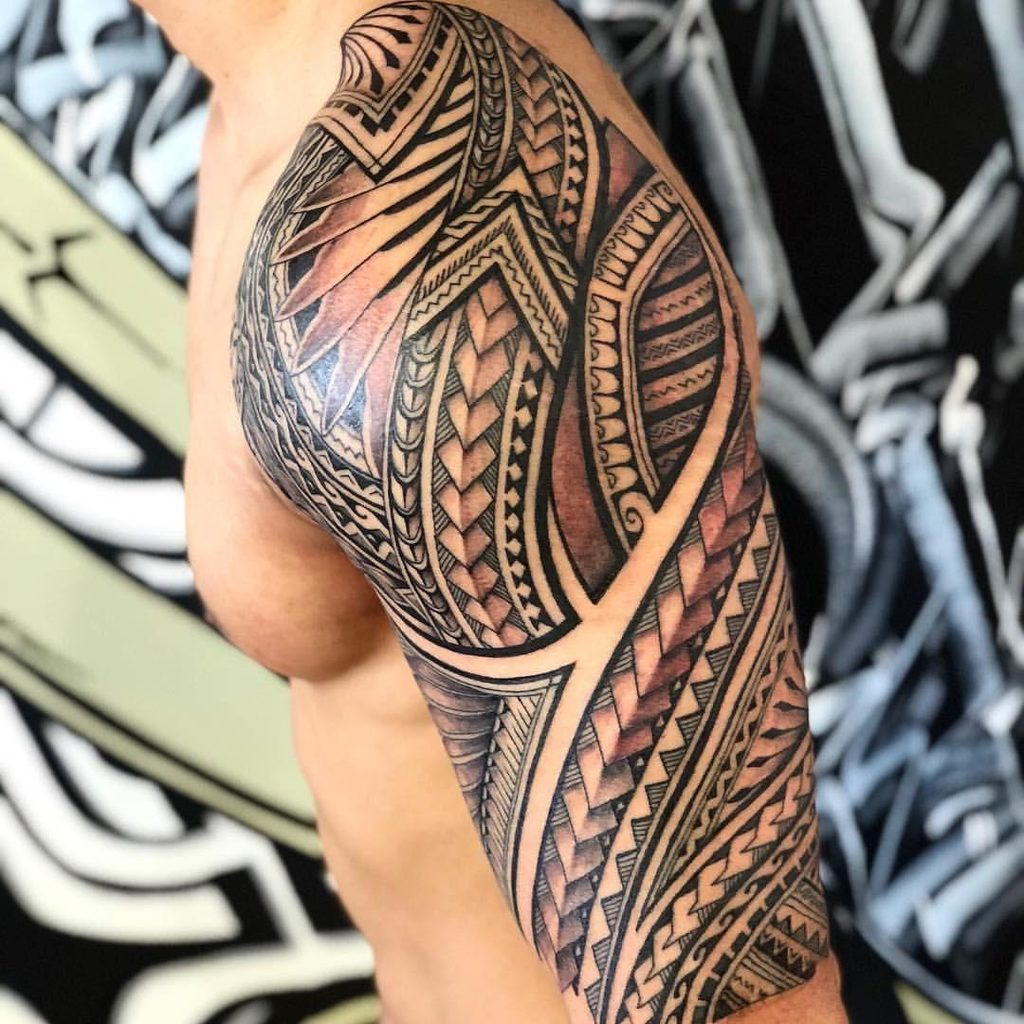
However, blackwork is a modern umbrella term, not the traditional name for every Polynesian tattoo practice.
What defines Polynesian tattoo art?
Although tattoo traditions vary between communities, some commonly recognizable visual characteristics include:
• Repeated geometric patterns
• Dense areas of dark pigment
• Strong contrasts between inked and uninked skin
• Designs organized around body contours
• Compositions that may communicate cultural or personal significance
These visual similarities do not mean that all Polynesian tattoo traditions share the same meanings.
Is Polynesian tattooing the same as modern blackwork?
No.
Modern blackwork describes a broad aesthetic approach that uses predominantly black ink. Traditional Polynesian tattooing involves specific cultural practices, histories, knowledge and responsibilities.
For example, a contemporary geometric tattoo may resemble patterns found in Samoan tattooing, but that resemblance does not make the modern tattoo a traditional Samoan tatau.
The essential distinction: Polynesian tattoo traditions are cultural practices first, not simply decorative styles within modern blackwork.
Where Did Polynesian Blackwork Tattoo Traditions Begin?
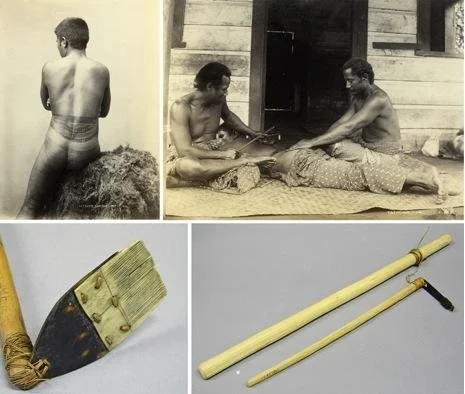
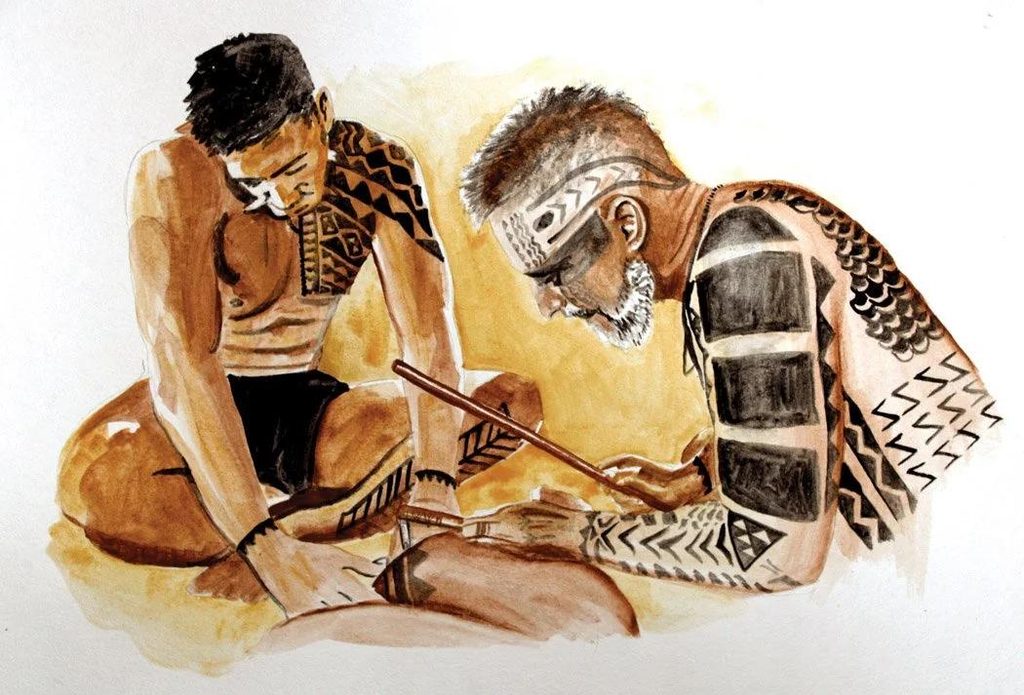
The history behind the Polynesian Blackwork Tattoo search term reaches back to tattooing traditions that developed across the Pacific over many generations.
Why is tattooing important in Polynesian history?
Tattooing has played different roles across Polynesian societies. Depending on the community and historical period, it has been associated with identity, social position, relationships, life transitions and cultural continuity.
Tattooing practices also changed through migration, colonial contact, missionary influence and cultural revitalization.
Rather than describing one origin story for all Polynesian tattooing, it is more accurate to recognize multiple connected yet distinct histories.
Where does the word tattoo come from?
The English word tattoo is generally traced to the Polynesian word tatau, encountered by European travelers in the Pacific during the eighteenth century.
However, Polynesian tattooing existed long before Europeans adopted the word.
The history of the term illustrates how Pacific tattoo practices influenced global awareness of tattooing.
Did every Polynesian island have the same tattoo tradition?
No.
Samoa, Tonga, the Marquesas Islands, Tahiti and other Polynesian societies developed different tattoo practices and visual languages.
Their patterns, placements, techniques and cultural meanings cannot be treated as interchangeable.
The differences are essential to understanding Polynesian tattoo heritage.
How Does Polynesian Blackwork Tattoo Heritage Differ Across Islands?
Understanding Polynesian Blackwork Tattoo heritage begins with recognizing the diversity of tattoo traditions across Polynesia.
Samoan tatau: Pe’a and malu
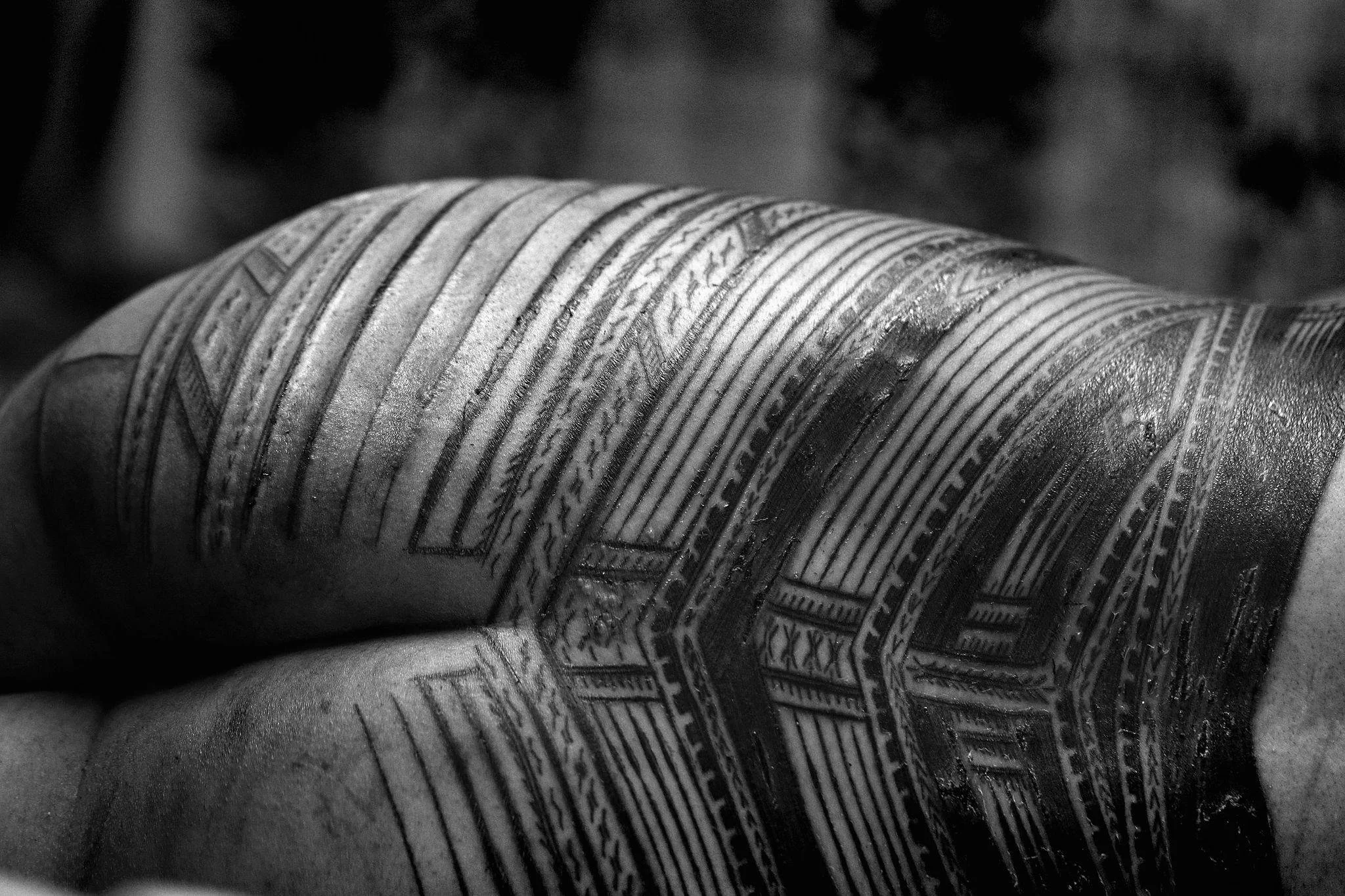
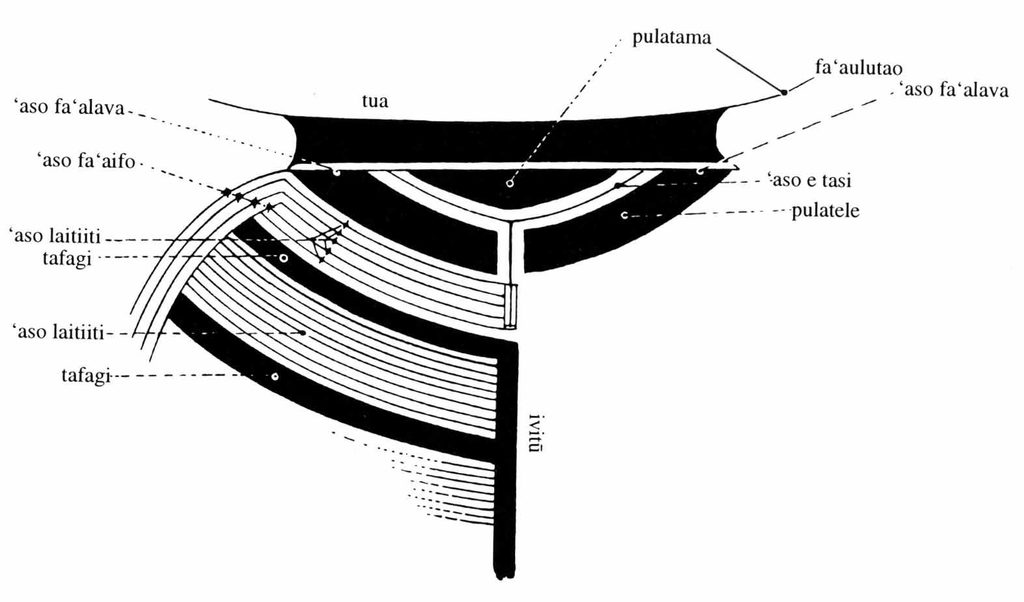
In Samoa, traditional tattooing is known as tatau. Two important forms are the pe’a and malu. The pe’a is a traditional tattoo associated with men, extending over much of the lower body. The malu is traditionally associated with women and has a different pattern arrangement and cultural context.
These practices are connected with social responsibilities, cultural identity and relationships within Samoan communities. Their significance cannot be understood simply by identifying individual geometric shapes.
Māori tā moko: Identity and whakapapa
In Aotearoa New Zealand, Māori tā moko is a culturally specific practice associated with identity and whakapapa, or genealogy. Moko designs and placement can communicate relationships and cultural knowledge.
Traditional Māori tattooing has its own terminology, history and contemporary cultural protocols. It should not be grouped into a generic Polynesian pattern library.
Marquesan tattoo traditions
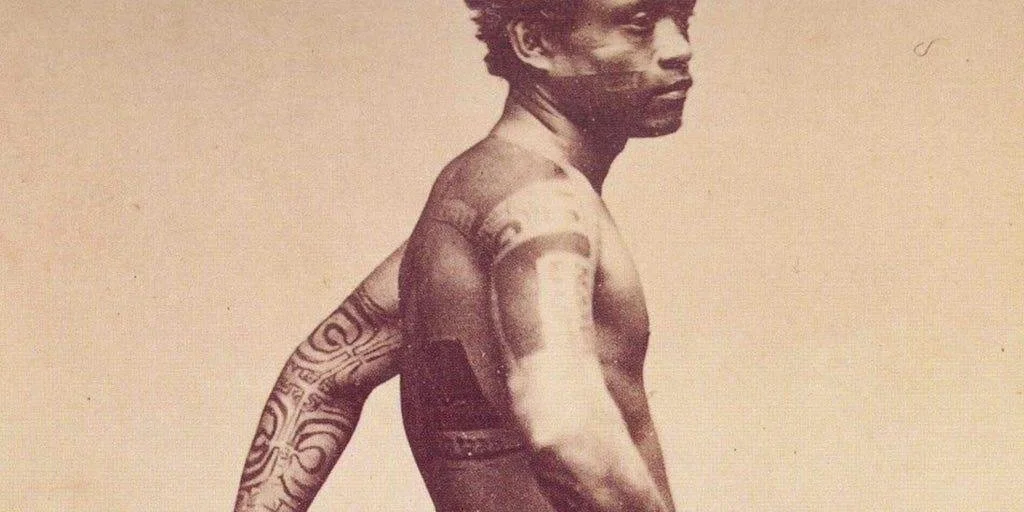
The Marquesas Islands have a rich history of tattooing that includes extensive geometric and figurative compositions.
Historical examples demonstrate the complexity of body placement, pattern repetition and visual organization within Marquesan tattoo traditions.
As with other culturally specific tattoo systems, the significance of individual motifs depends on historical and cultural context.
Tahitian and other Eastern Polynesian traditions
Tattooing also has a long history in Tahiti and other Eastern Polynesian communities. Practices have changed over time, and contemporary cultural revitalization continues to shape how tattooing is understood and practiced.
It is important to avoid assuming that a design from one island can represent Polynesian culture as a whole.
Read more: Blackwork Tattoo History: From Ancient Traditions to Modern Art
What Do Polynesian Blackwork Tattoo Symbols Mean?
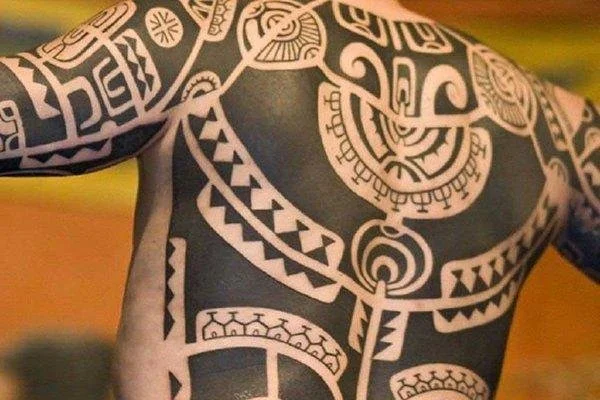
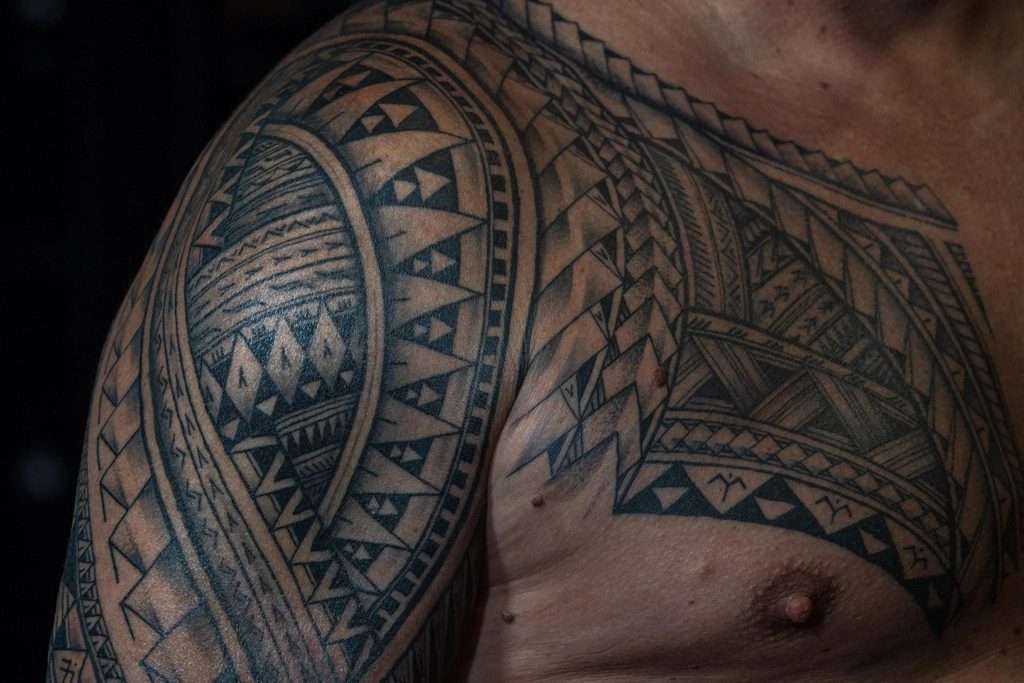
Polynesian Blackwork Tattoo symbols are often presented online as if every shape has a fixed, universal meaning. In reality, their interpretation depends on the cultural tradition, the complete composition and the people involved in creating and wearing the tattoo.
Do Polynesian geometric patterns have specific meanings?
Yes, patterns can carry cultural significance, but not every meaning can be reliably determined from a photograph. The same general shape may appear in different artistic contexts without sharing the same interpretation.
In some traditions, the significance of a tattoo is connected to its placement, the person’s genealogy, their community relationships or the circumstances of receiving it. For that reason, a generic online chart of Polynesian symbols is not a substitute for knowledge from the relevant cultural community.
How Are Polynesian Blackwork Tattoo Designs Traditionally Created?
Polynesian Blackwork Tattoo designs are frequently associated with bold black pigment, but the traditional methods used to apply tattoos differ across communities.
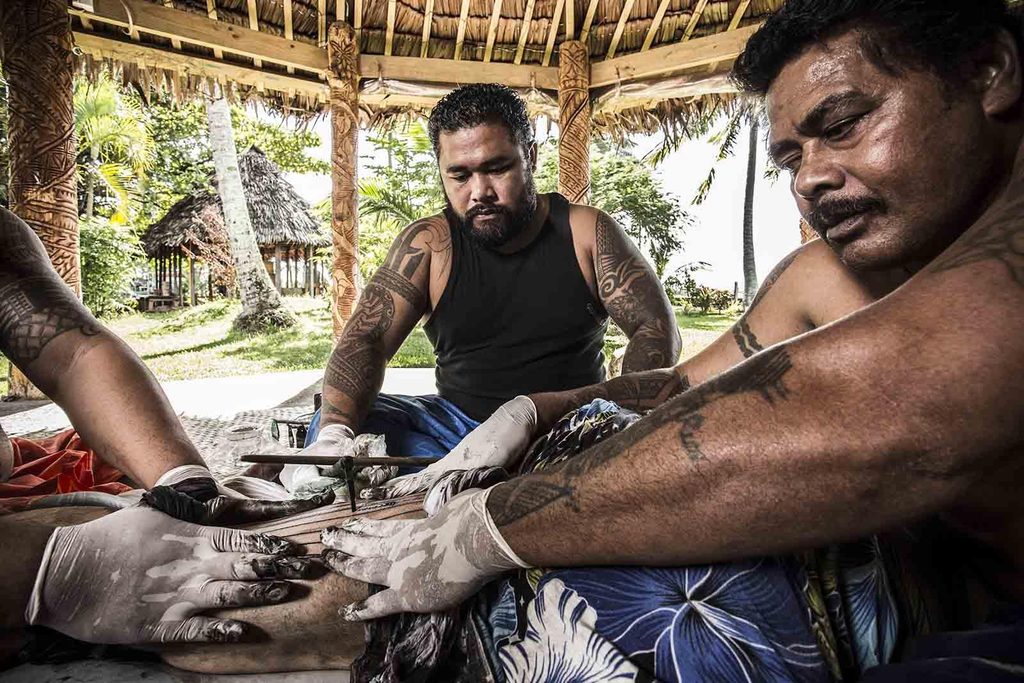
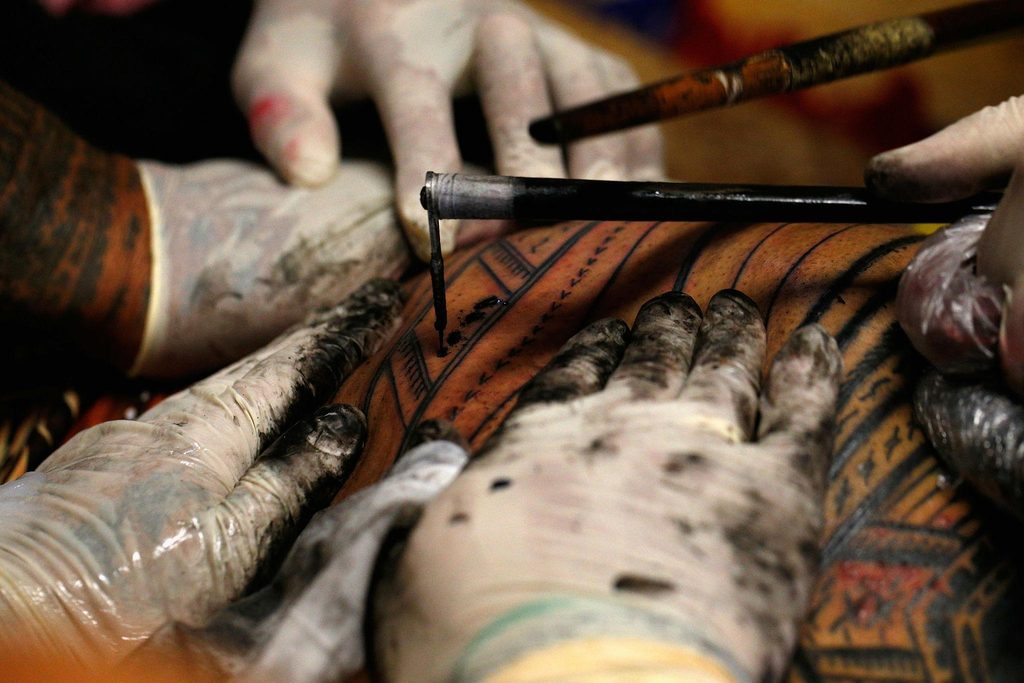
What is traditional hand-tapped tattooing?
In Samoan tattooing, traditional tatau can be applied using specialized hand tools rather than an electric tattoo machine. A practitioner uses a striking implement to tap a tattooing tool, introducing pigment into the skin.
This practice requires specialized training, skill and knowledge of cultural protocols. The tattooing process is not merely a technical method. It can also involve relationships, responsibilities and ceremonial significance.
Are traditional Polynesian tattoos always hand-tapped?
No.
Techniques vary across Polynesian cultures, and contemporary practitioners may use different methods.
Hand-tapping remains significant in some traditions, but it would be inaccurate to describe every Polynesian tattoo as being applied through the same process.
How do modern tattoo machines change the artwork?
Modern tattoo machines allow artists to create blackwork using a variety of linework, shading and filling techniques. Contemporary artists may draw visual inspiration from geometric compositions while using modern equipment.
However, using a modern machine to reproduce a culturally significant pattern does not make the result equivalent to receiving a traditional tattoo through its customary practice. The cultural context remains important.
How did Polynesian-inspired designs enter Western tattoo culture?
During the late twentieth century, Western tattoo artists increasingly experimented with large-scale black designs influenced by tattoo traditions from different parts of the world.
The neo-tribal movement became an important part of this development. Artists such as Leo Zulueta helped popularize bold black compositions that followed the body’s contours.
Yet this movement also raised questions about attribution and the use of Indigenous cultural imagery outside its original context.
Read more: Blackwork Tattoo Culture: Identity, Tradition & Expression
What is the difference between neo-tribal and traditional Polynesian tattooing?
Neo-tribal is a modern tattoo movement that often emphasizes abstract shapes, bold black areas and graphic compositions.
Traditional Polynesian tattooing refers to culturally specific practices with distinct histories and meanings. A neo-tribal tattoo may be visually inspired by Pacific art, but it does not automatically carry the cultural status or significance of a traditional tattoo.
Frequently Asked Questions About Polynesian Blackwork Tattoo
1. What is a Polynesian Blackwork Tattoo?
A Polynesian Blackwork Tattoo is a contemporary description often used for predominantly black tattoo designs influenced by Polynesian visual traditions. It is not the traditional name for a single tattoo practice, and different Polynesian cultures have distinct tattooing histories.
2. What do Polynesian blackwork tattoo symbols mean?
Their meanings depend on the specific cultural tradition, design, placement and wearer. There is no universal dictionary that accurately explains every Polynesian tattoo symbol.
3. Are Polynesian tattoos considered tribal tattoos?
Polynesian tattoo traditions are sometimes grouped under the broad commercial term tribal tattoos. However, identifying the specific tradition, such as Samoan tatau or Māori tā moko, is more accurate and respectful.
4. Can anyone get a Polynesian tattoo?
That depends on the particular tradition and design. Some practitioners create culturally appropriate tattoos for people outside their communities, while other motifs or placements may have restrictions or specific significance. Consult a knowledgeable practitioner.
5. What is the difference between Samoan tatau and Māori tā moko?
Samoan tatau and Māori tā moko are distinct cultural tattooing practices with different histories, design systems, techniques and cultural meanings. They should not be treated as interchangeable forms of Polynesian tattooing.
6. Are traditional Polynesian tattoos always black?
Dark pigment is prominent in many traditional Polynesian tattoo practices. However, methods, materials and artistic conventions differ across communities and historical periods.
7. Are Polynesian tattoos painful?
Tattoo pain depends on placement, technique, session length and individual sensitivity. Traditional hand-tapped tattooing and modern machine tattooing may feel different, but neither has one predictable pain level for every person.
8. How can I avoid cultural appropriation when choosing a tattoo?
Identify the cultural origin of your reference, research its meaning, avoid copying restricted or personal markings and consult knowledgeable practitioners. Consider an original contemporary design if your interest is primarily aesthetic.
Final Thoughts: Heritage, Symbols & Respect
Polynesian Blackwork Tattoo is more than a collection of striking black patterns. The term points toward a diverse heritage of tattooing practices that connect art with identity, genealogy, community and cultural continuity.
From Samoan tatau to Māori tā moko and other Polynesian traditions, each practice deserves to be understood within its own cultural context.
Contemporary blackwork artists may draw inspiration from bold composition, contrast and geometry. However, visual inspiration should never erase the origins or meanings of culturally significant tattoo designs.
The most important lesson is simple: appreciating Polynesian tattoo art begins with understanding and respecting the people and traditions behind it.
Explore Custom Blackwork at 3 of Spades Hanoi Tattoo
Inspired by the visual power of black ink, geometric patterns and expressive composition?
At 3 of Spades Hanoi Tattoo, we help clients explore custom tattoo ideas through a collaborative creative process.
Whether you’re interested in abstract blackwork, geometric compositions, brushstroke-inspired artwork or illustrative designs, our team can discuss how to develop an original piece suited to your personal style.
Located in Hanoi’s Old Quarter, we welcome international travelers looking for a comfortable, friendly Hanoi Tattoo experience with clear English communication.
For culturally specific Polynesian tattooing, we encourage working with an appropriately knowledgeable traditional practitioner.
Planning a custom blackwork tattoo in Hanoi? Send us your reference images, preferred size in centimeters, body placement and travel dates. We’ll help you explore suitable design directions, estimated time and pricing.
Your story. Your inspiration. A design created with intention.