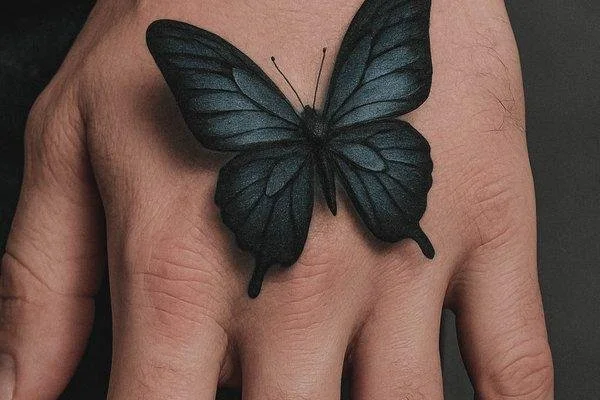

Modern Blackwork Tattoo transforms black ink into a versatile artistic language. Through bold geometric shapes, expressive brushstrokes, intricate dotwork and creative negative space, contemporary tattoo artists continue to redefine what monochromatic body art can look like.
Unlike tattoo styles that rely heavily on color, blackwork explores the relationship between pigment, skin and composition. A single black shape can create dramatic visual impact, while carefully arranged lines and dots can produce remarkable detail.
Today, modern blackwork is no longer limited to one recognizable aesthetic. It includes abstract compositions, ornamental patterns, illustrative artwork and experimental designs inspired by painting, architecture and graphic art.
But what makes modern blackwork different from traditional black ink tattooing? And how do artists create designs that feel both innovative and personal?
This guide explores the artistic evolution of blackwork, the techniques behind contemporary designs and how to choose a style that suits your story.
What Is a Modern Blackwork Tattoo?
A Modern Blackwork Tattoo is a contemporary tattoo created primarily with black ink, often emphasizing artistic experimentation, graphic contrast and original composition.
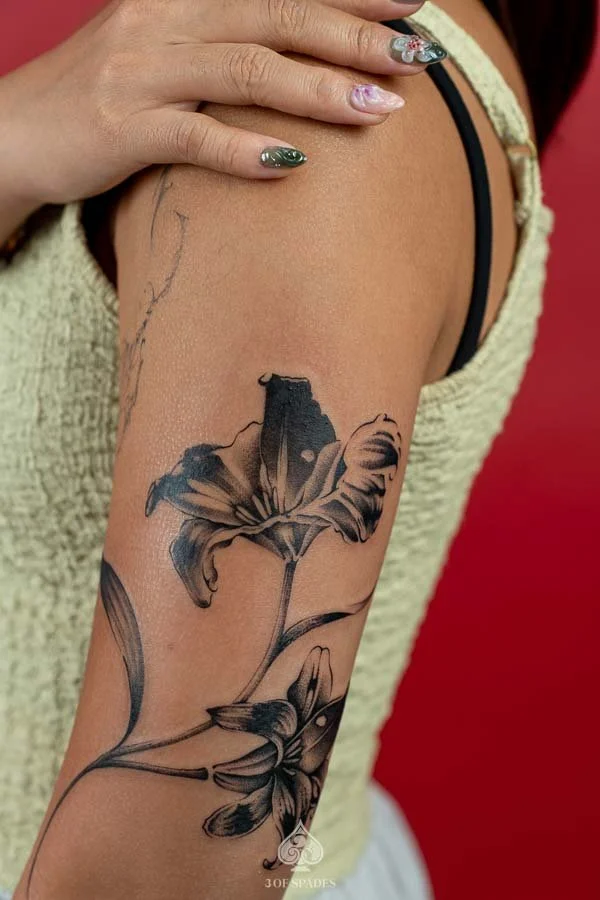
What defines contemporary blackwork?
Modern blackwork commonly features:
• Bold black shapes and solid fills
• Expressive lines and abstract compositions
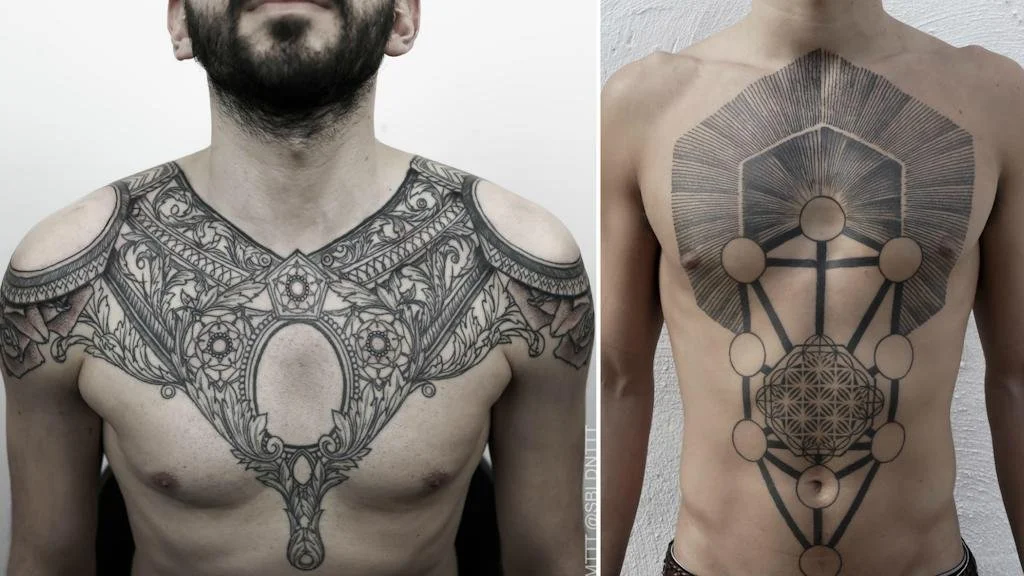
• Geometric or ornamental patterns
• Negative space that becomes part of the artwork
• Fine dotwork and textured shading
• Illustrative or experimental imagery
However, there is no single rule that determines how a modern blackwork tattoo must look.
A minimalist abstract design and a detailed ornamental sleeve can both belong to the broader blackwork category.
Why is black ink so versatile?
Black ink creates strong visual contrast against the surrounding skin.
Artists can manipulate this contrast through changes in line thickness, shading, spacing and density.
A small adjustment in negative space can dramatically change the visual balance of a composition.
This allows blackwork to move between subtle detail and bold graphic expression without introducing additional colors.
Is modern blackwork the same as a black and grey tattoo?
Not exactly.
Blackwork typically emphasizes black pigment as the primary visual medium, including solid fills, linework, dotwork and negative space.
Black and grey tattooing often focuses on tonal gradients and smooth shading to create depth, volume and realistic imagery.
The categories can overlap, but their artistic priorities are often different.
How Did Modern Blackwork Tattoo Evolve?
Modern Blackwork Tattoo developed through a combination of historical tattoo influences and contemporary artistic experimentation.
How did traditional tattooing influence modern blackwork?
Dark-pigment tattooing has existed in different societies for thousands of years.
Traditional tattoo practices across the Pacific and other regions demonstrate how black pigment can be used to create complex visual systems.
However, culturally specific practices such as Samoan tatau and Māori tā moko are not simply early versions of modern blackwork.
They carry their own histories, cultural meanings and responsibilities.
Contemporary blackwork artists may study historical tattooing, but responsible artistic practice requires recognizing these distinctions.
Related reading: Polynesian Blackwork Tattoo: Heritage, Symbols & Respect
What role did neo-tribal tattooing play?
During the late twentieth century, neo-tribal tattooing helped popularize large black shapes and body-conscious compositions in Western tattoo culture.
Artists experimented with flowing patterns, solid black forms and abstract designs that followed the body’s contours.
The movement influenced later approaches to contemporary blackwork, although it also raised important questions about cultural borrowing and attribution.
How did contemporary art influence blackwork?
As tattoo artists increasingly explored other visual disciplines, blackwork absorbed influences from:
• Abstract painting
• Minimalist art
• Japanese and Chinese ink painting
• Graphic design
• Printmaking and engraving
• Geometric abstraction
• Contemporary illustration
These influences helped expand blackwork beyond conventional tattoo motifs. For example, a tattoo may resemble a spontaneous brushstroke, a fragmented architectural drawing or an abstract painting adapted to the body.
Read More: Blackwork Tattoo History: From Ancient Traditions to Modern Art
How Do Modern Blackwork Tattoo Artists Reinvent Black Ink?
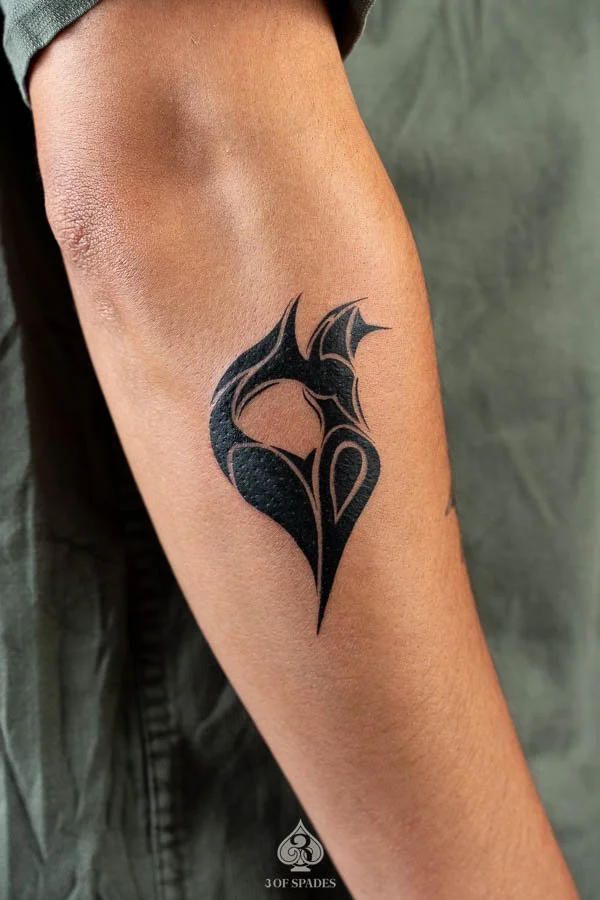
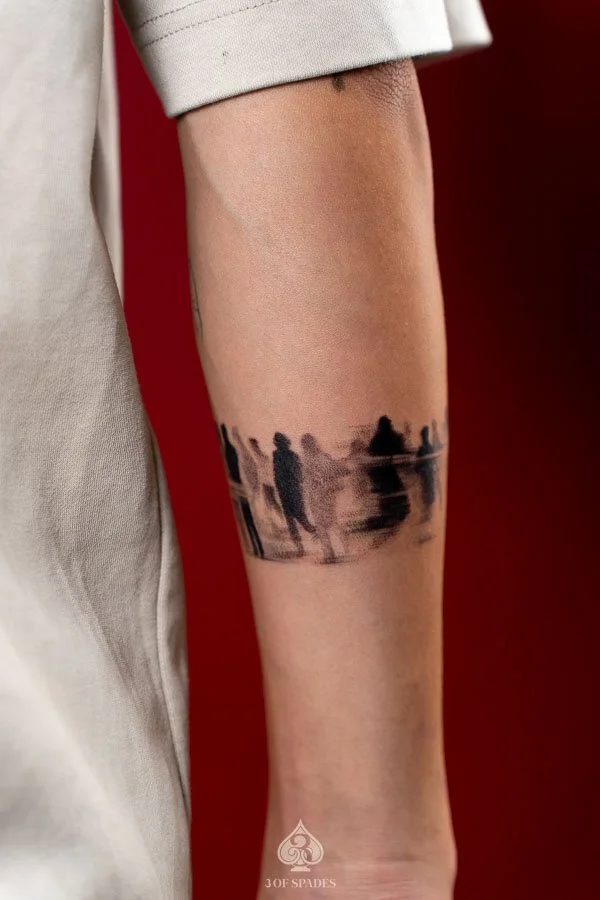
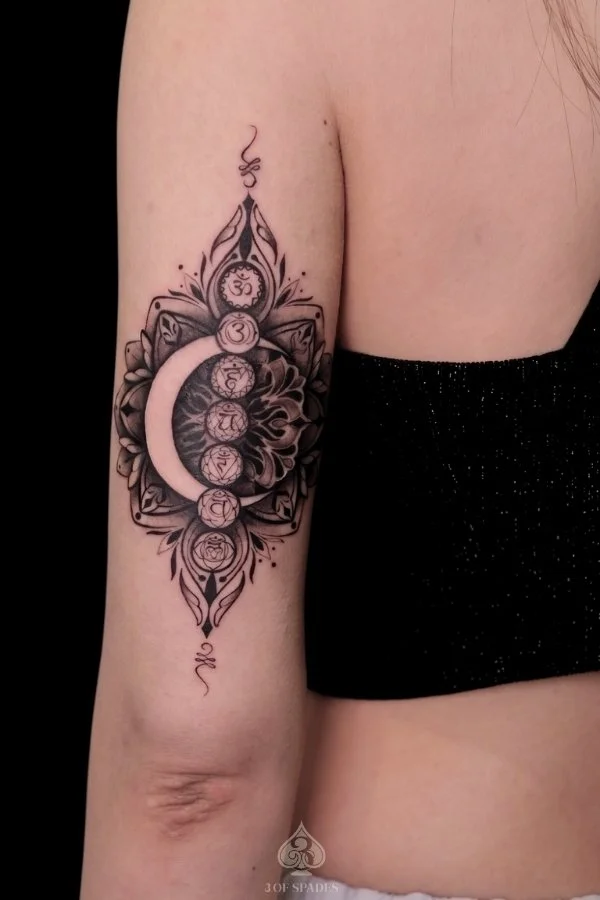
Modern Blackwork Tattoo artists reinvent black ink by treating the body as an artistic canvas rather than simply transferring an illustration onto the skin.
The most innovative designs often explore how shape, movement, texture and empty space interact.
1. Using negative space as part of the design
Negative space refers to areas of skin intentionally left uninked within or around a tattoo. Instead of treating empty skin as unused space, artists incorporate it into the composition.
For example, an artist might create a bold black shape interrupted by thin uninked lines. These lines can form geometric patterns, abstract imagery or visual movement.
Negative space is especially effective in large-scale blackwork because it helps separate elements and establish contrast.
2. Recreating the movement of brushstrokes
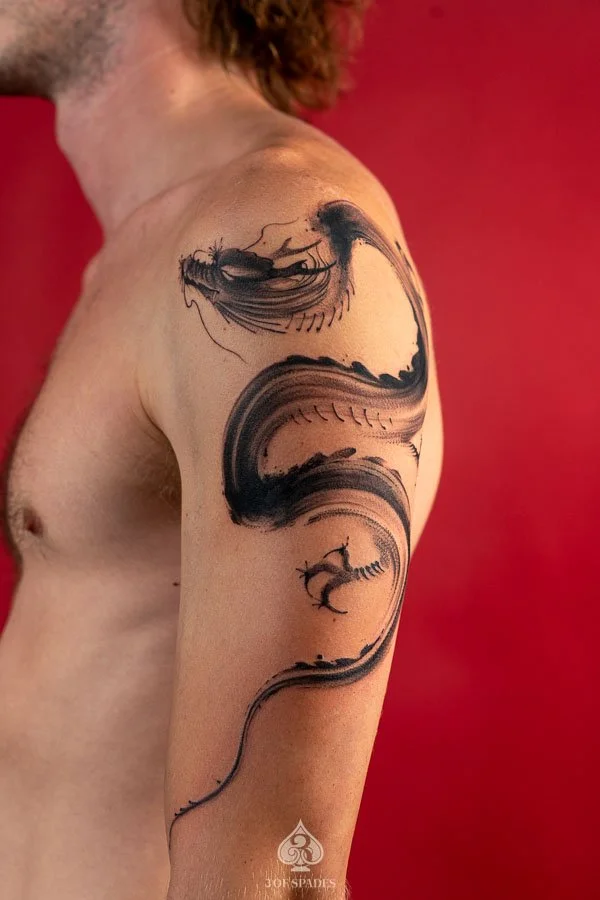
Brushstroke-inspired blackwork translates the visual characteristics of painting into tattoo art.
Artists may recreate:
• Irregular ink edges
• Changes in brush pressure
• Thick and thin strokes
• Dry-brush textures
• Flowing, expressive movements
Although the final tattoo is carefully planned and applied with tattoo equipment, the result can resemble spontaneous ink painting. This approach creates a particularly strong connection between tattooing and contemporary visual art.
3. Experimenting with geometric abstraction
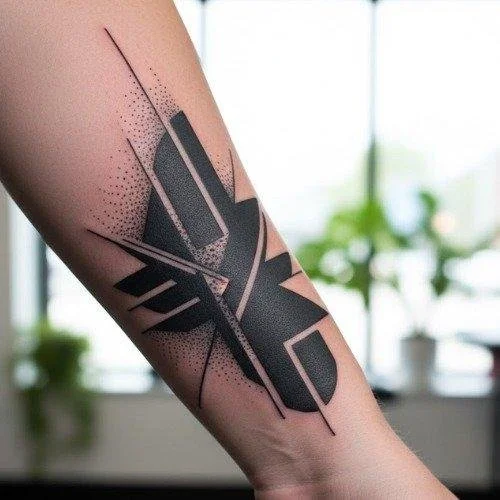
Geometric blackwork uses shapes, proportions and repetition to create structured compositions. Some designs emphasize symmetry, while others intentionally break it.
Artists may combine circles, intersecting lines, fragmented shapes and solid black areas to create a composition that feels architectural or futuristic.
4. Combining bold shapes with intricate details
One of the most visually interesting developments in contemporary blackwork is the contrast between large black areas and delicate linework.
A tattoo might feature a bold silhouette surrounded by fine ornamental patterns. Alternatively, a dense black shape may transition into detailed stippling or fine-line illustration. These contrasts create visual hierarchy, directing attention toward the most important parts of the artwork.
5. Creating designs around the body’s movement
Modern blackwork artists increasingly explore how tattoos interact with anatomy. A flowing composition may wrap around the forearm, while an abstract shape might follow the shoulder’s natural curve.
The design can appear different as the wearer moves, making the body an active part of the artwork. This approach distinguishes thoughtful tattoo composition from simply placing a flat image onto the skin.
How Does Modern Blackwork Tattoo Differ From Traditional Blackwork?
Modern Blackwork Tattoo differs from traditional tattoo practices primarily in its artistic context, design freedom and relationship with contemporary visual culture.
However, the distinction is not simply that modern blackwork is abstract while traditional tattoos are geometric.
| Feature | Modern Blackwork | Culturally Specific Traditional Tattooing |
|---|---|---|
| Primary purpose | Artistic expression, personal symbolism or decoration | Varies by tradition; may involve identity, genealogy or cultural responsibility |
| Design process | Often developed through individual artistic collaboration | May follow community-specific knowledge and protocols |
| Visual style | Abstract, geometric, illustrative, ornamental and experimental | Specific to the relevant cultural tradition |
| Technique | Usually contemporary tattoo equipment | Traditional or contemporary methods, depending on the practice |
| Meaning | Often personally defined | May be connected to established cultural systems |
| Artistic influences | Contemporary art, illustration and graphic design | Community histories and living artistic traditions |
Can modern blackwork incorporate traditional influences?
Yes, but inspiration should be approached thoughtfully.
For example, artists can study the relationship between pattern, contrast and anatomy without copying culturally restricted imagery. When a design references a particular Indigenous tattoo tradition, its cultural context should be researched and respected.
Modern blackwork also differs from American traditional tattooing, which typically uses bold outlines, recognizable motifs and established compositional conventions.
Read more: Blackwork Tattoo Culture: Identity, Tradition & Expression
Frequently Asked Questions About Modern Blackwork Tattoo
1. What is a Modern Blackwork Tattoo?
A Modern Blackwork Tattoo is a contemporary tattoo created primarily with black ink. It often emphasizes abstract compositions, geometric patterns, bold contrast, negative space or illustrative techniques.
2. What makes modern blackwork different from traditional tattoos?
Modern blackwork allows broad artistic experimentation through abstract shapes, contemporary illustration and unconventional compositions. Traditional tattoo styles or culturally specific tattoo practices may follow different visual conventions, histories and meanings.
3. Are modern blackwork tattoos always completely black?
They generally use black ink as the dominant medium, but uninked skin, shading, dotwork and negative space can create different tones and textures.
4. What are the most popular modern blackwork styles?
Common styles include abstract blackwork, geometric blackwork, ornamental blackwork, brushstroke tattoos, illustrative blackwork, dotwork and blackout designs.
5. Is modern blackwork more painful than other tattoo styles?
Not necessarily. Pain depends more on placement, individual sensitivity, session duration and the techniques used. Large areas of solid black saturation may feel more demanding than a small linework tattoo.
6. Can modern blackwork tattoos be small?
Yes. Minimalist and simple abstract blackwork can work well at smaller sizes. However, intricate geometric patterns and detailed textures may require more space to remain readable.
7. Can modern blackwork cover an old tattoo?
Sometimes. Dense black areas can be useful in certain cover-up designs, but feasibility depends on the existing tattoo’s size, darkness, placement and condition. An artist must assess the original tattoo before recommending a cover-up.
Final Thoughts: How Artists Reinvent Black Ink
Modern Blackwork Tattoo artists reinvent black ink by transforming a limited color palette into an expansive form of visual expression.
Through geometric precision, expressive brushstrokes, intricate textures and thoughtful negative space, contemporary artists demonstrate that black ink can communicate movement, depth and personality without relying on color.
The evolution of blackwork also reflects a broader shift in tattoo culture. Tattoos are increasingly approached as custom artwork developed through collaboration between artists and clients.
Whether you prefer a minimalist abstract symbol or a large, intricate composition, modern blackwork offers opportunities to create something distinctive.
Ultimately, the strength of a blackwork tattoo comes not from how much ink it contains, but from how thoughtfully that ink is used.
Create Your Modern Blackwork Tattoo at 3 of Spades Hanoi Tattoo
At 3 of Spades Hanoi Tattoo, we believe black ink offers endless opportunities for personal expression.
Whether you’re interested in expressive brushstrokes, abstract shapes, geometric compositions or detailed illustrative artwork, our team can help you explore a custom design that reflects your ideas.
Located in Hanoi’s Old Quarter, our studio welcomes international travelers looking for a friendly, collaborative Hanoi Tattoo experience with clear English communication.
Planning your tattoo? Send us:
• Your reference images or inspiration
• Preferred tattoo size in centimeters
• Body placement
• Travel dates in Hanoi
We’ll help you discuss the design possibilities, estimated session time and pricing.
One color. Endless possibilities. Let’s create something personal.