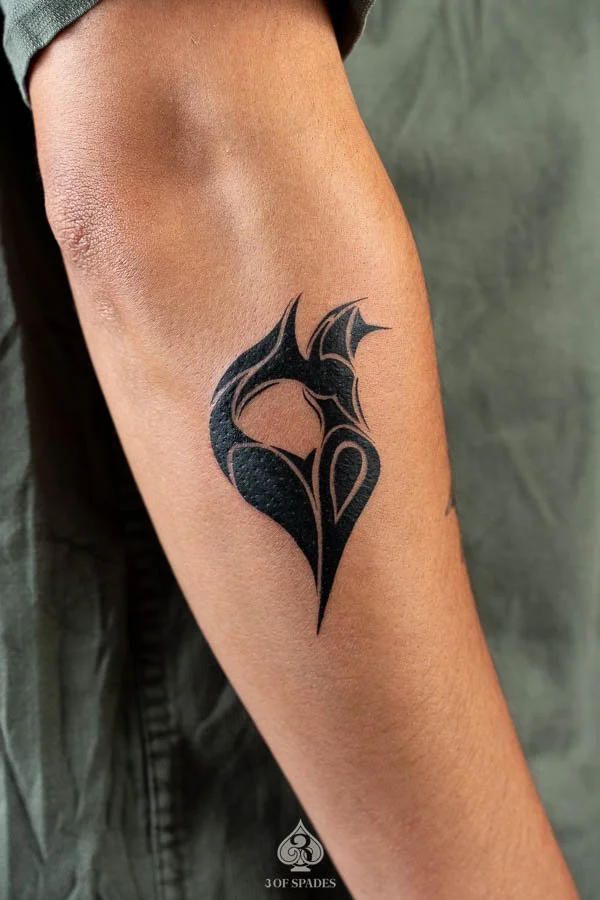
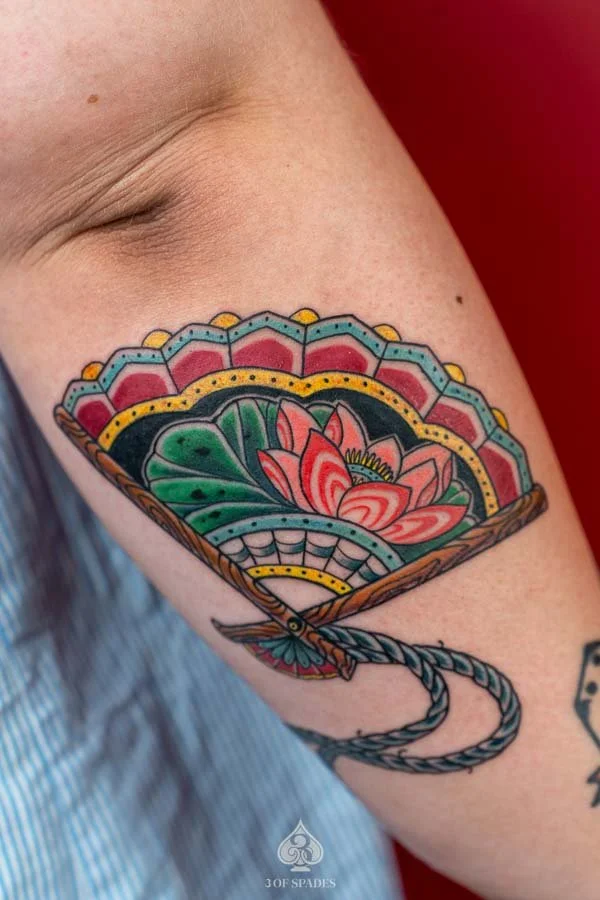
Oldschool Tattoo history is closely connected to maritime life, early professional tattoo shops and the development of American traditional tattooing. With bold black outlines, solid colors and recognizable imagery, this style became one of the most influential visual traditions in modern tattoo culture.
Anchors, swallows, roses, eagles and sailing ships are more than familiar tattoo motifs. Many became associated with travel, loyalty, love, identity and the experiences of people who lived or worked at sea.
Yet the story of oldschool tattooing extends beyond sailors.
It also involves technological innovation, influential tattoo artists, military communities and changing public attitudes toward body art.
Today, American traditional tattoos remain recognizable around the world. Their visual simplicity and powerful compositions continue to inspire both tattoo collectors and contemporary artists.
This guide explores how oldschool tattooing developed, the meaning behind its classic symbols and why the style remains relevant.
What Is Oldschool Tattoo History?
Oldschool Tattoo History refers primarily to the development of American traditional tattooing, a style recognized for its bold outlines, simplified shapes and strong visual contrast.
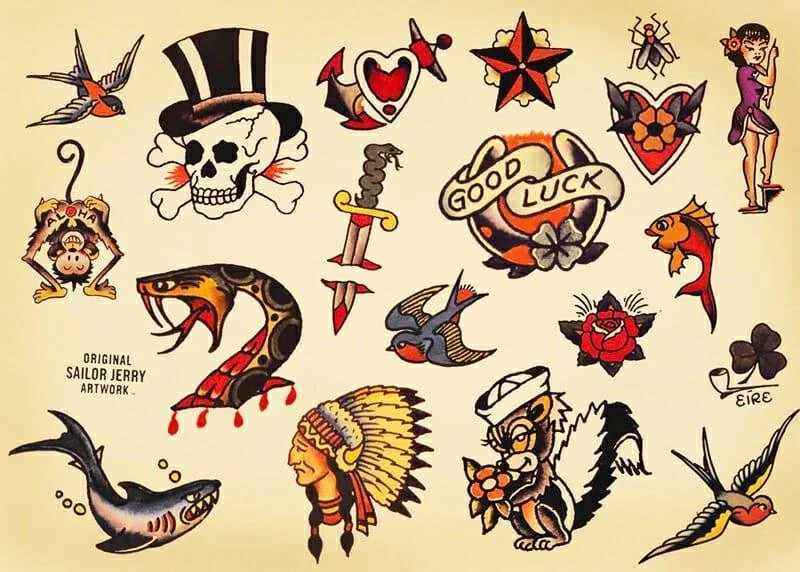
What defines an oldschool tattoo?
Common characteristics include:
• Bold black outlines
• Strong, recognizable silhouettes
• Solid areas of color
• Limited but striking color palettes
• Minimal fine detail
• Classic motifs such as roses, anchors, swallows and eagles
• Compositions designed for visual clarity
These characteristics helped establish a recognizable tattoo aesthetic that remains influential today.
Is oldschool the same as American traditional?
In most contemporary tattoo discussions, oldschool tattoo and American traditional tattoo refer to the same broad style.
However, the word traditional can also describe culturally specific tattoo practices from other parts of the world. For clarity, American traditional is the more precise term when discussing this particular Western tattoo style.
Why is the style called oldschool?
The term oldschool distinguishes classic tattoo imagery and techniques from later artistic movements such as neo-traditional, realism and contemporary illustrative tattooing.
It does not mean that every oldschool design is historically old. Many contemporary artists create new tattoos using the established visual conventions of American traditional artwork.
Where Did Oldschool Tattoo History Begin?
Oldschool Tattoo History developed through a combination of maritime tattooing, European and American tattoo practices, and the growth of professional tattoo shops.
How did tattooing reach Western maritime communities?
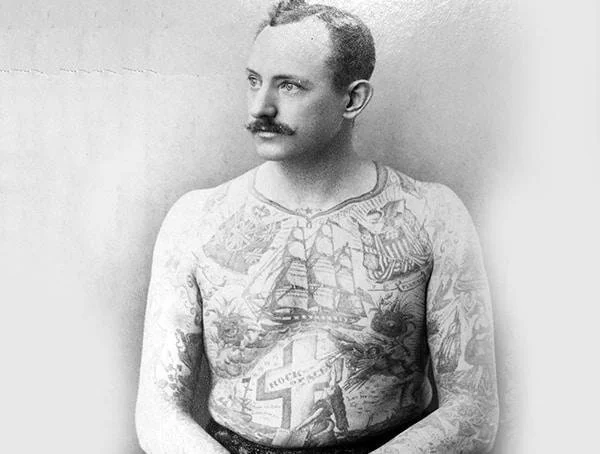
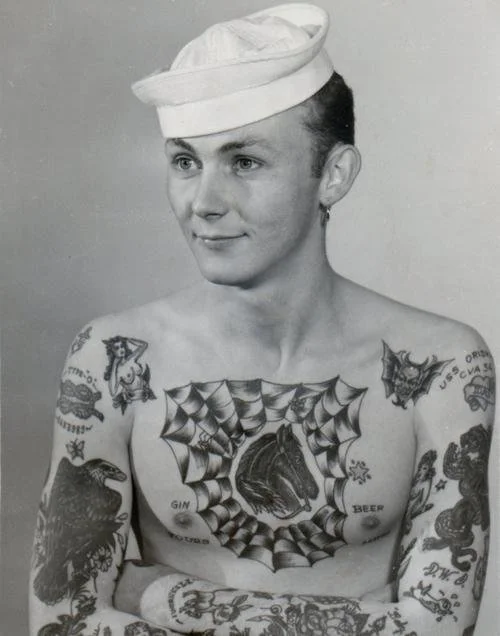
Tattooing existed in many cultures long before the emergence of American traditional tattooing. European sailors encountered tattooing practices during voyages across the Pacific and other regions.
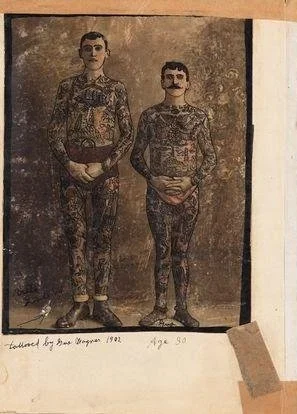
By the eighteenth and nineteenth centuries, tattooing became increasingly visible within Western maritime communities.
However, it would be inaccurate to suggest that sailors invented tattooing. Their role was important in spreading certain tattoo practices and imagery within Western societies.
When did professional tattoo shops emerge?
During the nineteenth century, tattooing became more commercially organized in Europe and the United States. Professional tattoo artists began serving sailors, military personnel, travelers and other customers. Tattooing developed from informal practices into a more recognizable commercial trade.
How did electric tattoo machines change the industry?
The development of electric tattooing equipment in the late nineteenth century helped professional artists work more efficiently.
Samuel O’Reilly patented an electric tattooing machine in 1891, building on earlier electrical engraving technology. This innovation contributed to the expansion of professional tattooing and the development of recognizable shop-based tattoo styles.
Why Were Sailors Important to Oldschool Tattoo History?
Sailors played a major role in the development and popularity of classic tattoo imagery. Life at sea involved long journeys, dangerous working conditions and extended periods away from home.
Tattoos could become personal records of travel, reminders of loved ones or symbols of hope and protection.
Tattoos as souvenirs of travel
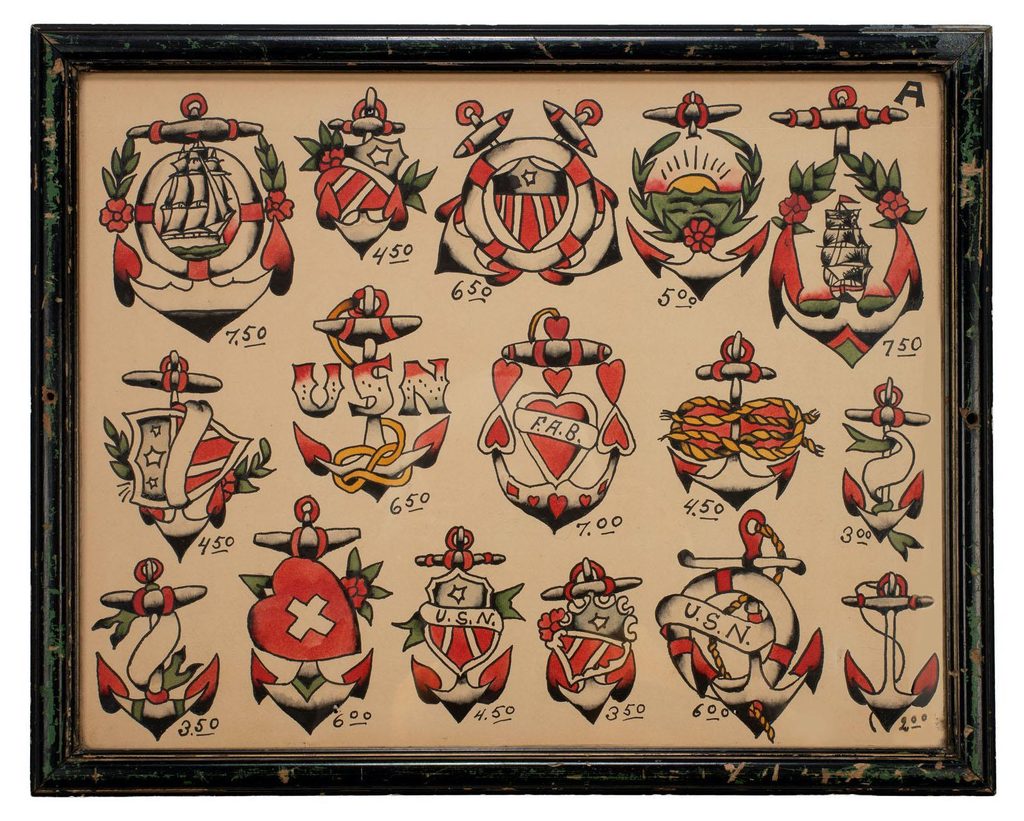
Sailors visiting different ports encountered local cultures, artistic traditions and tattoo practitioners. Some acquired tattoos to commemorate voyages or places they had visited.
Over time, maritime subjects became especially recognizable in Western tattoo culture.
Tattoos as symbols of protection
Life at sea could be unpredictable. Tattoos sometimes reflected sailors’ hopes for safe passage and eventual return home. Certain images became associated with protection, good fortune or navigation.
However, the meanings of maritime tattoos were not always standardized. Personal interpretations could differ between individuals, ports and historical periods.
Why were swallows popular among sailors?
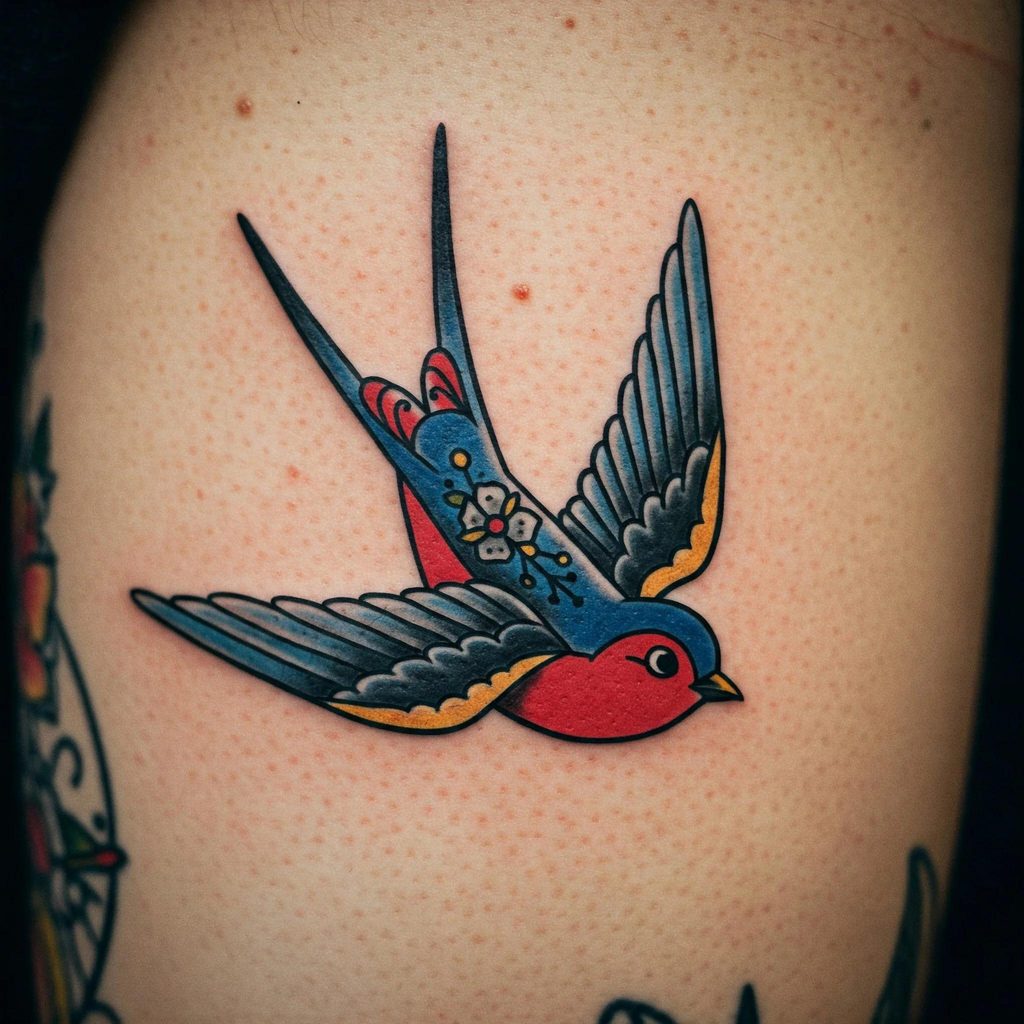
Swallows became closely associated with maritime tattooing. They are often interpreted as symbols of safe return, travel and homecoming.
Popular tattoo lore also connects swallows with nautical milestones, sometimes describing a swallow tattoo as marking 5,000 nautical miles traveled.
Such rules should be understood as traditions and folklore rather than universal historical requirements.
What did anchor tattoos represent?
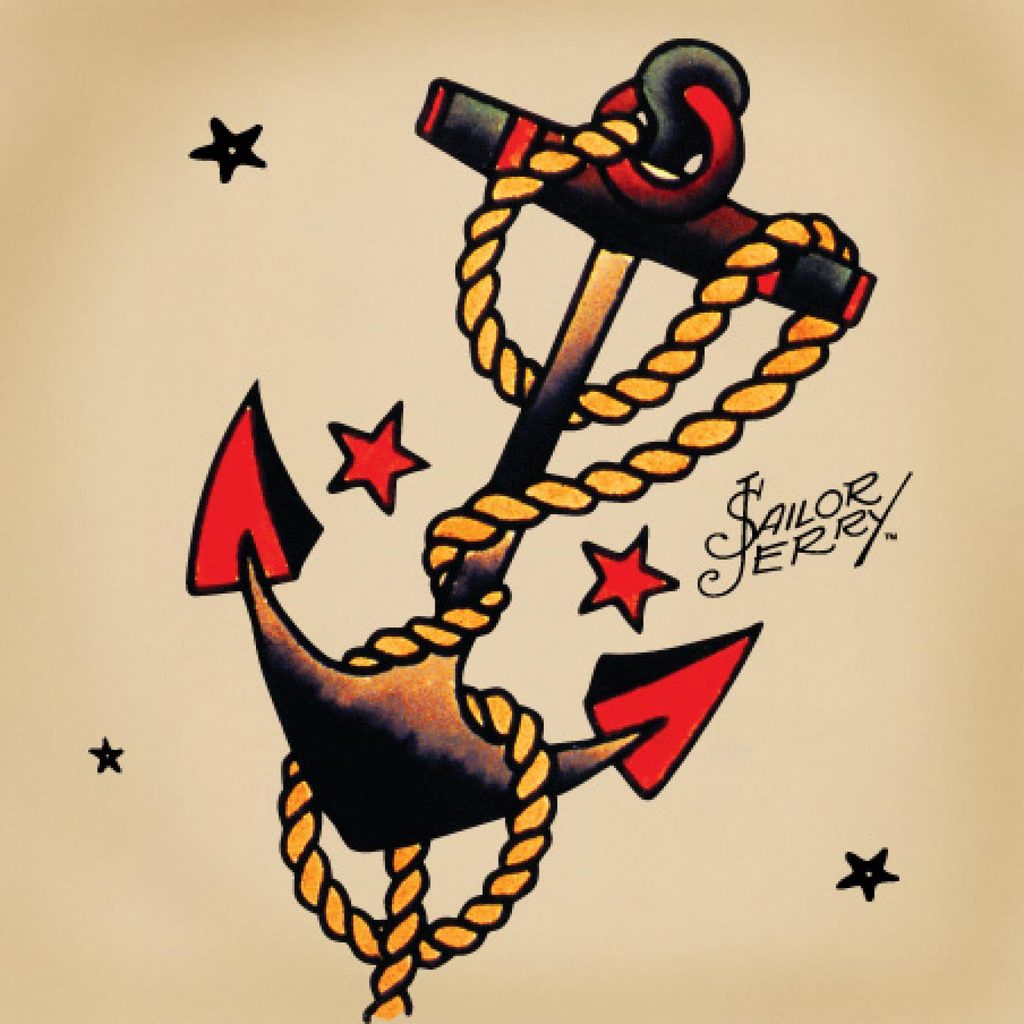
Anchors are commonly associated with stability, hope and security. For sailors, they could also represent their relationship with the sea or their desire to return safely to shore.
Today, an anchor tattoo may symbolize staying grounded during difficult periods. This evolution shows how traditional imagery can acquire new personal meanings.
Who Were the Pioneers of Oldschool Tattoo History?
Several influential artists helped shape American traditional tattooing through technical developments, recognizable artwork and professional tattoo culture.
Martin Hildebrandt and early American tattooing
Martin Hildebrandt is frequently identified as one of the earliest professional tattoo artists operating in the United States. He is associated with nineteenth-century tattooing and with serving military customers during the American Civil War era.
Historical accounts of his exact business timeline vary, but his career illustrates the growth of commercial tattooing in America.
Samuel O’Reilly and the electric tattoo machine
Samuel O’Reilly’s 1891 tattoo machine patent marked an important technological development.
Electric tattoo machines helped change how artists worked, making repeated needle movement mechanically driven rather than entirely manual.
The technology continued to evolve through later inventors and tattoo practitioners.
Bert Grimm and classic American tattooing
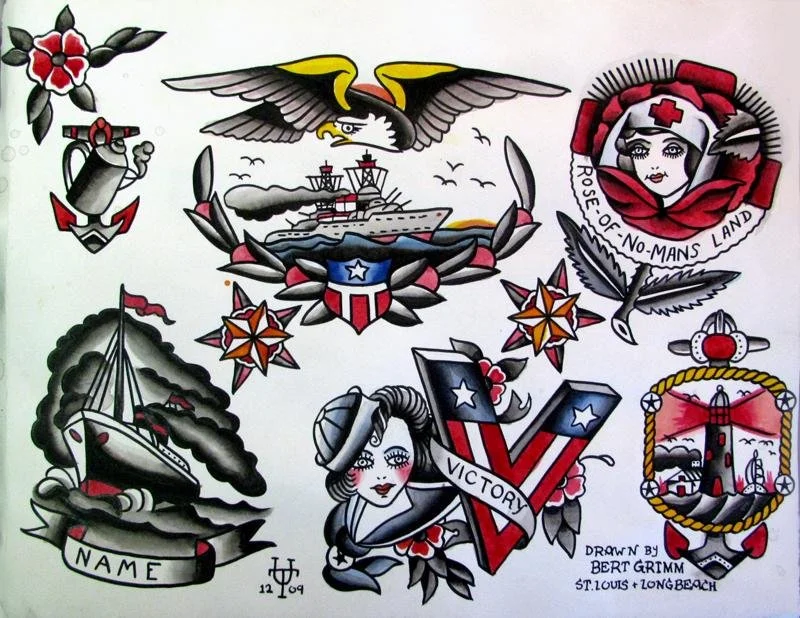
Bert Grimm became an influential figure in twentieth-century American tattooing.
His career spanned decades, and he worked within the professional tattoo scene that helped popularize classic imagery and bold compositions.
His work remains an important reference point for enthusiasts interested in the history of American traditional tattooing.
Norman Collins: Sailor Jerry
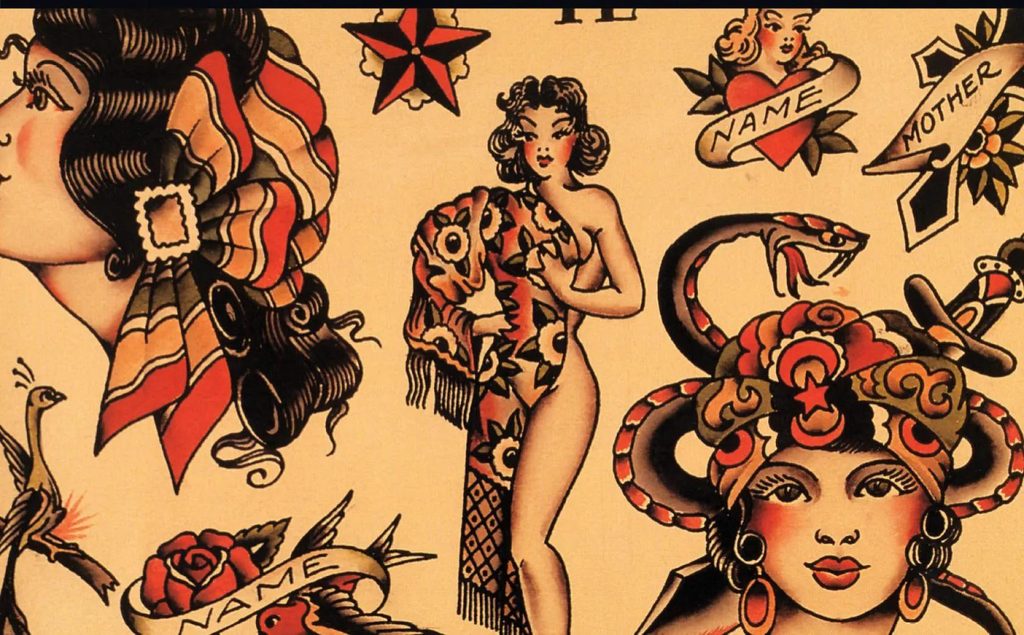
Norman Keith Collins, widely known as Sailor Jerry, became one of the most recognizable names associated with American traditional tattoos.
Working in Honolulu, he developed a distinctive approach combining bold American tattoo imagery with artistic and technical influences he encountered through his interest in Japanese tattooing.
His work is known for strong composition, confident outlines and subjects including eagles, snakes, ships, women and maritime imagery.
Sailor Jerry did not invent American traditional tattooing, but his artistic legacy contributed significantly to its continued popularity.
Don Ed Hardy and the next generation
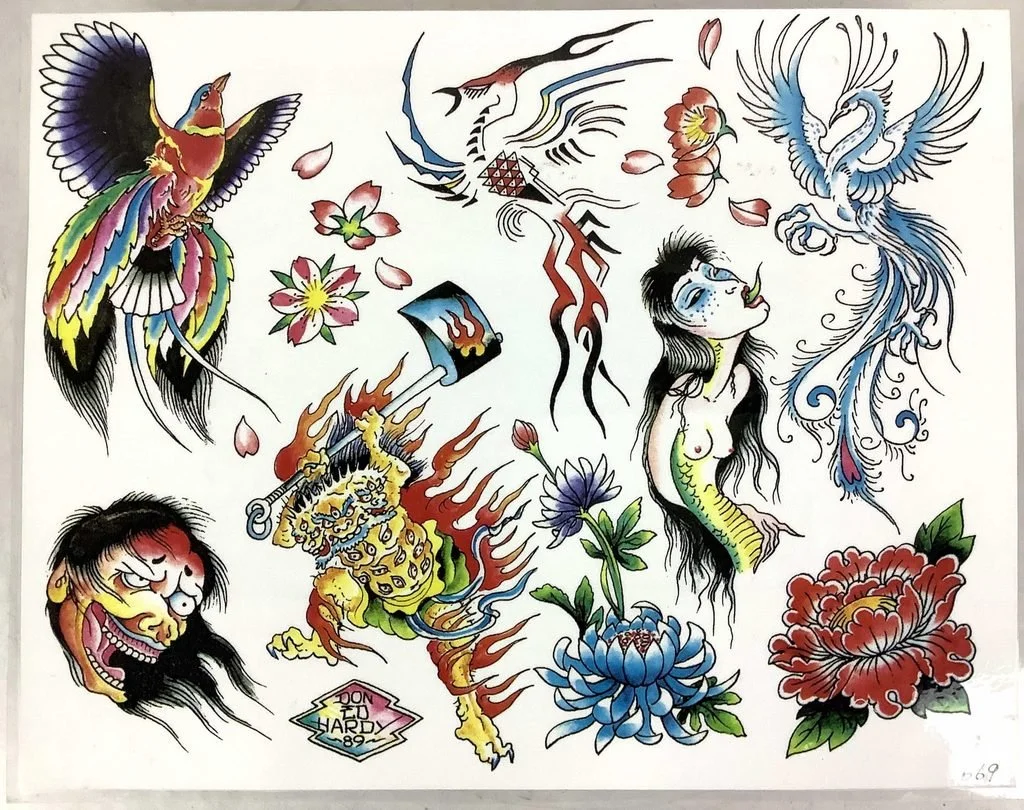
Don Ed Hardy helped expand the artistic possibilities of American tattooing.
Influenced by both American tattoo traditions and Japanese tattoo art, he became an important figure in the broader development of contemporary tattoo culture.
His career demonstrates how tattoo artists could preserve traditional techniques while exploring new compositions and artistic directions.
How Did Oldschool Tattoo History Influence Tattoo Techniques?
Oldschool Tattoo History influenced more than subject matter. It also helped establish a recognizable technical approach built around clarity, contrast and efficient visual communication.
Why are traditional tattoo outlines so bold?
Strong outlines help define the subject and separate important visual elements. In classic designs, an eagle, rose or anchor should remain recognizable without relying on intricate shading.
This emphasis on silhouette and structure is one reason traditional tattoos have such a distinctive appearance.
Why do oldschool tattoos use limited color palettes?
Classic American traditional tattoos are often associated with black, red, green and yellow, although historical palettes varied.
Earlier tattoo artists worked with the pigments and equipment available to them. Over time, bold areas of color became part of the style’s recognizable visual identity.
Contemporary artists can access a much broader range of pigments, but many intentionally retain classic palettes.
How does traditional shading work?
Traditional tattoo shading generally emphasizes clear contrast rather than photographic realism. Artists may use solid black areas and straightforward transitions to establish depth and volume.
The objective is often immediate readability rather than the reproduction of every realistic detail.
Frequently Asked Questions About Oldschool Tattoo History
1. What is an Oldschool Tattoo?
An Oldschool Tattoo, also called an American traditional tattoo, typically features bold black outlines, simplified shapes, solid colors and classic imagery such as anchors, swallows, roses and eagles.
2. Where did oldschool tattoos originate?
American traditional tattooing developed through Western maritime tattoo culture, professional tattoo shops and artistic influences during the nineteenth and twentieth centuries. It was not invented by one person.
3. Why did sailors get tattoos?
Sailors acquired tattoos for different reasons, including commemorating voyages, expressing identity, remembering loved ones and representing hopes for protection or safe return.
4. Who invented American traditional tattooing?
No single artist invented the entire style. Important historical figures include Martin Hildebrandt, Samuel O’Reilly, Bert Grimm and Norman Collins, better known as Sailor Jerry.
5. What does a traditional swallow tattoo mean?
A swallow is commonly associated with travel, homecoming and safe return. Some nautical tattoo folklore also connects swallows with sailing milestones, but interpretations vary.
6. What colors are used in oldschool tattoos?
Classic American traditional tattoos often feature black, red, green and yellow, although artists also use other colors. Strong contrast and solid color areas are more defining than one exact palette.
7. Can I create a custom oldschool tattoo?
Yes. Traditional techniques can be applied to new subjects and personal ideas. An artist can develop an original design while retaining the recognizable characteristics of American traditional tattooing.
8. Where can I get an Oldschool Tattoo in Hanoi?
You can contact 3 of Spades Hanoi Tattoo in Hanoi’s Old Quarter to discuss an American traditional design. Share your references, preferred size, placement and travel dates so the studio can recommend a suitable artist and appointment.
Final Thoughts: From Sailors to Modern Tattoo Culture
Oldschool Tattoo history is the story of how maritime imagery, professional tattooing and artistic innovation helped create one of the world’s most recognizable tattoo styles.
Sailors played an important role in spreading classic motifs, while influential artists and developing tattoo technology helped shape the visual language of American traditional tattooing.
Over time, the style moved beyond maritime and military communities to become part of international tattoo culture.
Today, an anchor no longer needs to represent life at sea, and a swallow does not have to mark a sailing achievement.
These familiar designs continue to evolve as new generations give them personal meaning.
Ultimately, oldschool tattooing remains relevant because it combines bold artistic simplicity with enduring opportunities for storytelling.
Create Your Oldschool Tattoo at 3 of Spades Hanoi Tattoo
At 3 of Spades Hanoi Tattoo, we believe traditional imagery can become the starting point for something personal.
Whether you’re drawn to a bold rose, a classic swallow, a vintage fan or an original subject interpreted through oldschool techniques, our team can help you explore a suitable design.
Located in Hanoi’s Old Quarter, we welcome international visitors looking for a comfortable, friendly Hanoi Tattoo experience with clear English communication.
Planning your tattoo? Send us:
• Your reference images or preferred oldschool motifs
• Your desired size in centimeters
• Your preferred body placement
• Your travel dates in Hanoi
We’ll review your idea and help you discuss the design direction, estimated session time and pricing.
Classic style. Your story. A tattoo made to last.