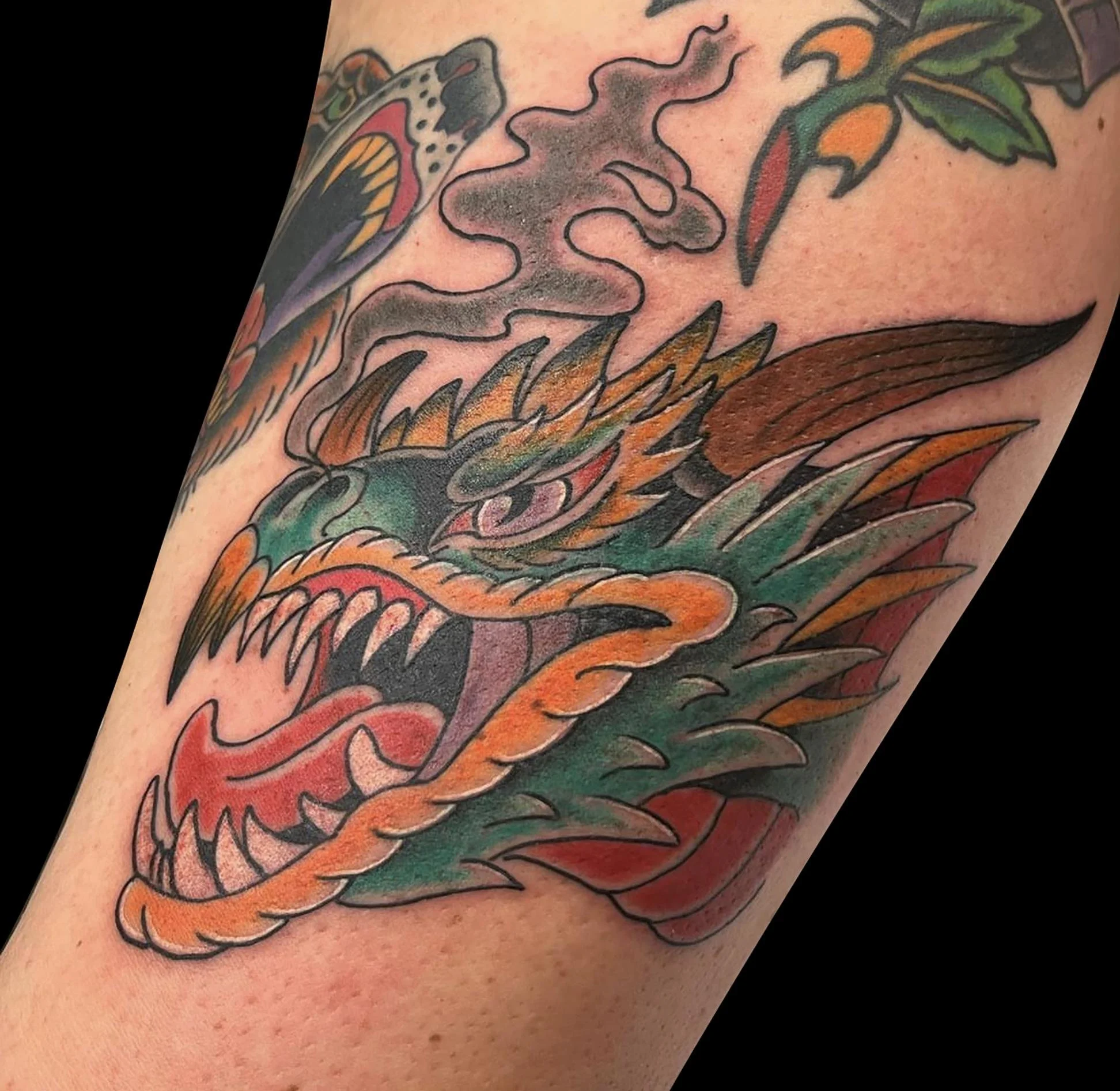
An Oldschool Dragon Tattoo brings together the mythical power of dragons and the bold visual language of American traditional tattooing. With thick black outlines, vibrant colors, dramatic claws and flowing bodies, these designs transform legendary creatures into striking pieces of body art.
Dragons have appeared in stories and artistic traditions across many cultures. In some, they represent wisdom, protection and prosperity. In others, they symbolize danger, conflict and extraordinary power.
American traditional tattoo artists reinterpret these creatures through a recognizable artistic approach: strong silhouettes, simplified details and confident compositions.
The result is a tattoo that feels both timeless and full of personality.
Whether you prefer a fierce red dragon surrounded by flames or a green dragon curling around a dagger, understanding the mythology and artistic principles behind these designs can help you choose something meaningful.
What Is an Oldschool Dragon Tattoo?
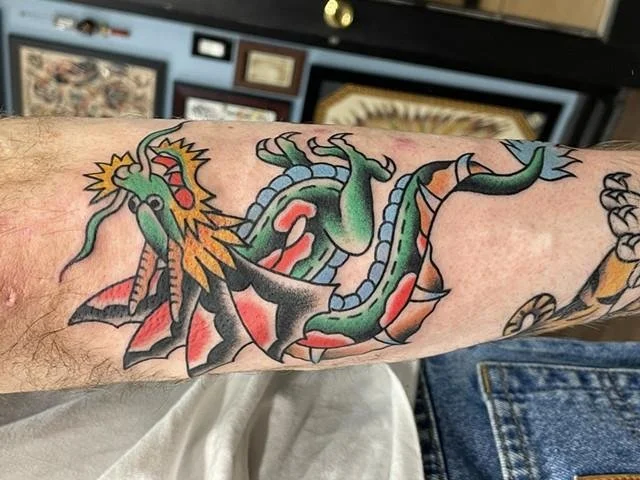
An Oldschool Dragon Tattoo is a dragon design illustrated using the visual conventions of American traditional, or old school, tattooing.
What defines the oldschool style?
Typical characteristics include:
• Thick black outlines
• Simplified, recognizable shapes
• Strong red, green, yellow and black color combinations
• Limited but intentional shading
• Expressive faces, claws and tails
• Clear negative space between design elements
• Bold compositions that remain readable from a distance
Rather than emphasizing every scale or anatomical detail, traditional artists focus on the dragon’s overall movement and silhouette.
Are dragon tattoos originally American?
No. Dragon imagery existed in Asian, European and other artistic traditions long before American traditional tattooing developed.
The oldschool approach refers to how the dragon is illustrated, not to the creature’s cultural origin.
American tattoo artists have historically drawn inspiration from multiple visual traditions, including East Asian tattoo art. Recognizing those influences is important when discussing the history of traditional dragon tattoos.
Where Does Dragon Tattoo Mythology Come From?
Dragon mythology developed in different cultural settings, and the meaning of a dragon varies considerably between traditions.
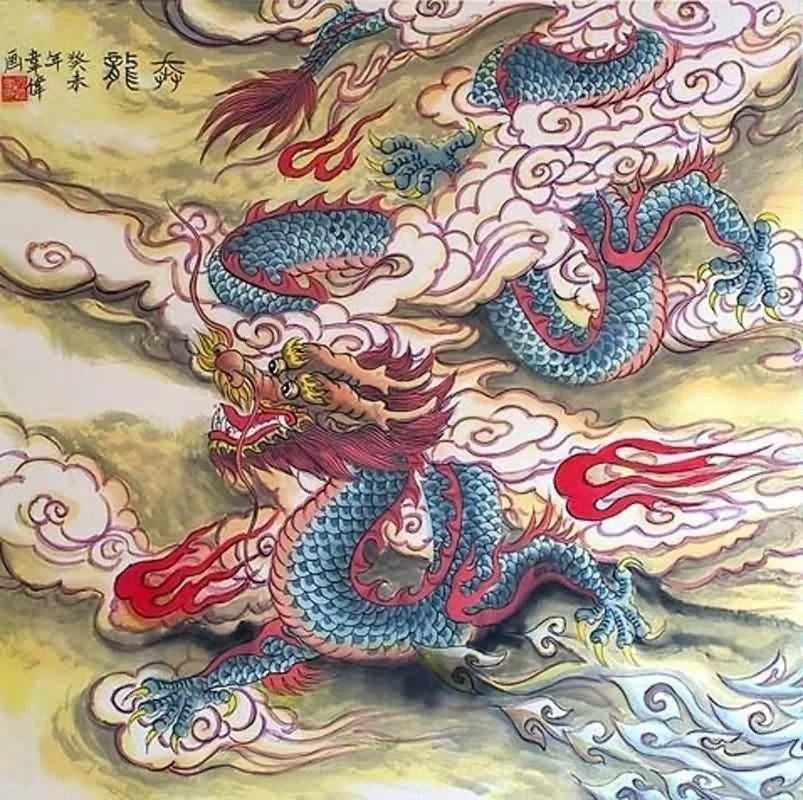
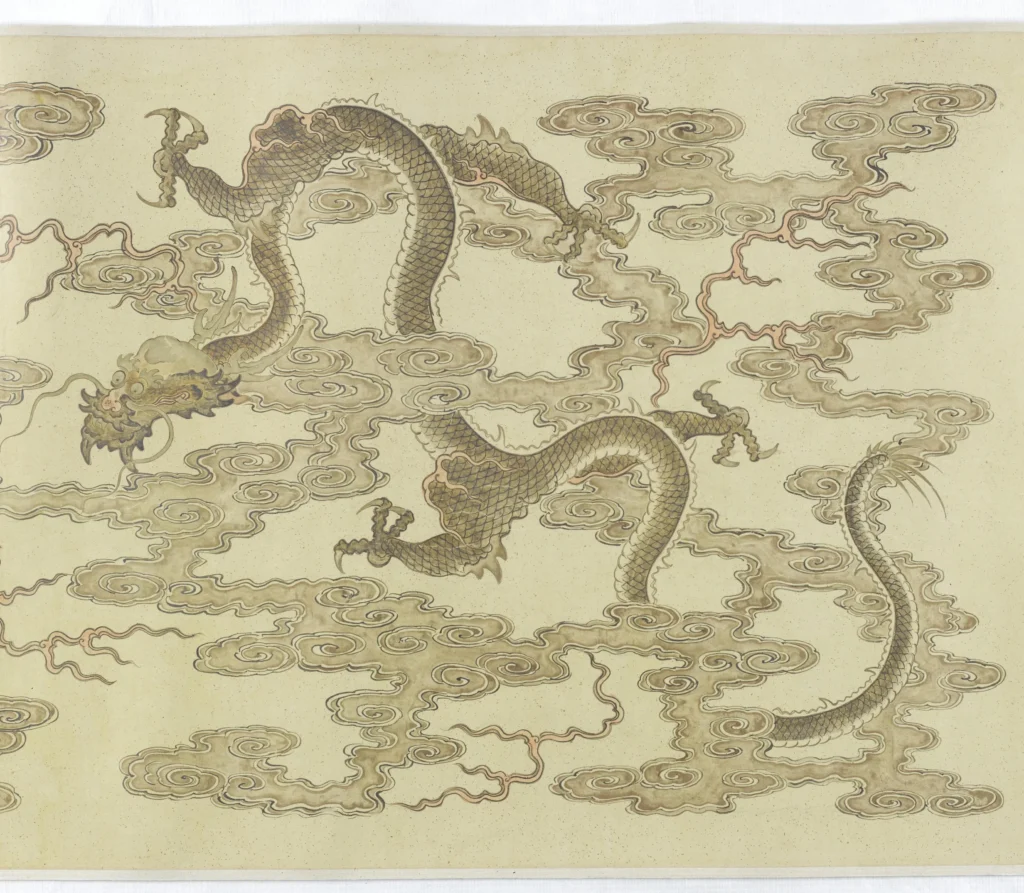
Chinese dragons: power, rain and prosperity
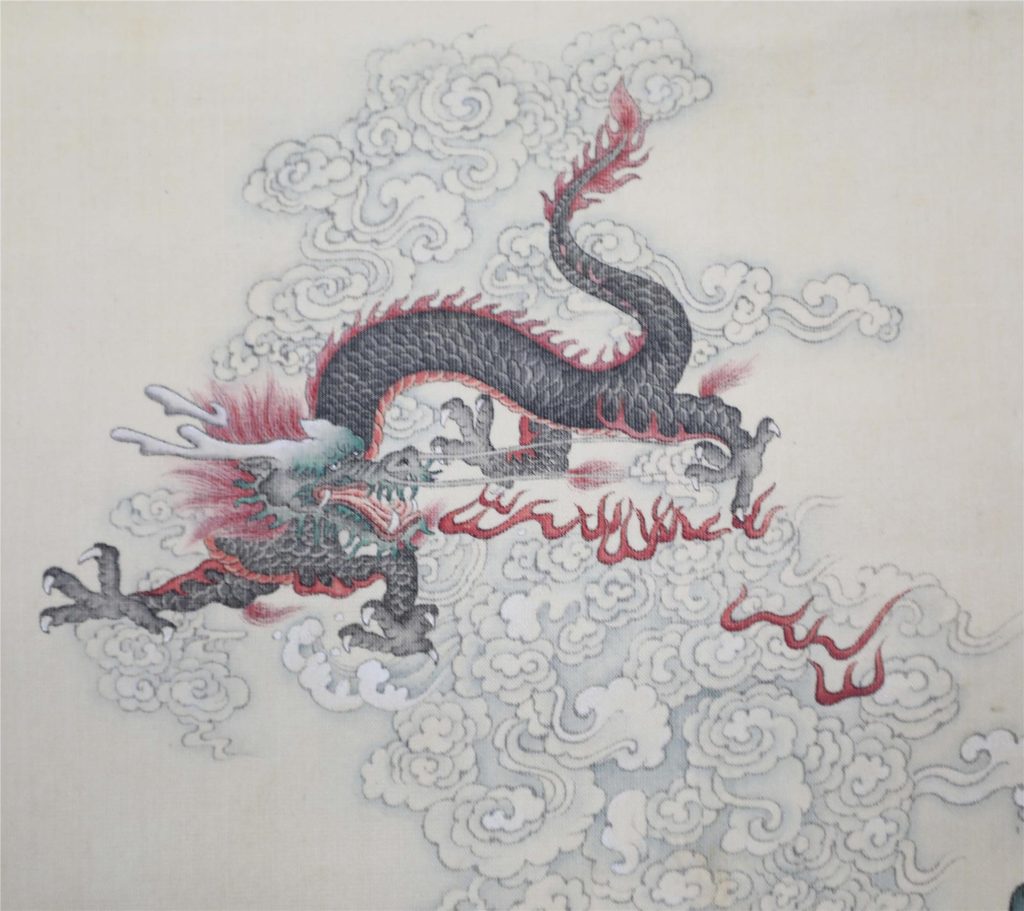
In Chinese cultural traditions, dragons are often associated with rain, water, imperial authority and auspicious power. They are frequently depicted with long serpentine bodies, claws, whiskers and flowing movement.
Unlike the fire-breathing monsters common in some European stories, Chinese dragons can be beneficial or protective beings. However, meanings vary across historical periods and specific legends.
Japanese dragons: water, protection and spiritual strength
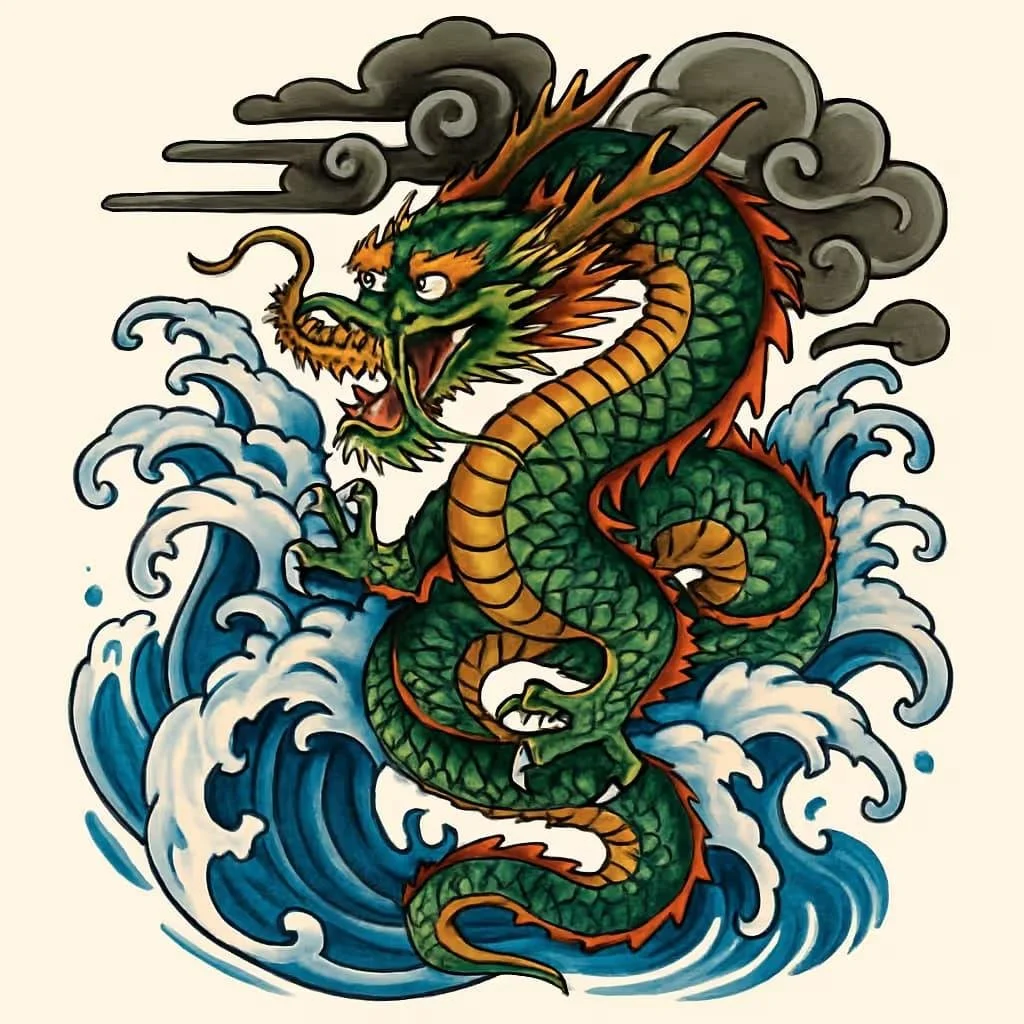
Japanese dragon imagery developed through several influences, including Chinese artistic and religious traditions.
Dragons, often called ryū or tatsu, appear in legends, temples, paintings and tattoo art. They are frequently connected with water, weather and supernatural power.
Japanese tattoo compositions may depict dragons surrounded by clouds, waves, wind bars or other traditional background elements. These designs belong to a distinct artistic tradition and should not automatically be labeled American traditional.
European dragons: danger, courage and conquest
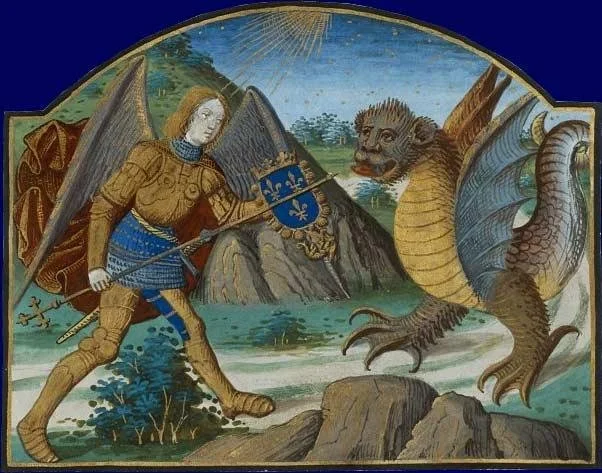
In many European stories, dragons appear as powerful creatures associated with danger, chaos or guarded treasures.
Legends involving heroes confronting dragons often explore courage, conflict and triumph.
However, European dragon mythology is not uniform. Dragons can have different appearances and roles depending on the region and story.
Why does mythology matter when choosing a tattoo?
The cultural background of a dragon can influence its appearance and meaning.
For example, a long, flowing East Asian dragon may communicate a different artistic idea from a winged European dragon surrounded by flames.
Understanding these differences allows you to choose references intentionally rather than combining unrelated symbols without context.
What Does an Oldschool Dragon Tattoo Mean?
An Oldschool Dragon Tattoo can represent strength, independence, transformation or protection. Its meaning depends on the dragon’s cultural inspiration, appearance and the wearer’s personal interpretation.
Strength and courage
Dragons are often portrayed as formidable creatures.
Their powerful bodies, sharp claws and dramatic expressions make them natural symbols of strength.
A person might choose a dragon tattoo to commemorate overcoming a difficult experience or developing greater confidence.
Protection and guardianship
In some cultural traditions, dragons are associated with protective forces. A tattoo inspired by these associations may represent a desire to protect loved ones, preserve personal values or remain resilient.
However, protection is not a universal meaning shared by every dragon tradition.
Freedom and independence
A dragon in flight can suggest freedom, independence and the ability to move beyond limitations. This interpretation is especially effective for designs featuring wings, sweeping tails or energetic compositions.
Transformation and personal growth
Dragons can also represent personal transformation. Their association with extraordinary power makes them compelling symbols for major life changes.
A dragon tattoo may commemorate a new beginning, an important achievement or a period of personal growth.
Wisdom and spiritual meaning
In several East Asian traditions, dragons are connected with wisdom, authority and supernatural forces. These meanings can provide inspiration, but they should be understood within the relevant cultural context.
What Are the Best Oldschool Dragon Tattoo Designs?
Oldschool Dragon Tattoo designs can range from classic flash-inspired compositions to custom interpretations that combine mythology with personal symbolism.
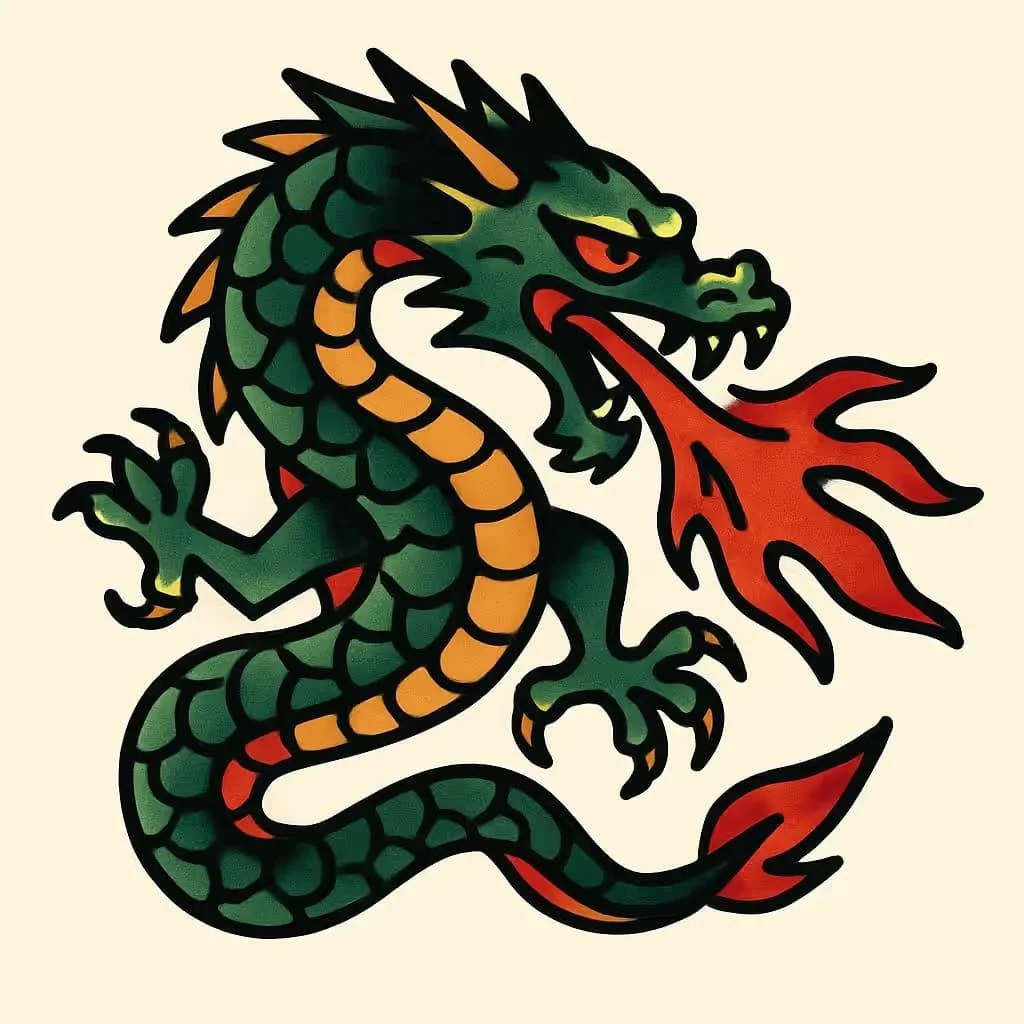
1. Classic Green Dragon Tattoo
A green dragon with red accents and thick black outlines creates a recognizable vintage aesthetic. Its coiled body works well on the forearm or upper arm.
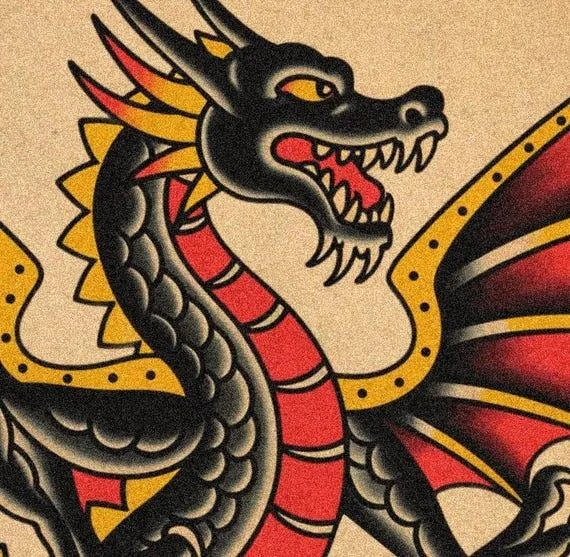
2. Bold Red Dragon Tattoo
Red creates a dramatic focal point. A traditional red dragon may be paired with black shadows and yellow accents for a powerful composition.
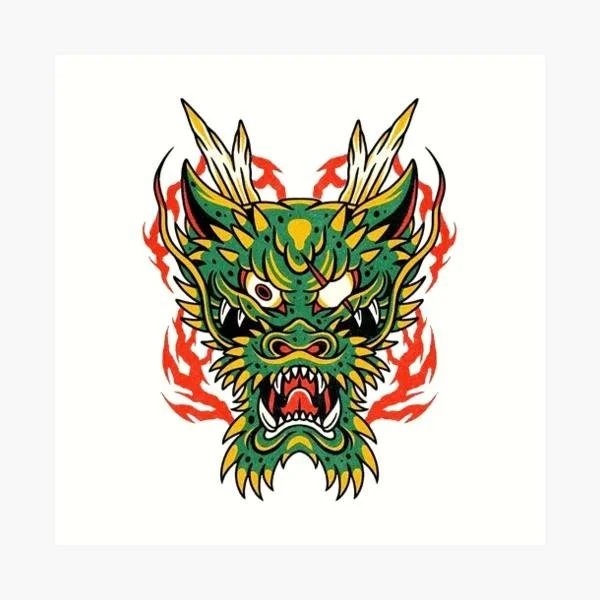
3. Traditional Dragon Head Tattoo
A dragon head emphasizes expression, horns, teeth and facial features. This design is ideal for people who want a compact but visually striking tattoo.
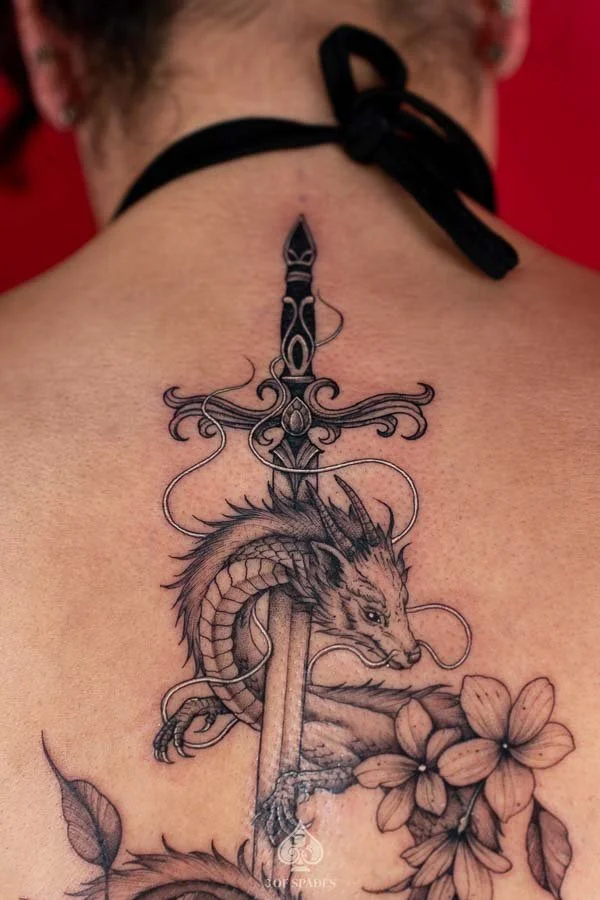
4. Dragon and Dagger Tattoo
Combining a dragon with a dagger creates a dramatic traditional composition. It may suggest conflict, courage or personal resilience, depending on the wearer.

5. Black and Grey Dragon Tattoo
Strong black outlines and solid shadows create a classic appearance without bright colors. This version suits people who prefer monochromatic artwork.
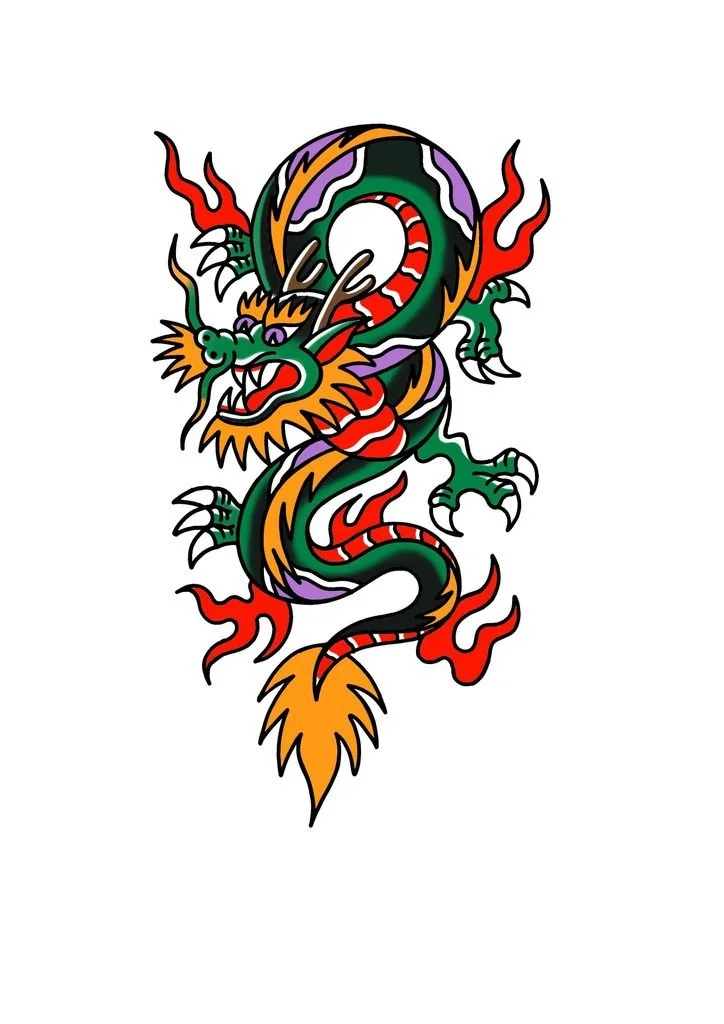
6. Fire-Breathing Dragon Tattoo
Flames add movement and intensity. This approach often draws on Western dragon imagery and can create a dynamic oldschool composition.
Read more: Black Traditional Dragon Tattoo: Meaning, Designs & Ideas (2026 Guide)
How Is an Oldschool Dragon Different From a Japanese Dragon?
An Oldschool Dragon Tattoo and a Japanese dragon tattoo can share visual influences, but they belong to different artistic approaches.
| Feature | Oldschool Dragon | Japanese Dragon |
|---|---|---|
| Artistic approach | American traditional | Japanese tattoo art, including irezumi |
| Outlines | Bold and graphic | Strong but often more varied |
| Detail | Simplified | Often more intricate |
| Color | Classic solid color areas | Varies, often with layered color and shading |
| Composition | Standalone or compact designs | Frequently integrated into larger compositions |
| Background | Optional flames, stars, banners | Often waves, clouds, wind and other traditional elements |
| Cultural context | Western tattoo style influenced by multiple traditions | Connected with Japanese visual culture and tattoo history |
Read more: Japanese Tattoo History: From Ancient Japan to Modern Irezumi
Where Should You Place Your Oldschool Dragon Tattoo?
Dragon tattoos are versatile because their long bodies can follow the contours of different body areas.
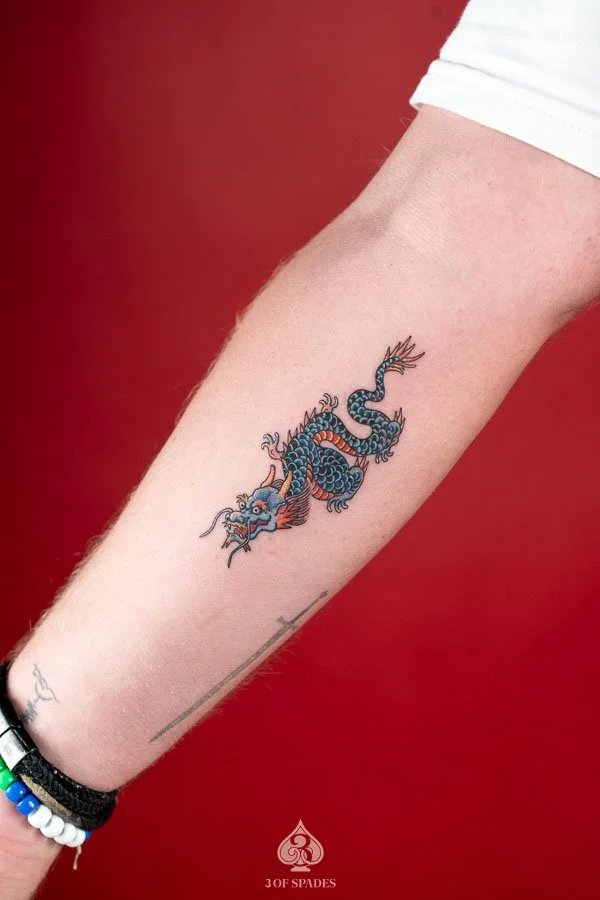
Forearm
Suitable for vertical dragons, compact coiled designs and dragon heads. The shape of the forearm can complement a flowing body.

Upper Arm and Shoulder
Offers space for larger dragons with expressive heads, curved tails and decorative elements.

Thigh
Provides a generous canvas for dramatic compositions, additional details and bold color.

Back
Suitable for large-scale compositions with additional flames, clouds or other decorative imagery.
Frequently Asked Questions About Oldschool Dragon Tattoo
1. What does an Oldschool Dragon Tattoo mean?
An Oldschool Dragon Tattoo can symbolize strength, courage, protection, freedom or personal transformation. The meaning depends on its cultural inspiration and the wearer’s interpretation.
2. Is an oldschool dragon tattoo American or Japanese?
The oldschool style refers to American traditional tattooing. However, dragon imagery can draw inspiration from Japanese, Chinese, European and other mythological traditions.
3. What colors are best for an oldschool dragon?
Green, red, yellow and black are popular choices for vintage-inspired dragon artwork. Black and grey designs can also work well.
4. What is the difference between an oldschool dragon and an irezumi dragon?
Oldschool dragons typically use simplified shapes, bold outlines and graphic color areas. Japanese irezumi dragons are often part of more elaborate compositions with traditional background elements.
5. Are dragon tattoos good for the forearm?
Yes. A dragon’s elongated body can follow the forearm naturally, making it suitable for vertical or slightly curved compositions.
6. Can I get a small oldschool dragon tattoo?
Yes, especially a simplified dragon head or compact design. Full-body dragons with many scales and details may require more space.
7. Do oldschool dragon tattoos have to be colorful?
No. They can be created in black and grey while retaining bold outlines and traditional composition.
8. What can I combine with a traditional dragon tattoo?
Popular combinations include roses, daggers, flames, clouds, banners and other classic tattoo elements.
9. Where can I get an Oldschool Dragon Tattoo in Hanoi?
You can contact 3 of Spades Hanoi Tattoo in Hanoi’s Old Quarter to discuss a custom dragon design. Share your references, preferred size, placement and travel dates so the team can assess the project and recommend a suitable artist.
Final Thoughts: Mythology Meets Bold Tattoo Art
An Oldschool Dragon Tattoo brings together centuries of dragon mythology and the recognizable visual language of American traditional tattooing.
Its appeal comes from the combination of powerful symbolism, flowing movement and bold artistic composition.
Whether inspired by East Asian dragons, European legends or a personal interpretation of strength, the design can be adapted to reflect your individual story.
Strong outlines, clear silhouettes and carefully selected colors give traditional dragon tattoos their distinctive appearance.
Ultimately, the best dragon tattoo is not simply the fiercest or most elaborate design. It is one that combines meaningful inspiration, thoughtful composition and an artistic style you genuinely love.
Create Your Oldschool Dragon Tattoo at 3 of Spades Hanoi Tattoo
At 3 of Spades Hanoi Tattoo, we welcome clients who want to explore custom tattoos inspired by mythology, classic imagery and personal stories.
Whether you prefer a bold green dragon, a fierce red dragon head or a custom composition combining traditional tattoo elements, our team can help you develop your idea.
Located in Hanoi’s Old Quarter, our studio offers a friendly, collaborative Hanoi Tattoo experience with clear English communication.
Planning your dragon tattoo? Send us:
• Your reference images or preferred dragon style
• Your desired tattoo size in centimeters
• Your preferred body placement
• Your travel dates in Hanoi
We’ll review your concept and discuss the design direction, estimated session time and pricing.
Ancient mythology. Bold lines. Your own story.