Mandala Arm Tattoo: Geometric Blackwork & Symbolic Body Art | 3 of Spades Hanoi Tattoo
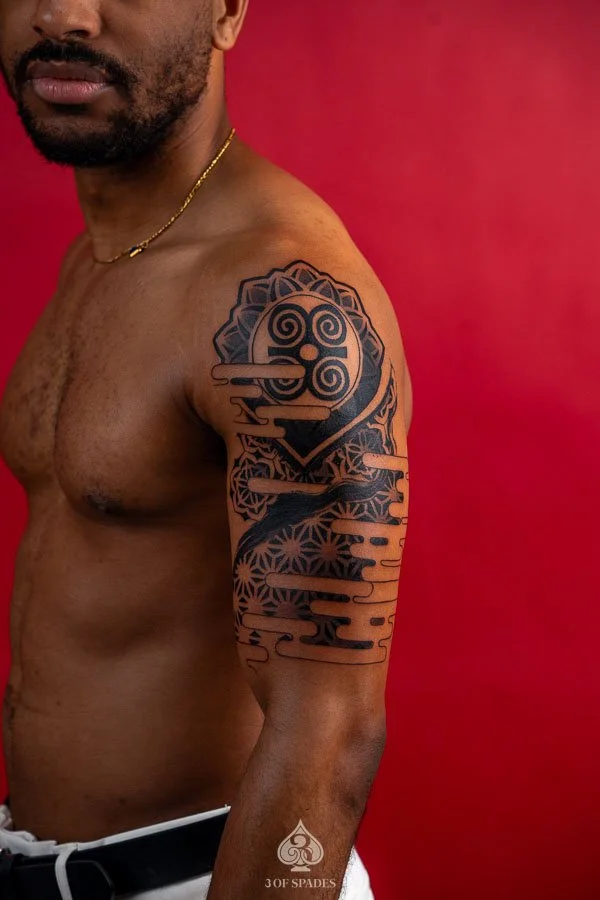
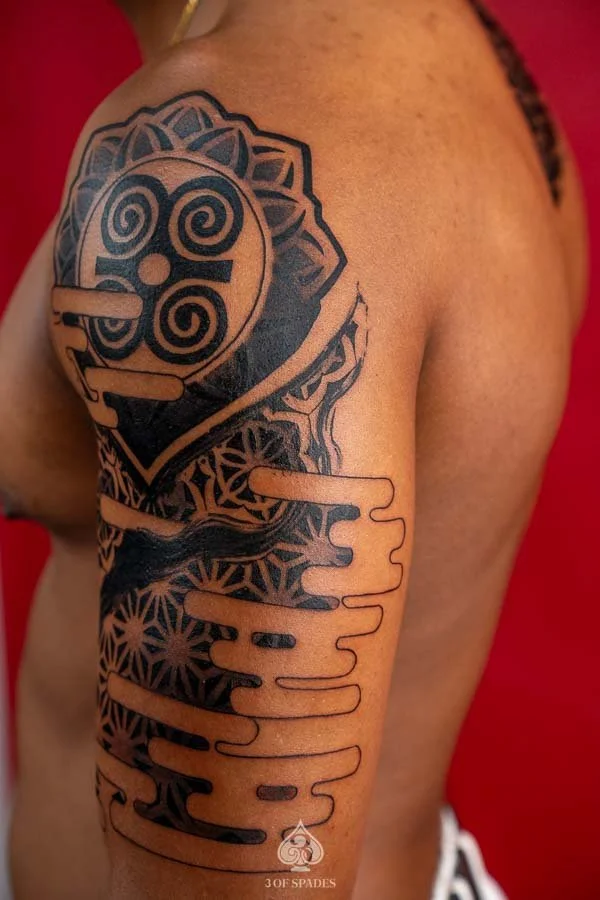
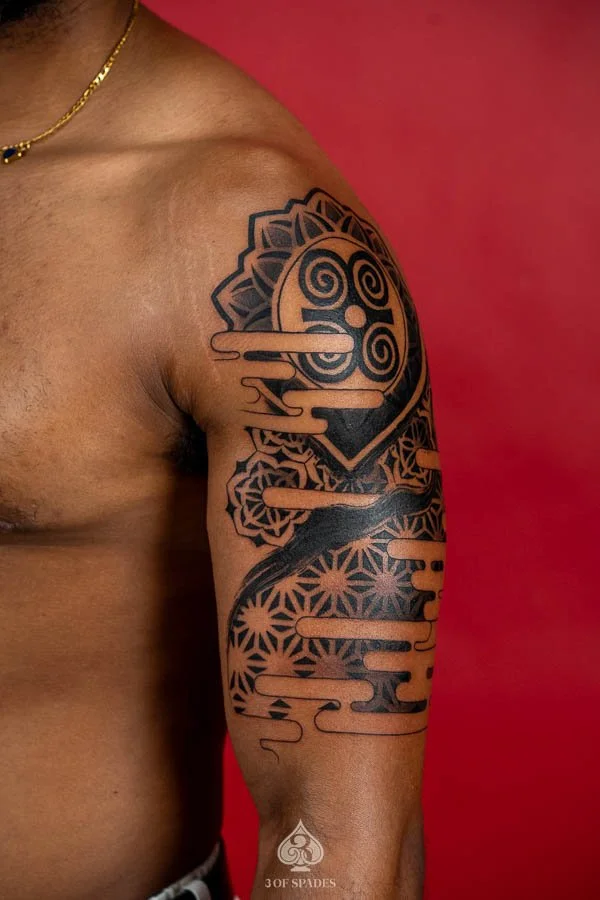
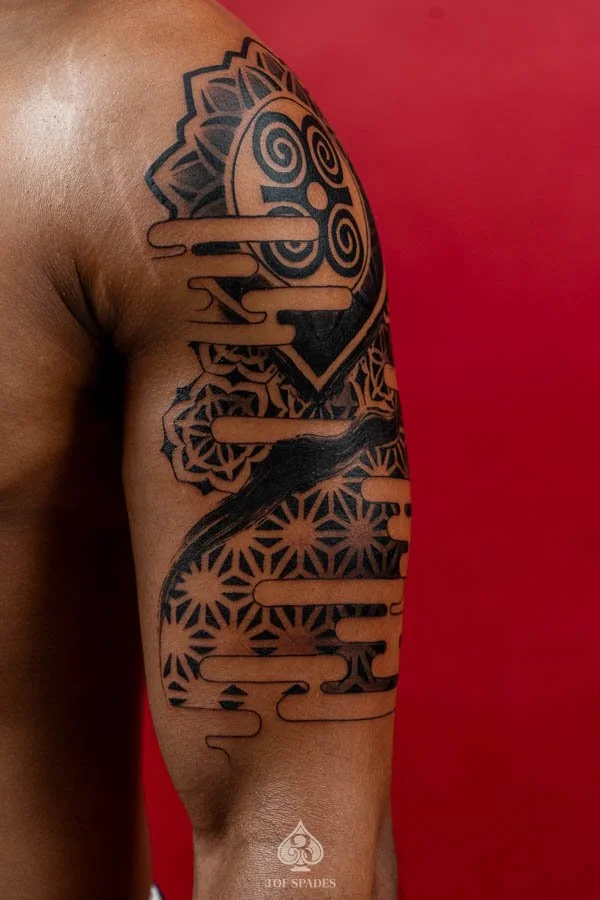
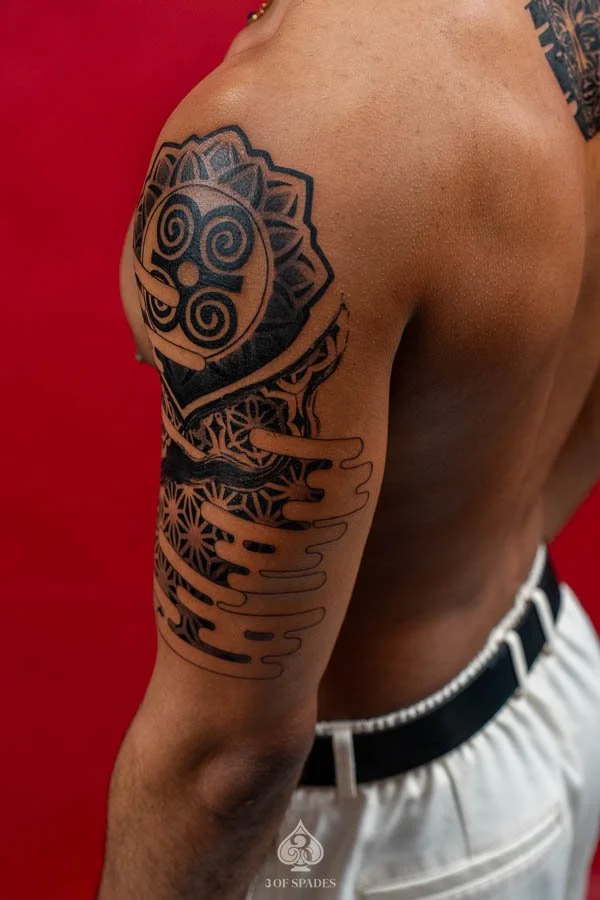
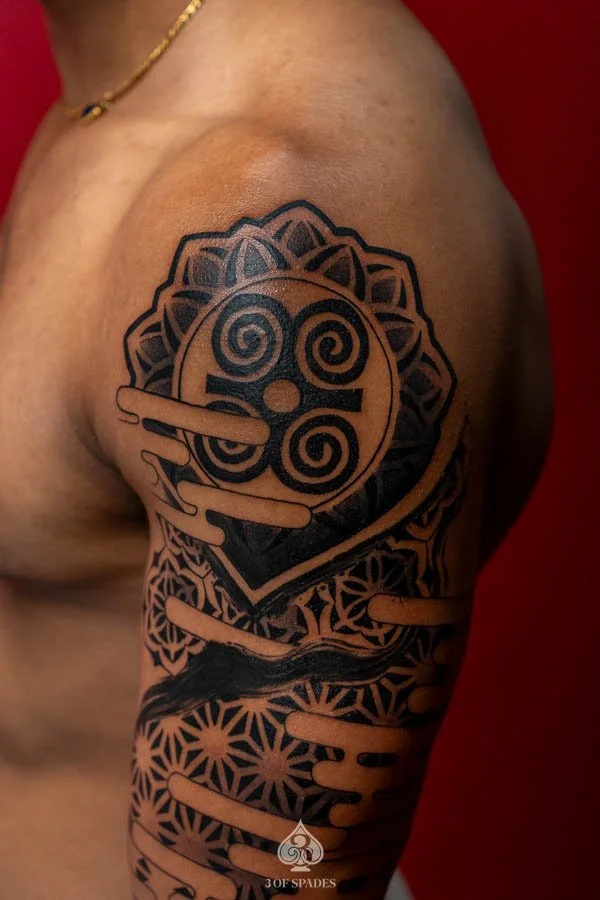
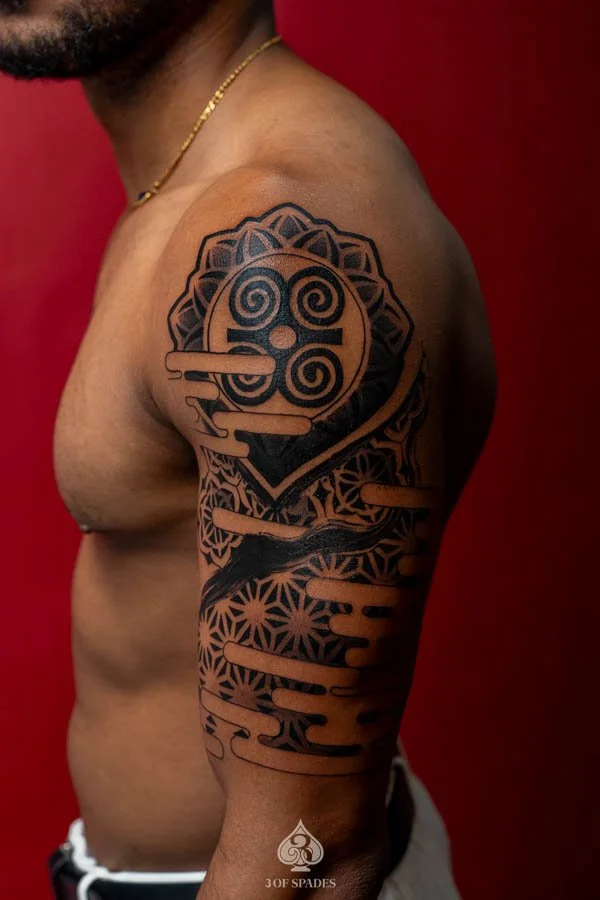
A Mandala Arm Tattoo combines intricate geometric patterns, bold blackwork, and ornamental details to create a striking composition across the upper arm. Featuring layered circular motifs, spiral elements, and carefully arranged negative space, this design explores the relationship between symmetry, structure, and personal symbolism.
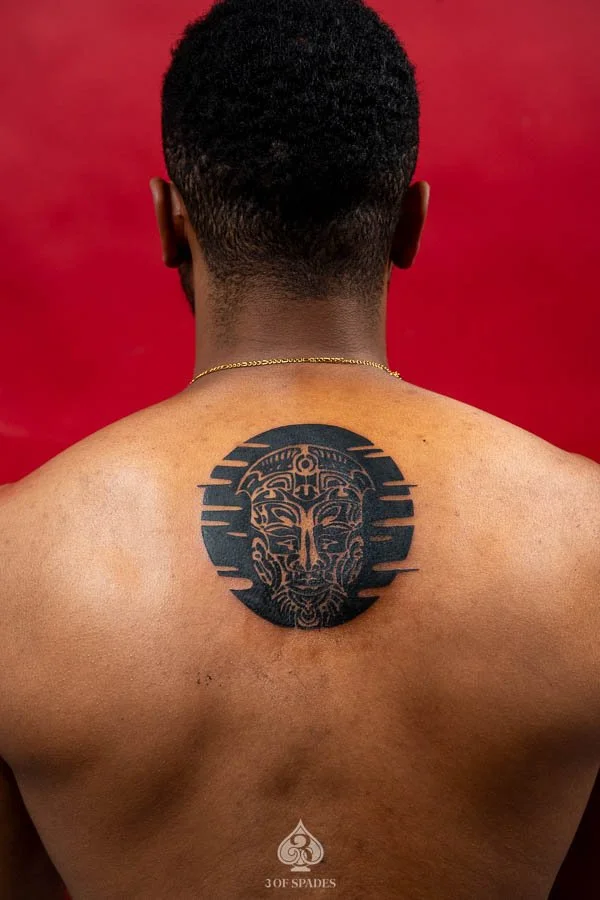
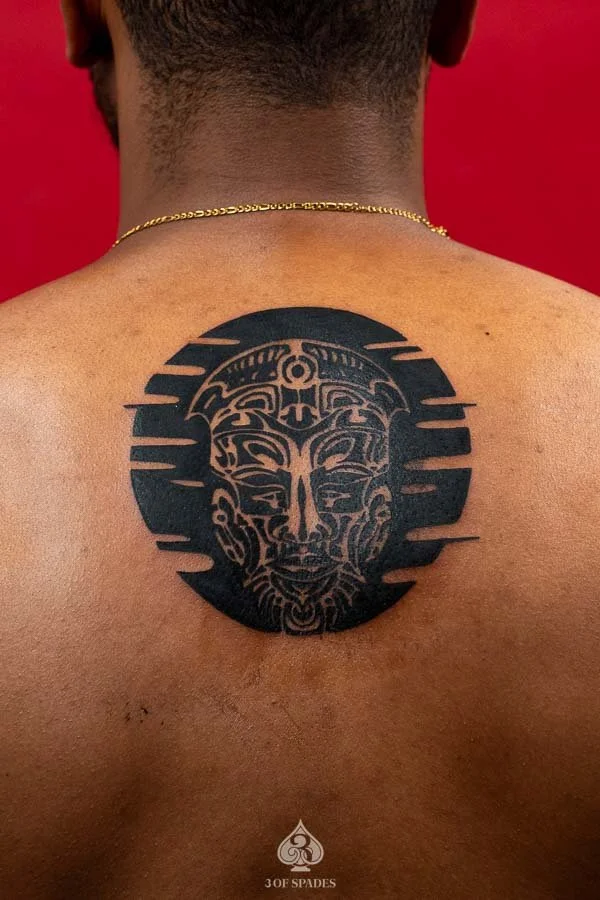
This tattoo collection also features a complementary geometric symbol back tattoo, showcasing a stylized ornamental face enclosed within a bold circular composition. Together, these artworks demonstrate how geometric patterns and symbolic imagery can create distinctive blackwork tattoos across different areas of the body.
The arm design uses dense black sections contrasted with skin breaks and intricate decorative patterns. Meanwhile, the back piece focuses on a central symbolic figure surrounded by horizontal graphic elements, creating a strong visual identity.
At 3 of Spades Hanoi Tattoo, our artists explore the possibilities of blackwork, geometric patterns, and custom ornamental compositions to transform personal references into distinctive body art.
Whether you appreciate sacred geometry, mandala-inspired patterns, or bold graphic tattoos, these designs offer inspiration for creating artwork with depth, structure, and individuality.
What Makes a Mandala Arm Tattoo Unique?
A Mandala Arm Tattoo stands out through its intricate arrangement of geometric shapes, repeated patterns, and balanced ornamental details.
Traditionally associated with circular compositions, mandala-inspired artwork uses symmetry and repetition to create visually harmonious designs. In contemporary tattooing, these elements can be combined with blackwork, abstract shapes, and unconventional graphic details.
Key characteristics include:
- ✨ Circular Geometry: Uses concentric shapes and repeated patterns to establish visual structure.
- ✨ Intricate Linework: Introduces detailed ornamental elements within larger geometric forms.
- ✨ Bold Blackwork: Creates strong contrast through solid black sections and carefully controlled shading.
- ✨ Negative Space: Uses untouched skin to separate patterns and emphasize individual shapes.
- ✨ Spiral Motifs: Adds movement and visual interest to the central composition.
- ✨ Symmetrical Details: Creates balance through repeated shapes and geometric arrangements.
- ✨ Ornamental Extensions: Allows the design to extend beyond its central circular structure.
- ✨ Custom Composition: Makes it possible to adapt traditional mandala-inspired elements to individual preferences.
The combination of intricate patterns and bold contrast gives this style its distinctive appearance.
Mandala Tattoo Meaning: Balance, Unity and Personal Expression
A Mandala Arm Tattoo can represent balance, unity, self-reflection, interconnectedness, and personal growth.
The word mandala originates from Sanskrit and is commonly translated as circle. Mandalas have appeared in different religious, spiritual, and artistic traditions, particularly within Hindu and Buddhist contexts.
Their meanings vary depending on the cultural tradition and specific design.
Common interpretations include:
- ✨ Balance: Represents harmony between different aspects of life.
- ✨ Unity: Symbolizes the connection between individual elements and a greater whole.
- ✨ Wholeness: Reflects completeness and interconnectedness.
- ✨ Self-Reflection: Represents introspection and personal understanding.
- ✨ Growth: Connects with personal development and transformation.
- ✨ Order: Expresses structure and organization through repeated geometric forms.
- ✨ Individuality: Allows personal meaning to be incorporated into an established visual language.
- ✨ Continuity: Represents the ongoing nature of personal experiences and change.
Not every geometric or circular tattoo carries traditional spiritual meaning. Contemporary mandala-inspired designs can also be appreciated purely for their visual structure and artistic complexity.
Understanding Mandala Geometry and Symbolic Tattoo Art
A Mandala Arm Tattoo can incorporate several geometric and decorative elements, each contributing to the overall composition.
Understanding these elements helps explain why mandala-inspired artwork is so versatile in contemporary tattooing.
Circular Geometry
Circular forms are among the most recognizable features of mandala-inspired designs.
Repeated circles and concentric arrangements create a natural focal point while allowing smaller decorative elements to radiate outward.
In tattoo compositions, circular geometry can be used to:
- Establish a central visual focus.
- Organize repeated patterns.
- Create symmetrical arrangements.
- Connect different ornamental elements.
- Introduce a sense of continuity.
Repeated Geometric Patterns
Repeated shapes create rhythm and consistency throughout the artwork.
Triangles, diamonds, curved lines, and interlocking forms can be arranged to produce intricate decorative structures.
These patterns are particularly effective when combined with bold blackwork.
Spiral Motifs
Spiral elements introduce movement into otherwise symmetrical compositions.
They can soften geometric structures and create visual contrast between rigid lines and flowing shapes.
Symbolic Faces and Graphic Imagery
The accompanying back tattoo demonstrates another approach to geometric body art.
A stylized face becomes the central element of the composition, surrounded by circular black sections and horizontal extensions.
This approach combines symbolic imagery with contemporary graphic design, creating a distinctive tattoo without relying on conventional ornamental patterns.
Mandala Arm Tattoo Design Elements
A Mandala Arm Tattoo can combine several visual components to create a detailed and cohesive blackwork composition.
The photographed arm design demonstrates how these elements can work together across a larger surface.
- ✨ Central Spiral Motif: Creates a focal point through repeated circular forms.
- ✨ Geometric Framing: Surrounds the central symbol with layered decorative shapes.
- ✨ Ornamental Borders: Introduces intricate patterns around the main composition.
- ✨ Bold Black Sections: Establishes contrast and emphasizes the overall structure.
- ✨ Negative-Space Bands: Separates different sections of the tattoo.
- ✨ Decorative Repetition: Creates visual rhythm through repeated geometric elements.
- ✨ Flowing Extensions: Connects the upper-arm composition with the lower sections.
- ✨ Detailed Linework: Adds complexity without relying entirely on solid black areas.
- ✨ Layered Composition: Creates the impression of multiple interconnected patterns.
The most important consideration is maintaining a clear relationship between the central motif and the surrounding decorative elements.
Geometric Symbol Back Tattoo: Meaning and Design
Alongside the mandala arm artwork, this collection features a Geometric Symbol Back Tattoo built around a stylized ornamental face.
The design combines a central facial motif with a circular black background and horizontal extensions that create a graphic, almost fragmented appearance.
This composition demonstrates how symbolic imagery can be transformed through geometric framing and bold blackwork.
Potential interpretations of this visual approach include:
- ✨ Identity: A symbolic face can represent individuality and personal identity.
- ✨ Mystery: Abstract facial details can create an enigmatic visual impression.
- ✨ Protection: Some symbolic facial designs draw inspiration from traditional protective imagery, depending on their cultural references.
- ✨ Transformation: Fragmented graphic elements can suggest change and reinterpretation.
- ✨ Personal Expression: Custom symbols allow wearers to incorporate their own references and meanings.
- ✨ Visual Balance: Circular framing creates a structured relationship between the central figure and its surroundings.
The exact meaning of the pictured symbol depends on its original reference and the wearer’s personal interpretation. It is best appreciated as a distinctive graphic composition rather than assigning it a specific cultural identity without further context.
Mandala Arm Tattoo Styles and Techniques
A Mandala Arm Tattoo can be interpreted through different tattoo techniques depending on the desired level of detail, contrast, and visual direction.
Blackwork Mandala Tattoo
Blackwork emphasizes contrast through the strategic use of solid black ink.
- Dense black sections.
- Strong geometric outlines.
- High-contrast patterns.
- Negative-space details.
- Bold ornamental structures.
Geometric Mandala Tattoo
Geometric designs focus on repeated shapes and structured arrangements.
- Concentric circles.
- Repeated triangles and diamonds.
- Symmetrical patterns.
- Interconnected geometric forms.
- Precise decorative outlines.
Ornamental Mandala Tattoo
Ornamental interpretations introduce decorative patterns inspired by traditional art and contemporary graphic design.
- Intricate borders.
- Repeated decorative motifs.
- Flowing extensions.
- Layered patterns.
- Symmetrical details.
Dotwork Mandala Tattoo
Dotwork uses individual dots to create texture, shading, and visual transitions.
- Graduated dot patterns.
- Textured backgrounds.
- Soft tonal transitions.
- Intricate geometric details.
- Decorative shading.
Abstract Geometric Tattoo
Abstract geometric designs reinterpret familiar symbols through unconventional shapes and compositions.
- Fragmented forms.
- Asymmetrical arrangements.
- Graphic extensions.
- Stylized symbolic imagery.
- Contrasting solid and open areas.
Combining blackwork and geometric techniques is particularly effective for creating large compositions with strong visual definition.
Best Placement for a Mandala Arm Tattoo
The placement of a Mandala Arm Tattoo influences how its geometric patterns interact with the body’s natural contours.
Different areas offer different possibilities for circular designs, ornamental extensions, and larger compositions.
- ✨ Upper Arm: Provides a rounded surface for central geometric and mandala motifs.
- ✨ Shoulder: Works well for circular compositions that follow the natural shoulder structure.
- ✨ Outer Arm: Offers a visible canvas for detailed blackwork.
- ✨ Full Sleeve: Allows multiple geometric patterns to connect into a larger composition.
- ✨ Half Sleeve: Creates space for a central mandala with ornamental extensions.
- ✨ Forearm: Works well for elongated geometric arrangements.
- ✨ Upper Back: Provides a broad surface for centered symbolic compositions.
- ✨ Between the Shoulder Blades: Offers a balanced placement for circular or symmetrical artwork.
For the photographed arm design, the upper arm provides enough room for the central motif while allowing the surrounding patterns to extend downward.
The accompanying back tattoo demonstrates how a smaller, centered composition can create a strong visual statement without requiring a full-back design.
Mandala Arm Tattoo Size and Composition
A Mandala Arm Tattoo can range from a compact geometric symbol to a large ornamental sleeve.
The ideal size depends on the complexity of the patterns, the amount of negative space, and the desired level of detail.
- ✨ Small Mandala Tattoo: Focuses on one simplified geometric composition.
- ✨ Medium Upper Arm Tattoo: Combines a central circular motif with decorative borders.
- ✨ Mandala Half Sleeve: Extends the design from the shoulder toward the elbow.
- ✨ Geometric Full Sleeve: Connects several patterns into a continuous composition.
- ✨ Blackwork Upper Arm Tattoo: Uses bold black sections to create a strong visual identity.
- ✨ Ornamental Shoulder Tattoo: Follows the shoulder’s natural curve with repeated patterns.
- ✨ Minimalist Geometric Tattoo: Uses simplified shapes and open negative space.
- ✨ Large Symbol Back Tattoo: Features a central graphic or symbolic figure framed by geometric details.
For detailed blackwork, planning the spacing between individual patterns is essential. Sufficient negative space helps maintain visual clarity and prevents intricate sections from becoming difficult to distinguish over time.
Popular Mandala and Geometric Blackwork Tattoo Ideas
A Mandala Arm Tattoo offers numerous creative possibilities through different geometric structures, ornamental details, and symbolic references.
Here are some concepts worth exploring:
- ✨ Traditional Mandala Arm Tattoo: Features concentric circles and repeated decorative patterns.
- ✨ Blackwork Mandala Sleeve: Combines bold black sections with intricate geometric details.
- ✨ Geometric Shoulder Tattoo: Uses symmetrical patterns across the shoulder.
- ✨ Sacred Geometry Arm Tattoo: Incorporates geometric structures inspired by mathematical and spiritual traditions.
- ✨ Ornamental Upper Arm Tattoo: Combines decorative patterns with bold blackwork.
- ✨ Abstract Symbol Back Tattoo: Features a custom graphic symbol within a geometric composition.
- ✨ Mandala and Dotwork Tattoo: Combines precise geometric outlines with textured shading.
- ✨ Negative Space Mandala Tattoo: Uses untouched skin to create contrast within dense black sections.
- ✨ Tribal-Inspired Geometric Tattoo: Explores bold patterns and flowing decorative shapes.
- ✨ Circular Blackwork Back Tattoo: Uses a central circular composition with graphic extensions.
- ✨ Abstract Face Tattoo: Combines symbolic facial imagery with contemporary geometric elements.
- ✨ Geometric Arm and Back Tattoo Set: Connects complementary visual themes across different placements.
Each design can be customized through pattern complexity, line thickness, contrast, and overall composition.
How to Personalize Your Mandala Arm Tattoo
A Mandala Arm Tattoo can become more meaningful through personalized geometric patterns, symbolic references, and carefully planned placement.
- ✨ Choose Your Central Motif: Start with a circular mandala, spiral, or personal symbol.
- ✨ Select Your Geometric Language: Explore triangles, circles, diamonds, and repeated decorative shapes.
- ✨ Decide on Contrast: Choose between dense blackwork, lighter outlines, or a combination.
- ✨ Incorporate Negative Space: Use open areas to separate individual elements.
- ✨ Explore Ornamental Details: Add decorative borders and flowing extensions.
- ✨ Consider Symbolic References: Include imagery that reflects your interests or personal experiences.
- ✨ Plan Your Placement: Adapt the composition to your shoulder, upper arm, forearm, or back.
- ✨ Think About Future Tattoos: Allow the artwork to connect naturally with potential additions.
At 3 of Spades Hanoi Tattoo, your references and ideas can guide the development of a custom geometric or mandala-inspired composition.
Mandala Arm Tattoo Healing and Longevity
A Mandala Arm Tattoo requires appropriate aftercare to preserve its intricate patterns, bold black sections, and carefully defined negative-space details.
- ✨ Follow Artist Instructions: Use the recommended cleaning and moisturizing routine.
- ✨ Keep the Tattoo Clean: Gently wash the area according to your artist’s guidance.
- ✨ Avoid Scratching: Allow peeling skin to shed naturally.
- ✨ Reduce Friction: Avoid clothing that repeatedly rubs against the fresh tattoo.
- ✨ Avoid Swimming: Do not soak the tattoo until it has completely healed.
- ✨ Protect from Sun Exposure: Once healed, use appropriate sun protection to help maintain contrast.
- ✨ Allow Complete Healing: Give the skin sufficient time to recover before considering a touch-up.
- ✨ Maintain Skin Health: Keep healed tattooed skin moisturized.
For large blackwork compositions, consistent aftercare is particularly important because dense ink coverage and intricate patterns require proper skin recovery.
Why Choose 3 of Spades Hanoi Tattoo?
A Mandala Arm Tattoo requires precision, consistency, and an understanding of how geometric patterns translate onto the body’s natural contours.
At 3 of Spades Hanoi Tattoo, our artists work with different tattoo styles and creative references to develop personalized blackwork, geometric, and ornamental artwork.
- ✨ Custom Tattoo Artwork: Turn personal references into original geometric compositions.
- ✨ Blackwork Techniques: Explore bold contrast and detailed black ink applications.
- ✨ Geometric Precision: Develop structured patterns and carefully balanced arrangements.
- ✨ Ornamental Designs: Combine intricate decorative details with contemporary tattoo aesthetics.
- ✨ Personalized Placement: Adapt artwork to your preferred body area.
- ✨ English-Speaking Communication: International visitors can comfortably discuss their tattoo concepts with the team.
- ✨ Hanoi Old Quarter Studio: 3 of Spades Hanoi Tattoo welcomes international travelers and local clients looking for custom tattoo artwork in Hanoi.
The featured mandala arm and geometric back tattoos were created by Hukk, showcasing his approach to bold blackwork, ornamental structures, and symbolic compositions.
Share your reference images, preferred dimensions, and placement with our team to discuss your custom tattoo concept.
Mandala Arm Tattoo FAQ
1. What does a Mandala Arm Tattoo symbolize?
A Mandala Arm Tattoo can represent balance, unity, wholeness, self-reflection, and personal growth. Its meaning depends on the design’s cultural references and the wearer’s individual interpretation.
2. What is a mandala in tattoo art?
A mandala is a geometric composition traditionally built around a central point, often using concentric circles and repeated patterns. In tattooing, it is commonly adapted into ornamental, geometric, and blackwork designs.
3. Are mandala tattoos considered spiritual?
Mandalas have spiritual significance in certain Hindu and Buddhist traditions. However, contemporary mandala tattoos can also be appreciated for their geometric structure and artistic qualities without a specific religious interpretation.
4. What is the difference between a mandala and a geometric tattoo?
A mandala typically features a central focal point surrounded by repeated or radiating patterns. Geometric tattoos are broader and can include various shapes, structures, and abstract compositions without following a traditional mandala arrangement.
5. What does a blackwork mandala tattoo represent?
A blackwork mandala tattoo can symbolize balance, unity, and personal expression. Its bold contrast and intricate patterns also create a distinctive graphic aesthetic.
6. Where is the best placement for a mandala tattoo?
The shoulder, upper arm, forearm, and upper back are popular placements. These areas provide different amounts of space for circular motifs and extended geometric compositions.
7. Can mandala tattoos be combined with tribal patterns?
Yes. Mandala-inspired designs can incorporate selected tribal-inspired elements, ornamental patterns, and geometric structures. The final composition should be developed with attention to the cultural origins of specific motifs.
8. How long does a Mandala Arm Tattoo take?
The duration depends on its dimensions, pattern complexity, blackwork coverage, and placement. A smaller upper-arm design may take a shorter session, while a large ornamental sleeve can require multiple sessions.
9. Do blackwork mandala tattoos age well?
Blackwork tattoos can maintain strong visual definition when their dimensions, line spacing, and solid areas are appropriately planned. Adequate negative space is especially important for preserving intricate patterns as the tattoo ages.
10. How much does a Mandala Arm Tattoo cost in Hanoi?
Pricing depends on the design’s size, complexity, placement, and blackwork coverage. Contact 3 of Spades Hanoi Tattoo with your reference images to receive a personalized quotation.
Book Your Mandala Arm Tattoo at 3 of Spades Hanoi Tattoo
A Mandala Arm Tattoo brings together geometric precision, ornamental detail, and bold blackwork to create a distinctive piece of body art.
From intricate circular patterns to abstract symbolic compositions, these designs demonstrate how geometry can be transformed into expressive tattoos that follow the body’s natural structure.
Whether you are drawn to mandala-inspired artwork, sacred geometry, or contemporary blackwork, the possibilities for customization are extensive.
At 3 of Spades Hanoi Tattoo, our artists can help transform your inspiration into custom artwork that reflects your preferred style, dimensions, and placement.
Share your references and ideas with our team to start planning your next tattoo.
Precision in every pattern. Meaning in every detail.