- Key Takeaways
- What Defines a High Risk Tattoo Placement?
- Breakdown of High Risk Tattoo Placement Zones
- How Style Choice Impacts High-Risk Placements
- Best Practices to Ensure High-Risk Tattoos Age Gracefully
- Frequently Asked Questions About High Risk Tattoo Placements
- Plan Your Tattoo Session at 3 Of Spades Hanoi
Choosing where to place a new tattoo is just as critical as selecting the artwork itself. While canvas areas like the outer bicep or forearm offer stable skin, low friction, and predictable aging, a high risk tattoo placement presents unique technical and aesthetic challenges. Areas characterized by thin skin, high friction, frequent washing, or proximity to bone can cause ink to spread, fade prematurely, or blowout if not applied with expert precision. Understanding which body zones carry higher risks allows you to make informed decisions about your design, style, and long-term expectations.
At 3 Of Spades Tattoo Studio, located in the heart of Hanoi, our master artists specialize in custom anatomical stenciling, controlled needle depth, and tailored linework techniques designed to keep high-risk placements crisp and readable over time.
Key Takeaways
- What Makes a Placement High-Risk: High skin friction, frequent washing, rapid skin cell turnover, extreme thinness, and proximity to joints or bone.
- Highest Risk Areas: Hands, fingers, feet, toes, ribs, inner lips, palms, elbows, and knees.
- Primary Risks: Premature ink fading, line spreading (blowouts), uneven scabbing, and heightened pain levels during application.
- Studio Mitigation: Light-touch single-needle precision, controlled dermis depth, and specialized aftercare instructions tailored to tropical climates.
What Defines a High Risk Tattoo Placement?
A high risk tattoo placement refers to any body location where biological factors make ink retention, line clarity, or comfortable application difficult. Unlike flat, protected body areas, high-risk locations interact with daily physical stress, friction, and unique skin mechanics.
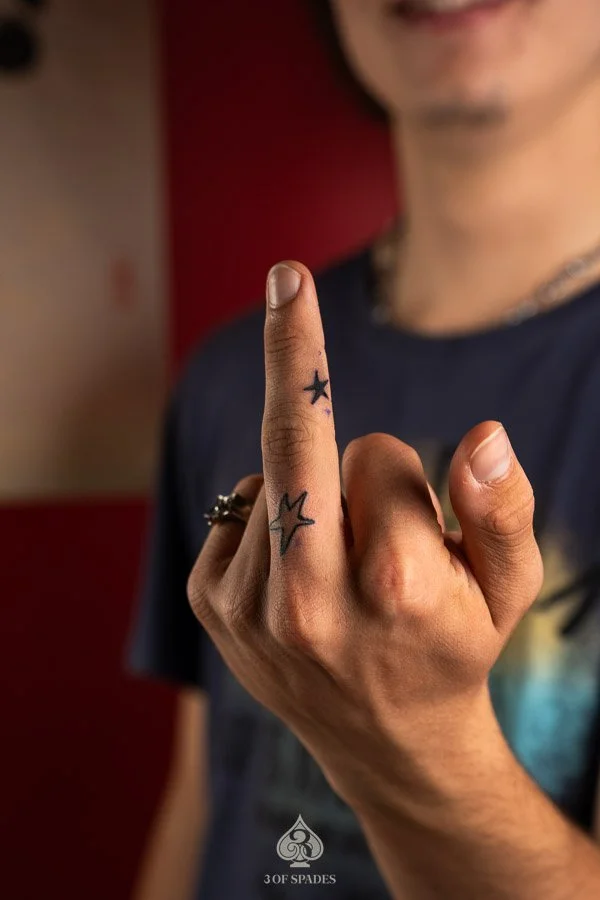
- High Friction & Rapid Exfoliation: Hands, fingers, palms, and feet shed skin cells significantly faster than other body areas due to constant friction from clothing, shoes, and handwashing. This rapid turnover can cause fine lines to break apart or fade unevenly within months.
- Thin Skin & Ink Blowouts: Areas with thin, delicate skin—such as the inner wrist, ribs, or throat—require precise needle depth. Depositing ink too deep penetrates the subcutaneous fat layer, causing the pigment to disperse into a permanent blur known as a tattoo blowout.
- Proximity to Bone & Nerve Density: Tattoos placed directly over bone (sternum, spine, ribs, ankles) feature high nerve density and minimal fat padding, resulting in higher pain levels and muscle twitching that can challenge line stability during application.
Explore custom fine-line and placement-optimized artwork over at our 3 Of Spades Tattoo Gallery!
Breakdown of High Risk Tattoo Placement Zones
Evaluating specific body areas helps set realistic expectations for healing, touch-ups, and design complexity:
| Body Placement Zone | Primary Risk Factors | Pain Expectations | Longevity & Aging Outlook |
| Hands, Fingers & Palms | High friction, frequent washing, rapid skin shedding | Moderate to High | High risk of fading and line breaking; touch-ups often required |
| Ribcage, Sternum & Spine | Thin skin, intense bone proximity, breathing movement | High to Severe | Excellent longevity if blowout is prevented during application |
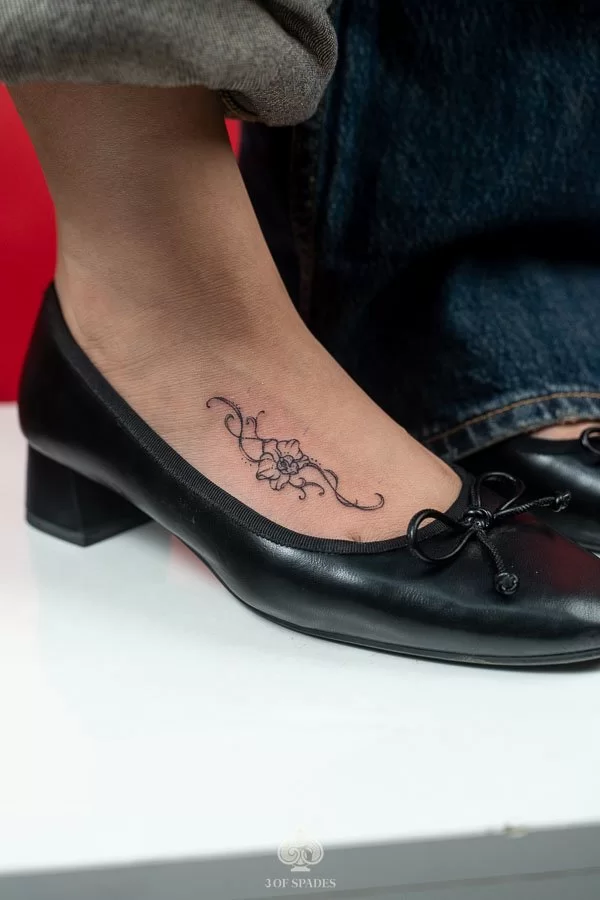
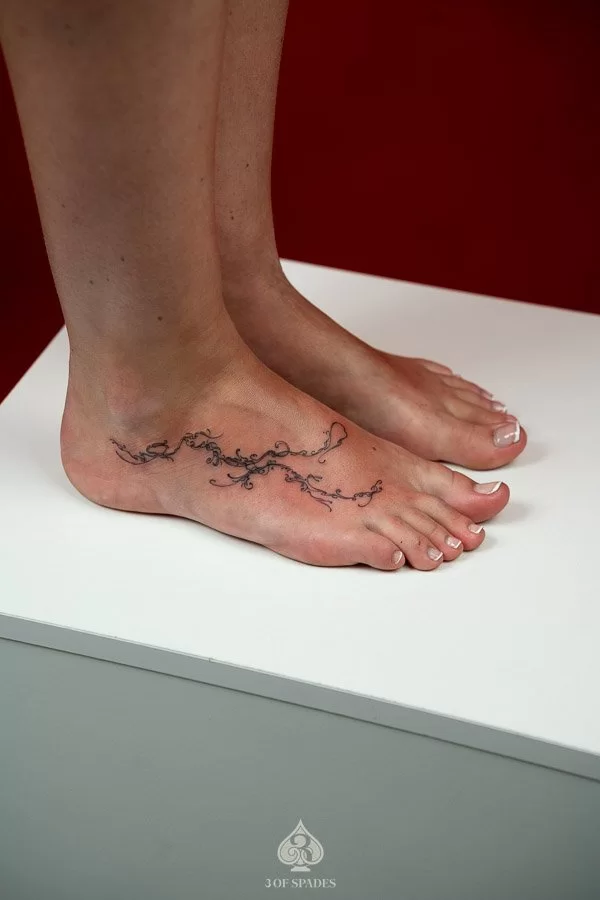
| Feet, Toes & Ankle Joint | Shoe friction, sweating, pressure from walking | Moderate to High | Moderate risk of edge fading; requires careful footwear during healing |
| Elbows & Knees | Constant joint movement, thick wrinkled skin, heavy scabbing | High | High risk of patchy ink retention during scabbing |
| Inner Lip & Tongue | Constant moisture, mucosal tissue, rapid cellular regeneration | Low to Moderate | Extreme fading; designs typically blur or disappear within 1–3 years |
How Style Choice Impacts High-Risk Placements
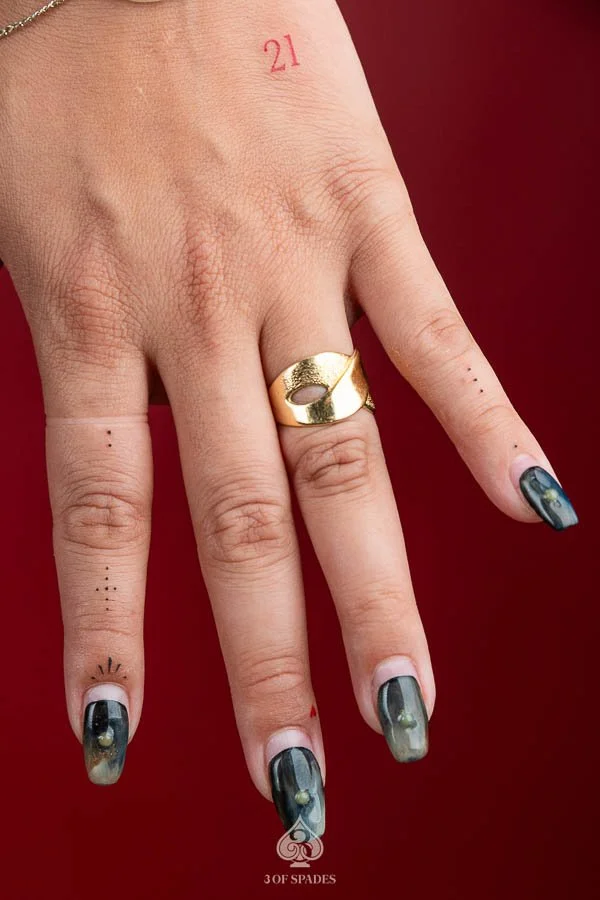
Choosing the right artistic style can mitigate or exacerbate the risks associated with delicate body locations:
1. Minimalist Fine Line & Micro-Script
- The Risk: Ultra-fine lines placed on high-friction areas (like fingers or palms) can fade or break apart easily.
- The Solution: On delicate zones like the collarbone, sternum, or behind the ear, single-needle fine linework executed with precise dermis depth holds crisp definition without blowouts.
2. Bold Blackwork & Heavy Saturation
- The Risk: Solid black packing on thin skin (like the ribs or throat) can cause severe trauma and prolonged scabbing if over-worked.
- The Solution: Blackwork thrives on stable areas like the outer arm or thigh, but when applied to high-risk zones, balanced negative space prevents heavy scabs from pulling ink out.
Best Practices to Ensure High-Risk Tattoos Age Gracefully
At 3 Of Spades Hanoi, our artists apply specific protocols to protect the integrity of high-risk tattoos:
- Precision Depth Control: Our master artists calibrate machine speed and utilize light needle pressure to deposit ink into the upper dermis layer, preventing ink migration on thin skin.
- Custom Anatomical Stenciling: Stencils are applied and adjusted while you stand in your natural posture to ensure lines do not distort when your body flexes or moves.
- Friction Protection During Healing: For placements on the feet, ankles, or ribs, wear loose, breathable clothing to prevent scabs from being pulled off prematurely.
- Sun Protection in Tropical Climates: UV exposure degrades tattoo pigments rapidly. Once healed, apply SPF 50 sunscreen daily to high-visibility placements.
Frequently Asked Questions About High Risk Tattoo Placements
What is considered the most high-risk tattoo placement?
Palms, inner lips, fingers, and soles of the feet are considered the highest-risk placements. Due to rapid skin cell turnover, constant friction, and frequent washing, tattoos in these areas fade significantly faster and often require multiple touch-ups to maintain readability.
Why do fine-line finger tattoos fade or blur so quickly?
Finger skin is thin, moves constantly across joints, and sheds cells rapidly through daily handwashing and friction. If the ink is placed too shallow, it sheds out; if placed too deep, it causes a blurry blowout.
How do I prevent a tattoo blowout on thin skin areas like the ribs?
Preventing blowouts requires an experienced tattoo artist who understands needle depth control. At 3 Of Spades Hanoi, our artists use calibrated machine settings and light needle depth to deposit ink precisely in the upper dermis without penetrating subcutaneous fat.
Are touch-ups necessary for tattoos on high-friction placement areas?
Yes, high-friction areas like fingers, hands, and feet often require a touch-up session after the initial healing period (4–6 weeks) to fill in minor gaps where skin shedding may have pulled out light pigment particles.
Plan Your Tattoo Session at 3 Of Spades Hanoi
Whether you are considering a fine-line piece on your collarbone or want expert guidance on matching a design to your body contours, our team of English-speaking artists at 3 Of Spades Tattoo Studio is ready to ensure a comfortable, hygienic, and precise session.