
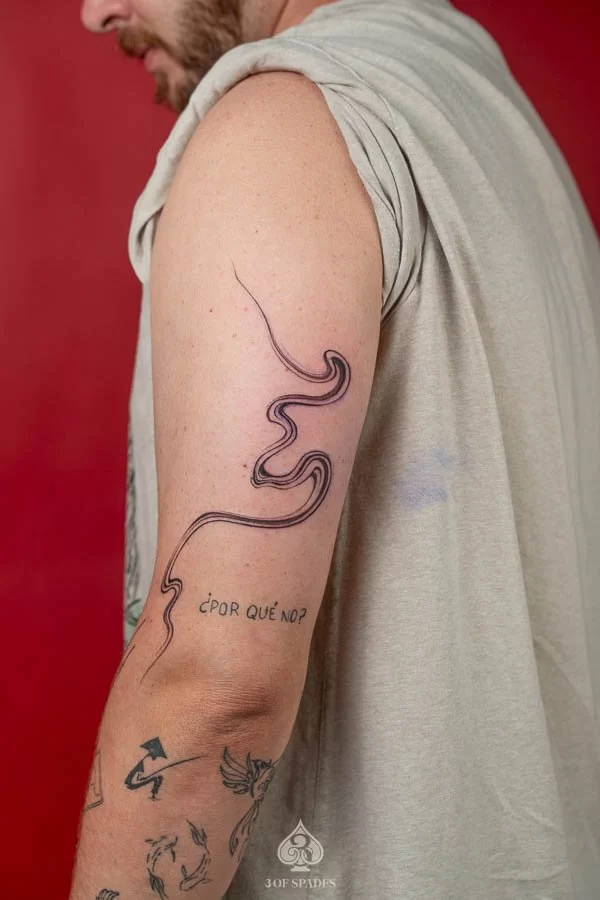
If you’re thinking about getting an arm tattoo but worried about the pain, then you’re certainly not alone. Whether you’re planning your first small tattoo or preparing for a full sleeve, one of the most common questions is: How much is this going to hurt?
The answer depends largely on where you get tattooed.
Your outer upper arm may feel relatively manageable, while areas such as the inner elbow and elbow bone can be considerably more uncomfortable for some people.
However, placement isn’t the only factor. Your individual pain tolerance, tattoo design, session length and even how well you’ve slept can influence your experience.
In this guide, we’ll explore which parts of the arm tend to be more sensitive, why certain placements feel different and how to prepare for a more comfortable tattoo session.
Does an Arm Tattoo Hurt?
Yes. Getting tattooed involves needles repeatedly depositing ink into your skin, so some degree of discomfort is expected.
However, not every part of your arm feels the same. Areas with more muscle and cushioning are often considered more manageable. Meanwhile, regions with thinner skin, prominent bones or sensitive anatomical structures may feel more uncomfortable.
Your personal experience can also vary considerably. For example, one person might find their outer forearm relatively easy to tolerate, while another may experience significant discomfort in the same location. That’s why tattoo pain charts should be treated as general guides rather than guaranteed predictions.
Arm Tattoo Pain Chart: Comparing Different Areas
The following comparison provides a general overview of commonly reported sensitivity. These categories are illustrative rather than scientifically established pain scores.
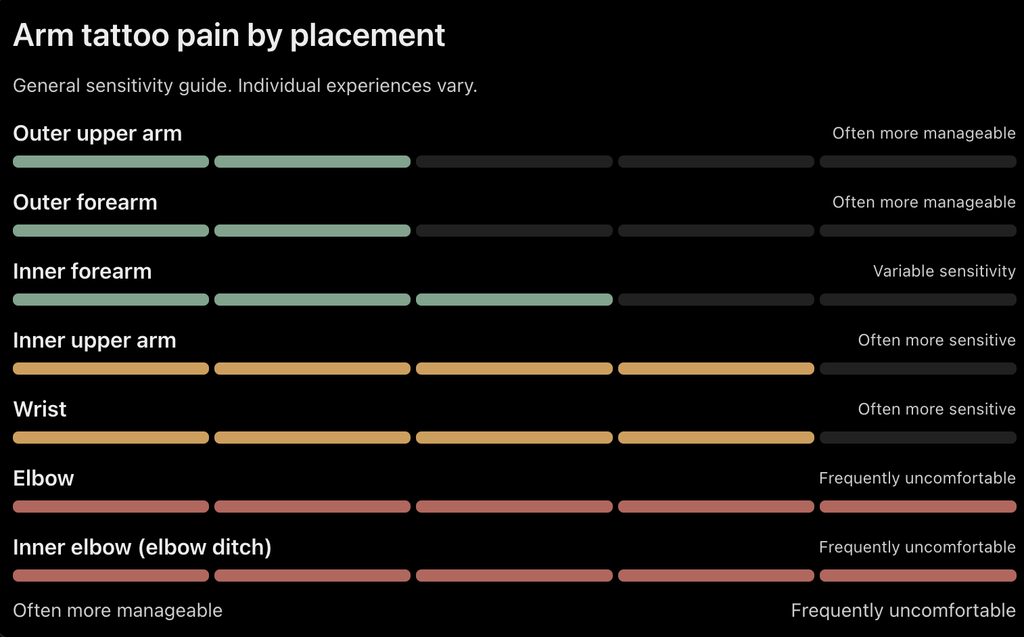
These comparisons can help you prepare, but they shouldn’t determine your tattoo placement on their own. If you love a particular design or location, discuss your concerns with your tattoo artist. They can recommend suitable dimensions, session lengths and design adjustments.
7 Arm Tattoo Areas: Which Ones Are More Sensitive?
Understanding the differences between arm placements can help you decide where to get your next tattoo. Let’s explore seven common areas, from the outer upper arm to the inner elbow.
1. Outer Upper Arm Tattoo Pain: Often More Manageable
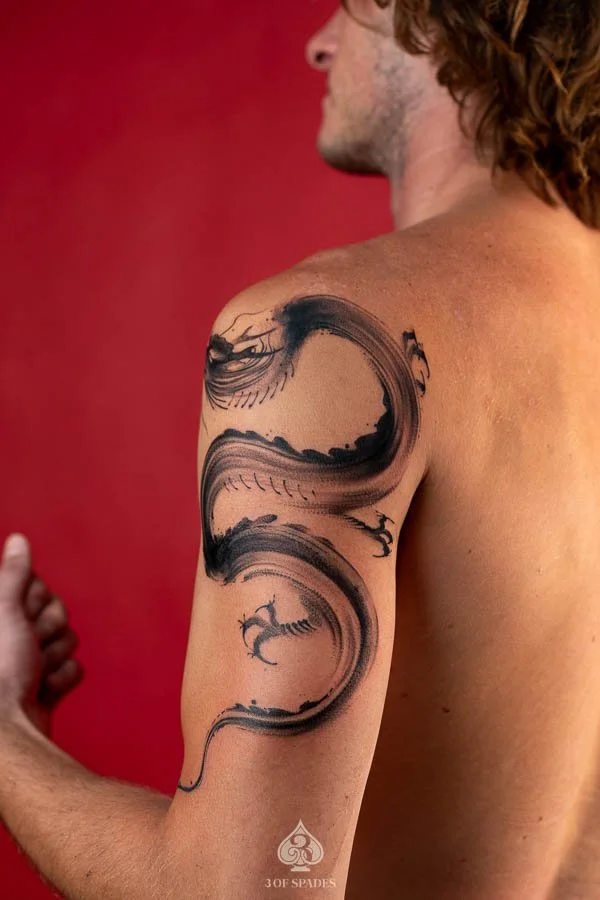
The outer upper arm is a popular choice for first-time tattoo clients. This area generally has substantial muscle and soft tissue, which may make the tattooing sensation easier to tolerate than areas directly over bone.
Additionally, the outer upper arm offers enough space for different tattoo styles, from small minimalist designs to larger illustrative artwork. However, the experience can change as the tattoo extends toward your shoulder, armpit or inner arm.
What to expect: Many people find this area relatively manageable, although discomfort varies.
Suitable designs: Floral tattoos, traditional artwork, geometric patterns, animal illustrations and upper-arm pieces.
2. Outer Forearm Tattoo Pain: A Popular First-Tattoo Placement

The outer forearm is another popular placement for first-time tattoo clients. Compared with more sensitive areas such as the inner elbow, many people find this location relatively manageable. It also offers excellent visibility, making it suitable for artwork you want to see regularly.
However, discomfort can increase as your design approaches the wrist or elbow. Larger pieces may also become more uncomfortable as the session progresses.
What to expect: Often manageable, particularly across the broader areas of the forearm.
Suitable designs: Script tattoos, botanical artwork, ornamental patterns, illustrative designs and medium-sized compositions.
3. Inner Forearm Tattoo Pain: Does It Hurt More?
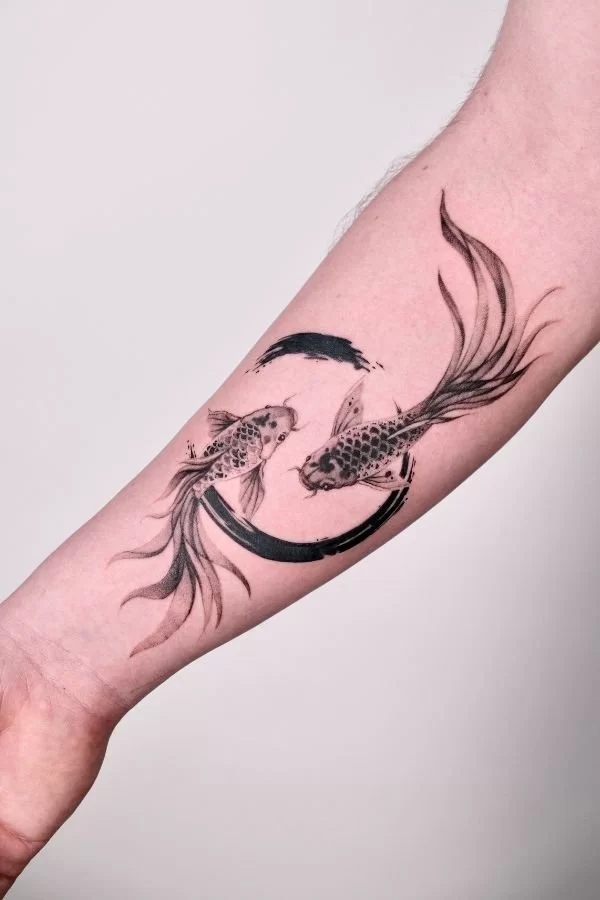
The inner forearm is popular for meaningful artwork because it’s easy to see and offers a relatively flat tattooing surface. However, sensitivity varies across this area. Some people find the central inner forearm manageable, while others experience greater discomfort than they would on the outer forearm.
The sensation may become more noticeable as the design approaches the wrist or inner elbow. If you’re planning delicate lettering or detailed fine-line artwork, remember that session length and tattooing technique can also influence your experience.
What to expect: Variable sensitivity, with some areas feeling more uncomfortable than others.
Suitable designs: Meaningful quotes, floral tattoos, fine-line illustrations and personalized artwork.
4. Inner Upper Arm Tattoo Pain: A More Sensitive Location
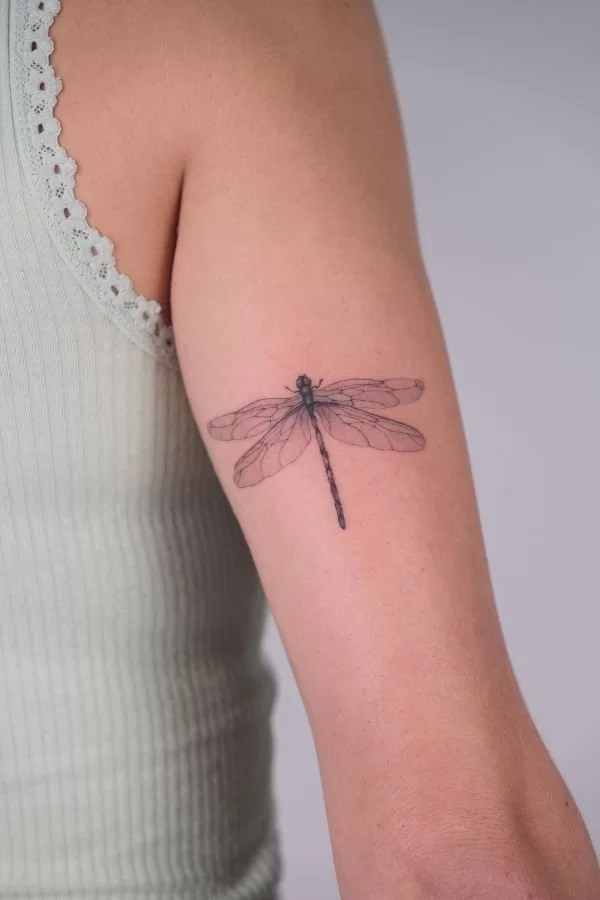
The inner upper arm is often considered more sensitive than the outer upper arm. This region has softer tissue, and some people experience greater discomfort as the tattoo approaches the armpit.
Although the placement can feel challenging, it’s popular for people who prefer artwork that can be concealed beneath everyday clothing. The inner upper arm also works well for designs that connect different parts of a larger sleeve.
What to expect: Often more sensitive, especially closer to the armpit.
Suitable designs: Floral compositions, script, ornamental artwork and sleeve extensions.
5. Wrist Tattoo Pain: Small Area, Noticeable Sensitivity
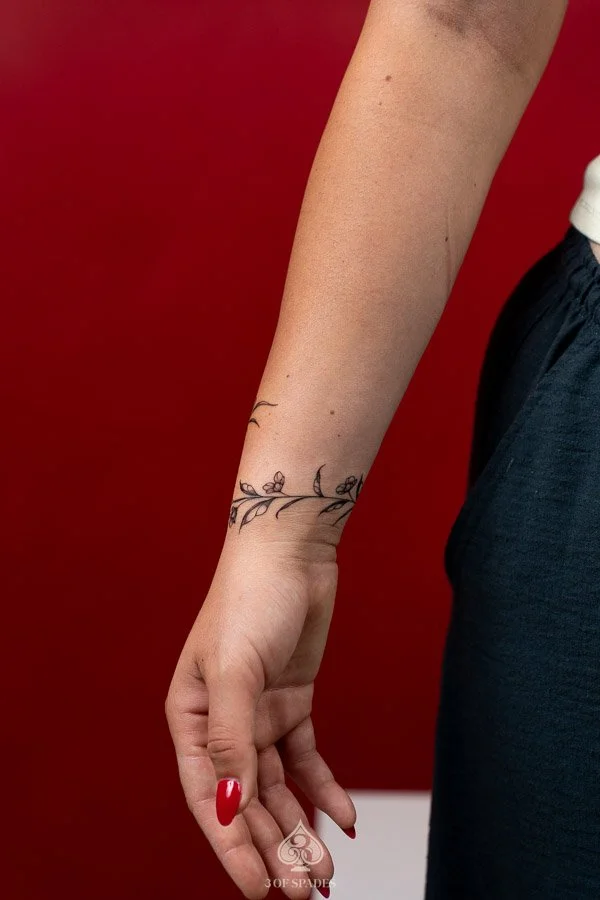
Wrist tattoos are popular for minimalist symbols, meaningful dates and delicate lettering.
However, their small size doesn’t necessarily make them painless.
The wrist contains areas with relatively little cushioning, and tattooing near prominent bones can feel uncomfortable.
The sensation may also vary between the inner and outer wrist.
Fortunately, simple designs often require shorter sessions than large, detailed artwork.
What to expect: Potentially sensitive, particularly near bony areas.
Suitable designs: Small flowers, hearts, symbols, dates and minimalist illustrations.
Artist’s tip: Avoid choosing an excessively small design simply because you’re worried about pain. Appropriate sizing is important for long-term clarity.
6. Elbow Tattoo Pain: Tattooing Over Bone
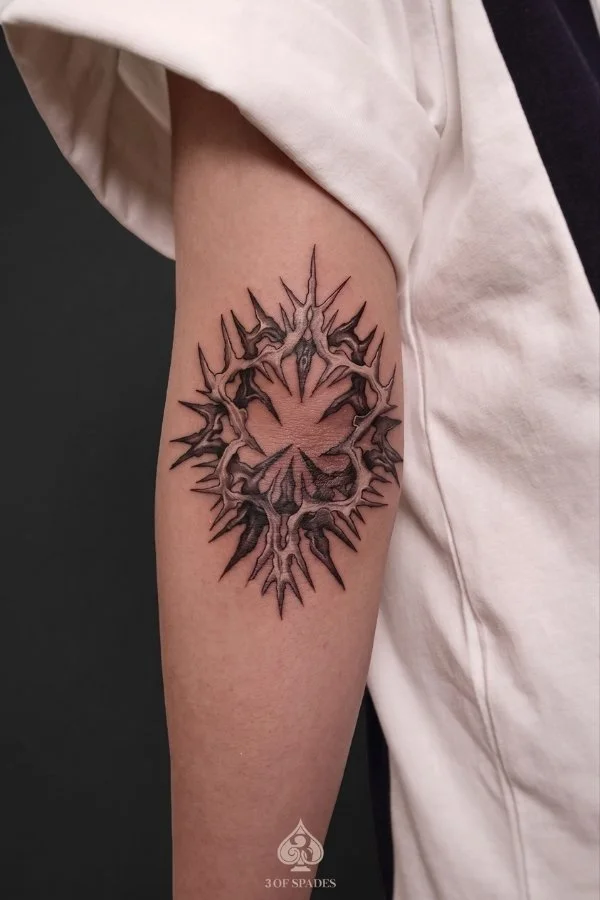
The elbow is frequently described as one of the more uncomfortable areas to tattoo. Its prominent bone and limited cushioning can make the sensation feel particularly intense.
Some people also find the vibration of the tattoo machine more noticeable when the artist works directly over the elbow. Additionally, the elbow’s curved surface and frequent movement create technical considerations for tattoo placement and healing.
Despite these challenges, elbow tattoos are popular additions to traditional sleeves, geometric compositions and ornamental artwork.
What to expect: Frequently uncomfortable, especially directly over the elbow bone.
Suitable designs: Spider webs, mandalas, geometric patterns and traditional tattoo compositions.
What Factors Affect Arm Tattoo Pain?
Placement matters, but it isn’t the only factor influencing your experience. Understanding the following considerations can help you prepare for your appointment.
1. Your Individual Pain Tolerance
Everyone experiences pain differently. Two people getting similar tattoos in the same location may report completely different sensations.Your previous tattoo experiences can provide some guidance, but they won’t necessarily predict how your next appointment will feel.
2. Tattoo Size and Complexity
A small minimalist design generally requires less tattooing time than a large, detailed composition.
However, complexity also matters. For example, a design involving extensive shading or multiple colors may require your artist to work on the same general area for longer. This can become increasingly uncomfortable as the session progresses.
3. Tattooing Duration
Long sessions can be physically demanding. Even if you initially find a particular placement manageable, discomfort may become more noticeable after several hours. That’s one reason larger projects are sometimes divided into multiple appointments.
4. Sleep, Stress and Physical Condition
Your physical and emotional state can influence how you experience discomfort.
Poor sleep, stress and fatigue may make your appointment feel more challenging. Therefore, preparing properly before your session is worthwhile.
Avoid arriving exhausted, hungry or dehydrated.
5. Tattoo Technique and Design
Different designs require different tattooing techniques. A small linework tattoo may involve less extensive work than a large composition containing detailed shading and color.
However, no particular tattoo style guarantees a painless experience. Discuss your design and any concerns with your artist before your appointment.
How to Reduce Arm Tattoo Pain: 7 Practical Tips
Although you can’t eliminate tattoo pain entirely, proper preparation can make your appointment easier to manage. Here are seven practical tips.
1. Get enough sleep. Arrive well-rested rather than scheduling your tattoo after an exhausting day.
2. Eat before your appointment. Having a proper meal can help you avoid feeling hungry or lightheaded during your session.
3. Stay hydrated. Drink enough water before your appointment and bring water for longer sessions.
4. Avoid alcohol. Don’t drink alcohol before getting tattooed. Follow any additional preparation instructions provided by your studio.
5. Wear comfortable clothing. Choose clothes that provide easy access to your arm without rubbing against the tattooing area.
6. Take breaks when needed. Communicate with your artist if you become uncomfortable, tired or lightheaded.
7. Discuss pain management in advance. If you’re considering numbing products, consult your artist before applying anything. Don’t use numbing creams without checking whether they’re appropriate for your session.
Frequently Asked Questions About Arm Tattoo Pain
1. Which Part of the Arm Hurts the Least to Tattoo?
The outer upper arm and broader areas of the outer forearm are commonly described as relatively manageable.
However, individual pain tolerance varies, so no placement is guaranteed to feel comfortable.
2. What Is the Most Painful Part of the Arm to Tattoo?
The elbow, inner elbow and areas close to the armpit are frequently described as particularly uncomfortable. These areas have anatomical characteristics that can make tattooing feel more intense.
3. Does an Inner Arm Tattoo Hurt More Than an Outer Arm Tattoo?
Some people find their inner upper arm more sensitive than their outer upper arm. However, sensitivity varies depending on the exact location and individual anatomy.
4. Is a Forearm Tattoo Painful?
Forearm tattoos are often considered relatively manageable compared with more sensitive placements. Nevertheless, discomfort can vary across the forearm, particularly near the wrist and elbow.
5. Do Elbow Tattoos Hurt?
Elbow tattoos are frequently described as uncomfortable because the area has limited cushioning over prominent bone. However, the sensation varies between individuals.
6. Does a Full Sleeve Tattoo Hurt More Than a Small Tattoo?
A full sleeve generally involves considerably more tattooing time and covers multiple anatomical areas. As a result, you may experience different sensations throughout the project.
Splitting larger artwork into multiple sessions can help make the experience more manageable.
7. Can I Use Numbing Cream Before My Arm Tattoo?
Discuss numbing products with your tattoo artist before your appointment. Not every product is appropriate for every situation, and some may affect the tattooing process or cause unwanted skin reactions.
Avoid applying numbing products without professional guidance.
Final Thoughts: Don’t Let Pain Decide Your Entire Tattoo
Arm tattoo pain varies considerably depending on placement, design complexity, session length and individual sensitivity. The outer upper arm and outer forearm are often considered relatively manageable. Meanwhile, areas such as the elbow, inner elbow and inner upper arm can be more challenging.
However, these are general patterns rather than guaranteed experiences. Instead of choosing your placement based entirely on expected pain, consider your preferred artwork, its dimensions and your long-term tattoo plans.
With thoughtful preparation, realistic expectations and clear communication with your artist, you can approach your appointment with greater confidence.
Your Arm. Your Art. Your Story.
Planning an arm tattoo during your Hanoi adventure?
At 3 of Spades Hanoi Tattoo, we believe your body is your journal, and your tattoos are your story.
Whether you’re considering a small forearm design, an upper-arm tattoo or a complete sleeve, our artist team would love to hear your ideas.
Send us your inspiration, preferred placement, approximate size and travel dates.
Every tattoo has a story. Let’s create yours.


