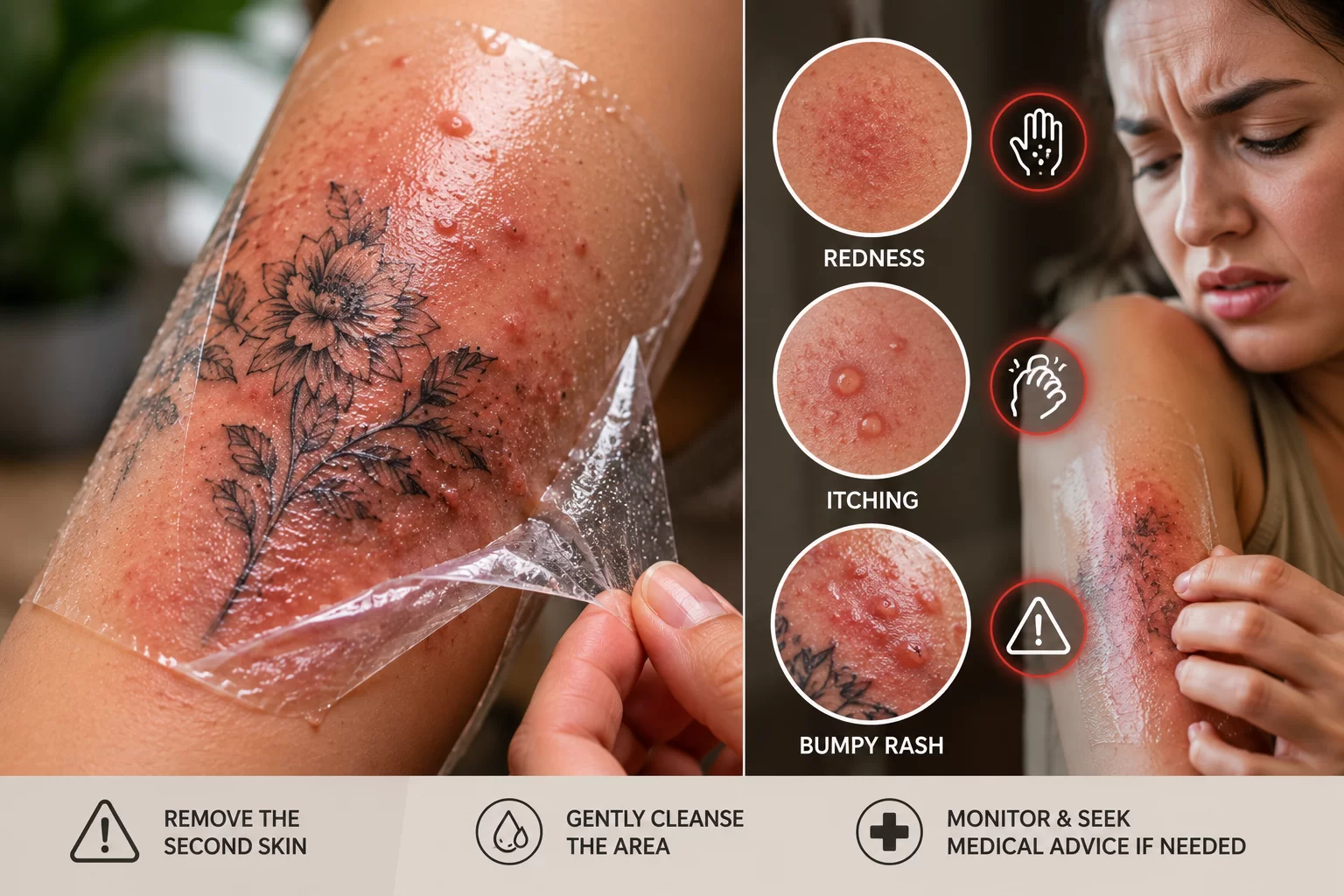
- Quick Answer: Can You Be Allergic to Second Skin?
- What Is Second Skin?
- What Causes an Allergic Reaction to Second Skin?
- What Does a Second Skin Allergy Look Like?
- What's Normal and What Isn't?
- Should You Remove the Second Skin?
- What Does 3 Of Spades Tattoo Studio Recommend?
- Can You Use Second Skin Again in the Future?
- Common Myths About Second Skin Allergies
- Frequently Asked Questions
- Final Thoughts
Second skin has become one of the most popular tattoo aftercare products used by professional tattoo studios around the world.
Its purpose is simple: protect a fresh tattoo during the most vulnerable stages of healing while creating a comfortable environment for recovery. For most people, second skin works exactly as intended and helps make the healing process easier.
However, some clients notice redness, itching, bumps, or irritation shortly after the bandage is applied and immediately wonder:
“Am I allergic to my second skin?”
The good news is that true allergic reactions are relatively uncommon. In many cases, what people experience is mild irritation from adhesive, friction, trapped moisture, or naturally sensitive skin.
Still, it’s important to understand the difference between normal healing and a possible allergic reaction.
If you’re experiencing redness, itching, or discomfort beneath your second skin, here’s everything you need to know.
See More: Getting a Tattoo in Vietnam: Everything You Need to Know in 2026
Quick Answer: Can You Be Allergic to Second Skin?
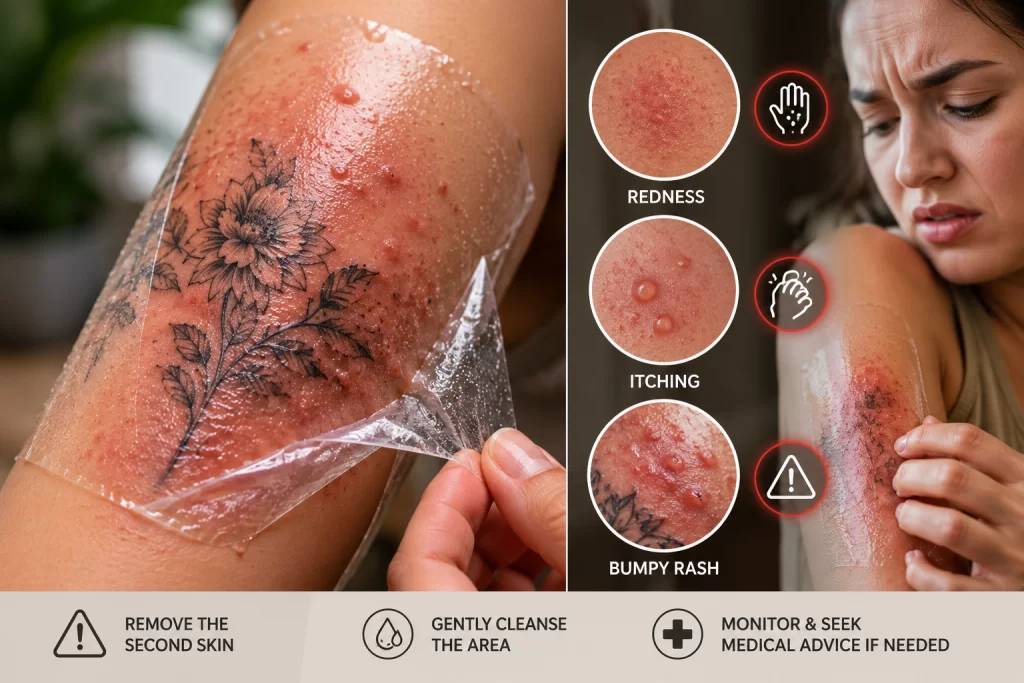
Yes.
Although uncommon, some people can experience an allergic reaction to the adhesive used in second skin bandages. Most reactions are not caused by the tattoo itself. Instead, they occur because the skin is sensitive to the medical-grade adhesive that helps the bandage stay attached.
Some people can develop redness, itching, bumps, or a rash from the adhesive used in second skin tattoo bandages. If significant irritation occurs, the bandage should usually be removed and normal tattoo aftercare should begin.
Fortunately, most reactions improve once the bandage is removed.
What Is Second Skin?
Second skin is a transparent adhesive bandage designed to protect a healing tattoo.
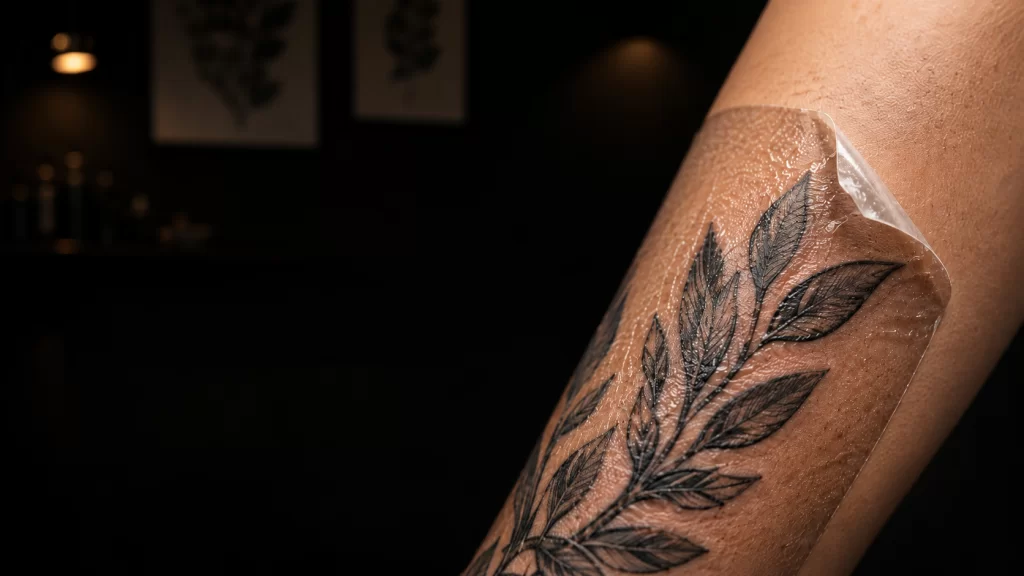
Many professional tattoo artists use products such as Saniderm, Derm Shield, Recovery Derm Shield, and other similar tattoo healing bandages during the first few days after tattooing.
The bandage acts as a barrier against:
- Dirt
- Bacteria
- Friction
- Excessive irritation
At the same time, it allows oxygen to reach the skin while helping maintain a healthy healing environment.
At 3 Of Spades Tattoo Studio, second skin is commonly applied after tattoo sessions to help protect fresh tattoos during the initial healing period.
See More: What If My Second Skin Comes Off Early After Getting Tattooed?
What Causes an Allergic Reaction to Second Skin?
There are several reasons why someone may react to a second skin bandage.
Adhesive Sensitivity

The most common cause is sensitivity to the adhesive itself. Some people have naturally reactive skin that does not tolerate certain adhesives well.
This is similar to reactions some individuals experience from:
⚪ Medical tape
⚪ Bandages
⚪ Sports tape
⚪ Adhesive dressings
Existing Skin Conditions
People with certain skin conditions may be more prone to irritation.
Examples include:
⚪ Eczema
⚪ Contact dermatitis
⚪ Sensitive skin
⚪ Previous adhesive allergies
Having one of these conditions does not automatically mean you’ll react to second skin, but it may increase the likelihood.
Moisture and Sweat
Excessive moisture trapped beneath the bandage can sometimes irritate the surrounding skin.
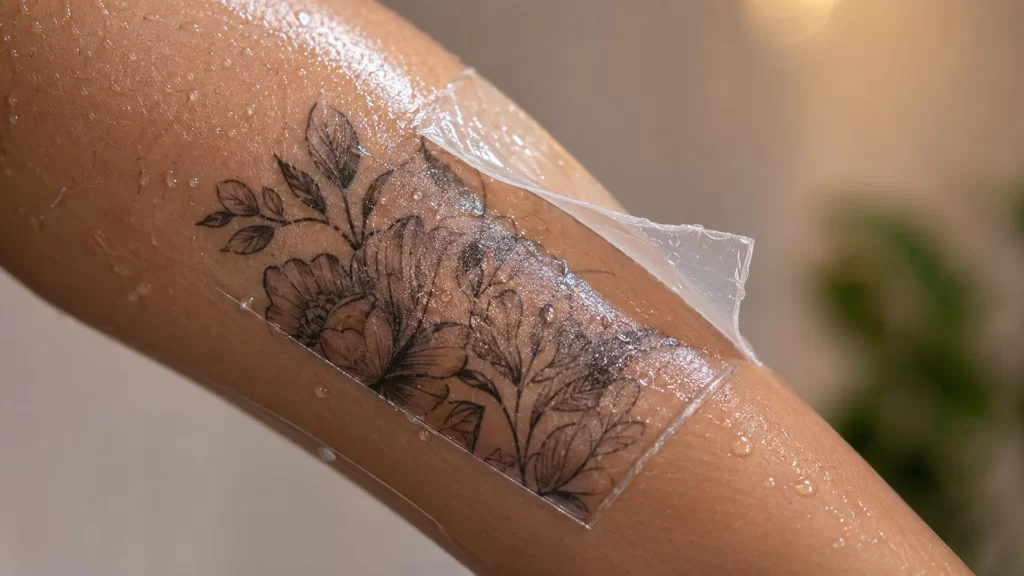
This is particularly common in:
⚪ Hot climates
⚪ Humid weather
⚪ Areas with heavy sweating
Friction and Movement
High-motion areas such as elbows, knees, ribs, and shoulders may experience irritation as the bandage moves against the skin throughout the day.
Sometimes this irritation can be mistaken for an allergy.
See More: How Do You Protect a New or Healing Tattoo in the Summer?
What Does a Second Skin Allergy Look Like?
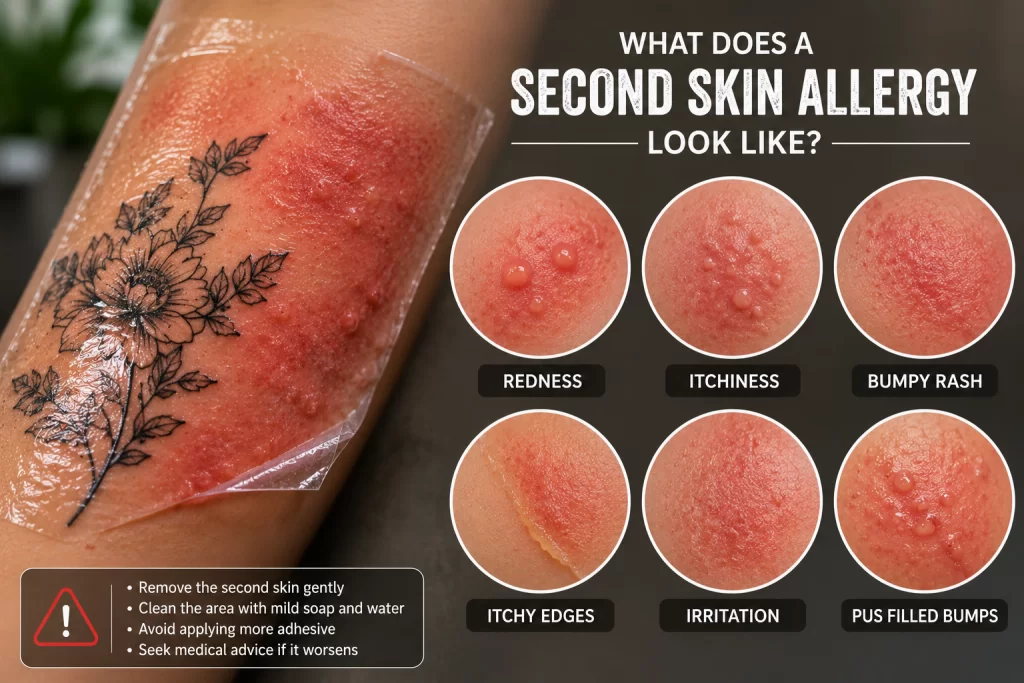
One of the biggest challenges is distinguishing between normal healing and a true allergic reaction.
Common Signs of an Allergic Reaction
A second skin allergy may include:
- Significant redness
- Intense itching
- Raised bumps
- Rash-like irritation
- Small blisters
- Burning sensation
A key detail is where the irritation appears.
In many cases, the reaction extends beyond the tattoo itself and follows the shape of the adhesive bandage.
A second skin allergy often appears as redness, itching, bumps, or a rash extending beyond the tattoo and matching the outline of the adhesive bandage.
This is one of the clearest indicators that the adhesive—not the tattoo—is causing the issue.
What’s Normal and What Isn’t?
Many clients become concerned about perfectly normal healing symptoms.
Normal Reactions
The following are generally considered normal:
✅ Mild redness immediately after tattooing
✅ Temporary skin marks from adhesive pressure
✅ Light itching during healing
✅ Slight discomfort around the edges
These symptoms often improve within a short period.
Possible Allergic Reactions
You may be experiencing an allergic reaction if you notice:
❌ Rapidly increasing redness
❌ Severe itching
❌ Widespread rash
❌ Blistering
❌ Irritation spreading beyond the tattoo
If symptoms continue worsening rather than improving, the bandage should be evaluated.
See More: Tattoo After Care: How to Heal Tattoo Properly (2026 Guide)
Should You Remove the Second Skin?
In many cases, yes. If you suspect an allergic reaction, leaving the bandage on may continue exposing the skin to the source of irritation.
When Removal Is Usually Recommended
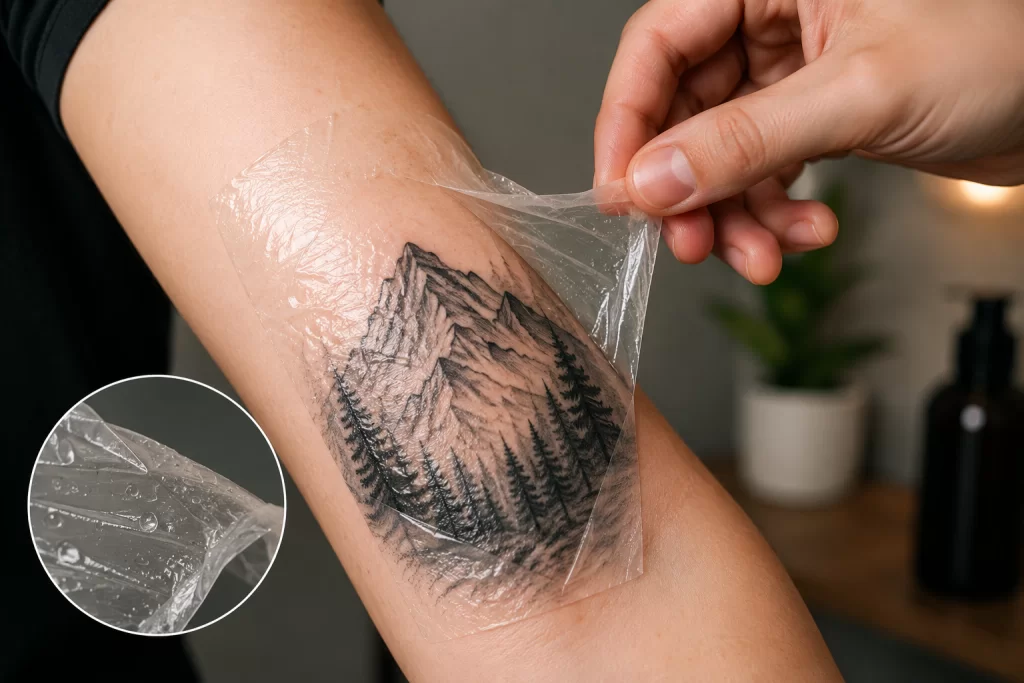
Most tattoo artists recommend removing second skin if:
⚪ Severe itching develops
⚪ Significant redness appears
⚪ Blisters form
⚪ Rash spreads beyond the tattoo area
⚪ The bandage becomes very uncomfortable
How to Remove It Safely
Remove the bandage slowly and carefully.
Many people find removal easiest during a warm shower. Avoid pulling the bandage straight upward. Instead, gently stretch it back over itself while supporting the skin.
After removal:
✅ Wash the tattoo gently
✅ Use mild fragrance-free soap
✅ Pat dry with a clean paper towel
✅ Continue traditional aftercare
If you suspect an allergic reaction to second skin, most artists recommend removing the bandage, gently cleaning the tattoo, and continuing normal aftercare.
Can Your Tattoo Still Heal Properly?
Absolutely. One of the biggest myths surrounding second skin is that your tattoo somehow depends on it for successful healing.
This is simply not true. Second skin is a helpful aftercare tool, but it is not essential. Before products like Saniderm became popular, tattoos healed successfully for decades using traditional aftercare methods. Once the bandage is removed, healing simply continues through normal tattoo care practices.
As long as the tattoo is kept clean and protected, it can still heal beautifully.
What Does 3 Of Spades Tattoo Studio Recommend?
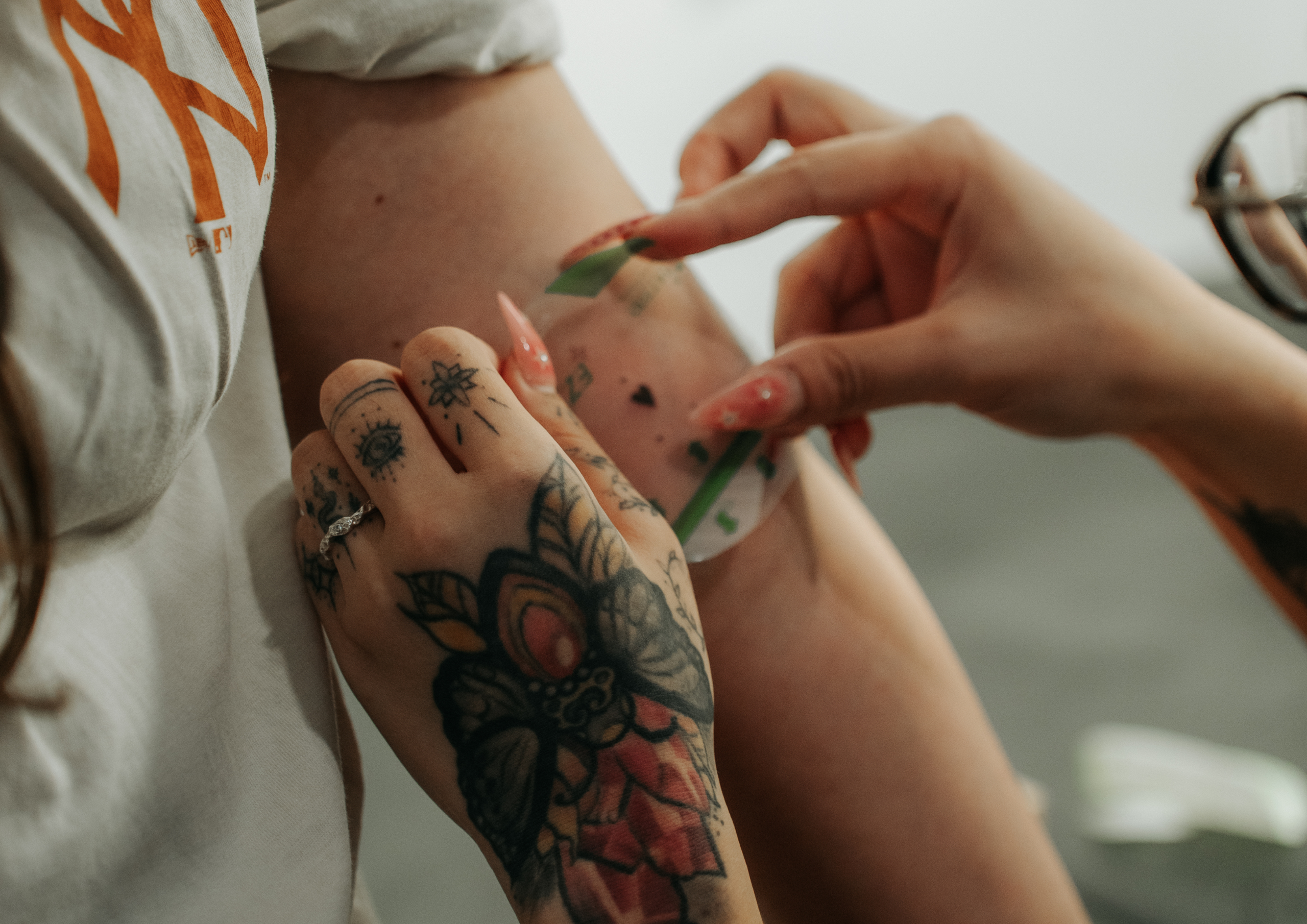
At 3 Of Spades Tattoo Studio, most clients experience no issues with second skin. However, every person’s skin is different.
If significant itching, redness, rash, or irritation develops beyond the tattoo itself, we generally recommend removing the bandage and switching to traditional aftercare.
Most importantly, do not panic. A second skin allergy does not mean your tattoo is damaged, and it does not mean the tattoo will heal poorly.
Our team regularly helps clients navigate aftercare questions and can provide guidance if you’re unsure whether your symptoms are normal healing or adhesive sensitivity.
As an English-speaking Hanoi tattoo studio, we encourage clients to contact us whenever they have concerns about their healing process.
Can You Use Second Skin Again in the Future?
That depends on the severity of the reaction.
Mild Irritation
Some people experience only minor irritation and may still be able to use second skin in the future.
Confirmed Adhesive Allergy
If you have a known adhesive allergy, it may be better to avoid second skin products altogether.
Alternative Healing Methods
Fortunately, tattoos heal perfectly well without second skin. Many clients successfully use:
⚪ Traditional healing methods
⚪ Gentle cleansing
⚪ Appropriate moisturizing
⚪ Standard aftercare routines
Common Myths About Second Skin Allergies
Myth #1: All Redness Means Allergy
False. Some redness is completely normal during tattoo healing.
Myth #2: The Tattoo Is Ruined If You Remove Second Skin
False. A tattoo can heal perfectly well without second skin.
Myth #3: Everyone With Sensitive Skin Is Allergic
False. Many people with sensitive skin tolerate second skin without any problems.
Myth #4: You Must Leave It On No Matter What
False. If significant irritation develops, removal is often the correct decision.
Frequently Asked Questions
Can you be allergic to second skin?
Yes. Some people experience sensitivity to the adhesive used in tattoo bandages.
What does a second skin allergy look like?
Common symptoms include redness, itching, bumps, rash, and irritation extending beyond the tattoo.
Is itching under second skin normal?
Mild itching can be part of normal healing. Severe itching may indicate irritation or allergy.
Should I remove second skin if it becomes red?
If redness is significant or continues worsening, removal is often recommended.
Can my tattoo still heal after removing second skin?
Yes. Tattoos can heal normally without second skin when proper aftercare is followed.
How long does an allergic reaction last?
Most reactions begin improving after the bandage is removed, although recovery time varies by individual.
Can I use second skin again?
Some people can. Others with confirmed adhesive allergies may need alternative healing methods.
Is redness around the edges normal?
Mild redness can be normal. Extensive redness that spreads beyond the bandage may indicate irritation.
When should I contact a doctor?
Seek medical advice if symptoms become severe, continue worsening, or cause significant concern.
Should I contact my tattoo artist?
Yes. Your artist can often help determine whether you’re experiencing normal healing or a possible reaction.
Final Thoughts
Second skin is an excellent aftercare tool that helps many tattoos heal comfortably and efficiently.
However, like any adhesive product, it doesn’t work perfectly for everyone.
If you develop redness, itching, bumps, or irritation that appears to be caused by the bandage, don’t panic. Most reactions are manageable, and your tattoo can still heal beautifully once the second skin is removed and proper aftercare begins.
When in doubt, contact your tattoo artist, follow their guidance, and focus on keeping the tattoo clean and protected during the healing process.