- Quick Answer: How Do You Protect a Healing Tattoo in Summer?
- Why Summer Is Harder on New Tattoos?
- Can Sunlight Damage a Healing Tattoo?
- Should You Use Sunscreen on a New Tattoo?
- Can You Swim With a New Tattoo?
- How Sweat Affects Tattoo Healing
- What Should You Wear Over a Healing Tattoo?
- Summer Travel Tips for New Tattoos
- Summer Tattoo Aftercare Checklist
- What Does 3 Of Spades Tattoo Studio Recommend?
- Frequently Asked Questions
- Final Thoughts
Summer is one of the most popular times of the year to get tattooed.
Whether you’re traveling abroad, heading to the beach, exploring a new city, or simply enjoying longer days outdoors, summer creates the perfect opportunity to collect new memories—and sometimes new tattoos.
Unfortunately, summer is also one of the most challenging seasons for tattoo healing.
Sun exposure, sweating, swimming pools, beaches, ocean water, and high humidity can all affect the healing process if you’re not careful.
The good news is that protecting a healing tattoo during summer is relatively straightforward once you understand the risks.
In this guide, we’ll explain exactly how to protect a new tattoo in hot weather and avoid common mistakes that can affect healing and long-term tattoo quality.
Quick Answer: How Do You Protect a Healing Tattoo in Summer?
To protect a healing tattoo in summer, avoid direct sunlight, swimming, excessive sweating, and friction while following your tattoo artist’s aftercare instructions.
Key Takeaways
⚪ Keep the tattoo clean
⚪ Avoid direct sunlight
⚪ Avoid swimming until healed
⚪ Wear loose clothing
⚪ Stay hydrated
⚪ Follow aftercare instructions carefully
Simple habits can make a huge difference in how your tattoo heals.
Why Summer Is Harder on New Tattoos?
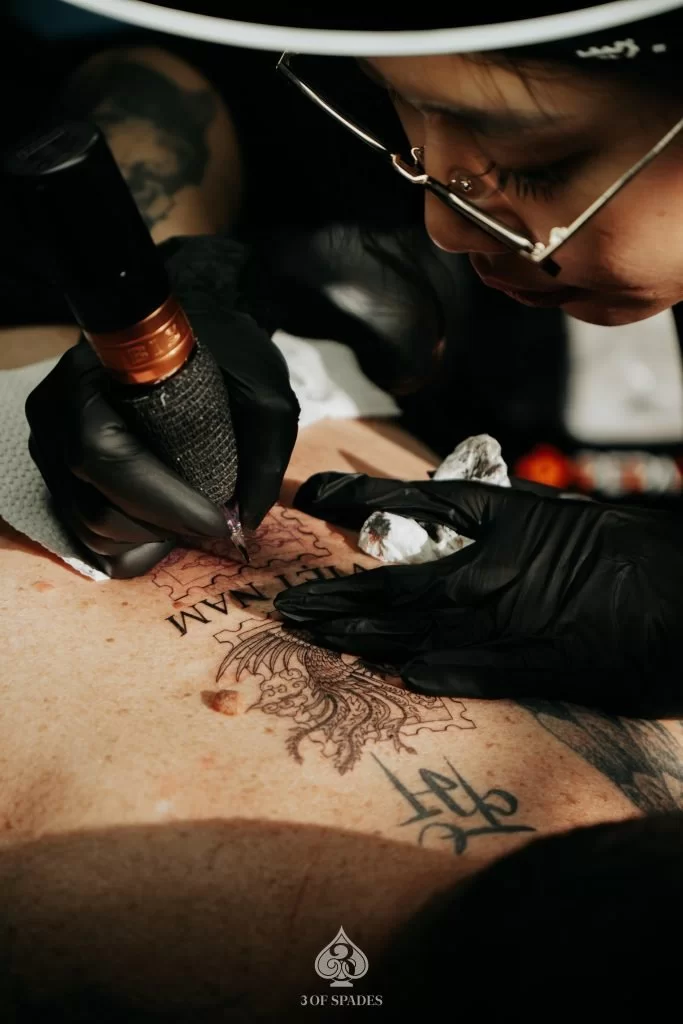
Healing tattoos require a clean and stable environment. Summer introduces several challenges that can interfere with that process.
See More: Getting a Tattoo in Vietnam: Everything You Need to Know in 2026
Increased Sun Exposure
Most people spend significantly more time outdoors during summer. Unfortunately, UV radiation is one of the biggest enemies of a healing tattoo.
More Sweating
Sweat itself is not necessarily dangerous, but excessive sweating can:
⚪ Irritate the skin
⚪ Increase friction
⚪ Create a moist environment that may slow healing
Swimming and Water Activities
Pools, beaches, rivers, and lakes expose healing tattoos to bacteria, chemicals, and prolonged moisture.
Higher Humidity
In places like Hanoi, summer humidity can make tattoo healing more difficult if proper aftercare is not followed.
See More: What Is the Best Time to Visit Hanoi? (2026 Guide)
Can Sunlight Damage a Healing Tattoo?
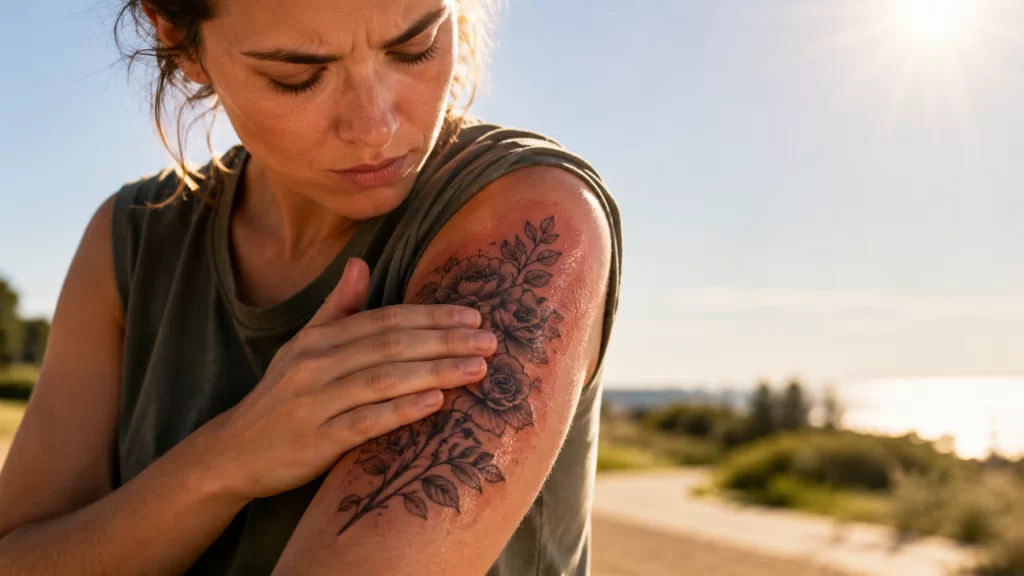
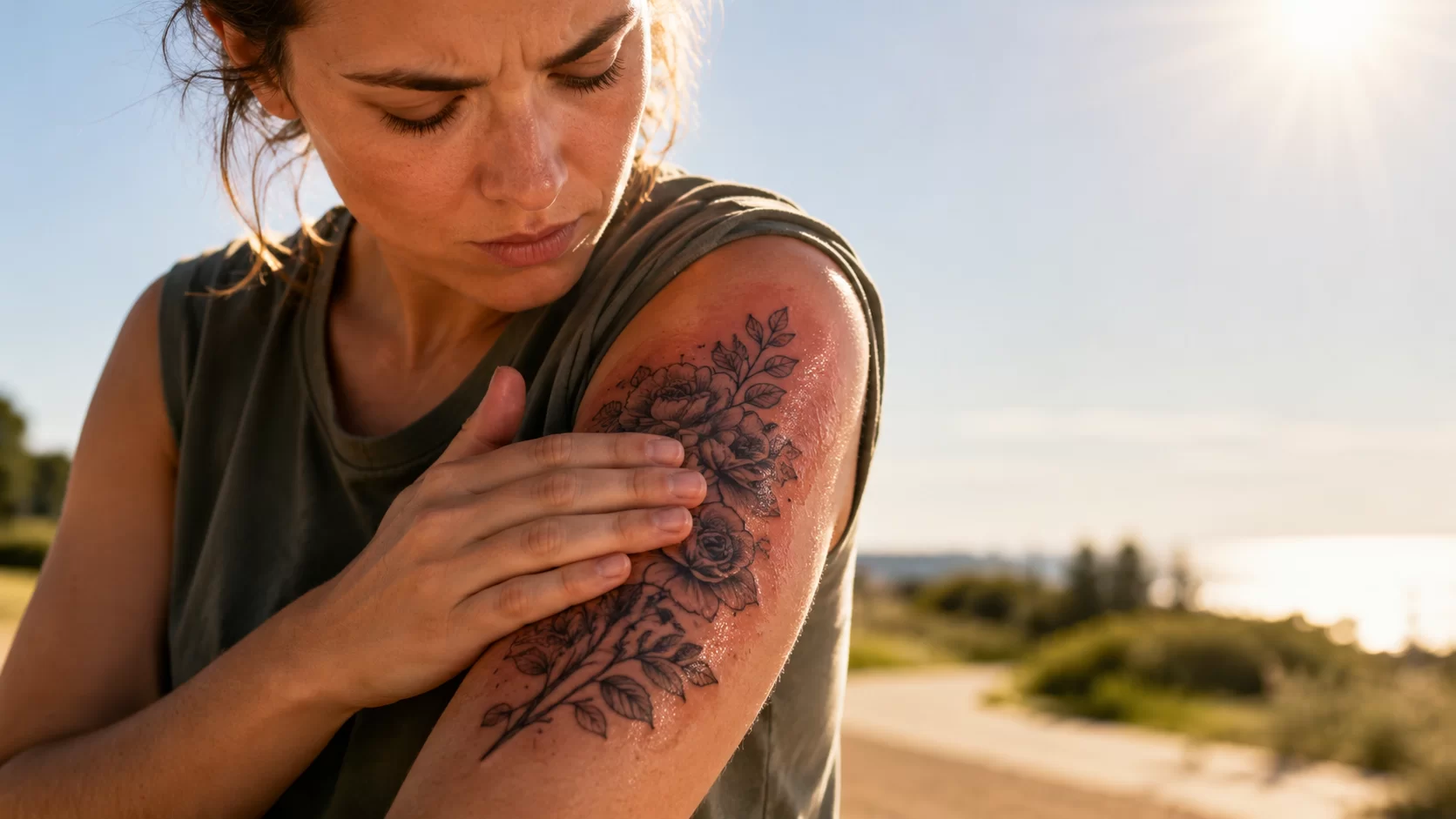
Yes. Direct sunlight can negatively affect both the healing process and the appearance of your tattoo.
Why UV Rays Are a Problem
A fresh tattoo is essentially an open wound. UV rays can irritate sensitive skin and interfere with healing.
What Happens to Tattoo Ink?
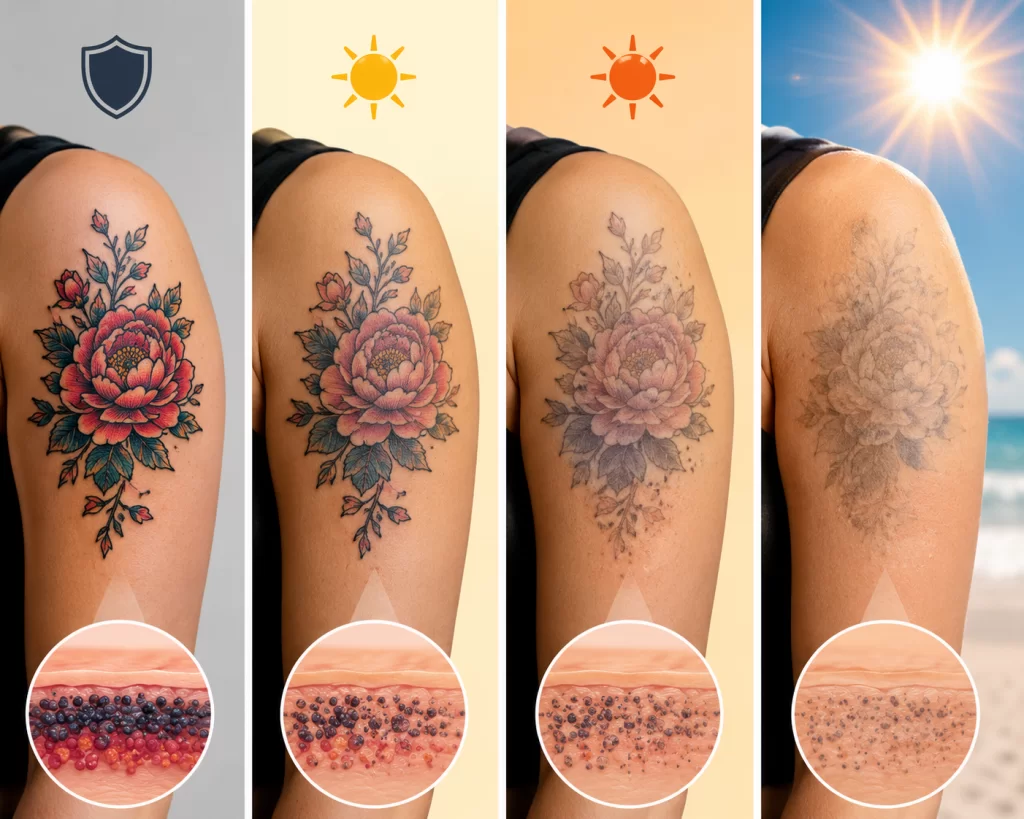
Excessive sun exposure can contribute to:
⚪ Premature fading
⚪ Dull colors
⚪ Reduced contrast
⚪ Uneven healing
Can the Sun Ruin a New Tattoo?
The word “ruin” may be extreme, but sun exposure can absolutely affect the final result.
Overall, direct sunlight should be avoided on a healing tattoo because UV exposure can cause irritation, fading, and delayed healing.
See More: Tattoo After Care: How to Heal Tattoo Properly (2026 Guide)
Should You Use Sunscreen on a New Tattoo?
This is one of the most misunderstood topics in tattoo aftercare.
Fresh Tattoos
Most artists recommend avoiding sunscreen on a fresh tattoo. The skin is still healing and introducing additional products may cause irritation.
Fully Healed Tattoos
Once the tattoo has completely healed, sunscreen becomes one of the best ways to protect it.
High-quality sunscreen can help preserve:
⚪ Color
⚪ Contrast
⚪ Sharpness
⚪ Overall appearance
When Can You Start Using Sunscreen?
Always follow your artist’s guidance. In general, sunscreen is only recommended once the tattoo has fully completed the healing process.
Can You Swim With a New Tattoo?
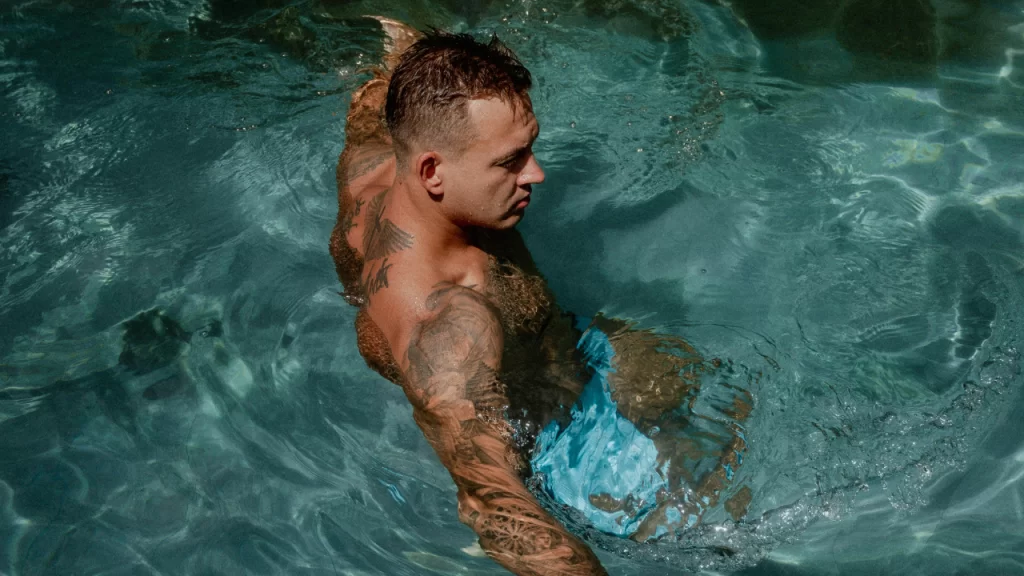
This is one of the most common questions tattoo artists receive every summer. The answer is simple: No, swimming is not recommended while a tattoo is healing.
Swimming Pools
Pools contain chemicals such as chlorine that may irritate healing skin.
Ocean Water
Although seawater may seem natural, it contains bacteria and other microorganisms that can increase risk during healing.
Lakes and Rivers
Natural bodies of water often contain bacteria and contaminants that should not come into contact with an open wound.
Hot Tubs
Hot tubs combine heat, moisture, and bacteria—three things a healing tattoo does not need.
At 3 Of Spades Tattoo Studio, we recommend avoiding swimming until your tattoo has completely healed. Whether you’re visiting a swimming pool, relaxing at the beach, or exploring Vietnam’s islands, keeping a healing tattoo out of the water helps reduce the risk of irritation, infection, and delayed healing while protecting the quality of your new artwork.
How Sweat Affects Tattoo Healing
Many clients worry that sweating will automatically damage their tattoo. The reality is more nuanced.
Is Sweating Dangerous?
Normal sweating is generally not harmful. However, excessive sweating can create conditions that are less than ideal for healing.
Exercise and Workouts
Intense exercise may increase:
- Friction
- Irritation
- Moisture buildup
This is especially true if clothing repeatedly rubs against the tattoo.
Outdoor Activities
Running, hiking, sports, and other outdoor activities may require additional caution during the early healing stages.
What If You Sweat?
If you sweat heavily:
⚪ Gently clean the area
⚪ Pat dry with a clean towel
⚪ Follow your artist’s aftercare instructions
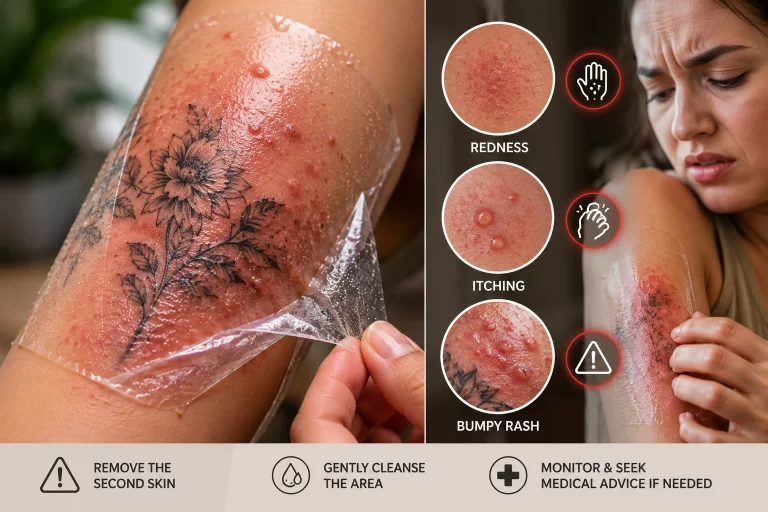
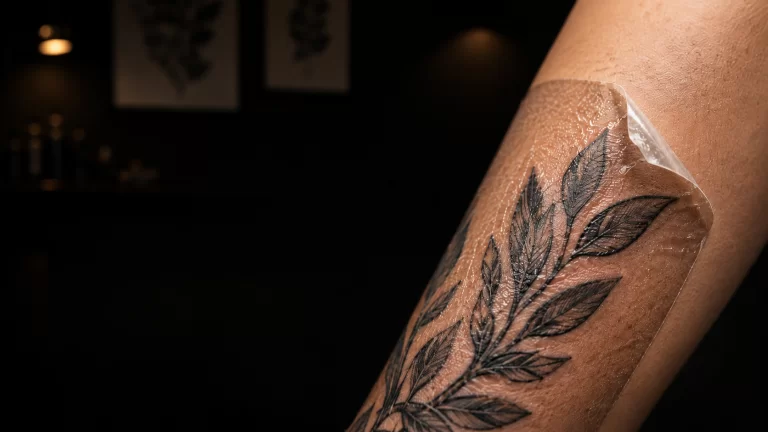
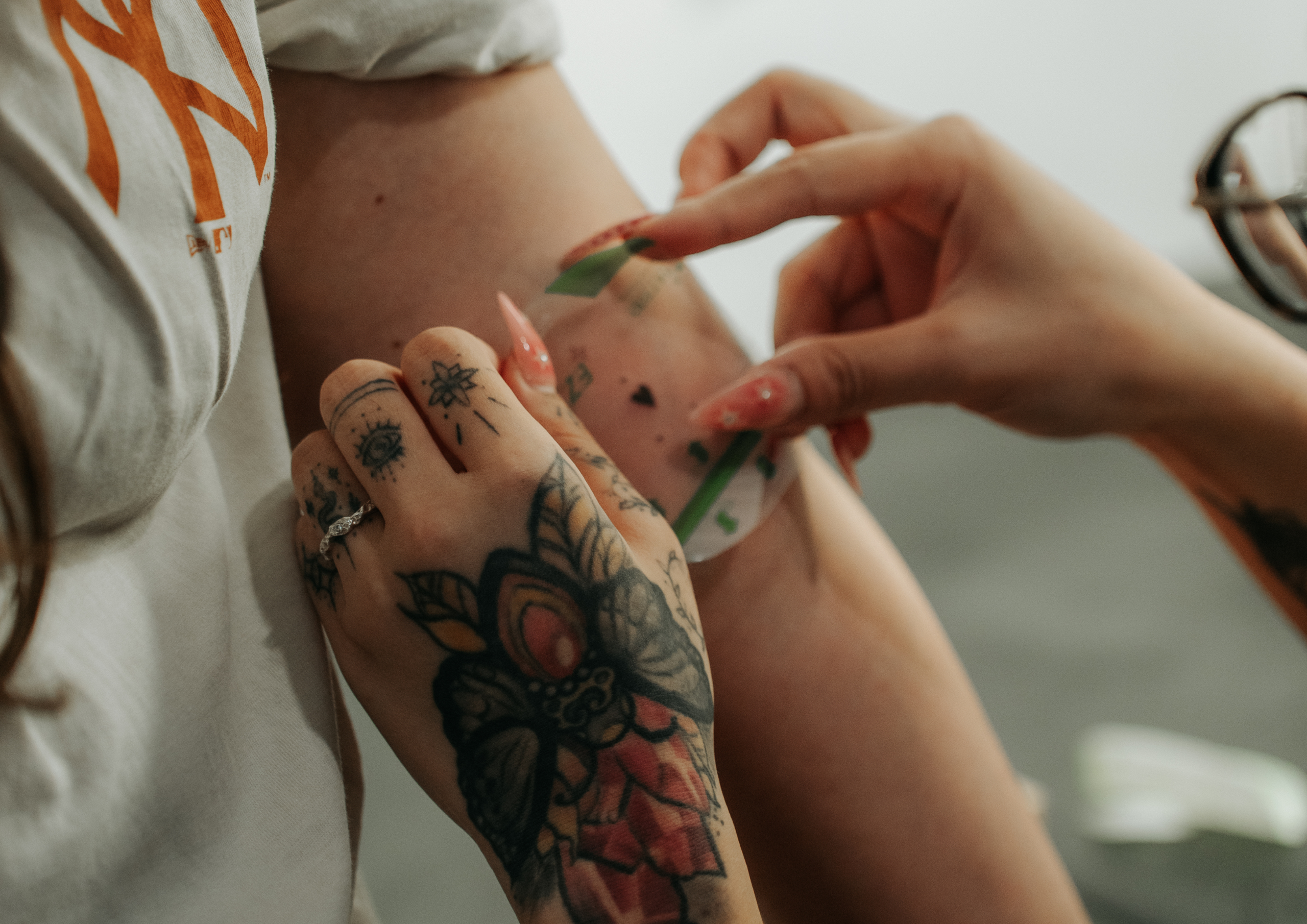
At 3 Of Spades Tattoo Studio, most clients receive a protective second skin immediately after their tattoo session. This bandage helps protect the tattoo from dirt, friction, and excess moisture during the early stages of healing. If the second skin begins to peel off, leaks heavily, or comes loose due to excessive sweating, simply remove it completely, gently wash the tattoo with mild soap and water, pat it dry, and continue following the aftercare instructions provided by your artist. Do not attempt to reapply a used second skin.
What Should You Wear Over a Healing Tattoo?
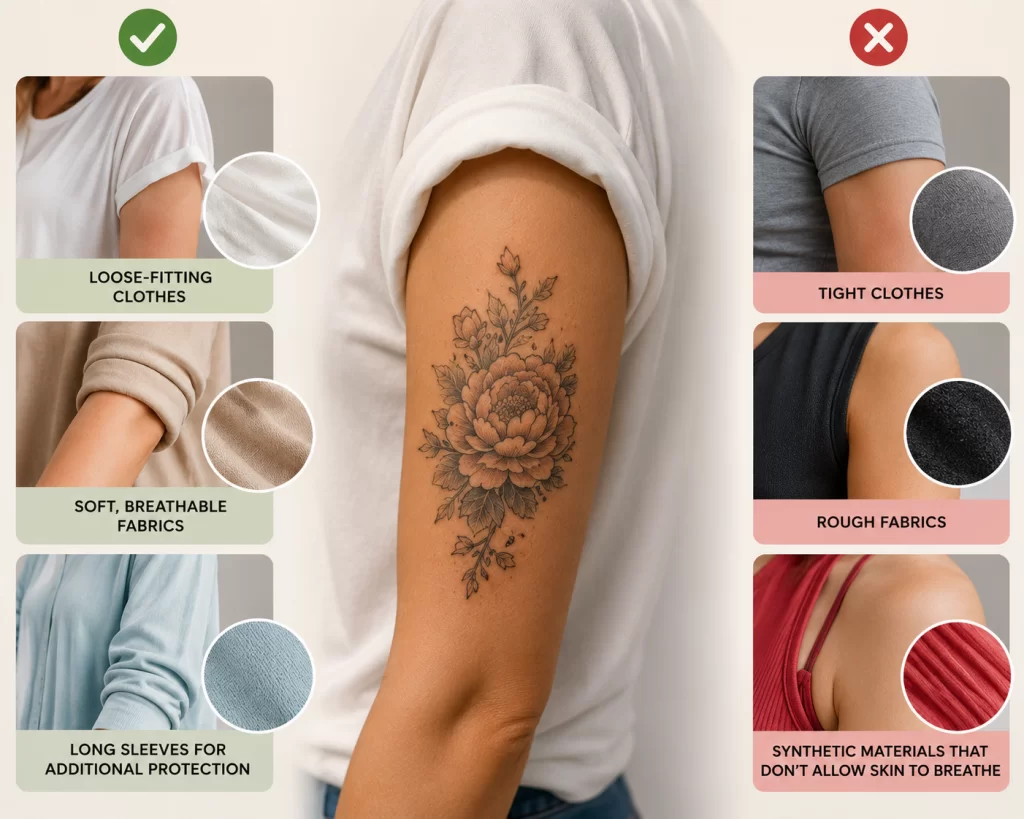
Clothing choices can significantly affect healing.
Wear Loose Clothing
Loose-fitting garments help reduce friction and irritation.
Choose Breathable Fabrics
Materials that allow airflow can help keep the skin comfortable.
Avoid Tight Compression
Tight clothing may:
⚪ Trap moisture
⚪ Cause rubbing
⚪ Slow healing
Think About Placement
A tattoo on the thigh, shoulder, foot, or rib area may require different clothing considerations during healing.
Summer Travel Tips for New Tattoos
Many people get tattooed while traveling. This is especially common among visitors exploring Vietnam.
Flying With a Fresh Tattoo
Flying is generally safe after getting tattooed.
However:
⚪ Stay hydrated
⚪ Avoid unnecessary friction
⚪ Keep the tattoo clean
Backpacking After a Tattoo
Backpacks and straps can rub against healing tattoos depending on placement. Plan accordingly.
Beach Vacations
A healing tattoo and beach vacation are not ideal companions. Sun, sand, and seawater all create challenges during healing.
Traveling in Vietnam’s Summer Heat
Vietnam’s summer climate can be particularly demanding. Cities such as Hanoi regularly experience:
- High temperatures
- Strong sunlight
- Significant humidity
Proper aftercare becomes even more important under these conditions.
Summer Tattoo Aftercare Checklist
Use this simple checklist during the healing process:
Daily Checklist
✓ Wash gently as instructed
✓ Keep the tattoo clean
✓ Avoid direct sunlight
✓ Avoid swimming
✓ Wear loose clothing
✓ Stay hydrated
✓ Follow artist recommendations
✓ Avoid scratching or picking
✓ Monitor the healing process
What Does 3 Of Spades Tattoo Studio Recommend?
At 3 Of Spades Tattoo Studio in Hanoi, many clients visit during Vietnam’s hottest months of the year.
Because Hanoi’s summer weather combines intense heat with high humidity, aftercare becomes especially important.
As an English-speaking Hanoi tattoo studio serving travelers from around the world, our team provides detailed aftercare instructions tailored to each client’s tattoo placement, lifestyle, and travel plans.
Whether you’re staying in Hanoi, heading to the beaches of Da Nang, exploring Ha Giang, or continuing your Southeast Asia adventure, protecting your tattoo during the healing process is one of the best investments you can make in its long-term appearance.
Frequently Asked Questions
Can the sun ruin a healing tattoo?
Direct sun exposure can contribute to fading, irritation, and delayed healing.
Can I go to the beach with a new tattoo?
It is generally best to avoid beaches until the tattoo has fully healed.
Can I swim after getting a tattoo?
Most artists recommend waiting until the tattoo has completed the healing process.
Does sweating damage a tattoo?
Normal sweating is usually fine, but excessive sweating can increase irritation and friction.
When can I use sunscreen on my tattoo?
Only after the tattoo has fully healed.
Can I travel after getting tattooed?
Yes, but proper aftercare becomes even more important while traveling.
Can humidity affect tattoo healing?
High humidity can increase moisture and irritation, making aftercare especially important.
What should I wear over a healing tattoo?
Loose, breathable clothing is generally the safest choice.
How do I protect a tattoo in Vietnam’s summer weather?
Avoid direct sunlight, swimming, excessive sweating, and friction while following your artist’s aftercare instructions carefully.
Final Thoughts
Getting a tattoo during summer doesn’t have to be a problem.In fact, many beautiful tattoos heal perfectly during the hottest months of the year. The key is understanding that a healing tattoo requires temporary sacrifices. A few weeks of avoiding excessive sun exposure, swimming, and irritation can help ensure that your tattoo looks great for years to come. By protecting your tattoo properly during the healing process, you’re protecting the artwork, the investment, and the story it represents.